

Chicken Care and Health
Can chickens eat cucumber? Yes, and it is one of the easiest summer treats to get right. Offer it in slices or halved lengthways, skin and seeds included, and hens can peck at it at their own pace. Cucumber is mostly water, so it suits hot weather as a cooling treat, but it is low in energy and protein and it never replaces layer feed. This guide covers how to serve it, what to do about skin and seeds, how much to give, the pickles warning, and the rules for baby chicks, all matched to our food checker.
The checker verdict is simple. Fresh cucumber is Safe, with the note slices or halved lengthways, and young cucumber leaves from untreated plants are also Safe. Everything else in this guide follows from those two lines, plus the treat rule that treats stay at about 10 percent or less of the diet.
Table of Contents
Quick Facts
At a Glance. Fresh cucumber is Safe, served in slices or halved lengthways. Skin and seeds need no separate removal step. Treats stay at about 10 percent or less of the diet. Pickled cucumber in brine or vinegar should not be served as a chicken treat.
Egg Laying. This article gives no egg laying figures, and none are invented here. Its only laying related point is that a treat like cucumber never replaces layer feed, which is what supports steady laying.
Good to Know. Cucumber is mostly water and low in energy and protein. Young cucumber leaves are Safe only from untreated plants, never from sprayed garden plants. Baby chicks wait until they are a couple of weeks old and eating confidently, with chick grit available, before treats like soft cucumber in small pieces.
The Short Answer. Yes, Slices or Halved Lengthways
The short answer is yes, chickens can eat cucumber, and the serving shape matters more than any fancy preparation. Cut it into slices or halve it lengthways and put it in the run, and hens will peck at the flesh, skin and seeds together. That shape also answers the two questions owners ask most, which are covered in full below, namely whether the skin is safe and whether the seeds need removing. Both are safe in fresh cucumber, so there is no separate removal step.
Think of cucumber as a hydrating treat, not as feed. It is mostly water, so it helps on a hot day, but it is low in energy and protein, and a hen that fills up on cucumber will miss the nutrition in her layer feed. Keep treats, cucumber included, at about 10 percent or less of the diet, and keep layer feed and fresh water available at all times.
| Form | Safe | How to serve |
|---|---|---|
| Fresh cucumber slices | Safe | Slice and serve in the run. |
| Cucumber halved lengthways | Safe | Place cut side up so hens can peck at it. |
| Cucumber skin | Safe | Leave the skin on, no peeling needed. |
| Cucumber seeds | Safe | Leave the seeds in, no removal step. |
| Young cucumber leaves from untreated plants | Safe | Offer only young leaves from plants with no sprays. |
| Pickled cucumber in brine or vinegar | Do not serve | Salty and acidic, not a chicken treat. |
How to Serve Cucumber to Chickens
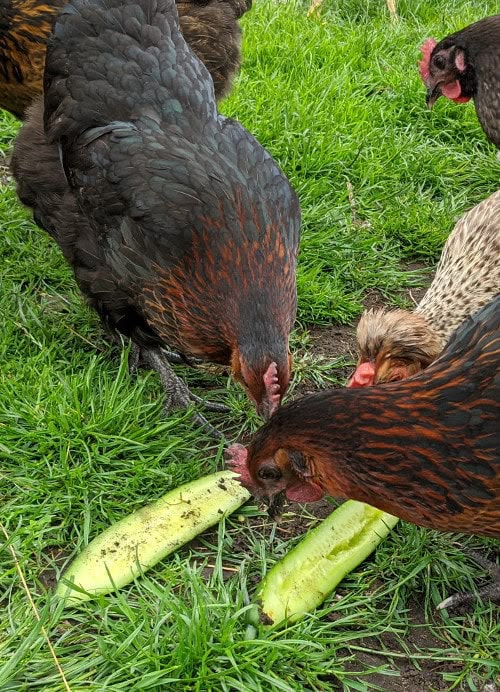
How to serve cucumber to chickens is refreshingly simple. Wash the cucumber, cut it into slices or halve it lengthways, and put it somewhere clean in the run, away from droppings and damp bedding. Hens peck at it happily, and a halved cucumber gives them something to work at, which is good enrichment on a dull day. Remove any uneaten pieces at the end of the day, especially in warm weather, so they do not go soft and attract flies.
If you have a small flock, one cucumber goes a long way. A few slices are plenty for a handful of hens, and you can keep the rest in the fridge for another day. There is no need to cook cucumber, mash it, or mix it with anything else for adult hens. For a simple summer serve, cucumber slices alongside fresh water are enough, and the hens will tell you quickly whether they like it, because most do.
Skin and Seeds. No Removal Step Needed
Can chickens eat cucumber skin? Yes, the skin is safe and there is no need to peel it. Can chickens eat cucumber seeds? Yes, the seeds are safe and there is no need to scoop them out. This is the point where cucumber is easier than many other foods, because the whole fresh cucumber, flesh, skin and seeds together, is the serve. Wash it first, as you would for your own kitchen, and then serve it whole in slices or halves.
Can chickens eat cucumber peel? That is the same question as skin, and the answer is the same, yes, as long as the cucumber itself is fresh and washed. The only peel to be careful about is peel from a cucumber that has been sprayed, because garden sprays are a separate issue from the cucumber itself. If you are unsure whether a cucumber has been sprayed, peel it or use a different cucumber, and keep the serve simple.
Cucumber in Hot Weather. A Cooling Treat, Not a Meal
Cucumber for chickens in hot weather is where this treat really earns its place. Hens do not sweat, so they cool themselves by panting and by drinking, and a watery treat like cucumber adds a little extra fluid while they peck. It will not replace drinking water, and fresh water must always be available, but on a hot afternoon a few cool slices are a welcome extra. Cucumber vs watermelon for chickens is a fair comparison, because both are watery summer treats, and both follow the same rule, which is treats in moderation, layer feed first, water always available.
Best hydrating treats for hens are not a competition, because the best treat is the one your hens enjoy and that fits the treat rule. Cucumber is a good one because it is cheap, easy to prepare, and low in anything that would upset a hen. Do not rely on cucumber alone to keep hens cool in a heatwave. Shade, ventilation, and fresh water matter far more, and cucumber is only a pleasant extra on top of those basics.
Cucumber Leaves. Young and Untreated Only
Cucumber leaves are a narrow point, and it is worth stating it exactly. Young leaves from untreated plants are Safe in our checker, but that does not expand into a general claim about cucumber plants. Leaves from sprayed garden plants should not be offered, and older tough leaves are not a useful treat either. If you grow cucumbers without sprays, a few young leaves are fine. If you do not know the spray history, skip the leaves and stick to the cucumber itself.
This is a good example of why the checker note matters. A broad claim like cucumber plants are safe would be misleading, because sprays change the picture completely. Keep the leaves rule narrow, young and untreated only, and you will stay on safe ground.
Pickles Are Not the Same Food
Can chickens eat pickles? No, and this is the one warning to state plainly, because searchers confuse the two. Pickled cucumber in brine or vinegar is a different food from fresh cucumber. It is salty and acidic, and salt in particular is a problem for hens in any quantity beyond what is already in their feed. Do not serve pickles, gherkins in brine, or cucumber pickled in vinegar as a chicken treat, even in small amounts.
If a hen steals a tiny piece of pickle, do not panic, but do not make it a habit either. Remove the pickle, offer fresh water, and go back to fresh foods. The safe version is always the fresh cucumber itself, washed and served in slices or halves, with nothing added.
How Much and How Often
How much cucumber can chickens eat? The treat rule gives the answer, which is about 10 percent or less of the diet, and cucumber counts inside that allowance, not on top of it. In practice, a few slices for a small flock, a few times a week in summer, is plenty. Daily cucumber in large amounts would crowd out layer feed, and that is the real risk, not the cucumber itself.
How often can chickens eat cucumber? A few times a week in hot weather is a sensible rhythm, and less often in cooler weather when hens do not need a cooling treat. Watch the droppings and the feed bowl. If hens are leaving their layer feed untouched, treats are too generous, whatever the treat is. Scale back, and the balance rights itself quickly.
Can Baby Chicks Eat Cucumber
Can baby chicks eat cucumber? Not as day old chicks, and not as their first food. Baby chicks follow the same position as our baby chick treats guide, which is starter feed first, treats wait until chicks are a couple of weeks old and eating confidently, with chick grit available. Soft cucumber in small pieces fits that rule once chicks reach that stage, because it is soft, easy to peck, and not a choking shape when cut small.
For chicks, cut the cucumber smaller than you would for adults, offer only a little, and remove uneaten pieces promptly. Keep starter feed as the main food, and keep chick grit available so chicks can grind any treat properly. If chicks are not yet eating confidently, wait. There is no rush, and starter feed gives them everything they need at that age.
FAQs
Can chickens eat cucumber skin and seeds?
Yes, both are safe in fresh cucumber. Serve it in slices or halved lengthways, skin and seeds included, with no separate removal step. Wash the cucumber first, and peel it only if you are unsure about sprays.
How do you serve cucumber to chickens in hot weather?
Wash it, cut it into slices or halve it lengthways, and put it in a clean spot in the run alongside fresh water. It is a cooling treat, not a meal, and it never replaces shade, ventilation, or drinking water.
Can chickens eat pickles or cucumber in vinegar?
No. Pickled cucumber in brine or vinegar is salty and acidic and should not be served as a chicken treat. The safe version is fresh cucumber only, with nothing added.
Can baby chicks eat cucumber?
Once chicks are a couple of weeks old and eating confidently, with chick grit available, soft cucumber in small pieces is fine. Before that, starter feed first, and no treats yet.
How much cucumber can chickens eat?
Keep treats at about 10 percent or less of the diet, cucumber included. A few slices for a small flock, a few times a week in summer, is plenty. If hens start leaving their layer feed, treats are too generous, so scale back.
For another fruit treat, see Can Chickens Eat Grapes? The One Prep Step That Matters.
