
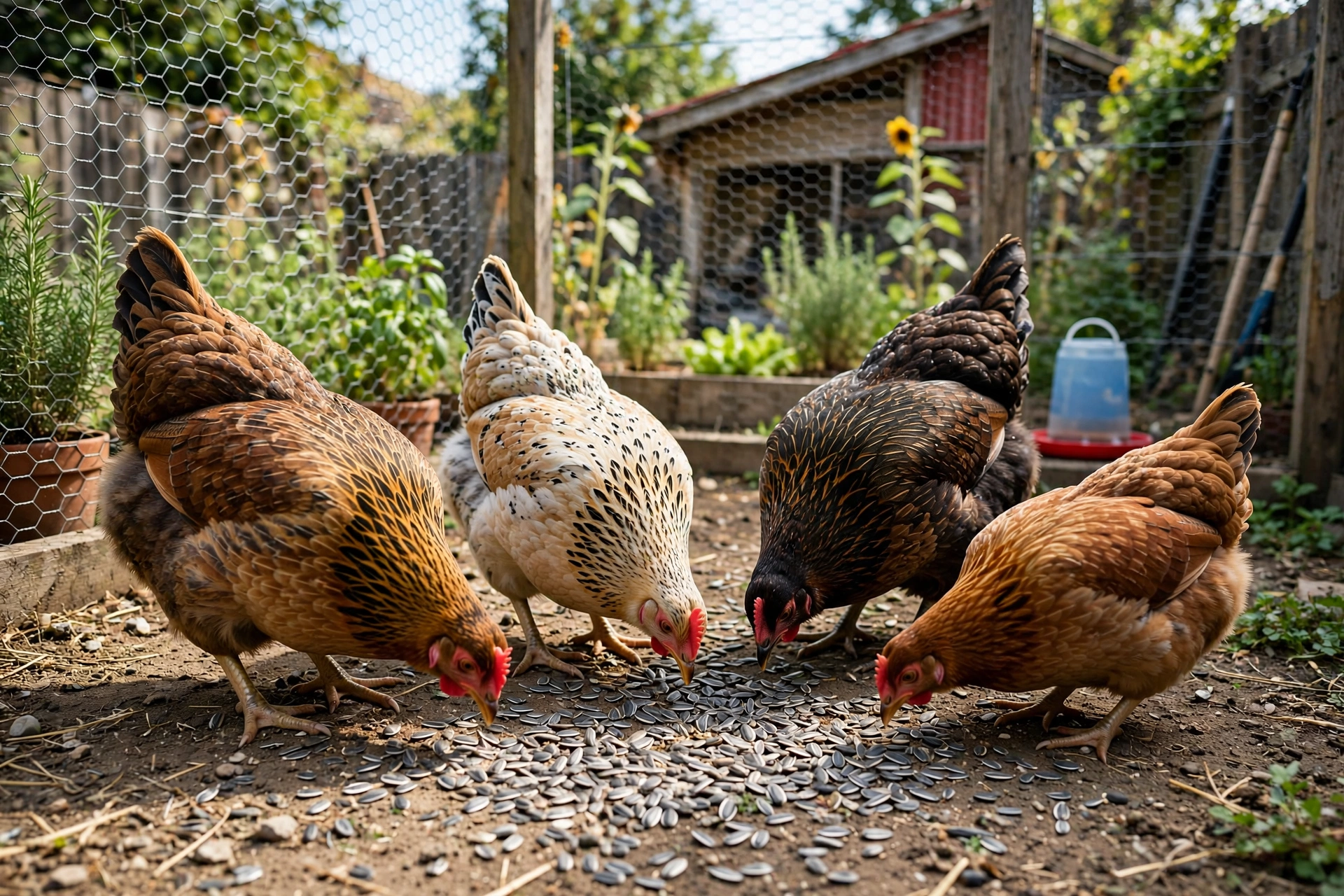
Yes, chickens can eat sunflower seeds, with or without the shell, but shelled seeds are better, because the shell is mostly fibre and the hens waste energy cracking it, and the amount matters more than the shell, because sunflower seeds are high in fat and the 10 percent treat rule caps them. The spine of this guide is simple, black oil sunflower seeds are better than striped seeds, with thinner shells and more oil, and salted seeds are never safe, and a small handful, once in a while, is plenty. This guide covers the shell question, black oil versus striped, how much to give, and the salted seed rule.
Table of Contents
- The Short Answer. Yes, Shelled Is Better
- With or Without the Shell. What the Shell Does
- Black Oil Versus Striped Seeds. Black Oil Wins
- Are Sunflower Seeds Good for Chickens
- Salted Seeds. Never Safe
- How Many Sunflower Seeds and How Often
- Sunflower Seeds in the Treat Rule
- Sunflower Seeds and Grit. Why Grit Matters
- Baby Chicks and Sunflower Seeds. The Hard Rule
- FAQs
Sunflower seeds are safe with or without the shell, but shelled seeds are better, and the amount matters more than the shell, because the seeds are high in fat.
The shell is mostly fibre, and the hens waste energy cracking it, so shelled seeds are better, and black oil seeds are better than striped, with thinner shells and more oil.
A small handful per hen, once or twice a week, inside the 10 percent treat rule. Too many means too much fat and less room for layer feed.
The Short Answer. Yes, Shelled Is Better
Yes, chickens can eat sunflower seeds, with or without the shell, but shelled seeds are better, because the shell is mostly fibre and the hens waste energy cracking it, and the amount matters more than the shell, because sunflower seeds are high in fat and the 10 percent treat rule caps them. Black oil sunflower seeds are better than striped seeds, with thinner shells and more oil, and salted seeds are never safe, because too much salt is bad for hens. A small handful per hen, once or twice a week, is plenty, and the hens will love the seeds, because they are oily and tasty, and they are good enrichment, scattered in the run, where the hens have to scratch and peck to find them. The rule is simple. Shelled black oil seeds, unsalted, in small amounts, once in a while, is the safe choice.

With or Without the Shell. What the Shell Does
Sunflower seeds are safe with or without the shell, but shelled seeds are better, because the shell is mostly fibre and the hens waste energy cracking it. A sunflower seed shell is mostly fibre, and it has almost no nutrition, and the hen has to crack it to get to the seed inside, which wastes energy, and the shell can be hard to digest, and it can cause a crop impaction if the hen eats too many shells at once. Shelled seeds are better, because the hen gets the seed straight away, without wasting energy cracking the shell, and without the risk of a crop impaction, and the seeds are easier to digest, and the hens get more nutrition from them. Hens can eat seeds with the shell, and they will crack them, and they will enjoy it, and it is good enrichment, because it keeps them busy, but shelled seeds are better, because they are easier, safer, and more nutritious. The rule is simple. If you can buy shelled seeds, buy shelled seeds. If you can only buy seeds with the shell, give them in small amounts, and make sure the hens have grit, so they can grind the shells in their gizzard.
Black Oil Versus Striped Seeds. Black Oil Wins
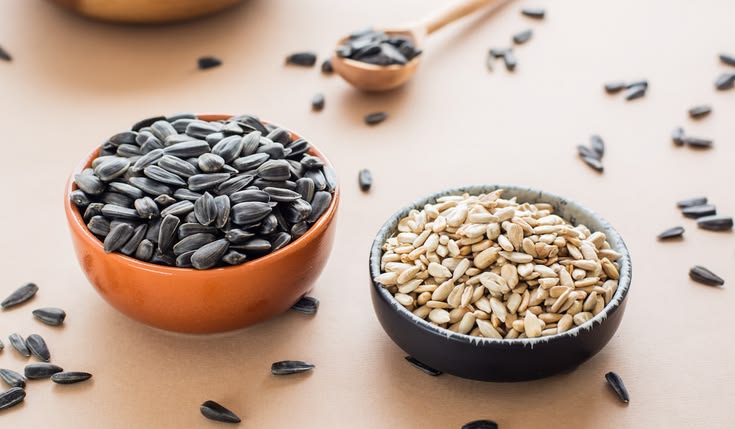
Black oil sunflower seeds are better than striped seeds, with thinner shells and more oil, and they are the kind to buy when you buy sunflower seeds for chickens. Black oil seeds have a thin shell, which is easy to crack, and they have more oil, which is good for the hens’ feathers and for egg laying, and they are smaller, so the hens can eat them whole, without struggling. Striped seeds have a thick shell, which is hard to crack, and they have less oil, and they are larger, so the hens have to work harder to eat them, and they get less nutrition from them. The price is the trade off. Black oil seeds cost more than striped seeds, because they are better, but they are worth it, because the hens get more from them, and they waste less energy cracking them. The rule is simple. Buy black oil seeds when you can, and buy striped seeds only if black oil seeds are not available, and give them in small amounts, with grit, so the hens can grind the shells.

Are Sunflower Seeds Good for Chickens
Sunflower seeds are good for chickens as a treat, because they are high in oil, protein and vitamin E, and they are good for feathers and for egg laying, but they are not good as a food, because they are high in fat, and too much fat makes the hens fat, and fat hens lay fewer eggs, with thinner shells, because they are not getting enough of what they need from their layer feed. Sunflower seeds are high in oil, which is good for the hens’ feathers, making them shiny and healthy, and they are high in protein, which is good for egg laying, and they are high in vitamin E, which is good for the hens’ immune system. But sunflower seeds are also high in fat, and too much fat makes the hens fat, and fat hens lay fewer eggs, with thinner shells, because they are not getting enough of what they need from their layer feed. The rule is simple. Sunflower seeds are good as a treat, in small amounts, once in a while, inside the 10 percent treat rule, but they are not good as a food, because they are too high in fat to be a main food.
Salted Seeds. Never Safe
Salted seeds are never safe, because too much salt is bad for hens, and salted sunflower seeds have a lot of salt. A hen needs only a tiny amount of salt, and too much salt makes her thirsty, and it makes her drink too much water, and it gives her loose droppings, and it can damage her kidneys. Salted sunflower seeds are coated in salt, so a small handful is a large amount of salt, and that is bad for the hens. The seeds sold for people to eat are usually salted, and they should never be fed to chickens, because they are too salty, and they will make the hens sick. Buy unsalted seeds, always, and check the bag, because some seeds are salted and some are not, and the salted ones look the same as the unsalted ones, until you taste them. The rule is simple. Unsalted seeds only, never salted, and if you are not sure whether the seeds are salted, do not feed them to the hens.
How Many Sunflower Seeds and How Often
A small handful per hen, once or twice a week, inside the 10 percent treat rule, is the right amount. Sunflower seeds are high in fat, and the amount matters, because too many seeds means too much fat, and fat hens lay fewer eggs, with thinner shells, because they are not getting enough of what they need from their layer feed. A small handful, about a tablespoon per hen, once or twice a week, is plenty, and the hens will love the seeds, because they are oily and tasty, and they are good enrichment, scattered in the run, where the hens have to scratch and peck to find them. Too many seeds means loose droppings, because the seeds are high in fat, and they dilute the layer feed that makes eggs. A hen that eats too many sunflower seeds will lay fewer eggs, with thinner shells, because she is eating less calcium, and she is gaining weight, which is bad for laying. The rule is simple. A small handful, once or twice a week, inside the 10 percent treat rule, and never as a meal, never as a food.
Sunflower Seeds in the Treat Rule
Sunflower seeds sit inside the 10 percent treat rule, and the rule is the thing that keeps treats from becoming a problem. The rule is simple. Treats, including sunflower seeds, kitchen scraps, mealworms and fruit, should stay under a tenth of what the flock eats in a day. The other nine tenths should be layer feed, which is balanced for egg laying, with the right protein, the right calcium and the right vitamins. A hen that eats too many treats will lay fewer eggs, with thinner shells, because she is not getting enough of what she needs. Sunflower seeds are a good treat inside the rule, because they are high in oil and protein, so they give the hens energy and nutrition, but they are still a treat, and they still count toward the tenth, so keep the amount small and the frequency low. Our guide to rice covers the treat rule in full, because rice is the other treat that fills the crop without feeding the bird, and the same rule applies there, because rice and sunflower seeds are both treats with the same strengths and the same limits. Our guide to mealworms covers protein treats, and sunflower seeds are a protein treat too, with the same amounts and the same rule, because mealworms and sunflower seeds are both high in protein and high in fat, and both need to stay small.
Sunflower Seeds and Grit. Why Grit Matters
Sunflower seeds need grit, because the hens need grit to grind the seeds in their gizzard, and without grit, the seeds will not digest properly. A hen’s gizzard is a muscular stomach that grinds food, and it needs grit, small stones, to grind the food, and without grit, the food will not grind, and it will pass through undigested, and the hen will not get the nutrition from it. Sunflower seeds with the shell need grit even more, because the shell is hard, and it needs to be ground, and without grit, the shell will sit in the crop, and it can cause a crop impaction, which is when the crop gets blocked, and the hen cannot eat, and she can die. Make sure the hens always have grit available, in a separate dish, so they can take what they need, and offer sunflower seeds only when the hens have grit, because without grit, the seeds are a risk, not a treat.
Baby Chicks and Sunflower Seeds. The Hard Rule
Never feed sunflower seeds to baby chicks, because chicks need starter feed, not sunflower seeds, and sunflower seeds will make them sick. Chicks under 18 weeks old should eat only starter feed, because they need the protein and the balanced nutrition to grow, and sunflower seeds have almost none of that, and they are high in fat, and a chick’s gut cannot handle them, so they will give the chick loose droppings and a sore gut, and they will stop the chick from eating its starter feed, which is what it needs to grow. Sunflower seeds with the shell are even worse for chicks, because a chick cannot crack the shell, and it can choke on it, and the shell can block its crop, and it can die. Wait until the chicks are 18 weeks old and starting to lay, and then offer a tiny amount of shelled sunflower seeds, once in a while, as a treat, and the pullets will enjoy them, and they will not get sick.
FAQs
Can chickens eat sunflower seeds.
Yes, chickens can eat sunflower seeds, with or without the shell, but shelled seeds are better, because the shell is mostly fibre and the hens waste energy cracking it. Black oil seeds are better than striped, with thinner shells and more oil, and salted seeds are never safe.
Can chickens eat sunflower seeds with shells.
Yes, but shelled seeds are better, because the shell is mostly fibre, and the hens waste energy cracking it, and the shell can cause a crop impaction if the hen eats too many shells at once. Give seeds with the shell only in small amounts, and make sure the hens have grit, so they can grind the shells in their gizzard.
Can baby chicks eat sunflower seeds.
No, never feed sunflower seeds to baby chicks, because chicks need starter feed, not sunflower seeds, and sunflower seeds will make them sick. Wait until the chicks are 18 weeks old and starting to lay, and then offer a tiny amount of shelled sunflower seeds, once in a while, as a treat.
Are sunflower seeds good for chickens.
Sunflower seeds are good as a treat, because they are high in oil, protein and vitamin E, and they are good for feathers and for egg laying, but they are not good as a food, because they are high in fat, and too much fat makes the hens fat, and fat hens lay fewer eggs.
Can chickens eat black oil sunflower seeds.
Yes, black oil sunflower seeds are the best kind, with thinner shells and more oil than striped seeds, and they are smaller, so the hens can eat them whole, without struggling. Buy black oil seeds when you can, and give them unsalted, in small amounts, once or twice a week.
If your hens keep flying over the fence after a treat, read our guide on how to stop chickens flying over the fence without clipping wings.
Keep Reading

Nusrat
Author, TheChickenPet.com