
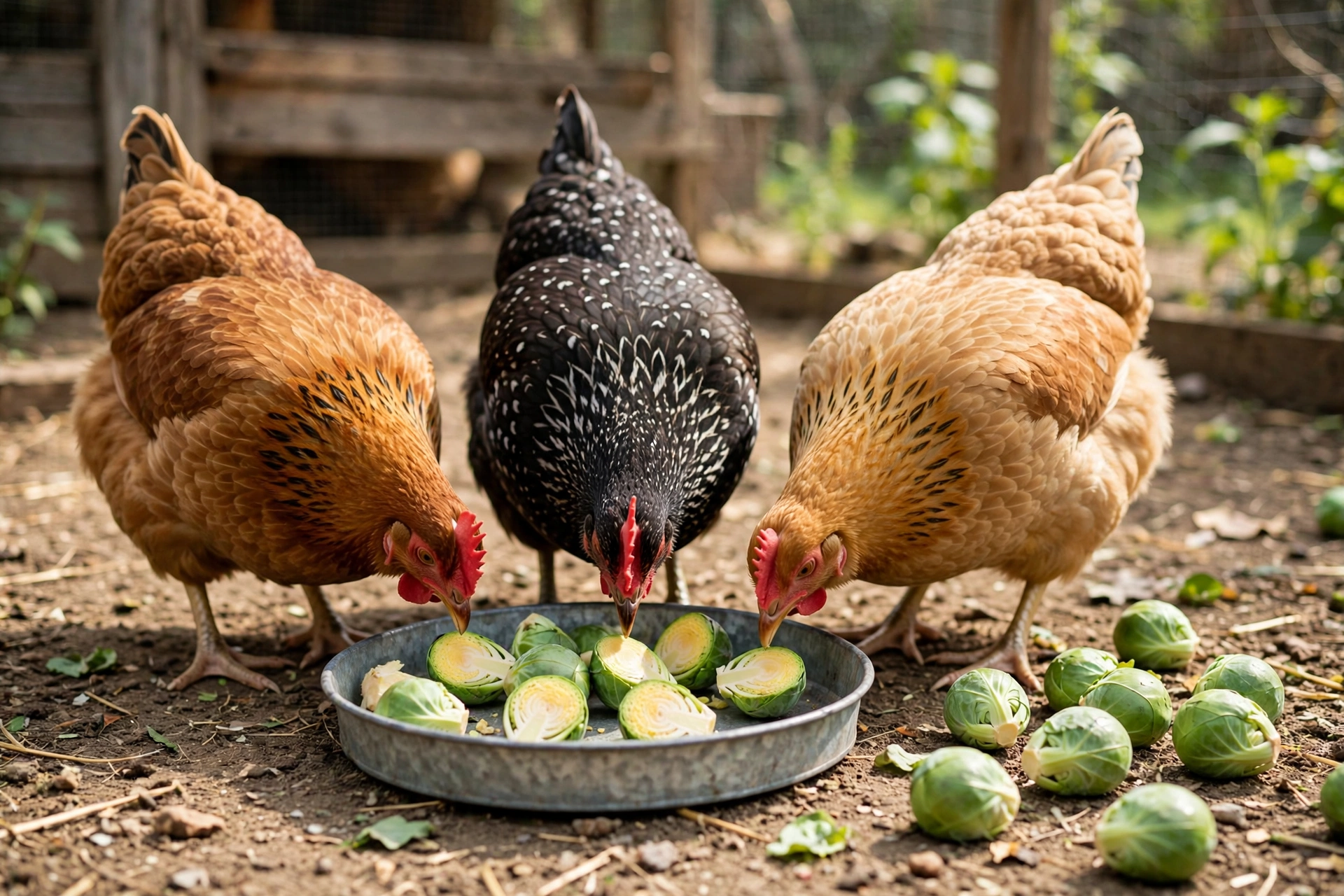
Yes, chickens can eat brussels sprouts, and they are safe, halved raw or lightly cooked, a few pieces per bird two to three times a week, with the goitrogen moderation point as the only real rule, and cooked is usually accepted better than raw, and the bare stalk makes a pecking toy, and the only hard rules are that butter, salt and seasoning are out, and that the sprouts are served plain. Brussels sprouts are the brassica the other pages only list, and this guide gives the real serving answer, halved raw or lightly cooked, a few pieces per bird, and it explains the goitrogen point, and the stalk trick, and how many to give.
Table of Contents
- The Short Answer. Yes, Halved Raw or Lightly Cooked
- Are Brussels Sprouts Good for Chickens
- Raw or Cooked. Cooked Is Usually Accepted Better
- How Many Brussels Sprouts and How Often
- Brussels Sprouts and the Goitrogen Rule
- The Stalk Makes a Pecking Toy
- Brussels Sprouts in the Treat Rule
- What Never to Serve With Them
- Baby Chicks and Brussels Sprouts. The Hard Rule
- FAQs
Brussels sprouts are safe for chickens, halved raw or lightly cooked, a few pieces per bird two to three times a week, with the goitrogen moderation point as the only real rule.
Cooked is usually accepted better than raw, because cooking softens the sprouts, and it makes them easier to peck, and it takes the bitter edge off.
A few pieces per bird, about 2 to 3 halved sprouts, two to three times a week, inside the 10 percent treat rule.
The Short Answer. Yes, Halved Raw or Lightly Cooked
Yes, chickens can eat brussels sprouts, and they are safe, halved raw or lightly cooked, a few pieces per bird two to three times a week, with the goitrogen moderation point as the only real rule, and cooked is usually accepted better than raw, and the bare stalk makes a pecking toy. Brussels sprouts are the brassica the other pages only list, and this guide gives the real serving answer, halved raw or lightly cooked, a few pieces per bird, and it explains the goitrogen point, and the stalk trick, and how many to give.
Our guide to cabbage covers the goitrogen moderation point, and the hanging enrichment angle, and it explains why brassicas need moderation, and how to serve them.
The rule is simple. Halved raw or lightly cooked, plain, a few pieces per bird, two to three times a week, inside the 10 percent treat rule, is the safe choice.
Are Brussels Sprouts Good for Chickens
Brussels sprouts are good for chickens as a treat, because they are high in vitamin C, and vitamin K, and fibre, and they are low in calories, so a few pieces will not make a hen fat, and they are a good source of antioxidants, which help the immune system.
Brussels sprouts are also a good winter treat, because they are in season when the garden is bare, and they give the hens something green to peck, and they help hydration, because they are high in water, and they are firm, so they last longer in the dish than soft fruit.
But brussels sprouts are also brassicas, and brassicas carry goitrogens, which can slow the thyroid if a hen eats too many, so the amount matters, and the frequency matters, and a few pieces two to three times a week is plenty.
Our guide to broccoli covers the other brassica, and it explains the same goitrogen point, and why brassicas are safe in moderation.
The rule is simple. Brussels sprouts are good as a treat, in small amounts, two to three times a week, inside the 10 percent treat rule, but they are not good as a food, because too many brassicas can slow the thyroid.
Raw or Cooked. Cooked Is Usually Accepted Better
Cooked is usually accepted better than raw, because cooking softens the sprouts, and it makes them easier to peck, and it takes the bitter edge off, and hens will eat a cooked sprout happily when they ignore a raw one.
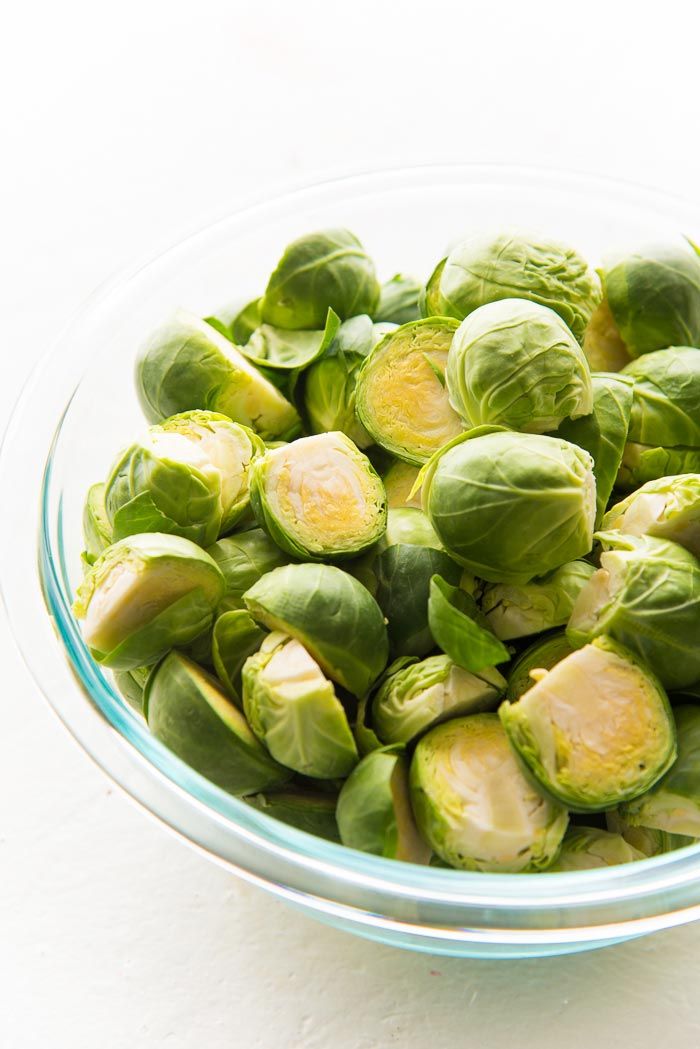
Raw sprouts are safe, halved, because a whole sprout is too big, and too hard, and a hen can choke on it, and she will ignore it, and it will rot in the run, so always halve a raw sprout, or quarter a big one, and serve the pieces in a dish, or scattered on the ground.
Lightly cooked sprouts are best, steamed or boiled until just soft, with no salt, and no butter, and no seasoning, and then cooled, and halved, and served in a dish, or scattered on the ground, and the hens will eat them happily, because they are soft, and mild, and easy to peck.
Never serve sprouts raw and whole, because they are too big, and too hard, and a hen can choke, and never serve sprouts fried, or roasted in oil, or buttered, or seasoned, because the fat and the salt are bad for hens.
Our guide to cauliflower covers the other brassica, and the brassica family, and it explains why brassicas are safe in moderation, and how to serve them.
The rule is simple. Halved raw is safe, lightly cooked is better, and never whole, never fried, never buttered, never seasoned.
How Many Brussels Sprouts and How Often
A few pieces per bird, about 2 to 3 halved sprouts, two to three times a week, inside the 10 percent treat rule, is the right amount.
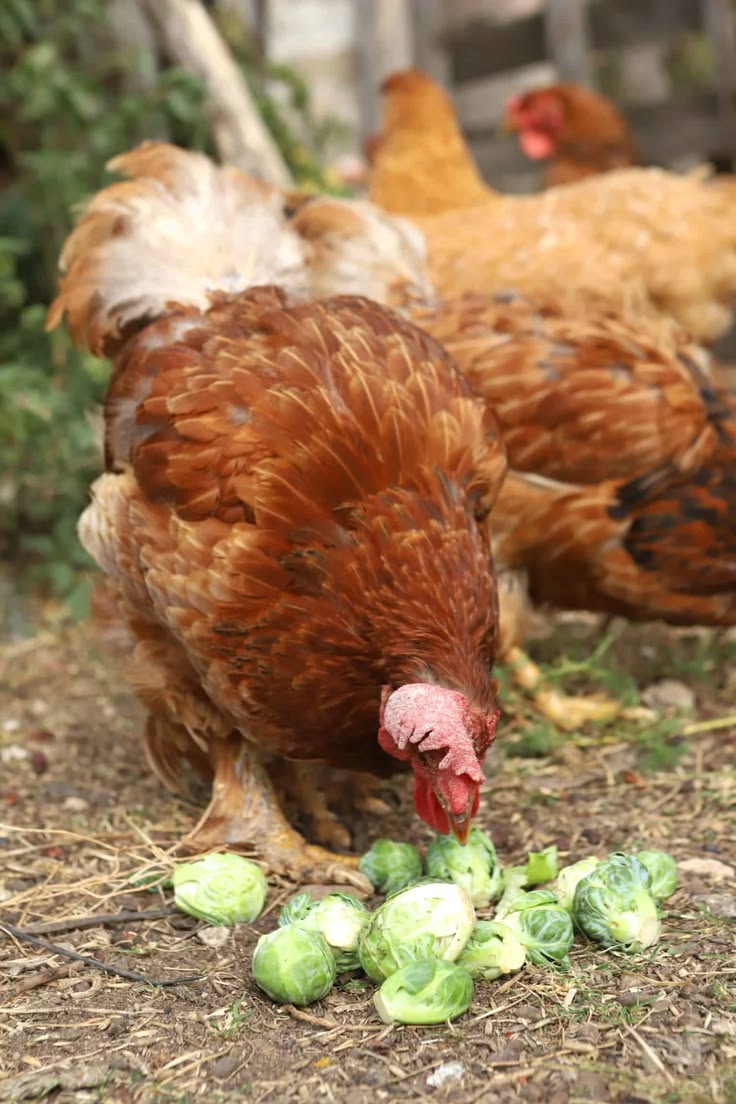
Brussels sprouts are brassicas, and the amount matters, because too many brassicas means too many goitrogens, and goitrogens can slow the thyroid, and a slow thyroid means fewer eggs, and a hen that is off her feed, so keep the amount small and the frequency low.
Two to three halved sprouts per bird, two to three times a week, is plenty, and the hens will love the sprouts, because they are firm, and mild, and fun to peck, and they will get the vitamins they need, without too many goitrogens.
Too many sprouts means loose droppings, because the sprouts are high in fibre, and they dilute the layer feed that makes eggs.
A hen that eats too many brussels sprouts will lay fewer eggs, with thinner shells, because she is eating less calcium, and she is gaining weight, which is bad for laying.
The rule is simple. Two to three halved sprouts per bird, two to three times a week, inside the 10 percent treat rule, and never as a meal, never as a food.
Brussels Sprouts and the Goitrogen Rule
Brussels sprouts carry goitrogens, and goitrogens can slow the thyroid if a hen eats too many brassicas, so the goitrogen rule is the thing that limits them.
Goitrogens are natural compounds in brassicas, and they block the thyroid from using iodine, and the thyroid is the thing that controls egg laying, and growth, and energy, so a hen that eats too many brassicas will lay fewer eggs, and she will be slow, and off her feed.
Cooking lowers the goitrogens, because heat breaks them down, so a lightly cooked sprout is safer than a raw one, and that is another reason cooked is usually accepted better than raw.
The rule is simple. A few pieces, two to three times a week, lightly cooked when you can, and never a daily brassica habit, and the thyroid will stay fine.
Our guide to cabbage covers the goitrogen moderation point in full, and it explains why brassicas need moderation, and how to serve them safely.
The Stalk Makes a Pecking Toy
The bare stalk makes a pecking toy, because a brussels sprout stalk is long, and firm, and it can hang from a string, and the hens will peck at it for hours, and it keeps them busy, and it stops boredom, and it stops pecking each other.
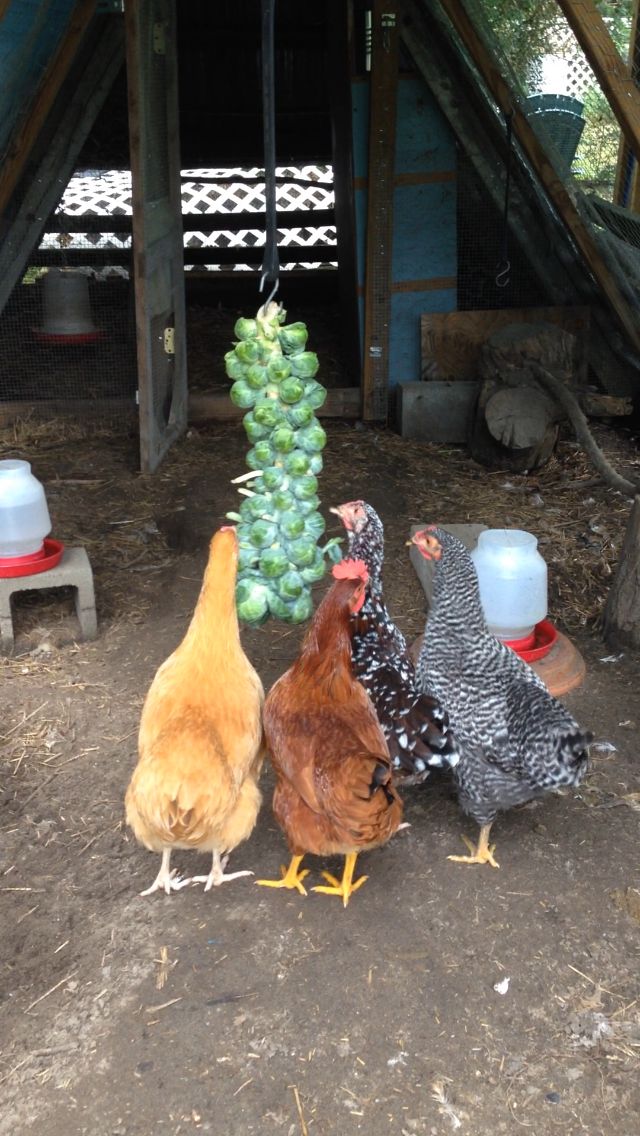
Hang the stalk from a string in the run, at head height, with a few sprouts still on it, and the hens will peck at the sprouts, and they will jump, and they will stretch, and they will get exercise, and they will stay busy, and they will not peck each other.
The stalk is not food, and the hens will not eat it, because it is woody, and tough, and they will peck the sprouts off it, and leave the bare stalk, and you can take the stalk away when the sprouts are gone, and compost it.
The rule is simple. Hang the stalk, let the hens peck the sprouts off it, and take the bare stalk away when it is done.
Brussels Sprouts in the Treat Rule
Brussels sprouts sit inside the 10 percent treat rule, and the rule is the thing that keeps treats from becoming a problem.
The rule is simple. Treats, including brussels sprouts, kitchen scraps, mealworms and fruit, should stay under a tenth of what the flock eats in a day.
The other nine tenths should be layer feed, which is balanced for egg laying, with the right protein, the right calcium and the right vitamins.
A hen that eats too many treats will lay fewer eggs, with thinner shells, because she is not getting enough of what she needs.
Brussels sprouts are a good treat inside the rule, because they are firm, and mild, and fun to peck, and they give the hens vitamins, but they are still a treat, and they still count toward the tenth, so keep the amount small and the frequency low.
Our guide to what chickens can eat covers the whole treat rule, and the foods that are safe, and the foods that are not, and it explains why the tenth matters.
The rule is simple. A few pieces, two to three times a week, inside the tenth, and never as a meal, never as a food.
What Never to Serve With Them
Never serve brussels sprouts with butter, or salt, or seasoning, because butter is high in fat, and salt is bad for hens, and seasoning can upset a hen’s stomach, and the sprouts must be plain, always.
Never serve sprouts in a creamy sauce, or in a cheese sauce, or in a bacon dish, because the sauce is high in fat, and salt, and it will make the hens sick, with loose droppings, and with a sore gut.
Never serve sprouts that are mouldy, or soft, or smelly, because mould makes toxins, and a mouldy sprout can make a hen sick, and even a little mould can kill a hen, so throw a mouldy sprout away, and never feed it.
Never serve the sprouts straight from the fridge, cold, because they are hard, and cold, and the hens will not eat them, and they can chill a hen on a cold day, so let them come to room temperature first, or warm them lightly.
The rule is simple. Plain only, never buttered, never salted, never seasoned, never mouldy, never cold from the fridge.
Baby Chicks and Brussels Sprouts. The Hard Rule
Never feed brussels sprouts to baby chicks, because chicks need starter feed, not brussels sprouts, and brussels sprouts will make them sick.
Chicks under 18 weeks old should eat only starter feed, because they need the protein and the balanced nutrition to grow, and brussels sprouts have almost none of that, and they are firm, and fibrous, and a chick’s gut cannot handle them, so they will give the chick loose droppings and a sore gut, and they will stop the chick from eating its starter feed, which is what it needs to grow.
Brussels sprouts are also too big for a chick to eat, and too hard, and they can choke on them, and the sprouts can block their crop, and they can die.
Wait until the chicks are 18 weeks old and starting to lay, and then offer a tiny amount of brussels sprouts, one small halved piece, once in a while, as a treat, and the pullets will enjoy them, and they will not get sick.
FAQs
Can chickens eat brussels sprouts.
Yes, chickens can eat brussels sprouts, and they are safe, halved raw or lightly cooked, a few pieces per bird two to three times a week, with the goitrogen moderation point as the only real rule, and cooked is usually accepted better than raw.
Can chickens eat brussel sprouts cooked.
Yes, lightly cooked sprouts are best, steamed or boiled until just soft, with no salt, and no butter, and no seasoning, and then cooled, and halved, and served in a dish, or scattered on the ground. Cooking softens the sprouts, and it lowers the goitrogens.
Are brussels sprouts good for chickens.
Yes, brussels sprouts are good as a treat, because they are high in vitamin C, and vitamin K, and fibre, and they are low in calories, and they are a good winter treat, when the garden is bare. But they are not good as a food, because too many brassicas can slow the thyroid.
Can chickens eat sprout stalks.
The stalk itself is not food, but it makes a pecking toy. Hang the stalk from a string in the run, at head height, with a few sprouts still on it, and the hens will peck the sprouts off it for hours. Take the bare stalk away when the sprouts are gone.
Can baby chicks eat brussels sprouts.
No, never feed brussels sprouts to baby chicks, because chicks need starter feed, not brussels sprouts, and brussels sprouts will make them sick. Wait until the chicks are 18 weeks old and starting to lay, and then offer one small halved piece, once in a while, as a treat.
Our guide to yogurt covers the other dairy treat, and it explains which kind is safe, and how much to give.
Keep Reading

Nusrat
Author, TheChickenPet.com