

Chicken Care and Health
Yes, chickens can eat chickpeas, but only when they are fully cooked, and only as an occasional treat. Chickpeas are a real feed ingredient, rich in protein and fibre, and hens usually love them. The catch is the cooking. Raw dried chickpeas are hard, full of lectins, and difficult for a hen to digest, so they must be soaked and boiled until soft before they ever reach the run. Cook them properly, mash or split them, and a small handful per bird is a fine protein treat. Serve them raw from the bag, and you are asking for an upset crop and a poorly hen.
Table of Contents
- The Short Answer. Yes, Cooked Only
- What the Food Checker Says. Caution for Cooked Chickpeas
- Why Raw Chickpeas Are a Problem. Lectins and Hard Beans
- Cooked, Canned, Dried, or Roasted. Which Chickpeas Are Safe
- How to Serve Chickpeas. Cook, Mash, Scatter
- How Much and How Often. A Small Handful, Rarely
- The Hummus Trap. Why Hummus Is Not the Same Food
- Chickpeas vs Peas. The Legume Cousins
- Can Baby Chicks Eat Chickpeas. Wait Until Four Weeks
- What If a Hen Eats Raw Chickpeas. What to Watch For
- FAQs
At a Glance
Chickpeas are a Caution food for chickens, not a free treat. Serve them fully cooked, mashed or split, a small handful per bird, a few times a week at most. Raw dried chickpeas are never served. Always keep treats under about 10 percent of the daily diet.
The Cooking Rule
Raw dried chickpeas carry lectins, natural compounds that make raw legumes hard to digest. Soaking and boiling until soft destroys the lectins, which is why the checker says cooked only. Canned chickpeas are already cooked, so they only need a rinse and a mash.
The Other Name
Chickpeas are also called garbanzo beans, and it is the same food under both names. Every rule in this article applies to garbanzo beans exactly as it applies to chickpeas.
The Short Answer. Yes, Cooked Only
Can chickens eat chickpeas. Yes, they can, and most hens will eat them happily. A chickpea is soft once cooked, easy to peck apart, and packed with protein, fibre, folate, and iron. But chickpeas are a Caution food on our own food checker, not a Safe one, and the difference matters. A Safe food can be a regular treat. A Caution food needs a rule, and the rule here is short. Cook them fully, mash or split them, and serve a small handful per bird.
The rule is short enough to remember. Soak dried chickpeas overnight, boil them until they squash easily between your fingers, let them cool, and then mash or split them before scattering. Canned chickpeas skip the soaking and boiling, because the canning already cooked them, but they still need a rinse and a mash. Do that, and chickpeas are a fine occasional treat. Hand out hard dried chickpeas straight from the bag, and you are feeding your hens a food their gizzards cannot handle properly.

What the Food Checker Says. Caution for Cooked Chickpeas
Our homepage food checker gives chickpeas a clear answer, and it is worth quoting exactly, because the checker is the same tool readers use on the site. For “cooked chickpeas” the checker says CAUTION, with the note “Only fully cooked, mash or split”. That is a genuine entry in the checker, confirmed live on the homepage and matched against the checker’s own data file. If you want the full safe and toxic list, read our guide to what can chickens eat.
Cooked chickpeas. CAUTION. Only fully cooked, mash or split.
One honest point belongs here, because the checker can mislead on this food. If you type plain “chickpeas” into the checker, it shows SAFE with the note “Fresh, thawed or split, in or out of pod”. That note is the checker’s entry for peas, not chickpeas. The checker matched the word peas inside chickpeas, so that result is a fallback to the peas entry, not a verdict on chickpeas. The same fallback appears for “raw chickpeas”, “dried chickpeas”, and “chickpea”. So this article does not present chickpeas as a Safe food. It follows the genuine cooked chickpeas entry, Caution, cooked only, and every raw, dried, roasted, and flour rule in this article is the article’s own guidance, marked as such, not a checker verdict.
The checker also has a genuine entry for hummus, which matters because hummus is made from chickpeas. For “hummus” the checker says CAUTION, with the note “Contains garlic and lemon, small amounts only”. That entry is covered in full in the hummus section below.
Hummus. CAUTION. Contains garlic and lemon, small amounts only.
Rows marked no checker entry are this article’s own guidance, not checker verdicts. The cooked chickpeas and hummus rows are the genuine checker entries.
Why Raw Chickpeas Are a Problem. Lectins and Hard Beans
Are chickpeas safe for chickens when they are raw. No, and the reason is chemistry, not taste. Raw dried chickpeas, like other raw beans and legumes, contain lectins and trypsin inhibitors. These are natural compounds the plant uses to protect its seeds, and they make raw legumes hard to digest. A hen that eats raw dried chickpeas has to work hard to break them down, and the lectins can irritate the gut and block the absorption of protein. The result is usually loose droppings and a hen that feels off, and in a big enough amount it can mean a genuinely poorly bird.
Cooking solves the problem completely. Soaking draws water into the bean, and boiling breaks the lectins down, which is why every bean and legume rule in poultry keeping ends the same way. Cook them first. The same principle runs through the whole feeding series, and it is the reason green beans must be cooked before serving too. Heat is what turns a hard, indigestible seed into a soft, useful food.
The hardness matters as well as the chemistry. A dried chickpea is a small, hard, round pellet, and a hen swallows her food whole. Hard pellets sit in the crop and need a lot of grinding in the gizzard, and a crop full of hard dry beans can swell as the beans slowly absorb moisture. Cooked chickpeas are soft, squash easily, and pass through without that effort, which is why the checker says mash or split as well as fully cooked. Soft food, small pieces, no struggle.
Cooked, Canned, Dried, or Roasted. Which Chickpeas Are Safe
Can chickens eat canned chickpeas. Yes, and canned chickpeas are the easiest way to serve them. The canning process already cooked the beans until soft, so they only need a rinse under cold water to wash off the salt in the brine, and then a quick mash or split with a fork. Choose plain canned chickpeas in water or brine, never ones in a flavoured sauce, and check the tin for added salt or sugar. Rinsed and mashed, they are ready in a minute.
Can chickens eat dried chickpeas. Only after cooking, never straight from the bag. Dried chickpeas need a long soak, usually overnight in cold water, and then a boil until they are completely soft, which takes around 45 minutes to an hour on the hob, or less in a pressure cooker. Test one by squashing it between your fingers. If it squashes easily, it is ready. If it still resists, keep cooking. Dried chickpeas are the cheapest way to buy them, and they keep for months in the cupboard, but they demand that hour of cooking, and there is no shortcut. Never offer them dry, and never offer them half cooked.
Can chickens eat roasted chickpeas. Shop bought roasted chickpeas are a snack food, not a chicken treat. They are almost always salted, and often coated in spices, chilli, or flavourings a hen does not need. Salt is the real problem, because hens need very little of it, and a salty snack can push their intake too high. If you roast plain cooked chickpeas at home with no salt and no seasoning, a few are fine, but there is no reason to bother. Plain cooked chickpeas, mashed, are better, and they are less work.
Chickpea flour, also sold as gram flour or besan, is not a treat at all. It is raw ground chickpea, so it carries the same lectin problem as raw beans, and a powder is no use to a hen in any case. It belongs in cooking, not in the run. Chickpea plants and leaves are not a usual treat either. The leaves are sometimes used as fodder in farming regions, but they are sour and not something backyard keepers offer, so stick to the cooked beans, which are the food this article is about.
How to Serve Chickpeas. Cook, Mash, Scatter
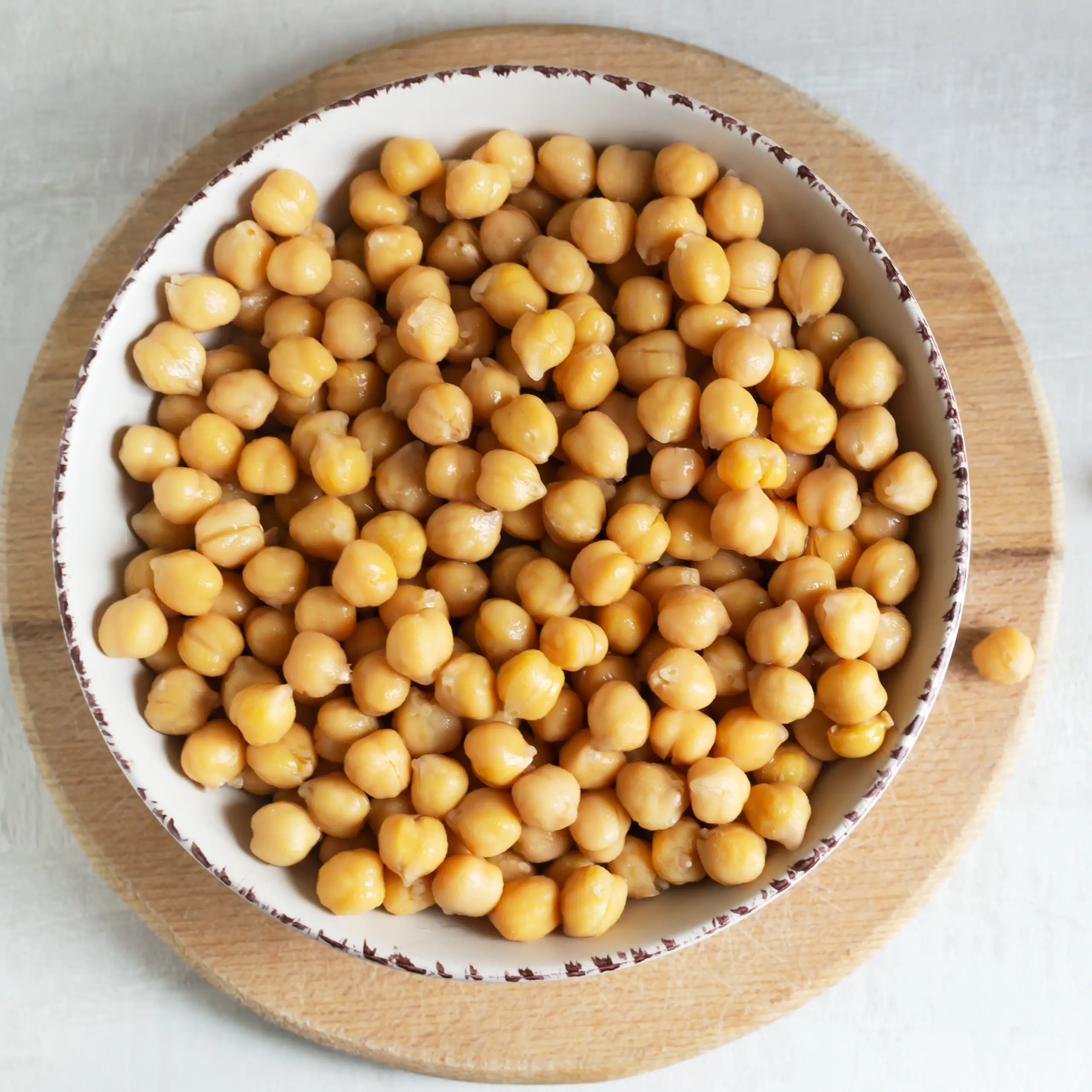
How to cook chickpeas for chickens is simple, and the steps are the same every time. If you are starting from dried chickpeas, soak them overnight in cold water, then drain, rinse, and boil them in fresh water until they squash easily. If you are starting from a tin, drain them, rinse them well under cold water, and skip the cooking. If you are starting from leftover cooked chickpeas from your own meal, check first that they are plain, with no salt, sauce, garlic, or seasoning, and then use them as they are.
Once they are cooked and cool, mash or split them. A fork does the job in seconds, and splitting each chickpea in half is enough. Whole cooked chickpeas are soft enough for a grown hen to manage, but mashing spreads the treat around, so every bird gets a share instead of one bold hen grabbing the lot. It also makes the pieces small enough for younger birds and stops a greedy hen swallowing too many whole ones at once.
Scatter the mashed chickpeas in a dish or on clean ground, the same scatter habit our guide to can chickens eat cabbage shows for another treat that needs prep. Scattering keeps the flock moving and pecking naturally, and it stops the push and shove that a single pile always causes. Serve them at room temperature, never hot from the pot, and never serve chickpeas in sauce, oil, or dressing. Plain, cool, mashed, and scattered is the whole method.
How Much and How Often. A Small Handful, Rarely
Chickpeas are a treat, not feed, and the amount matters as much as the cooking rule. A good serving is a small handful of mashed cooked chickpeas per bird, about two to three tablespoons each, offered two or three times a week at most. Treats of every kind together should stay under about 10 percent of what your hens eat in a day, because layer feed is what makes eggs, and treats only dilute it.
Chickpeas are rich in protein, around 19 grams per 100 grams when cooked, which is more than most vegetables in this series. That protein is genuinely useful, especially during moult, when hens are growing new feathers and need extra protein. But protein from treats is a top up, not a replacement, and a diet that leans on treats will show up as fewer eggs and hens that put on weight. If you want another protein rich treat to rotate with chickpeas, our guide to can chickens eat sunflower seeds covers the amounts for that one, and the same small serving habit applies there.
A few chickpeas will not change the flavour of your eggs. The flavour of an egg comes mostly from the hen’s main feed, and a treat as small as this one will not show up in the yolk. What chickpeas do bring is protein, fibre, folate, and iron, and a little variety in a week that is mostly layer feed and greens. Keep the serving small, keep it rare, and the protein works for the flock instead of against it.
The Hummus Trap. Why Hummus Is Not the Same Food
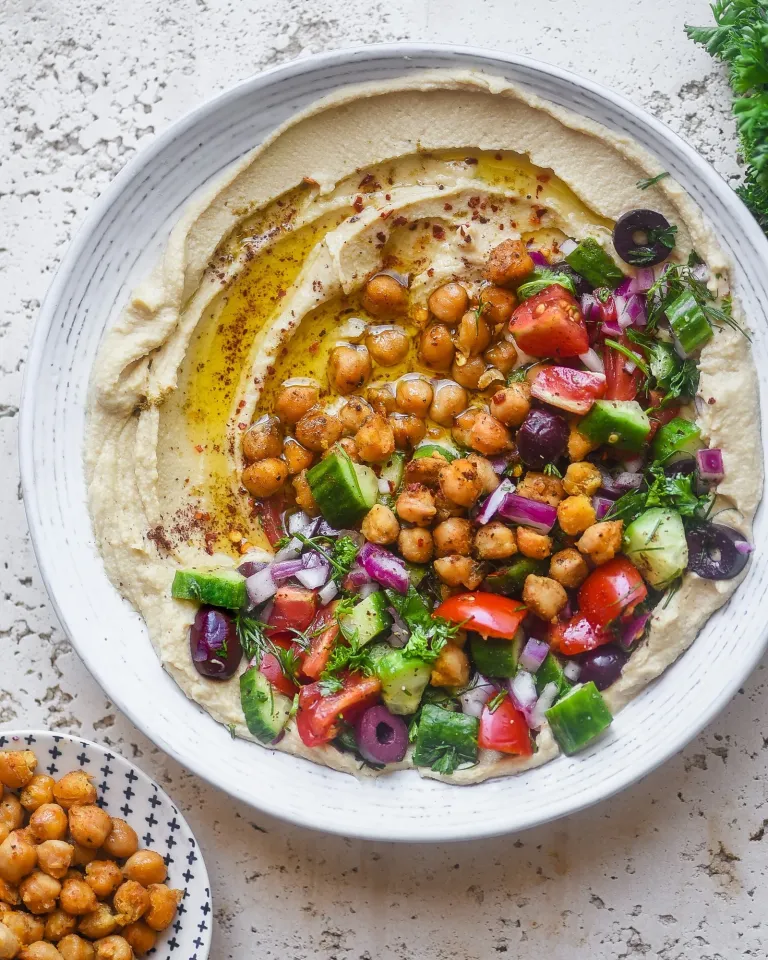
Can chickens eat hummus. The checker says Caution, and the reason is what goes into the hummus, not the chickpeas themselves. Hummus is chickpeas blended with tahini, lemon juice, garlic, salt, and oil. The chickpeas in it are cooked, so that part is fine, but the lemon juice makes it acidic, the garlic is strong, and shop bought hummus is usually salted. The checker note says it plainly, “Contains garlic and lemon, small amounts only”.
A small spoonful of plain hummus now and then will not harm a healthy hen, but there is no reason to choose it over plain cooked chickpeas. Plain chickpeas give the hens the same protein and fibre without the salt, acid, and garlic, and they cost less. If you do offer hummus, use a plain variety, keep it to a teaspoon per bird, and never offer flavoured hummus with chilli, roasted garlic, sun dried tomato, or extra salt. The hummus trap is a simple one. People see a chickpea food and assume the chickpea rule applies, but the extra ingredients change the answer, so plain cooked chickpeas are always the better choice.
Chickpeas vs Peas. The Legume Cousins
Chickpeas and peas are cousins in the legume family, and keepers often ask whether the same rules apply to both. The short answer is that they are similar foods with different serving rules, and the difference is worth knowing. Peas are soft, small, and safe fresh, thawed, or split, in or out of the pod, and the checker gives peas a Safe verdict. Chickpeas are larger, harder, and denser, and they must be fully cooked and mashed or split before serving, which is why the checker gives cooked chickpeas a Caution verdict. Our guide to can chickens eat peas covers the pea side of the family in full.
The confusion between the two is also why the checker itself can mislead on chickpeas, as the checker section above explains. The word peas sits inside chickpeas, so the checker matches the pea entry when you type the chickpea name. That is a good reminder to read the note, not just the verdict. A Safe verdict with a note about peas is not a verdict about chickpeas at all, and a keeper who reads the note will see the mismatch straight away.
Nutritionally the two are close, with chickpeas carrying more protein and peas carrying more natural sweetness. Both are useful treats, and both fit inside the 10 percent treat rule. If you already serve peas, chickpeas are an easy next step, with one extra job attached, and that job is the cooking. Peas need no cooking. Chickpeas always do.
Can Baby Chicks Eat Chickpeas. Wait Until Four Weeks
Can baby chicks eat chickpeas. Yes, but only after they are about four weeks old, and only as tiny pieces of soft mashed cooked chickpea. Chicks under four weeks should eat starter feed only, because their digestion is still developing, and they need the balanced nutrition in the starter to grow properly. A dense legume like chickpea is too much for a very young chick, even when it is cooked.
When your chicks are old enough for treats, offer only a very small piece of soft mashed chickpea, about half a chickpea per chick, and only once in a while. The chickpea must be fully cooked and mashed to a soft paste, because a chick cannot manage firm pieces. Always have chick grit available when you offer any treat, because chicks need grit in their gizzard to grind food that is not starter crumb.
Never give chicks raw chickpeas, dried chickpeas, hummus, or roasted chickpeas. Dried chickpeas are too hard and too full of lectins for a small chick, and hummus carries the same garlic, lemon, and salt problem that makes it a Caution food for grown hens. Most keepers will find it simpler to wait until the chicks are six weeks old before offering chickpeas at all, and there is no rush. Starter feed is the right food for young birds, and treats can wait.
What If a Hen Eats Raw Chickpeas. What to Watch For
It happens to most keepers sooner or later. A bag of dried chickpeas splits in the feed shed, or a handful spills where the hens can reach it, and before you can sweep it up a hen has eaten several hard beans. The first thing to do is stay calm, because a few raw chickpeas are not an emergency on their own. The lectins in a small amount will usually pass through with nothing worse than loose droppings for a day.
Watch her closely for the next day. The signs that matter are loose or watery droppings, a hen who goes off her feed, a swollen or hard crop that does not empty overnight, weakness, or a hen who sits puffed up and quiet. If her crop is still full and hard in the morning, or she stops eating and drinking, she needs a vet. Do not try to empty her crop yourself, and do not try to make her sick, because both can do more harm than the beans.
If she is eating, drinking, and moving normally after a day, she is almost certainly fine, and you can relax. The habit to take away from the scare is the same one this article keeps repeating. Keep dried chickpeas in a sealed container the hens cannot reach, cook every chickpea before it reaches the flock, and sweep up any spill before the birds find it.
FAQs
Are chickpeas safe for chickens.
Yes, when they are fully cooked. Our food checker calls cooked chickpeas CAUTION with the note “Only fully cooked, mash or split”. Serve a small handful of mashed cooked chickpeas per bird, a few times a week at most. Raw dried chickpeas are never served, because they carry lectins and are too hard to digest.
Can chickens eat raw chickpeas.
No. Raw dried chickpeas contain lectins that make them hard to digest, and their hardness can trouble the crop. The checker has no entry for raw chickpeas, so this is the article’s own guidance, not a checker verdict. Always soak and boil dried chickpeas until soft before serving, and mash or split them first.
Can chickens eat canned chickpeas.
Yes. Canned chickpeas are already cooked, so they only need a rinse under cold water to wash off the salt, and then a mash or split. Choose plain canned chickpeas in water or brine, never ones in a flavoured sauce, and serve a small handful per bird as an occasional treat.
Can chickens eat hummus.
Only in small amounts. Our food checker calls hummus CAUTION with the note “Contains garlic and lemon, small amounts only”. A teaspoon of plain hummus per bird now and then is fine, but plain cooked chickpeas are the better choice, because they carry the same protein without the salt, acid, and garlic. Never offer flavoured hummus.
Can chickens eat garbanzo beans.
Yes, with the same rule. Garbanzo beans are chickpeas under another name, so every rule in this article applies to them exactly. Fully cooked only, mashed or split, a small handful per bird, a few times a week. Raw garbanzo beans are never served.
If you are just starting out with backyard chickens, grab our free starter checklist and keep it by the coop for those first weeks of trying new treats.
Keep Reading

Nusrat
Author, TheChickenPet.com