

Every keeper with young pullets asks the same question, when will the first egg arrive, and the honest answer is a window, not a date. Most hens lay their first egg at 18 to 22 weeks old, but production hybrids can start as early as 16 weeks, heavy breeds can take until 24 to 28 weeks, and Silkies later still. The good news is that a pullet tells you she is nearly ready, with a red comb, squatting, nesting box interest and the egg song, and this guide covers the age window by breed, the six signs to watch for, what the first eggs look like, and the daylight wildcard that can delay a pullet until spring.
Table of Contents
- The Short Answer. 18 to 22 Weeks, With Exceptions
- The Laying Age Window by Breed
- The Six Signs a Pullet Is Days Away
- The Egg Song. What It Sounds Like and Means
- First Eggs. Small, Soft and Sometimes Strange
- The Daylight Wildcard. Why Autumn Pullets Wait Until Spring
- What to Do Before the First Egg
- When a Pullet Is Late and When to Worry
- Do You Need a Rooster for Eggs
- FAQs
Most hens lay their first egg at 18 to 22 weeks old. The window is a guide, not a deadline, and no rooster is needed.
Production hybrids as early as 16 weeks. Most common breeds 18 to 22 weeks. Heavy breeds 24 to 28 weeks. Silkies 7 to 9 months.
Red comb and wattles, squatting when you reach for her, interest in the nesting boxes, and the egg song. A pullet showing all four is days away.
The Short Answer. 18 to 22 Weeks, With Exceptions
Most hens lay their first egg at 18 to 22 weeks old. That is the short answer, and the exceptions are what fill the rest of this guide. Production hybrids, the breeds made for laying, can start as early as 16 weeks. Heavy breeds with big bodies, like Brahmas, Orpingtons and Wyandottes, can take until 24 to 28 weeks, because their bodies need longer to mature. Silkies are later still, at 7 to 9 months, and our guide to when Silkie chickens start laying eggs covers their numbers in full.
The window is a guide, not a deadline. Two pullets of the same breed, hatched on the same day and raised together, can start laying a month apart, and both are normal. Breed, feed, daylight and the season all move the date, and a pullet that is a little late is usually fine. What matters is not the exact week, but the signs that she is nearly ready, and those are the next section.
The Laying Age Window by Breed
Breed is the biggest factor in when a pullet starts laying, because laying age is written into the breed. The table below gives the usual window for the breeds most pet keepers own, and it is a guide, not a promise.
Production hybrids start first. ISA Browns, Red Sex Links and White Leghorns usually lay their first egg at 16 to 18 weeks, and they lay almost every day once they start. These are the breeds made for eggs, and they mature fast.
Most common breeds start next. Rhode Island Reds, Australorps, Plymouth Rocks, Sussex and Easter Eggers usually start at 18 to 22 weeks. These are the breeds most backyard flocks are made of, and their first eggs arrive in the late summer if they hatched in spring.
Heavy breeds start later. Brahmas, Orpingtons, Wyandottes and Cochins usually start at 24 to 28 weeks, because their big bodies take longer to mature. A Brahma pullet that has not laid by 24 weeks is not late, she is on schedule for her breed.
Silkies and other ornamental breeds start last. Silkies usually start at 7 to 9 months, and some take even longer. If you keep Silkies, expect to wait, and do not compare them with a Leghorn, because they are bred for looks and broodiness, not for early eggs.
| Breed group | Usual first egg age |
|---|---|
| Production hybrids, ISA Brown, Leghorn | 16 to 18 weeks |
| Most common breeds, Rhode Island Red, Australorp, Plymouth Rock | 18 to 22 weeks |
| Heavy breeds, Brahma, Orpington, Wyandotte | 24 to 28 weeks |
| Silkies and ornamental breeds | 7 to 9 months |
The Six Signs a Pullet Is Days Away
A pullet does not lay her first egg without warning. She shows it in her body and her behaviour, and when you see several of these signs together, the first egg is days away, not weeks.
First, her comb and wattles turn red. A young pullet has a small pale pink comb, and as she nears laying it grows larger and turns bright red. This is the clearest single sign, and it is caused by the hormones that come with laying. A pullet with a big bright red comb is nearly ready.
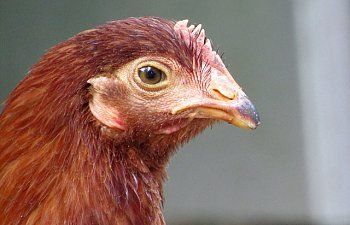
Second, she squats. When you reach your hand towards her, she crouches down, spreads her wings slightly and holds still. This is the mating squat, and it means her body is ready for laying, even if there is no rooster in the flock. A squatting pullet is days away from her first egg.
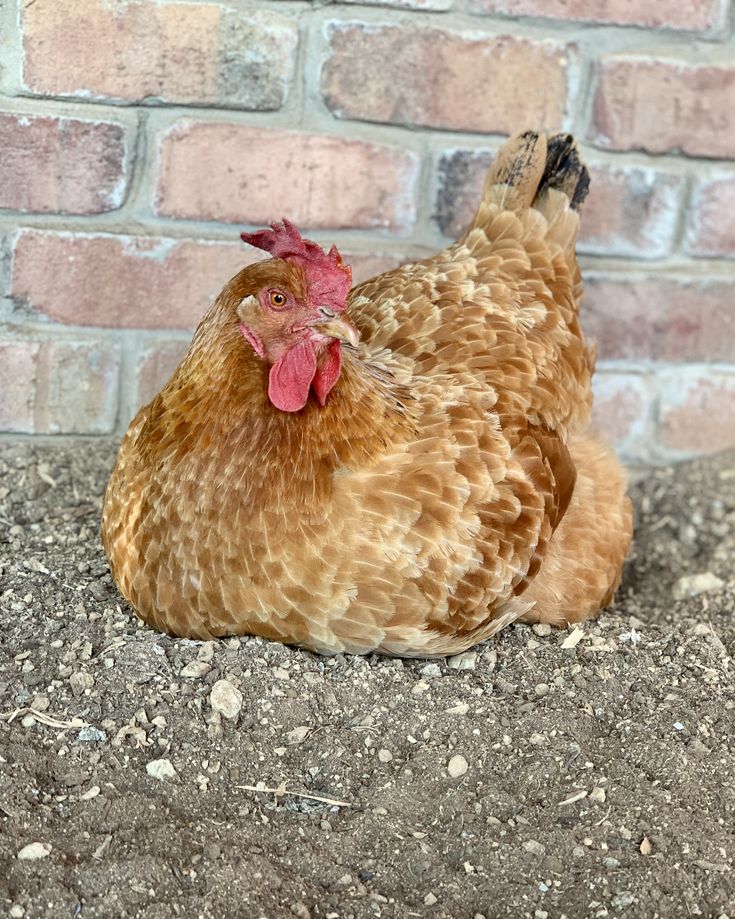
Third, she takes an interest in the nesting boxes. She will hop in and out of the boxes, scratch around in the bedding, sit in a box for a few minutes and then leave. She is practising, and she is looking for the right place. Make sure the boxes are ready, clean and private, with fresh bedding and a fake egg or two to show her where to lay.
Fourth, she starts the egg song, which is covered in the next section.
Fifth, she eats more, especially layer feed and oyster shell. A pullet near laying needs calcium for shells, so she will start eating oyster shell if it is offered free choice. Make sure the oyster shell dish is out and filled.
Sixth, her vent changes. A laying hen has a wide moist vent, while a pullet that is not laying has a small dry one. This is a subtler sign, and you do not need to check it every day, but it confirms what the other signs are telling you.
When you see the red comb, the squatting and the nesting box interest together, start checking the boxes every day, because the first egg is close.
The Egg Song. What It Sounds Like and Means
The egg song is the loudest sign a pullet is nearly ready, and it is also the most entertaining. It is a series of loud clucks, buk buk buk buk buk, repeated over and over, and it is much louder than normal chicken talk. A pullet practises the egg song in the days before her first egg, and a laying hen sings it after she lays, as if announcing the event to the whole yard. The whole flock may join in, and it can go on for several minutes.
The egg song does not mean an egg is already in the box. It means the pullet’s body is ready, and the first egg is days away. Some pullets sing for a week before the first egg, and some sing only once or twice. Some hens never sing at all, and that is normal too. Do not worry if your pullets are loud. The egg song is normal, it is not a sign of distress, and it is one of the small joys of keeping chickens. The neighbours may not agree, but the hens do not care.
First Eggs. Small, Soft and Sometimes Strange
The first eggs a pullet lays are rarely normal, and that is nothing to worry about. The first egg is usually small, sometimes half the size of a normal egg, and it may have no yolk at all. These tiny eggs are called fairy eggs or wind eggs, and they are a normal part of a young hen’s system settling down. The eggs get bigger over the first few weeks, and by a month in they are close to full size.
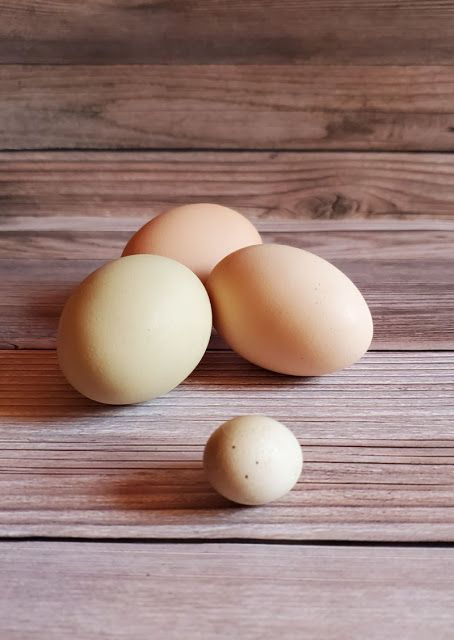
The first eggs may also have soft shells, thin shells or no shell at all, just a membrane. This is common in the first week of laying, because the shell gland is still learning its job. It usually fixes itself within a few days, especially if the hen has oyster shell free choice and a good layer feed. If soft shells keep coming after a few weeks, check the feed and the calcium, and read our guide to soft shell eggs for the full picture.
The first eggs may be odd shapes, double yolked, or laid in strange places. A pullet that has not yet learned to use the nesting box may lay on the floor of the coop, in the run, or under a bush. Put a fake egg in each nesting box to show her where to lay, and collect the eggs daily so she does not learn to lay elsewhere. None of this is a problem. The first month of laying is a settling in period, and by the second month most hens are laying regular eggs in the nesting box, on schedule.
The Daylight Wildcard. Why Autumn Pullets Wait Until Spring
Daylight is the wildcard that can delay a pullet by months, and it catches many new keepers by surprise. Hens need about 14 to 16 hours of light a day to lay well, and their laying is controlled by the length of the day. A pullet that reaches laying age in spring or summer, when the days are long, will usually start laying on schedule. A pullet that reaches laying age in late autumn or winter, when the days are short, may wait until spring, even though her body is ready. This is normal, and it is not a sign that anything is wrong. Her body is waiting for the longer days, and when spring comes she will start laying. Our guide to light in winter explains the daylight rules in full, including how much light hens need and whether to add light in winter.

You can add light in the coop to bring her into lay earlier, but think carefully before you do. Adding light in winter means the pullet lays through the darkest months, when her body would naturally rest, and many keepers prefer to let nature take its course and wait for spring. There is no right answer, only a choice, and a pullet that waits until spring is not behind, she is on nature’s schedule.
The same daylight rule explains why hens stop laying in winter and moult in autumn. Laying follows the light, and the light follows the seasons.
What to Do Before the First Egg
There are a few simple jobs to do before the first egg arrives, and they make the first month of laying much smoother. First, switch the feed. Pullets eat grower feed, and laying hens eat layer feed, which has the calcium for shells. Switch to layer feed at about 18 weeks, or when you see the first signs of laying, whichever comes first. Do not switch too early, because the extra calcium is not good for young chicks, and do not switch too late, because the first eggs need the calcium. Second, put out oyster shell free choice in its own dish. The layer feed has calcium in it, but the oyster shell is the top up, and a pullet near laying will start eating it on her own. Keep the dish filled, clean and dry. Third, get the nesting boxes ready. One box for every 3 to 4 hens, filled with clean dry bedding, in a dark quiet corner of the coop, with a fake egg or two in each box to show the pullets where to lay. Check the boxes every day once the signs appear. Fourth, check the coop for gaps and drafts. A pullet that is about to lay needs a safe quiet place, and a coop with holes that let in cold air or predators will put her off. Fix the gaps before the first egg, not after. Fifth, collect the eggs every day once laying starts. Daily collecting keeps the eggs clean, stops the hens from going broody, and stops them from learning to eat their own eggs.
When a Pullet Is Late and When to Worry
A pullet that is a little late is usually fine, but there are times when lateness means something is wrong. First, check the breed. A Brahma at 24 weeks is on schedule, and a Silkie at 6 months is on schedule too. Compare your pullet with her own breed’s window, not with a Leghorn, because the windows are very different. Second, check the season. A pullet that reaches laying age in late autumn may wait until spring, and that is normal. A pullet that reaches laying age in spring and still has not laid by 28 weeks may need a closer look. Third, check the feed and the light. A pullet on poor feed, or a pullet that is not getting enough daylight, will lay late. Make sure she is on layer feed, that she has oyster shell free choice, and that she gets at least 14 hours of light, natural or added. Fourth, check her health. A pullet that is thin, pale, lethargic or losing feathers may be unwell, and illness delays laying. Check for mites, check her droppings, and see a vet if she looks sick. Fifth, check for hidden eggs. A pullet that is laying but not in the nesting box may be laying in the garden, under a bush or behind the coop. Search the run and the garden before you decide she is not laying at all. If your pullet is past 30 weeks, in good health, on good feed, with long days, and still not laying, talk to a vet or an experienced keeper. But most late pullets are simply late for their breed or their season, and they start when they are ready.
Do You Need a Rooster for Eggs
No. Hens lay eggs without a rooster, and a rooster is never needed for eggs. This is the most common myth new keepers hear, and it is worth answering plainly. A hen lays eggs on her own schedule, and the eggs are unfertilised unless a rooster has mated with her. An unfertilised egg is a normal egg, it tastes the same, it looks the same, and it is the egg most people eat. A rooster is needed only if you want fertile eggs for hatching. Our guide to whether chickens need a rooster to lay eggs answers this in full, and the short answer is no, they do not.
A flock of hens only is quieter, calmer and safer, especially for families with children, and it lays just as well as a flock with a rooster. If you do keep a rooster, he will not make the hens lay earlier or more often. Laying follows age, breed, feed and daylight, not the presence of a rooster.
FAQs
When do chickens start laying eggs.
Most hens lay their first egg at 18 to 22 weeks old. Production hybrids can start as early as 16 weeks, heavy breeds at 24 to 28 weeks, and Silkies at 7 to 9 months. The window is a guide, not a deadline.
What are the signs a pullet is about to lay her first egg.
A red comb and wattles, squatting when you reach for her, interest in the nesting boxes, the egg song, eating more oyster shell, and a wide moist vent. When you see several of these together, the first egg is days away.
Why is my pullet not laying at 6 months.
She may be a heavy breed or a Silkie, which start later, or she may have reached laying age in late autumn, when short days delay laying until spring. Check her breed window, the season, her feed and her health before you worry.
Do chickens need a rooster to lay eggs.
No. Hens lay eggs without a rooster, and the eggs are unfertilised unless a rooster has mated with them. A rooster is needed only for fertile eggs for hatching.
How long do hens lay eggs for.
A hen lays most in her first two years, then slows down gradually. Our guide to how long hens lay eggs for covers the laying life after it starts, including how many years a hen keeps laying and when she stops.
Also read: Can Chickens Eat Rice Cooked or Raw and the Myth to Ignore
Keep Reading

Nusrat
Author, TheChickenPet.com