
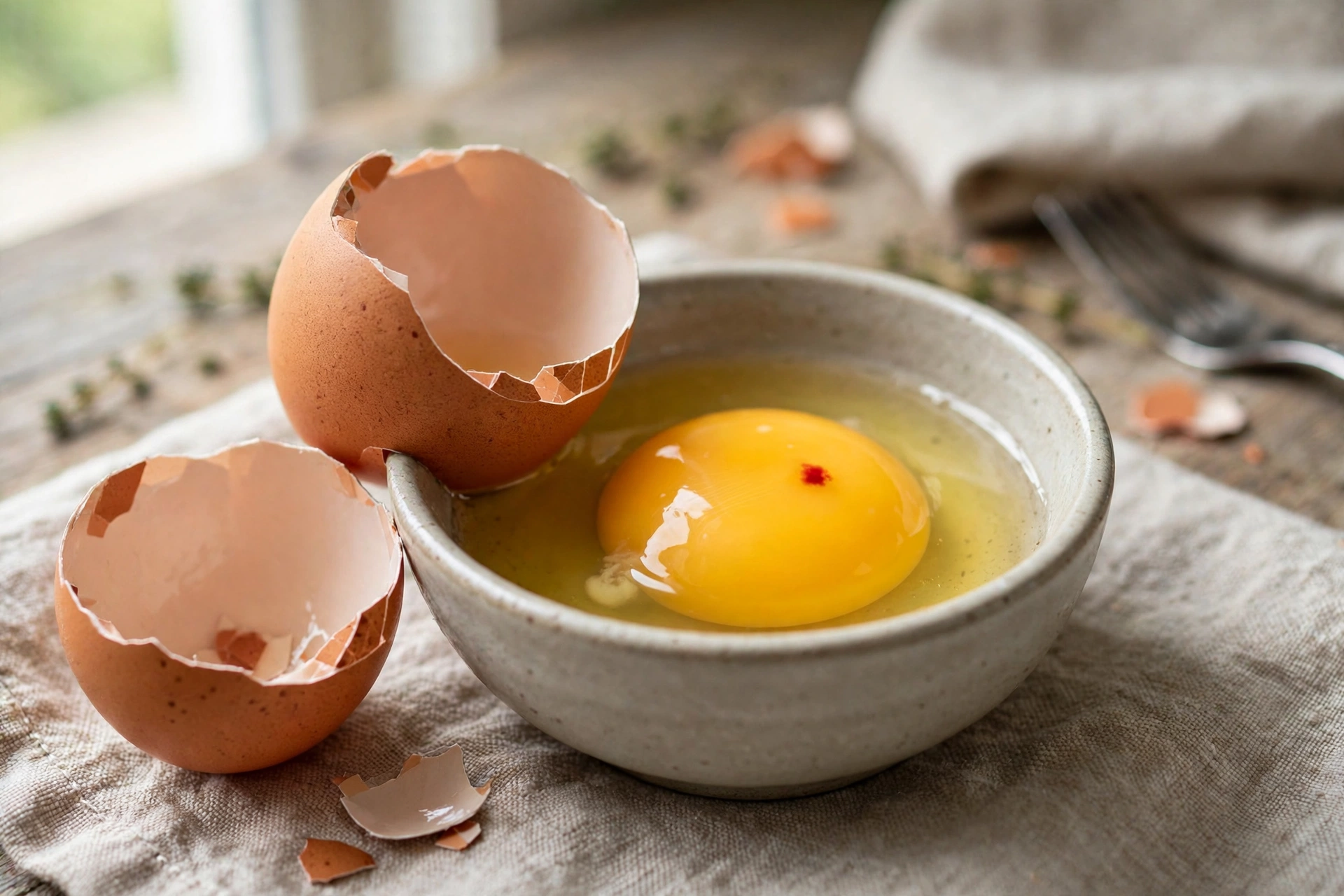
You crack an egg into a bowl and there it is, a small red spot on the yolk, and the first thought is to throw the whole egg away. Most keepers have had that moment, and most of them threw away a perfectly good egg. A blood spot is a tiny blood vessel that broke while the egg was forming, and it is not a sign of fertilisation, not a sign of disease, and not a reason to waste the egg. This guide explains what blood spots are, what meat spotsare, when an egg is safe to eat, and the one case where blood means a real emergency for the hen.
Table of Contents
- The Short Answer. Yes, Cook It and Eat It
- What Causes a Blood Spot in an Egg
- Blood Spots, Meat Spots and What Is the Difference
- Are Eggs With Blood Spots Safe to Eat
- Why Spots Are More Common in Farm Fresh Eggs
- Blood on the Shell Is a Different Problem
- Prolapse. The Emergency You Must Not Miss
- How to Check an Egg Before You Crack It
- How to Reduce Blood Spots in Your Flock
- FAQs
A blood spot is a tiny blood vessel that broke while the egg was forming. It is not fertilisation and not disease.
The egg is safe to eat when properly cooked. Scoop the spot out with a spoon if it bothers you.
Blood on the shell with tissue bulging from the vent is prolapse, and that hen needs a vet at once.
The Short Answer. Yes, Cook It and Eat It
Yes, an egg with a blood spot is safe to eat when it is properly cooked. Scoop the spot out with a spoon if it bothers you, and cook the egg as normal. That is the whole answer in one sentence, and the rest of this guide explains why it is true.
A blood spot is a tiny blood vessel in the hen that broke while the yolk was being released, and a drop of blood landed on the yolk or the white. It is a normal accident of egg making, not a sign that something is wrong with the hen, and not a sign that the egg is fertilised. It does not make the egg unsafe, and it does not change the taste.
The only blood that should worry you is blood on the outside of the shell, especially with tissue bulging from the hen’s vent. That is a different problem entirely, and it is covered in the prolapse section below. A spot inside the egg is harmless. Blood on the shell with a prolapse is an emergency.
What Causes a Blood Spot in an Egg
An egg forms in stages, and the yolk is released from the hen’s ovary first. The yolk travels down the oviduct, where the white and the shell are added around it. A blood spot forms at the very first step, when a tiny blood vessel on the surface of the ovary breaks as the yolk is released, and a drop of blood lands on the yolk.
It is the same kind of accident as a bruise, a small vessel breaking under normal pressure, and it happens to healthy hens as well as to sick ones. It is more common in young hens that have just started laying, because their laying system is still settling down, and in older hens, whose vessels are more fragile. It is also more common in brown eggs, because the brown pigment makes the spot easier to see, not because brown egg layers have more spots.
Stress, a fright, or a sudden change in the flock can make spots more likely, because stress raises blood pressure and makes small vessels more likely to break. But most spots have no clear cause at all, and a hen that lays one spotted egg will often go back to laying clean eggs the next day.
A blood spot is not a sign of fertilisation. A fertilised egg and an unfertilised egg look the same on the outside, and a blood spot appears in both. Our guide to whether chickens need a rooster to lay eggs answers the fertilisation question in full, and the short answer is that hens lay eggs without a rooster, and a blood spot tells you nothing about whether a rooster was involved.
Blood Spots, Meat Spots and What Is the Difference
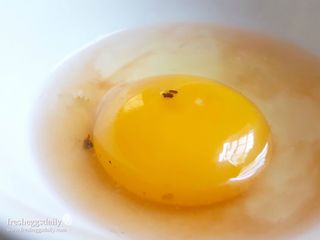
Blood spots and meat spots look similar and worry keepers in the same way, but they are different things. A blood spot is red or dark red, and it sits on the yolk or floats in the white. It is a drop of blood from a broken vessel, and it is usually small, about the size of a pin head or a little larger.
A meat spot is brown, tan or grey, and it is a small piece of tissue from the lining of the oviduct that broke off while the egg was forming. It looks like a tiny lump of cooked meat, and it often sits in the white. Meat spots are more common in older hens and in brown eggs, and like blood spots they are harmless.
Both are safe when the egg is properly cooked. Both can be scooped out with a spoon if they bother you. Neither one means the hen is sick, and neither one means the egg is bad. The difference matters only for naming what you see, not for what you do about it.
Do not confuse either one with a rotten egg. A rotten egg smells bad when cracked, and the white is cloudy or pink, and the yolk is flat and broken. A blood spot or a meat spot in an otherwise fresh egg with a firm yolk and a clear white is a normal egg, not a bad one.
Are Eggs With Blood Spots Safe to Eat
Yes. An egg with a blood spot is safe to eat when it is properly cooked, and that is the position of the food safety authorities that have looked at it. The blood spot is a tiny amount of the hen’s own blood, and cooking kills anything that could be a risk, just as it does for the rest of the egg.
The practical rule is simple. Crack the egg into a separate bowl first, not straight into the pan or the mixing bowl. Look at it, smell it, and if it looks and smells fresh, scoop the spot out with a spoon if it bothers you, and cook the egg as normal. Cooking through, so the white is set and the yolk is firm, is the safety step, and it is the same step you should take with every egg.
Do not eat a spotted egg raw, and do not use it in a dish that is not cooked, like a raw egg dressing. That rule applies to all eggs, not just spotted ones, because raw eggs carry a small risk whatever they look like.
If the spot bothers you, scoop it out. If it does not bother you, cook the egg with the spot in it. There is no health reason to throw the egg away, and throwing away good eggs is a waste of the hen’s work and your money.
Why Spots Are More Common in Farm Fresh Eggs
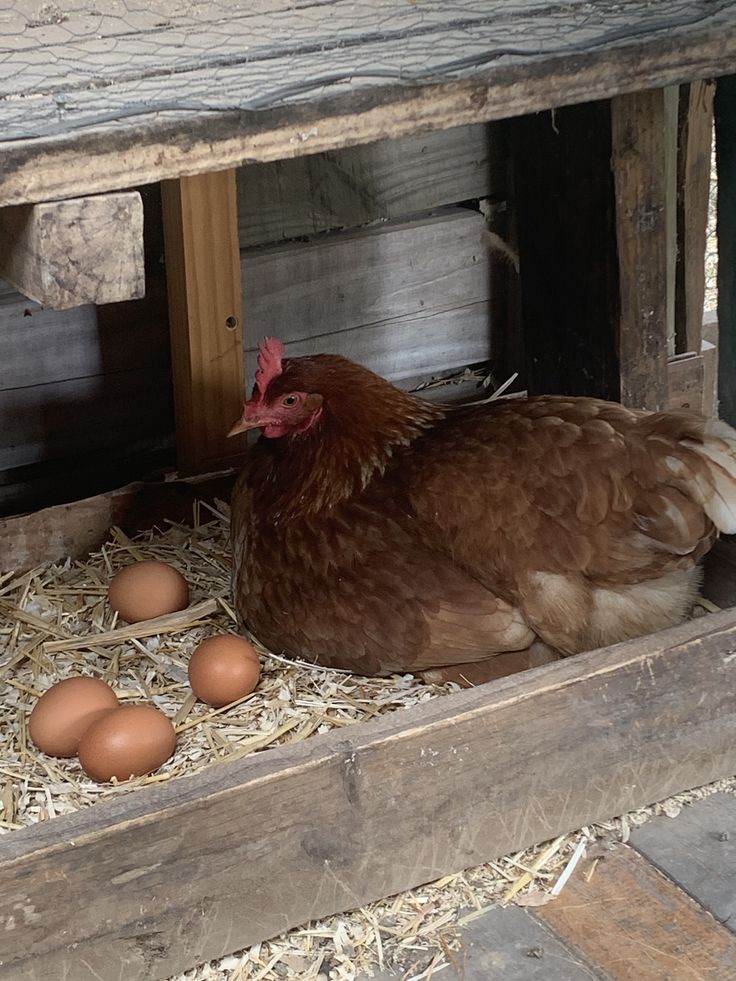
If you buy eggs from a shop, you almost never see a blood spot, and if you keep your own hens, you see them often. That difference is not because your hens are less healthy. It is because shop eggs are candled. Candling means holding each egg up to a bright light and looking through the shell, and a blood spot shows up as a dark shadow. Commercial egg packers candle every egg and remove the spotted ones, so the eggs that reach the shop are the clean ones. Your own eggs are never candled, so you see the spots that the packers would have removed.
Brown eggs show spots more often for the same reason. The brown shell is thicker and darker, so candling is less effective, and more spotted brown eggs reach the shop. White eggs are easier to candle, so fewer spotted white eggs get through. Your brown egg layers are not producing more spots, you are simply seeing more of them.
So a blood spot in a farm fresh egg is normal, not a sign of a problem. It is one of the small differences between keeping your own hens and buying from a shop, like the deeper yolk colour and the stronger shell.
Blood on the Shell Is a Different Problem
A blood spot inside the egg is harmless, but blood on the outside of the shell is a different story, and it needs attention. A little blood on the shell is common in young hens that have just started laying, because the egg is large for their body and the vent stretches. A small streak of blood on the first few eggs of a young hen is usually nothing to worry about, and it stops on its own as she grows.
Blood on the shell of an older hen, or blood that keeps appearing on every egg, is a warning sign. It can mean the hen is laying eggs that are too large, that she is overweight, or that something is irritating the vent. Check the hen, check her weight and her feed, and watch whether the blood is getting worse.
The serious case is blood on the shell with tissue bulging from the vent. That is prolapse, and it is covered in the next section, because it is an emergency and it needs a vet.
Do not confuse blood on the shell with a dirty egg. An egg with a little mud or droppings on the shell is dirty, not bloody, and it can be wiped clean with a dry cloth. Blood is red and sticky, and it comes from the hen, not from the nest.
Prolapse. The Emergency You Must Not Miss
Prolapse is when part of the hen’s oviduct pushes out through the vent and stays out, and it is one of the few true emergencies in chicken keeping. It looks like a red pink bulge of tissue at the vent, often with blood on it, and it must not be ignored. A hen with a prolapse is in pain, and the other hens will peck at the exposed tissue, which can kill her. Separate her from the flock at once, keep her in a dark quiet place, and call a vet. Do not try to push the tissue back in yourself, and do not leave her with the flock while you decide what to do.
Prolapse is more common in young hens that start laying too early, in overweight hens, and in hens that lay very large eggs. It is also more common in hens that are laying every day without a break. Our guide to how often chickens lay eggs explains the laying cycle, and the steady daily laying that makes prolapse more likely is part of it.
Keeping hens at a healthy weight, not pushing them to lay with extra light, and giving them a good diet all help to prevent it.
This is the one case where blood means a real emergency. A blood spot inside the egg is harmless. Blood on the shell with tissue bulging from the vent is prolapse, and that hen needs a vet at once. Learn the difference, because it is the difference between throwing away a good egg and saving a hen’s life.
How to Check an Egg Before You Crack It
You cannot see a blood spot through the shell without candling, but you can check whether an egg is fresh before you crack it, and freshness is what matters most. The float test is the simplest check. Put the egg in a bowl of water. A fresh egg sinks and lies flat on the bottom. An older egg stands on its end, and a bad egg floats. Our guide to the float test explains it in full, and it is the check to use when you are unsure about an egg’s age.
Candling is the check that finds blood spots before you crack the egg. Hold the egg up to a bright light in a dark room, a torch works well, and look through the shell. A blood spot shows up as a dark shadow. You do not need to candle every egg, but it is a useful trick if you are selling eggs or if spots bother you.
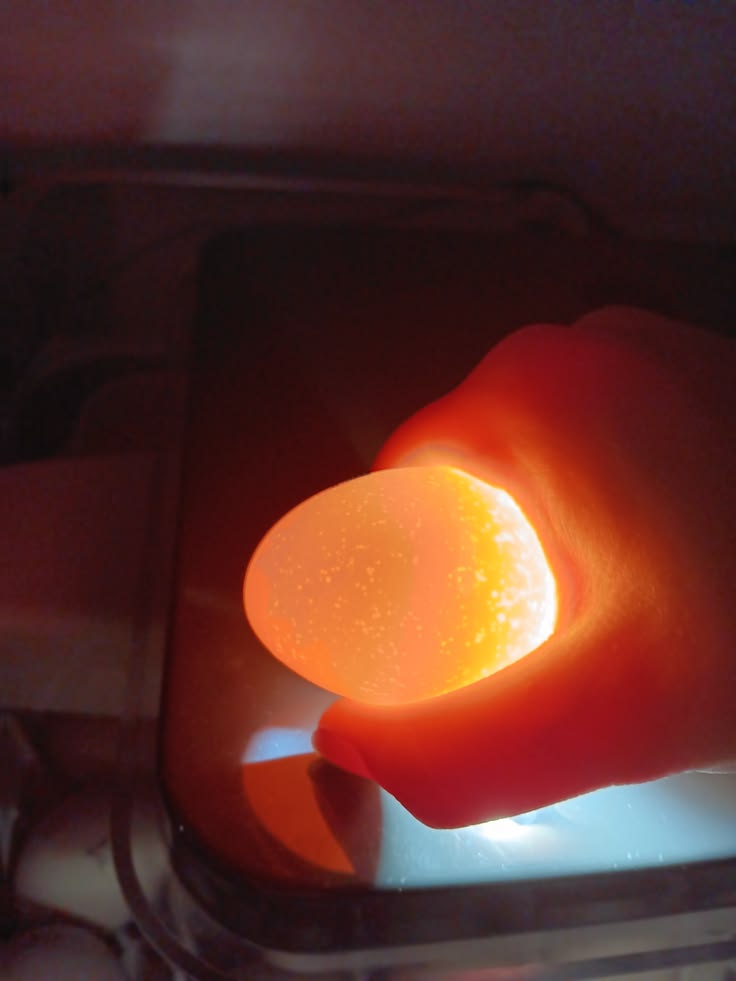
The crack test is the final check. Always crack eggs into a separate bowl first, not straight into the pan or the mixing bowl. That way, if one egg is bad, it does not spoil the whole dish, and you can see a blood spot and scoop it out before you cook.
How to Reduce Blood Spots in Your Flock
You cannot stop blood spots completely, because they are a normal accident of egg making, but you can make them less common.
Keep the flock calm. Stress, frights and sudden changes make spots more likely, so keep the routine steady, keep predators away, and do not move hens about more than you need to. A calm flock lays cleaner eggs.
Feed a good balanced layer feed, and do not overfeed treats. A hen that is overweight lays larger eggs, and larger eggs stretch the vent more, which makes spots and shell blood more likely. Treats should stay at about 10 percent of the diet.
Give young hens time. Pullets that have just started laying will lay spotted eggs more often, and that settles down as their laying system matures. Do not push them to lay early with extra light, because early laying makes prolapse more likely too.
Check the hens regularly. A hen that lays spotted eggs every day, or a hen with blood on the shell every day, is telling you something is wrong, and she needs a closer look. Most hens lay a spotted egg now and then and go back to normal, and that is nothing to worry about.
FAQs
Are eggs with blood spots safe to eat.
Yes, when properly cooked. A blood spot is a tiny broken blood vessel from egg formation, not disease and not fertilisation. Scoop the spot out with a spoon if it bothers you, and cook the egg through.
What causes a blood spot in an egg yolk.
A tiny blood vessel on the hen’s ovary breaks as the yolk is released, and a drop of blood lands on the yolk. It is more common in young hens, older hens and brown eggs, and it is a normal accident, not a sign of sickness.
What are meat spots in eggs.
Meat spots are small brown or grey pieces of tissue from the lining of the oviduct that broke off while the egg was forming. Like blood spots, they are harmless, and they can be scooped out if they bother you.
Is a blood spot a sign the egg is fertilised.
No. A blood spot appears in fertilised and unfertilised eggs alike, and it tells you nothing about whether a rooster was involved. Hens lay eggs without a rooster, and a blood spot is not a baby chick.
When is blood in an egg a real problem.
When it is on the shell with tissue bulging from the vent, which is prolapse, and that hen needs a vet at once. A spot inside the egg is harmless, and blood on the shell with a prolapse is an emergency.
New pullets often lay small or odd first eggs, so if yours are just starting out, read our guide to when chickens start laying eggs.
Keep Reading

Nusrat
Author, TheChickenPet.com