
Chicken Care and Health
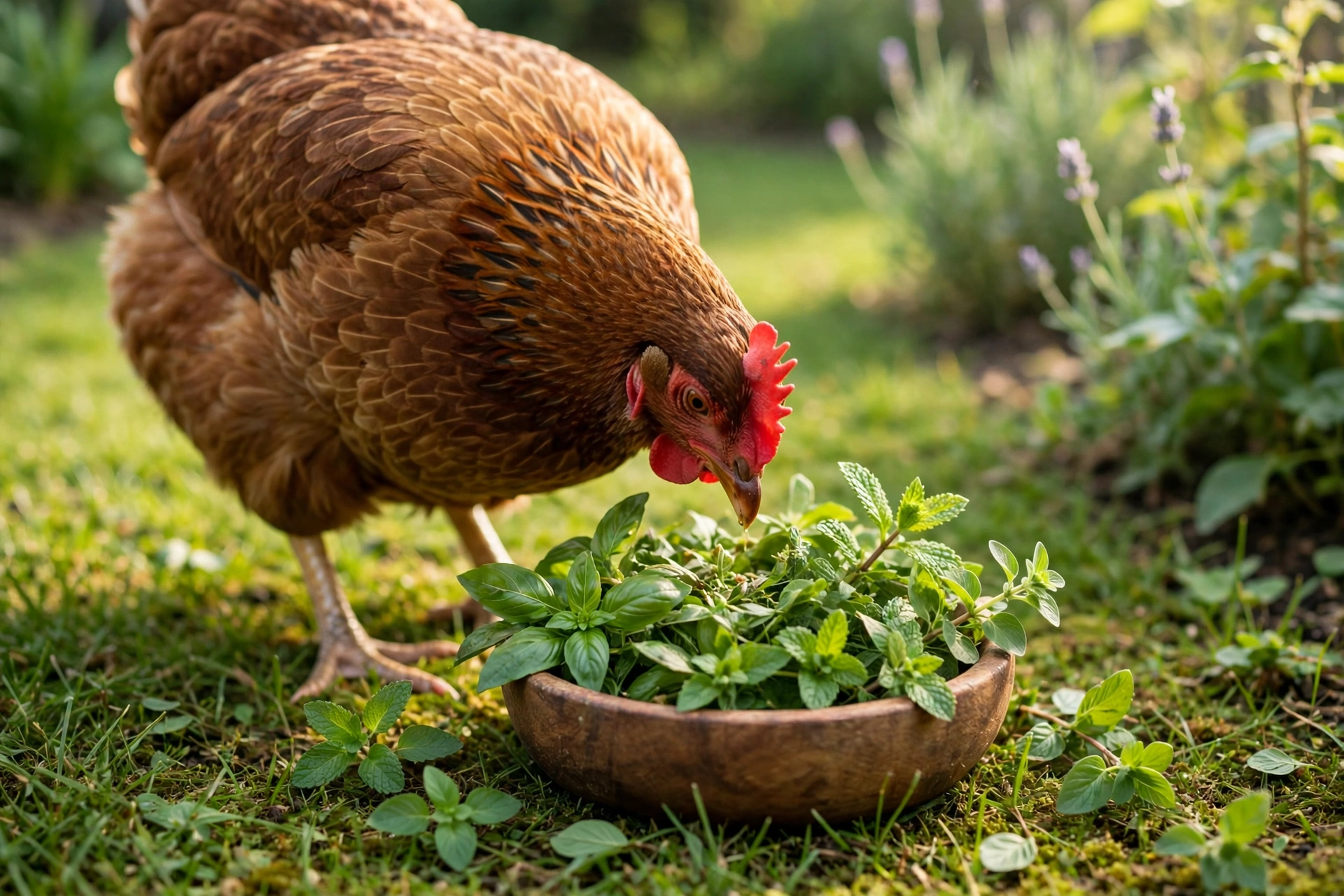
Yes, chickens can eat herbs, and oregano, basil and mint are three of the safest ones you can offer. Our own food checker gives all three a Safe verdict, and hens usually eat them happily. A few fresh leaves, torn or chopped and scattered in the run, make a simple treat that adds variety to a week of layer feed and greens. Herbs are not medicine, and they are not a replacement for proper feed, but as a small treat they are an easy win, and they cost nothing if you already grow them in the garden. This guide covers the three kitchen herbs in full, how much to serve, the other safe herbs in the checker, the few herbs to keep out of the run, and the essential oil warning that matters more than any single herb.
Table of Contents
- The Short Answer. Yes, Oregano Basil and Mint Are Safe
- What the Food Checker Says. Three Safe Verdicts and One False Alarm
- Oregano for Chickens. The Flock Health Favourite
- Basil for Chickens. Fresh Leaves for Everyday Feeding
- Mint for Chickens. Cooling Leaves and Pest Deterrence
- How to Serve Herbs. Fresh, Chopped and Scattered
- How Much and How Often. A Small Handful, Not a Meal
- Other Safe Kitchen Herbs. Rosemary, Thyme, Parsley and More
- Herbs to Avoid. Foxglove, Wormwood and the Unlisted Ones
- Essential Oils. Why Fresh Leaves Beat Concentrated Oil
- Herbs in the Coop and Dust Bath. Beyond the Feed Bowl
- Can Baby Chicks Eat Herbs. Wait Until Four Weeks
- FAQs
At a Glance
Oregano, basil and mint are all Safe foods for chickens on our food checker. Serve fresh leaves in small amounts, a few times a week, as a treat. Foxglove is Unsafe, wormwood is Caution in tiny amounts only, and pennyroyal and rue have no checker entry, so do not feed them.
The Serving Rule
A small handful of fresh leaves per bird is plenty. Tear or chop the leaves, scatter them in the run, and let the hens peck at their own pace. Treats of every kind together should stay under about 10 percent of what your hens eat in a day.
The Honest Limit
Herbs are a treat, not medicine. The trials that show benefits from oregano used extracts mixed into complete feed for weeks, not a handful of leaves in the run. Fresh herbs add variety and small amounts of vitamins, and that is enough reason to offer them.
The Short Answer. Yes, Oregano Basil and Mint Are Safe
Can chickens eat herbs. Yes, they can, and the three kitchen herbs in this article are all Safe on our food checker. Oregano is Safe, fresh or dried, and the checker calls it a flock health favourite. Basil is Safe as fresh leaves. Mint is Safe as fresh leaves, and so are its cousins peppermint and spearmint. A hen can eat all three without any special preparation, and most hens will peck at them willingly once they get used to the strong smell.
Are herbs safe for chickens in general. Most kitchen herbs are, and the checker backs that up across a long list, rosemary, thyme, parsley, sage, lavender, chamomile, dill, cilantro and tarragon all return Safe verdicts too. The exceptions are few, and they are covered in full in the avoid section below, so you can check any herb you grow before it reaches the run. The short rule is simple. Fresh leaves from a safe herb, in a small amount, are fine. Concentrated oils, sprayed plants and unknown wild herbs are not.
What the Food Checker Says. Three Safe Verdicts and One False Alarm
Our homepage food checker gives herbs a clear answer, and it is worth quoting exactly, because the checker is the same tool readers use on the site. For “oregano” the checker says SAFE, with the note “Fresh or dried, a flock-health favourite”. For “basil” it says SAFE, with the note “Fresh leaves”. For “mint” it says SAFE, with the note “Fresh leaves”. All three are genuine entries in the checker, confirmed live on the homepage and matched against the checker’s own data file. If you want the full safe and toxic list, read our guide to what can chickens eat.
One honest point belongs here, because the checker can mislead on this food. If you type plain “herbs” into the checker, it shows CAUTION, with the note “Plain chamomile/fennel types, small amounts only”. That note is the checker’s entry for herbal tea, not a verdict on herbs. The checker matched the word herbs inside the herbal tea entry, so that result is a fallback, not a verdict on herbs in general. So this article does not present herbs as a Caution food. It follows the genuine oregano, basil and mint entries, all Safe, and every other herb verdict in this article is a genuine live checked entry or is marked plainly as the article’s own guidance.
Oregano for Chickens. The Flock Health Favourite
Can chickens eat oregano. Yes, and oregano is the herb keepers ask about most, because it carries the strongest reputation of the three. The checker calls it a flock health favourite, and it is the only one of the three whose note mentions health at all. Oregano contains natural compounds called carvacrol and thymol, which give it its strong smell and its sharp taste, and these are the compounds behind the poultry feed trials that made oregano famous among keepers.
The honest limit matters here, because the oregano story is often overstated. The trials that show gut health benefits used oregano extract mixed into complete feed for weeks, at a measured dose, not a handful of fresh leaves tossed into the run. A few fresh leaves are a fine treat, and they do give the hens small amounts of useful compounds, but they are not a medicine, and they do not replace clean water, good feed, a dry coop and a vet when a bird is actually ill. Think of oregano as a healthy treat with a good reputation, not as a cure.
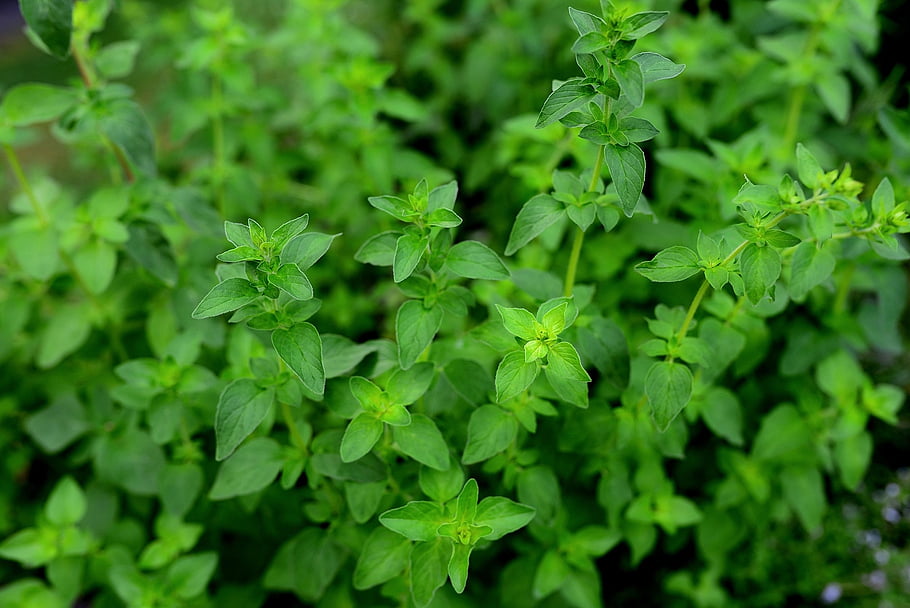
Fresh or dried oregano are both fine, and the checker says so. Fresh sprigs can be torn and scattered, and dried oregano can be sprinkled over feed or mixed into a treat bowl. Dried oregano from the spice jar is fine too, as long as it is plain oregano with no added salt, seasoning or anti caking agents. Keep dried herbs dry and check them for mould before serving, because damp dried herbs go off quickly. A small pinch per bird is plenty, and the strong smell means some hens will take a few days to warm to it.
Basil for Chickens. Fresh Leaves for Everyday Feeding
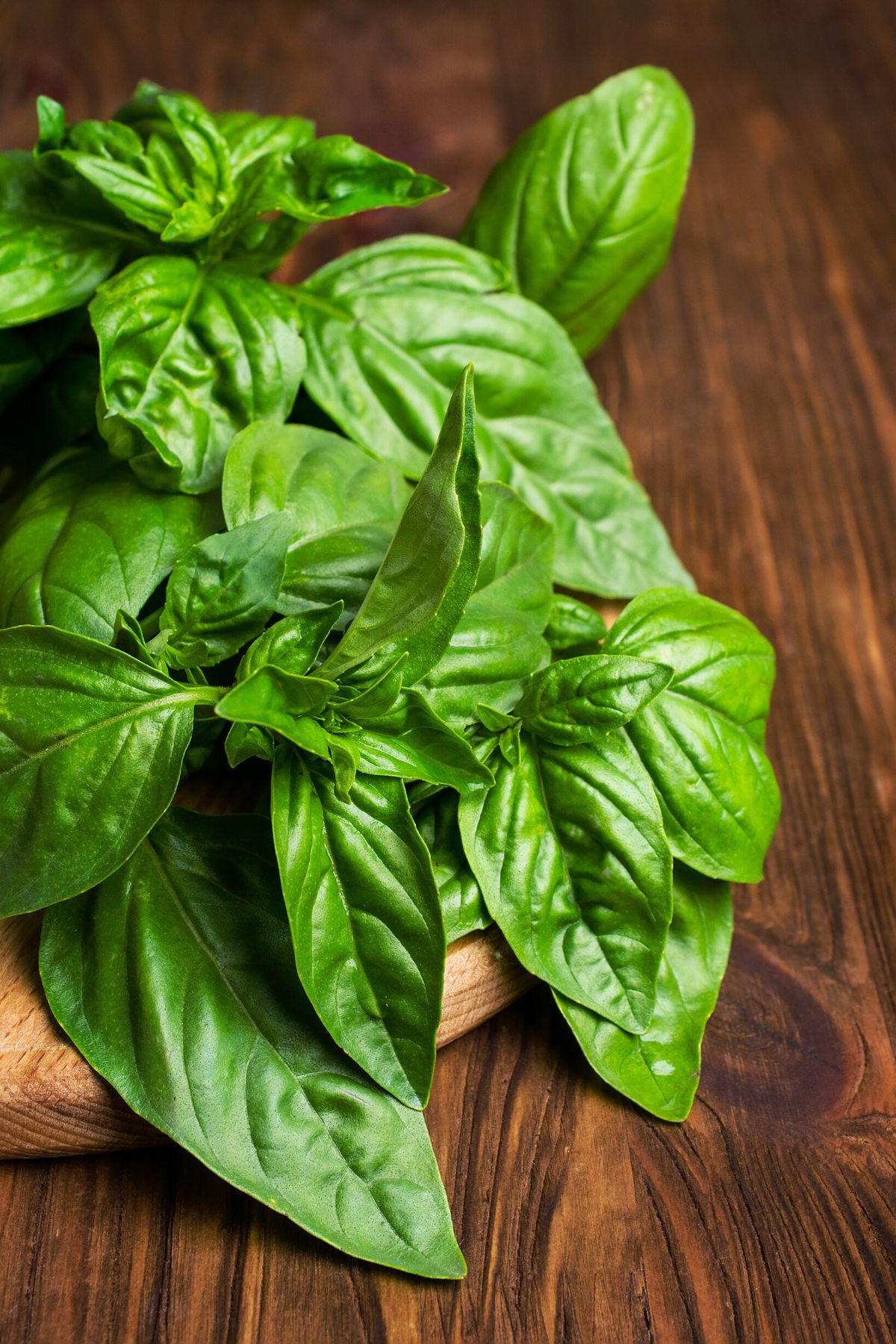
Can chickens eat basil. Yes, and basil is the easiest of the three to feed, because hens usually accept it straight away. The checker says Safe, with the note “Fresh leaves”, and basil leaves are soft, mild and easy to tear into pieces a hen can manage. Sweet basil is the common kitchen kind, and it is the one this article means, but holy basil, also called tulsi, is Safe on the checker too. Basil brings small amounts of vitamins A and K, calcium and antioxidants, and it adds variety to a diet that is mostly layer pellets and grass. Keepers often offer basil for immune support, and while a few leaves will not transform a hen’s health, basil is a genuinely useful green treat, and it is one of the few herbs hens will eat fresh from the plant without any coaxing. If you grow basil in summer, the trimmings from pinching out the tops are a ready made treat, and the hens will happily finish what you do not use in the kitchen.
Serve basil as fresh leaves, torn or chopped, and scatter them in the run or in a shallow dish. Dried basil is fine in small amounts as well, sprinkled over feed, though fresh leaves are better, because they hold more moisture and the hens can peck at them properly. Basil is a warm weather plant, so in winter you will be buying it or using dried, and either way the serving stays the same, a small handful per bird, a few times a week.
Mint for Chickens. Cooling Leaves and Pest Deterrence
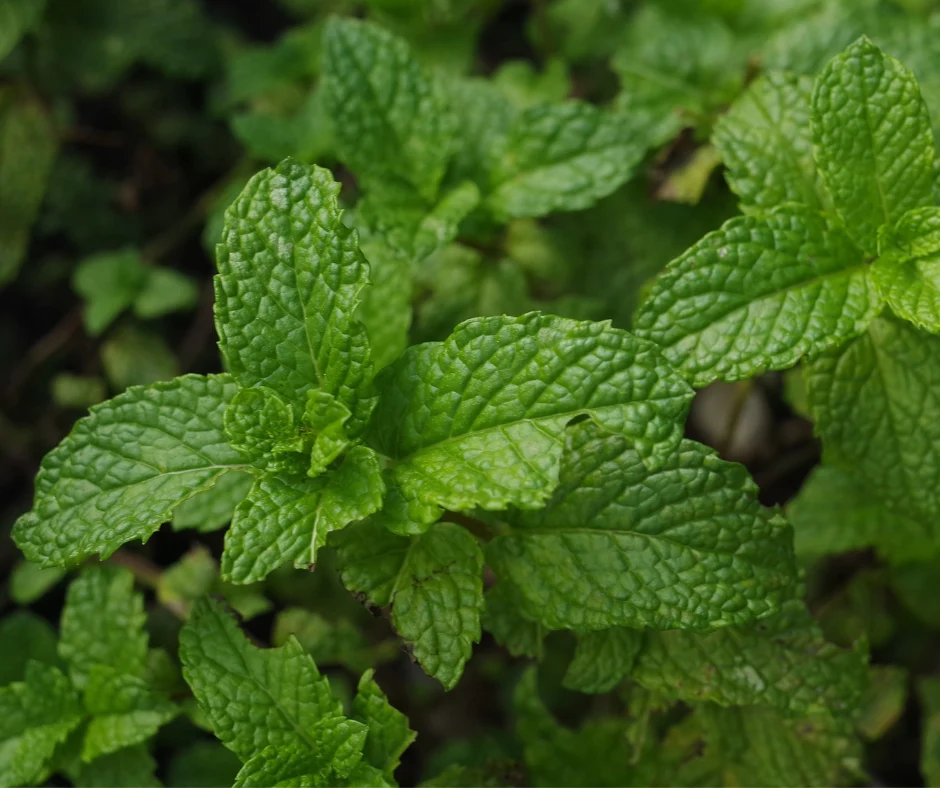
Can chickens eat mint leaves. Yes, and mint is the most useful of the three outside the feed bowl as well as inside it. The checker says Safe, with the note “Fresh leaves”, and the same verdict covers peppermint and spearmint, which are both Safe as fresh leaves too. Mint leaves are soft, strongly scented and easy for a hen to tear apart, and many keepers offer them most in summer, when the cooling reputation of mint feels like the right treat for a hot flock.
The pest angle is real, though it is often overstated, so it deserves a plain version. Rats and mice dislike strong mint scent, and fresh mint sprigs around the coop can make the area less inviting to them, but mint alone will not keep rats away. Real rat proofing is sealed feed bins, hardware cloth and removing spilled feed, and our guide to how to keep rats away from chicken coop without poison covers that in full. Mint is a helper, not a solution, and a keeper who relies on mint alone will still get rats.
Grow mint in a pot, not in open ground, because mint spreads fast and will take over a garden bed in a single season. A pot by the coop door gives you fresh leaves all summer and keeps the plant where you want it. Pick a few sprigs, tear the leaves, and scatter them in the run, or hang a small bunch in the coop for the hens to peck at. Never confuse mint with pennyroyal, which is a mint relative that looks similar and is not safe, and that confusion is covered in the avoid section below.
How to Serve Herbs. Fresh, Chopped and Scattered
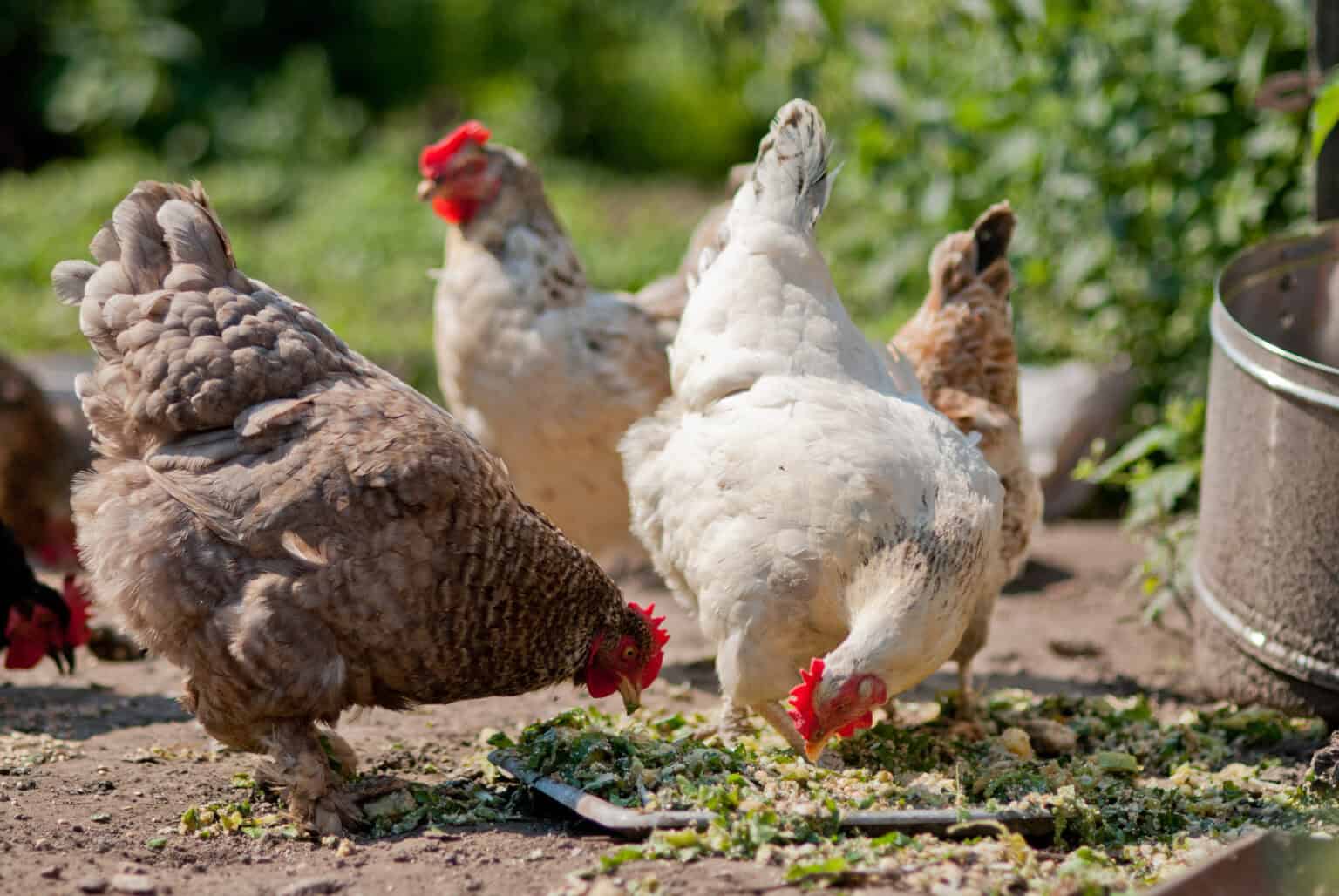
How to serve herbs to chickens is simple, and the steps are the same for all three. Pick fresh leaves from an unsprayed plant, give them a quick rinse if they are dusty, and tear or chop them into pieces a hen can manage. Scatter the pieces in the run or in a shallow dish, and let the hens peck at their own pace. Scattering keeps the flock moving and pecking naturally, and it stops the push and shove that a single pile always causes.
Dried herbs work too, and the method is even simpler. Sprinkle a small pinch of dried oregano, basil or mint over the feed or into a treat bowl, and mix it in lightly. Dried herbs are stronger in flavour than fresh, so use less, about half the amount you would use fresh. Check dried herbs for mould before serving, and throw away any jar that smells musty or has gone damp, because mouldy herbs are worse than no herbs at all.
A few rules apply to every herb you offer. Never serve herbs that have been sprayed with pesticide, herbicide or fertiliser, and wash leaves from a garden that sits near a road. Never serve herbs in sauce, oil, butter, dressing or seasoning, because the extras are the problem, not the herb. Never serve herbs that have gone slimy or mouldy. And never offer a herb you cannot name with confidence, because the safe list and the avoid list look alike to an untrained eye, and a wrong guess is not worth the risk.
How Much and How Often. A Small Handful, Not a Meal
Herbs are a treat, not feed, and the amount matters as much as the choice of herb. A good serving is a small handful of fresh leaves per bird, about a loose handful torn into pieces, offered two or three times a week at most. Treats of every kind together should stay under about 10 percent of what your hens eat in a day, because layer feed is what makes eggs, and treats only dilute it.
Herbs are mostly water and fibre, so they are low in calories, and a small handful will not put weight on a hen. The real risk of overfeeding herbs is different. Strong herbs like oregano and mint have powerful flavours, and too much of them can put hens off their feed, so a hen that fills up on strong leaves may eat less of the layer feed she actually needs. That is why the serving stays small, even though the herbs themselves are safe.
Rotate herbs with the other treats in the programme rather than serving the same one every day. A few basil leaves on Monday, a pinch of dried oregano on Wednesday, and some mint on a hot Saturday gives the flock variety without turning any one herb into a daily habit. If you want another treat to rotate with herbs, the feeding series has plenty, and the same small serving habit applies to all of them.
Other Safe Kitchen Herbs. Rosemary, Thyme, Parsley and More
Oregano, basil and mint are the headline herbs, but they are not the only safe ones. The checker returns Safe verdicts for a long list of kitchen herbs, and every verdict below was confirmed live on the homepage checker on 2026-11-19. If you grow any of these, they can join the treat rotation under the same small serving rule.
Rosemary needs one extra step, because the checker note says it plainly. Chop the needles and leave the woody stems out, because a hen cannot manage a tough stem. Thyme is the easiest of the group after basil, because the small leaves strip straight off the sprig and scatter well. Parsley is a good everyday green, and both flat leaf and curly parsley are fine. Lavender and chamomile are usually used in the coop rather than the feed bowl, and that use is covered in the coop section below. Tarragon deserves a note of its own, because some herb guides list it as one to avoid, but our checker says Safe, with the note “Fresh leaves”, and the checker is the verdict this article follows.
Herbs to Avoid. Foxglove, Wormwood and the Unlisted Ones
Most kitchen herbs are safe, but the exceptions matter, and they fall into three groups. The first group is the outright unsafe one, and it has a single name on it. Foxglove is UNSAFE on the checker, with the note “Cardiac toxins, deadly”. Foxglove is a garden flower, not a kitchen herb, but it grows in many gardens, and its leaves can look like a harmless green to a keeper who does not know it. Keep foxglove out of the run entirely, and pull it from anywhere the hens forage.
The second group is the caution one. Wormwood is CAUTION on the checker, with the note “Tiny amounts only, contains thujone”. Wormwood is not a kitchen herb, and it is not a treat, so the practical rule is simple. Do not feed wormwood to your hens. The checker allows tiny amounts, but there is no reason to test that limit, and no keeper needs wormwood in the run.
The third group is the unlisted ones, and this is where the article’s own guidance takes over from the checker. Pennyroyal has no checker entry at all, and the checker answers that it is not in its list of 628 foods yet. Pennyroyal is a mint relative that contains pulegone, a compound widely listed as toxic, and it looks enough like mint to cause a dangerous mix up, so do not feed it, and do not plant it where hens forage. Rue also has no checker entry, and the same “not in my list” answer applies. Many herb guides list rue as unsafe for poultry, so this article follows that guidance and says do not feed rue. When the checker has no entry and the herb guides say avoid, the safe choice is to leave it out. Chives belong here too, as the article’s own guidance. Chives are in the allium family with onion and garlic, and the onion family is a known avoid for chickens, so do not offer chives as a herb treat. The feeding pillar covers the foods to avoid in full, and the onion family sits at the top of that list.
Essential Oils. Why Fresh Leaves Beat Concentrated Oil
The essential oil warning is the most important part of this article, because it is where keepers go wrong most often. Fresh leaves and essential oil are not the same thing. A fresh oregano leaf is mostly water and fibre with a small amount of natural oils. A bottle of oregano essential oil is those oils concentrated many times over, and that concentration changes the answer completely. Never add undiluted essential oil to drinking water or feed, and never put it on a hen’s skin or feathers. Concentrated oils can irritate a hen’s airways, especially in a closed coop, and they can upset the gut in doses that look tiny to a human. Oregano oil products sold for poultry are measured extracts made for feed, not kitchen essential oils, and they are dosed by weight in a way a keeper cannot copy at home with a dropper bottle. If a product label says it is made for poultry and gives a dose, follow that label. If it is a kitchen or aromatherapy oil, keep it out of the coop. Fresh leaves are the safe form, and they are also the useful form. A hen pecking at fresh mint or basil gets the scent, the moisture and the fibre together, in amounts her body can handle. An oil gives her the strong compounds with none of the balance, and that is why this article says fresh leaves only, never concentrated oils.
Herbs in the Coop and Dust Bath. Beyond the Feed Bowl
Herbs have a second life beyond the feed bowl, and it is the one many keepers enjoy most. Dried lavender buds and fresh mint sprigs in the nesting boxes keep the coop smelling fresh, and hens seem to like pecking at a hanging bunch of herbs in the run. A small bunch of rosemary, thyme or mint hung in the coop gives the birds something to investigate, and it adds scent without any spray or chemical. Dried herbs can go into the dust bath too. A handful of dried lavender, mint or rosemary mixed into the dust bath adds scent and gives the hens something new to scratch through, and our guide to how to make a dust bath for chickens covers the mix itself. Keep the amounts small, and use only untreated herbs with no spray or added scent.
One honest limit belongs here. Herbs in the coop do not treat mites. Dried herbs smell pleasant and may make the coop less inviting to some insects, but a mite infestation needs real treatment, and our guide to chicken mites covers the signs and the steps. Herbs are a pleasant extra, not a cure, and a keeper who relies on them alone will still have mites.
Can Baby Chicks Eat Herbs. Wait Until Four Weeks
Can baby chicks eat herbs. Yes, but only after they are about four weeks old, and only as tiny pieces of soft fresh leaves. Chicks under four weeks should eat starter feed only, because their digestion is still developing, and they need the balanced nutrition in the starter to grow properly. A strong herb like oregano or mint is too much for a very young chick, even in a small amount. When your chicks are old enough for treats, offer only a few tiny pieces of soft fresh basil or mint, about a pinch per chick, and only once in a while. The leaves must be torn small, because a chick cannot manage a whole leaf. Always have chick grit available when you offer any treat, because chicks need grit in their gizzard to grind food that is not starter crumb. Never give chicks essential oils, pennyroyal, foxglove or wormwood, and never hang strong herbs in a closed brooder, because the scent can overwhelm a small chick in a small space. Most keepers will find it simpler to wait until the chicks are six weeks old before offering herbs at all, and there is no rush. Starter feed is the right food for young birds, and treats can wait.
FAQs
Are herbs safe for chickens
Yes, most kitchen herbs are safe. Our food checker gives Safe verdicts to oregano, basil, mint, rosemary, thyme, parsley, sage, lavender, chamomile, dill, cilantro and tarragon. Serve fresh leaves in small amounts, a few times a week. Foxglove is Unsafe, wormwood is Caution in tiny amounts only, and pennyroyal and rue have no checker entry, so do not feed them.
Can chickens eat oregano
Yes. Our food checker calls oregano Safe, with the note “Fresh or dried, a flock-health favourite”. Serve a small pinch of fresh leaves or dried oregano per bird, a few times a week. Oregano is a healthy treat, not a medicine, and it does not replace clean water, good feed and a vet when a bird is ill.
Can chickens eat basil
Yes. Our food checker calls basil Safe, with the note “Fresh leaves”. Sweet basil is the common kitchen kind, and holy basil, also called tulsi, is Safe too. Serve fresh leaves torn or chopped, a small handful per bird, a few times a week.
Can chickens eat mint leaves
Yes. Our food checker calls mint Safe, with the note “Fresh leaves”, and peppermint and spearmint are Safe too. Serve fresh leaves in small amounts, and grow mint in a pot, because it spreads fast in open ground. Do not confuse mint with pennyroyal, which is a mint relative that is not safe.
Can chickens eat dried herbs
Yes, in small amounts. Our food checker says oregano is Safe fresh or dried, and thyme is Safe as fresh or dried sprigs. Sprinkle a small pinch of plain dried herbs over feed, use about half the amount you would use fresh, and check dried herbs for mould before serving. Use plain dried herbs only, with no added salt or seasoning.
What herbs should chickens not eat
Foxglove is Unsafe on our food checker, with the note “Cardiac toxins, deadly”, so keep it out of the run entirely. Wormwood is Caution, with the note “Tiny amounts only, contains thujone”, so do not feed it as a treat. Pennyroyal and rue have no checker entry, and the herb guides list them as unsafe, so do not feed them. Chives are in the onion family, so do not offer them as a herb treat either.
If you are just starting out with backyard chickens, grab our free starter checklist and keep it by the coop for those first weeks of trying new treats.
If your hens enjoy herbs, they will probably like fennel too. Read our guide to fennel for chickens.
Keep Reading

Nusrat
Author, TheChickenPet.com