

Yes, chickens can eat pasta, as long as it is cooked and plain. Our own food checker gives cooked pasta a Safe verdict, with the note “Plain, no sauce or salt”, and hens usually love it, especially long spaghetti strands they can chase and tug. Pasta is a kitchen scrap treat, not a feed, so the serving stays small, the sauce stays in the kitchen, and dry pasta is a different story from cooked. This guide covers cooked pasta, spaghetti, noodles and other shapes, how much to serve, the dry pasta warning, and the sauces and instant noodles that stay out of the run.
Table of Contents
- The Short Answer. Yes, Cooked and Plain Only
- What the Food Checker Says. Five Live Verdicts
- Cooked Pasta for Chickens. Plain Is the Whole Rule
- Spaghetti for Chickens. Chop the Long Strands First
- Noodles and Other Shapes. Penne, Fusilli and Egg Noodles
- Dry and Raw Pasta. Small Amounts Only, Cooked Is Better
- How to Serve Pasta. Cooked, Chopped and Scattered
- How Much and How Often. A Small Treat, Not a Meal
- Sauces and Toppings to Avoid. What Stays in the Kitchen
- Instant Noodles. Unsafe, the Flavouring Is a Salt Bomb
- Can Baby Chicks Eat Pasta. Wait Until Four Weeks
- Pasta and the Cooked Grain Family. Rice, Oatmeal and Quinoa
- FAQs
At a Glance. Cooked pasta is Safe for chickens on our food checker, as long as it is plain, with no sauce, salt, butter or seasoning. Spaghetti and noodles are Safe in the same plain cooked form. Raw and dry pasta is Caution, small amounts only, because it swells as it absorbs moisture. Instant noodles are Unsafe.
The Serving Rule. A small handful of plain cooked pasta per bird is plenty, two or three times a week at most. Chop long spaghetti into short pieces first, scatter the pieces in the run, and let the hens peck at their own pace.
The Honest Limit. Pasta is mostly refined carbohydrate with very little protein, fibre or vitamins. It is a fun kitchen scrap treat and a way to use leftovers, not a food that helps your hens lay or stay healthy. Layer feed does that job, and pasta never replaces it.
The Short Answer. Yes, Cooked and Plain Only
Can chickens eat pasta. Yes, they can, as long as it is cooked and plain. Our food checker says cooked pasta is Safe, with the note “Plain, no sauce or salt”, and that note is the whole rule in six words. Cooked pasta with nothing on it is a safe treat. Pasta with sauce, salt, butter, cheese or seasoning is not the same food, and the extras are what cause the trouble.
Is pasta safe for chickens in general. Yes, in its plain cooked form, and hens usually enjoy it more than most treats. Spaghetti is the favourite, because the long strands move like worms and trigger the same chase and tug behaviour hens show with real worms. Short shapes like penne and fusilli work just as well once they are cooked, and they are easier to scatter fairly across the flock.
The one thing to get right is the form. Cooked pasta is Safe. Dry and raw pasta is Caution, only in small amounts, because it swells as it absorbs moisture. Instant noodles are Unsafe, because the flavouring is a salt bomb. Keep those three forms apart and the answer stays simple.
What the Food Checker Says. Five Live Verdicts
Our homepage food checker gives pasta a clear answer, and it is worth quoting exactly, because the checker is the same tool readers use on the site. For “pasta” the checker says SAFE, with the note “Plain, no sauce or salt”. For “pasta (cooked)” it says SAFE, with the same note, “Plain, no sauce or salt”. For “cooked pasta” it says SAFE, with the note “Plain cooked pasta is fine, no sauce or salt”. For “spaghetti” it says SAFE, with the note “Plain, a famously fun treat”. For “noodles” it says SAFE, with the note “Plain wheat/egg noodles, no seasoning”. For “raw pasta” it says CAUTION, with the note “Dried pasta swells as it absorbs moisture, small amounts only”. For “instant noodles” it says UNSAFE, with the note “The flavouring is a salt bomb”. All seven are genuine live results, confirmed on the homepage and matched against the checker’s own data file. If you want the full safe and toxic list, read our guide to what can chickens eat.
| Form | Checker verdict | Checker note |
|---|---|---|
| Cooked pasta | Safe | Plain, no sauce or salt |
| Spaghetti (cooked) | Safe | Plain, a famously fun treat |
| Noodles (cooked) | Safe | Plain wheat/egg noodles, no seasoning |
| Raw pasta | Caution | Dried pasta swells as it absorbs moisture, small amounts only |
| Instant noodles | Unsafe | The flavouring is a salt bomb |
The plain “pasta” result deserves one line of explanation. The checker returns the cooked note for the plain word too, because cooked pasta is the form most people mean when they say pasta. That is not a fallback to a different food. It is the same Safe verdict on the same food, and the cooked, spaghetti and noodles entries stand on their own as well.
One more honest note belongs here. A live query for “dry pasta” returned Safe with the plain pasta note, word for word the same as the plain “pasta” result. That is the fingerprint of a fallback to the plain pasta entry, the same pattern the chickpea article found when “chickpea” fell back to peas. The data file lists dry and uncooked pasta as Caution, and the live “raw pasta” query agrees, with the swelling note. So this article follows the genuine Caution verdict for the uncooked form, and never presents dry pasta as freely Safe.
Cooked Pasta for Chickens. Plain Is the Whole Rule
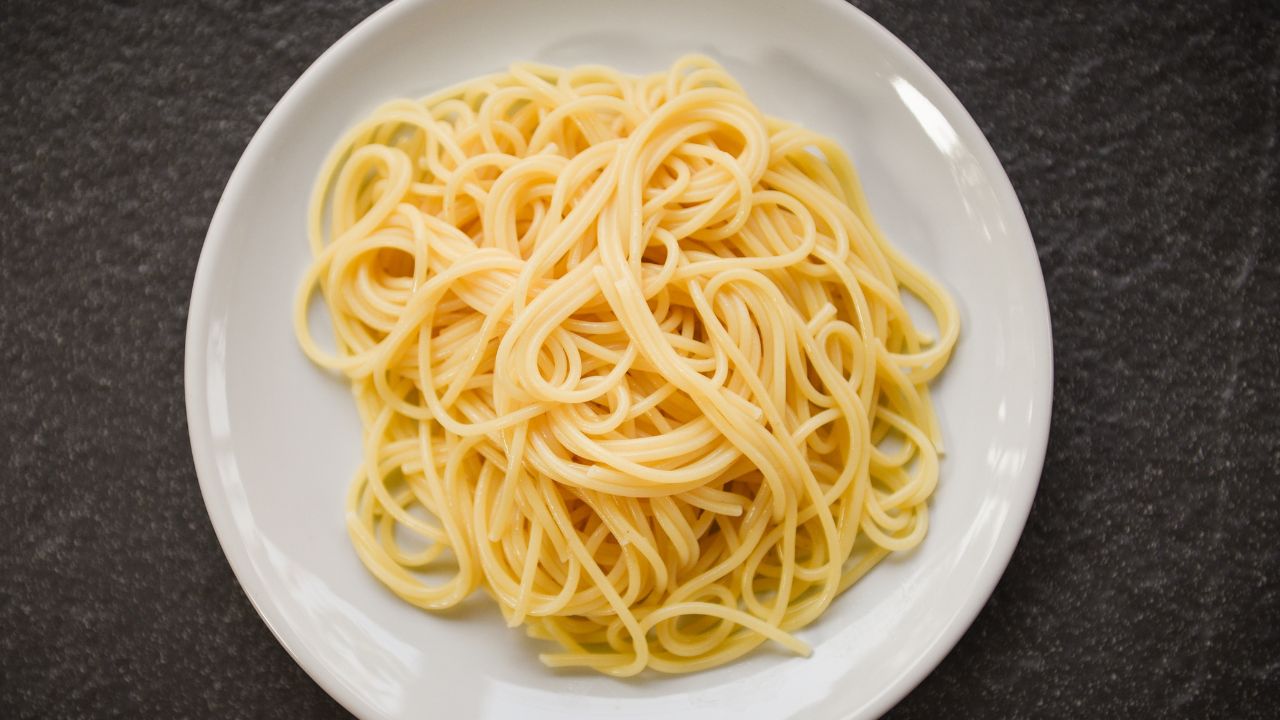
Can chickens eat cooked pasta. Yes, and cooked pasta is the only form to serve. Boil it in plain water with no salt in the pot, drain it, and let it cool before it goes to the run. Al dente holds together better than mush, because soft overcooked pasta clumps into a sticky lump that one hen guards and the rest cannot share. A little firmness helps the pieces scatter and keeps the flock moving.
Plain is the whole rule, and it is worth spelling out, because pasta rarely reaches a hen plain. No tomato sauce, no cheese sauce, no pesto, no butter, no oil, no salt, no garlic, no onion and no stock cube in the cooking water. The checker note says it plainly, “Plain, no sauce or salt”, and every extra you add moves the food away from that Safe verdict. Leftover pasta from a family meal is fine only if it was served plain, or if you can rinse the sauce off properly, and most of the time it is simpler to cook a small plain batch for the hens.
Cooked pasta brings very little nutrition of its own. It is mostly refined carbohydrate, with small amounts of protein and almost no fibre or vitamins. That is not a reason to avoid it, it is a reason to keep the serving small. A treat that adds energy without adding nutrition is fine in a small amount and a problem in a large one, because every mouthful of pasta is a mouthful of layer feed a hen does not eat.
Spaghetti for Chickens. Chop the Long Strands First
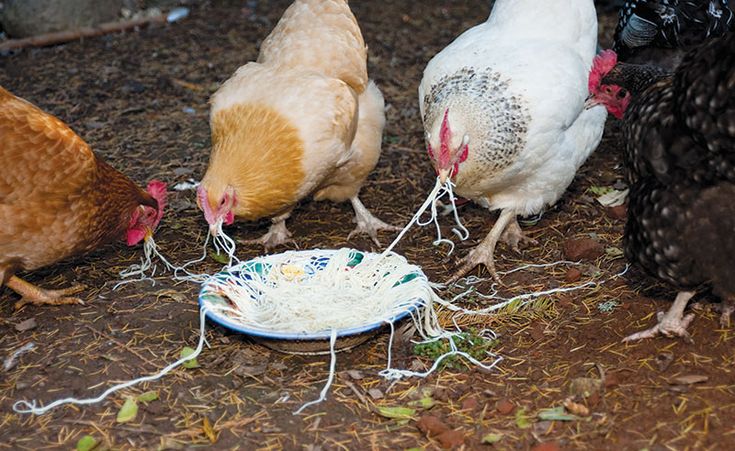
Can chickens eat spaghetti. Yes, and spaghetti is the most fun form of pasta for a flock. The checker says spaghetti is Safe, with the note “Plain, a famously fun treat”, and the fun is real. Hens treat a long strand like a worm, grabbing one end and running while the others chase, and a plate of spaghetti can keep a small flock busy and laughing for ten minutes. That enrichment value is the best reason to serve it, and it is why spaghetti beats short shapes for entertainment.
Chop the long strands first, because a whole strand is the one thing that can spoil the fun. A hen that grabs a long strand and runs will be chased by the rest of the flock, and a strand that is too long can be hard to swallow in one go. Cut cooked spaghetti into pieces about the length of your thumb, or break dry spaghetti in half before it goes in the pot. Short pieces scatter fairly, every hen gets a share, and nobody ends up trailing a noodle across the run.
Spaghetti night leftovers are the usual source, and the same plain rule applies. Plain boiled spaghetti with nothing on it is a perfect treat. Spaghetti with tomato sauce, meatballs, cheese or garlic bread on the side is not, because the sauce and the extras carry the salt and onion the checker warns about. If the family meal was sauced, set a small plain portion aside before the sauce goes on, and your hens get the treat without the trouble.
Noodles and Other Shapes. Penne, Fusilli and Egg Noodles
Can chickens eat noodles. Yes, and the checker says noodles are Safe, with the note “Plain wheat/egg noodles, no seasoning”. Wheat noodles and egg noodles are the same food as spaghetti in a different shape, and the same plain cooked rule covers them. Cook them plain, let them cool, chop the long ones, and scatter them in the run.
Short shapes are the easiest pasta to serve, because they need no chopping at all. Penne, fusilli, farfalle and macaroni all cook into bite sized pieces a hen can manage, and they scatter fairly across the flock without one bird running off with the lot. Fusilli is a good choice for hens, because the twists are easy to grip with a beak and hard to swallow whole. Macaroni is the smallest common shape, and it is the easiest for a hen to eat in one peck, which makes it a good first pasta for a flock that has never tried it.
Whole wheat pasta is fine too, and it is a slightly better choice than white pasta, because it carries a little more fibre. The difference is small, and either is fine as a treat. What matters is not the flour, it is the cooking and the extras. Brown pasta with sauce is still sauced pasta, and white pasta served plain is still the Safe food the checker describes.
Dry and Raw Pasta. Small Amounts Only, Cooked Is Better
Can chickens eat raw pasta. Only in small amounts, and cooked is better. Our food checker gives raw pasta a Caution verdict, with the note “Dried pasta swells as it absorbs moisture, small amounts only”, and the reason is simple. Dry pasta is hard and it absorbs water, so a piece eaten dry keeps swelling inside the bird as it soaks up moisture. A few small pieces are no problem, because a hen’s crop and gizzard can handle them, but a large amount of dry pasta can sit heavy and uncomfortable, and it is an unnecessary risk when cooked pasta is so easy.
The same Caution covers the other dry forms. Uncooked spaghetti, dry penne, dry macaroni and broken dry pieces from the bottom of the packet are all the same food in the same state, hard, dry and ready to swell. If your hens find a few spilled dry pieces on the kitchen floor, there is no need to worry. If you are serving pasta on purpose, cook it first. Cooking is the difference between a Safe treat and a Caution one.
Do not soak dry pasta and call it cooked. Pasta that has sat in water for a few minutes is soft on the outside and hard in the middle, and it still carries the swelling problem. Properly boiled pasta, cooked right through and cooled, is the Safe form, and there is no shortcut to it. The pot takes ten minutes, and that is the whole price of the safe version.
How to Serve Pasta. Cooked, Chopped and Scattered
How to serve pasta to chickens is simple, and the steps are the same each time. Boil the pasta in plain water with no salt, drain it, and let it cool until it is comfortable to hold. Chop long shapes like spaghetti and linguine into thumb length pieces, and leave short shapes as they are. Scatter the pieces across the run or in a shallow dish, and let the hens find them while they peck.
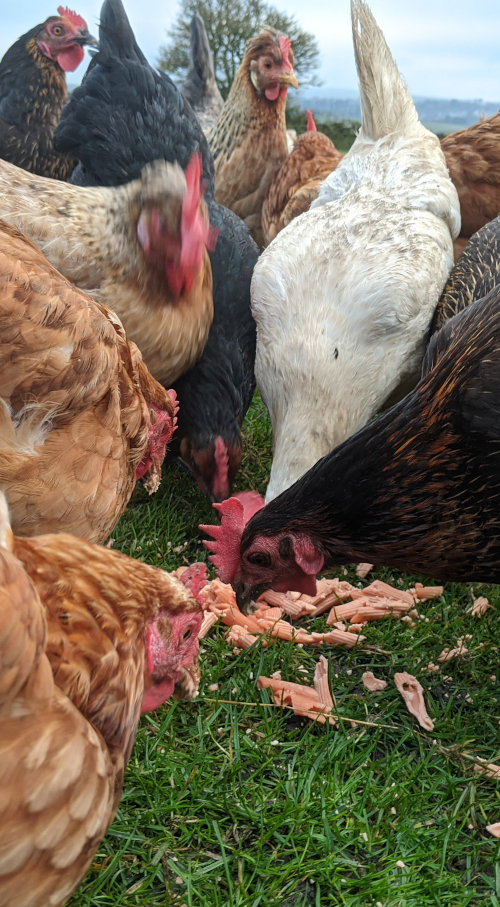
Scattering matters more with pasta than with most treats, because pasta is the treat hens chase. A single pile means the boldest hen eats most of it while the shy ones watch, and a long strand means one hen runs with the prize while the rest give chase. Scattered short pieces keep the flock spread out and pecking calmly, and every bird gets a fair share without a scuffle.
A few rules apply every time. Never serve pasta hot from the pot, because it can burn a hen’s mouth and crop. Never serve pasta that has gone slimy or mouldy, and throw away leftovers that have sat out overnight. Never serve pasta in sauce, oil, butter, dressing or seasoning, because the extras are the problem, not the pasta. And never leave a bowl of pasta in the run all day, because it will attract flies and go off in the heat.
How Much and How Often. A Small Treat, Not a Meal
Pasta is a treat, not feed, and the amount matters as much as the choice of form. A good serving is a small handful of plain cooked pasta per bird, about as much as fits in your cupped palm for each hen, offered two or three times a week at most. Treats of every kind together should stay under about 10 percent of what your hens eat in a day, because layer feed is what makes eggs, and treats only dilute it.
Pasta is mostly carbohydrate, so it is low in calories per mouthful but easy to overfeed, because hens love it and will keep eating as long as it is there. The real risk of overfeeding pasta is not weight, it is the feed a hen does not eat. A hen that fills up on pasta eats less layer feed, and layer feed is where the calcium, protein and vitamins for eggs come from. That is why the serving stays small, even though cooked pasta itself is safe.
Rotate pasta with the other treats in the programme rather than serving it every day. A few pieces of spaghetti on Monday, some chopped penne on Thursday, and a different treat on Saturday gives the flock variety without turning any one food into a daily habit. If you want another treat to rotate with pasta, the feeding series has plenty, and the same small serving habit applies to all of them.
Sauces and Toppings to Avoid. What Stays in the Kitchen
The pasta is Safe, and the sauce is where the trouble starts. Tomato sauce is usually made with onion, garlic and salt, and all three are foods a hen should not eat in quantity. Cheese sauce and butter add fat and salt with almost no benefit. Pesto is made with garlic and a lot of salt. Cream sauces add fat and dairy a hen cannot digest well. None of these turns a Safe food into a better treat, they turn it into a salty, fatty meal a hen does not need.
Meatballs and sausage served with pasta stay out too, because they are salty, fatty and often seasoned with onion and garlic. Spaghetti and meatballs is a family favourite, but the noodles are the only part the hens should get, and only if they are plain. Pick the plain noodles out before the sauce goes on, and the hens get their treat while the family keeps the rest.
Cheese deserves its own line, because keepers ask about it often. A tiny crumb of plain cheese now and then is not a danger, but cheese is salty and fatty, and it adds nothing a hen needs. Pasta with cheese on top is not plain pasta, and the checker verdict for plain pasta does not cover it. If you want to give your hens a cheesy treat, keep it tiny and rare, and never let it become the way pasta is served.
Instant Noodles. Unsafe, the Flavouring Is a Salt Bomb
Can chickens eat instant noodles. No, and this is the one pasta form the checker calls Unsafe. The note is blunt, “The flavouring is a salt bomb”, and it is right. A single flavour packet holds far more salt than a hen should eat in a day, and the noodles themselves are usually fried before they are dried, so they carry extra fat as well.
Plain instant noodles with the flavour packet thrown away are still not a good treat. The noodles are made to cook in three minutes, which means they are thin, soft and low in fibre, and they offer nothing a hen needs. Cooked plain pasta from a packet of spaghetti or penne is cheaper, safer and better in every way, and there is no reason to reach for the instant kind.
The same warning covers pot noodles, cup noodles and any noodle product that comes with a flavour sachet. The sachet is the problem, and the noodles are not worth saving. If a packet of instant noodles is the only pasta in the cupboard, skip the treat that day and serve something else.
Can Baby Chicks Eat Pasta. Wait Until Four Weeks
Can baby chicks eat pasta. Yes, but only after they are about four weeks old, and only as tiny pieces of soft cooked pasta. Chicks under four weeks should eat starter feed only, because their digestion is still developing, and they need the balanced nutrition in the starter to grow properly. A starchy food like pasta is too much for a very young chick, even in a small amount.
When your chicks are old enough for treats, offer only a few tiny pieces of soft plain cooked pasta, about a pinch per chick, and only once in a while. The pieces must be chopped very small, because a chick cannot manage a whole piece of penne or a long strand of spaghetti. Always have chick grit available when you offer any treat, because chicks need grit in their gizzard to grind food that is not starter crumb.
Never give chicks dry or raw pasta, and never give them instant noodles or sauced pasta. Most keepers will find it simpler to wait until the chicks are six weeks old before offering pasta at all, and there is no rush. Starter feed is the right food for young birds, and treats can wait.
Pasta and the Cooked Grain Family. Rice, Oatmeal and Quinoa
Pasta sits in a family of cooked grains, and the same serving habits carry across the whole family. Our guide to rice explains the cooked grain rule, and it even settles the old myth about raw grains swelling, because rice is fine raw or plain cooked. Our guide to oatmeal covers the other cooked grain treat, warm and soft in winter. Our guide to quinoa covers the other cooked only grain in this programme, with its own rinse first rule. If your hens like pasta, they will probably like all three, and all four follow the same rule, cook it plain, serve it cool, and keep the serving modest.
The family link is useful, because it stops a keeper from learning the same lesson four times. Cooked grains are safe treats, raw grains need care, and sauces and seasoning are always the problem, never the grain itself. Pasta is the most fun of the four, because of the spaghetti chase, and rice is the most practical, because it cooks fastest. Oatmeal is the winter favourite, and quinoa is the protein rich one. Together they give a flock a whole week of different treats without any new rules to learn.
FAQs
Can chickens eat pasta.
Yes. Our food checker gives cooked pasta a Safe verdict, with the note “Plain, no sauce or salt”. Serve it cooked, plain and cool, in small amounts, two or three times a week at most. Dry pasta is Caution, and instant noodles are Unsafe.
Is pasta safe for chickens.
Yes, when it is cooked and plain. Spaghetti, noodles, penne and other shapes are all Safe in their plain cooked form. The danger is not the pasta itself but the extras, sauce, salt, butter, cheese and seasoning, and the uncooked form, which swells as it absorbs moisture.
Can chickens eat spaghetti.
Yes, and it is the most fun pasta for a flock. Our food checker says spaghetti is Safe, with the note “Plain, a famously fun treat”. Chop the long strands into thumb length pieces first, so nobody runs off with a whole strand and the whole flock gets a share.
Can chickens eat raw pasta.
Only in small amounts, and cooked is better. Our food checker gives raw pasta a Caution verdict, with the note “Dried pasta swells as it absorbs moisture, small amounts only”. A few spilled dry pieces are no problem, but pasta served on purpose should always be cooked first.
Can chickens eat noodles.
Yes. Our food checker says noodles are Safe, with the note “Plain wheat/egg noodles, no seasoning”. Cook them plain, let them cool, and chop the long ones. Instant noodles are the exception, and they are Unsafe, because the flavouring is a salt bomb.
Can baby chicks eat pasta.
Yes, but only after they are about four weeks old, and only as tiny pieces of soft plain cooked pasta, about a pinch per chick. Chicks under four weeks should eat starter feed only. Never give chicks dry pasta, sauced pasta or instant noodles, and always have chick grit available when you offer any treat.
If you are just starting out with backyard chickens, grab our free starter checklist and keep it by the coop for those first weeks of trying new treats.

Nusrat
Author, TheChickenPet.com