
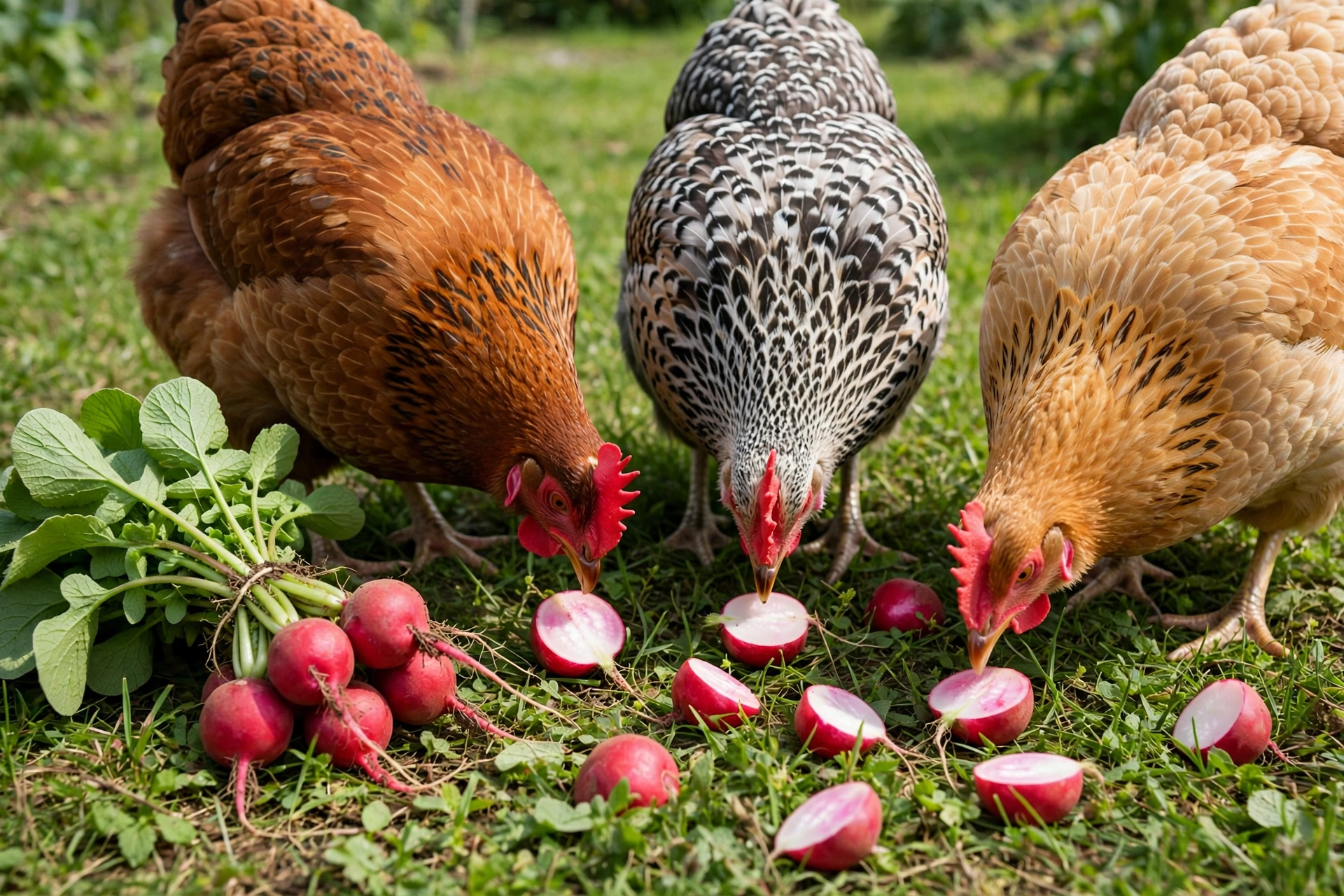
Yes, chickens can eat radishes, roots and leaves both, and the root is served grated or halved, and the leafy tops are fine too, and a small serving once or twice a week is enough, and the peppery bite puts some hens off, and too many can loosen droppings, and may affect egg taste, and the serving stays small, and the root must be grated or halved first, and never served whole.
Table of Contents
- The Short Answer. Yes, Roots and Leaves
- Radish Roots. Safe, Grated or Halved
- Radish Leaves. The Tops Are Fine Too
- Raw Radishes. Chop or Halve Them First
- The Peppery Bite. Some Hens Say No
- How Much Radish. A Small Serving, Once or Twice a Week
- Dense Chunks. Why Size Matters
- Radishes Compared With Kale and Cabbage. The Brassica Family
- Radishes for Baby Chicks. Wait Until They Are Older
- FAQs
Radishes are safe for chickens, roots and leaves both, served grated or halved, in small servings once or twice a week.
The root is served grated or halved, and the leafy tops are fine too, and both are safe.
A small serving once or twice a week, because too many can loosen droppings and may affect egg taste, and the peppery bite puts some hens off.
The Short Answer. Yes, Roots and Leaves
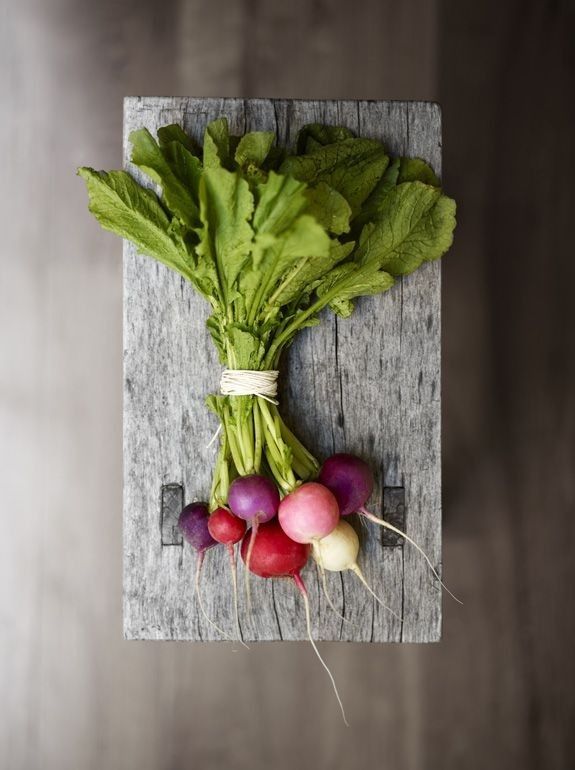
Yes, chickens can eat radishes, roots and leaves both, and the root is served grated or halved, and the leafy tops are fine too, and a small serving once or twice a week is enough, and the peppery bite puts some hens off, and too many can loosen droppings, and may affect egg taste, and the serving stays small, and the root must be grated or halved first, and never served whole.
Are radishes safe for chickens. Yes, radishes are safe for chickens, roots and leaves both, and the root is crisp, and watery, and the tops are soft, and leafy, and the hens will eat both, and the serving stays small, because radish is a treat, and treats stay under a tenth of what the hens eat in a day, and a hen that eats too many treats will eat less feed, and lay fewer eggs, and get fat, and the treat must stay a treat, not a meal.
Our guide to what chickens can eat covers the whole root and leaf list, and the safe and unsafe foods, and it explains how to use the food checker before you serve anything new.
The rule is simple. Roots and leaves both, grated or halved, and a small serving, once or twice a week.
Radish Roots. Safe, Grated or Halved
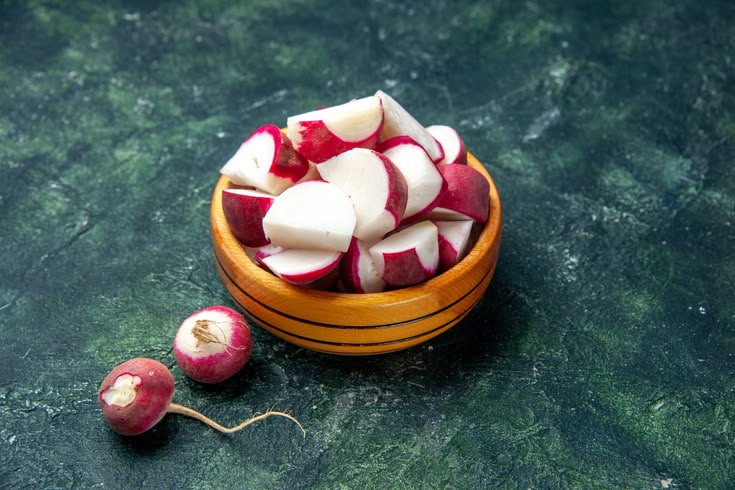
The radish root is the round red part, and it is safe for chickens, grated or halved, and it is crisp, and watery, and the hens will peck at it, and eat it, and the serving is a few thin slices, or a spoonful of grated root, per hen, once or twice a week, and the root must be washed first, and the thin tail root trimmed off, and the root grated, or cut in half, before the hens get it, and a whole radish is never served, because a whole radish is hard, and round, and a hen can swallow a chunk whole, and it can sit in the crop, and block it.
Grate the root for a flock, and the shreds are easy to peck, and easy to swallow, and halve the root for a few hens, and the halves are easy to hold, and easy to peck, and the grated root can be scattered, and the hens will find it, and scratch for it.
A radish that is soft, or mouldy, or rotten, is never fed, and a radish from the garden should be washed, and a radish from the shop should be washed too, and the soil must come off, and the root must be firm, and fresh, and red, and the tops must be green, and fresh, and a radish that smells off is thrown away, and never fed.
The rule is simple. Root grated or halved, washed first, and a small serving, once or twice a week.
Radish Leaves. The Tops Are Fine Too
Can chickens eat radish leaves. Yes, chickens can eat radish leaves, and the leafy tops are fine, and the tops are soft, and leafy, and the hens will eat them, and the tops can be served fresh, or chopped, and a small handful per hen is enough, and the tops should be washed first, and chopped into short pieces, and scattered, or put in a feeder, and the hens will peck at them, and eat them gladly.
The tops must come from radishes that were never sprayed, and a sprayed top is never fed, and the tops must be fresh, and green, and a top that is yellow, or wilted, or slimy, is thrown away, and never fed, and the tops from the garden are best, because you know what went on them, and the tops from the shop should be washed well, and the soil must come off, and the tops must be fresh.
The tops are a leafy green, and they sit with kale, and cabbage, and the other brassica leaves, and the serving is the same, a small handful per hen, once or twice a week, and the tops count toward the treat limit, and the feed stays the main food, and the tops are a treat, not a meal.
The rule is simple. Leafy tops are fine, washed first, and chopped, and a small handful per hen.
Raw Radishes. Chop or Halve Them First
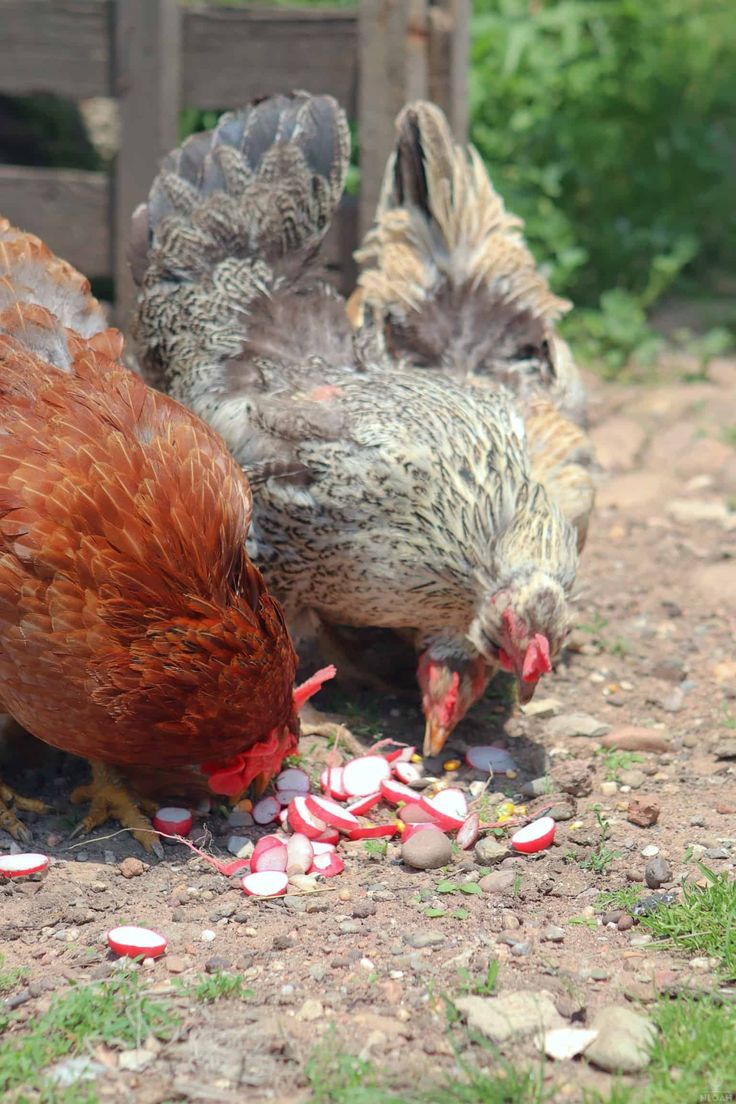
Can chickens eat raw radishes. Yes, chickens can eat raw radishes, and raw is the way to serve them, and there is no need to cook them, and the raw root is crisp, and watery, and the hens will peck at it, and eat it, and the raw root must be grated or halved first, and a whole raw radish is never served, and a raw chunk is hard, and dense, and a hen can swallow it whole, and it can sit in the crop, and block it, and the grating, or the halving, is the step that makes raw radish safe.
Grate the raw root on a coarse grater, and the shreds are soft enough to swallow, and halve the raw root with a knife, and the halves are easy to peck, and the hens will eat them down to nothing, and the raw tops need only a wash, and a chop, and the tops are soft already, and the hens will eat them, and the serving is a small amount, once or twice a week.
A raw radish that is firm, and fresh, and red, is the one to serve, and a raw radish that is soft, or mouldy, or rotten, is never fed, and the root must be washed, and the tail trimmed, and the tops must be washed, and chopped, and the serving stays small, and the feed stays the main food.
The rule is simple. Raw is fine, grated or halved, and never whole, and a small serving, once or twice a week.
The Peppery Bite. Some Hens Say No
The peppery bite is the radish flavour, and it is the one honest caution, and some hens love it, and some hens peck once, and walk away, and the bite is strongest in a big radish, and in a radish that grew in hot weather, and a small radish, and a radish that grew in cool weather, is milder, and the hens will eat it more gladly, and the bite is the reason to start small, and to watch what the hens do.
Start with a tiny amount, and a few shreds of grated root, or a few chopped tops, and watch the hens, and if they eat it, the serving can grow a little, and if they peck once, and walk away, the radish is not for them, and it can be tried again another day, and if they refuse it twice, the radish is left out, and the hens are given a milder green instead, and the kale, and the cabbage, are the milder brassicas, and the radish is never forced.
Mixing the grated root with milder greens can help, and a few shreds in a bowl of chopped kale, or cabbage, will be eaten with the rest, and the peppery bite is softer in a mix, and the hens will eat the mix, and the radish is a small part of it, and the serving stays small, and the bite stays mild.
The rule is simple. The peppery bite puts some hens off, so start tiny, and watch, and never force it.
How Much Radish. A Small Serving, Once or Twice a Week
A small serving, once or twice a week, and no more, because radish is a treat, and treats in total should stay under a tenth of what the hens eat in a day, and radish counts toward that, and fruit, and mealworms, and scraps, all count together, so keep the radish to once or twice a week, and keep the rest of the treats small too, and a hen that eats too many treats will eat less feed, and lay fewer eggs, and get fat, and the treat must stay a treat, not a meal.
A few thin slices, or a spoonful of grated root, per hen, is the serving, and a small handful of chopped tops per hen is the serving, and a bigger flock can have more, and the rule stays the same, a small amount per hen, once or twice a week, and the serving should be gone in minutes.
Too many radishes can loosen droppings, and the droppings will be runny, and soft, and the hens will be fine, and the droppings will firm up when the radish stops, and too many radishes may affect egg taste, and the eggs can carry a faint peppery note, and the taste will fade when the radish stops, and the serving stays small, and the eggs stay clean, and the droppings stay firm.
The rule is simple. A small serving per hen, once or twice a week, and no more.
Dense Chunks. Why Size Matters
Dense chunks are the one thing to watch, because a radish root is hard, and dense, and a whole radish is round, and a hen can swallow a chunk whole, and a chunk can sit in the crop, and block it, and a blocked crop is a vet job, and a hen with a blocked crop will stop eating, and her crop will feel hard, and full, and she will need help fast, and the grating, or the halving, is the step that stops it, and the step is never skipped.
Grate the root, or halve it, every time, and the shreds are soft enough to swallow, and the halves are easy to peck, and the hens will eat them down to nothing, and the tops are soft already, and they need only a wash, and a chop, and the tops cannot block a crop, and the root is the part that must be cut, and the root is never served whole, and never served in thick chunks, and the serving is always grated, or halved, and the crop stays clear.
A hen that has eaten a chunk, and whose crop feels hard, and full, in the morning, needs a vet, and the keeper should not wait, and the vet is the answer, and the grating is the prevention.
The rule is simple. Grate it, or halve it, every time, and never serve a whole radish, or a thick chunk.
Radishes Compared With Kale and Cabbage. The Brassica Family
Radish is a brassica, and the brassica family is the family of kale, and cabbage, and broccoli, and the radish sits with them, and the serving is the same, a small amount, once or twice a week, and the peppery bite is the difference, because radish is peppery, and kale is mild, and cabbage is mild, and the hens that refuse radish will eat kale, and cabbage, and the family gives the keeper a choice.
Our guide to can chickens eat kale covers the brassica family, and the leafy greens rule, and it explains why kale is a mild brassica, and a good daily green.
Our guide to can chickens eat cabbage covers the other brassica, and the serving size, and it explains why cabbage is mild, and a good flock green.
Our guide to can chickens eat parsnips covers the other root vegetable, and the grated or chopped rule, and it explains why a root must be cut before serving.
The rule is simple. Radish is a brassica, same family as kale and cabbage, same serving, and the peppery bite is the difference.
Radishes for Baby Chicks. Wait Until They Are Older
Can baby chicks eat radishes. Baby chicks should wait until they are older before eating radishes, because chicks need their starter feed, and grit, and clean water, and radish is a treat for older birds, and a chick that fills up on radish will eat less starter feed, and grow slower, and the safe age is after they are eating well, and have grit, and are at least a few weeks old, and the root must be grated fine, and the tops must be chopped fine, and the serving must be tiny, and the peppery bite is stronger for a chick, and a chick that refuses it is left alone.
A chick that is a few weeks old, eating starter feed well, and with grit available, can have a tiny shred of grated radish, or a tiny piece of chopped top, once in a while, and it should be soft, and small, and easy to peck, and it should never replace starter feed, and never be given daily, and the piece must be tiny, and the serving must be rare, and if the chick will not eat it, the radish is left out, and tried again when the chick is older.
Our guide to when baby chicks can eat treats covers the safe age, and the first treats, and it explains what to give, and what to skip.
The rule is simple. Wait until the chicks are older, eating well, and have grit, then a tiny shred, once in a while.
FAQs
Are radishes safe for chickens. Yes, radishes are safe for chickens, roots and leaves both, and the root is served grated or halved, and the leafy tops are fine too, and a small serving once or twice a week is enough, and the peppery bite puts some hens off, and too many can loosen droppings, and may affect egg taste.
Can chickens eat radish leaves. Yes, chickens can eat radish leaves, and the leafy tops are fine, and the tops are soft, and leafy, and they should be washed first, and chopped into short pieces, and a small handful per hen is enough, and the tops must come from radishes that were never sprayed, and a top that is yellow, or wilted, or slimy, is thrown away, and never fed.
Can chickens eat raw radishes. Yes, chickens can eat raw radishes, and raw is the way to serve them, and there is no need to cook them, and the raw root must be grated or halved first, and a whole raw radish is never served, and a raw chunk is hard, and dense, and a hen can swallow it whole, and it can sit in the crop, and block it.
Can baby chicks eat radishes. Baby chicks should wait until they are older before eating radishes, because chicks need starter feed, and grit, and clean water, and a chick that is a few weeks old, eating starter feed well, and with grit available, can have a tiny shred of grated radish, or a tiny piece of chopped top, once in a while, and it should never replace starter feed, and never be given daily.
How much radish can chickens eat. A few thin slices, or a spoonful of grated root, per hen, once or twice a week, and a small handful of chopped tops per hen, and no more, because too many radishes can loosen droppings, and may affect egg taste, and treats in total should stay under a tenth of what the hens eat in a day.
If you are just starting out, our free starter checklist covers the basics, and the first treats, and it helps you set up the flock right.
Kohlrabi is another brassica your flock may enjoy, and you can read our guide to can chickens eat kohlrabi for the full detail on serving it.
Keep Reading

Nusrat
Author, TheChickenPet.com