
Chicken Care & Health
A chick that hatched yesterday and a chick that is three weeks old live in the same brooder, but they should not eat the same menu. Treats are where new keepers most often rush, because a chick pecking at something new is hard to resist. So when can baby chicks eat treats? Not at first. Starter feed and clean water come first, and the first tiny treats arrive at about two weeks old.
This guide follows the position already published in our Feeding pillar, What Can Chickens Eat?, and it uses the same food verdicts as our homepage food checker. The age by age chart below is the whole article in one table, and the sections after it explain the reasoning, the grit rule and the foods that stay off the menu at every age.
Table of Contents 9 sections
At a Glance: Baby chicks get chick starter and clean water only at first. First treats come at about two weeks old, tiny, soft and chopped, and chick grit must be available from the very first treat.
Egg Laying: Chicks are growing, not laying, and starter feed is balanced for that growth in a way no treat is. That is why treats stay small, soft and rare while hens can handle a wider treat range.
Good to Know: Day old chicks get no treats at all, with no exceptions needed. Celery is fine from treat age when it is chopped extra fine. Every food on the never list for hens is also never for chicks, and a chick’s small body makes mistakes less forgiving.
The Short Answer
Starter Only at First, With First Treats at About 2 Weeks: For the first days of life, the answer is no treats at all. A newly hatched chick lives on starter feed and clean water, and that plain menu is complete. Treats join the menu at about two weeks old, once chicks are eating starter confidently, and even then they arrive in tiny, soft, chopped amounts with chick grit beside them.
Everything else in this article hangs off that one line. Starter first, treats at about two weeks, grit from the first treat, and the never list at every age. If you keep those four rules, chick treats stop being a worry.

Why Chicks Need Starter First
Chick starter is not just small feed. It is a balanced ration built for the fastest growth period of a chicken’s life, with the protein, vitamins and minerals a developing body and digestive system need in the right proportions. No treat is built that way. A chick that fills its tiny crop with treats has less room for the food that is actually growing it.
The digestive system is also still developing in the first days. Starter and water are the foods it is ready for. That is why day old chicks and first week chicks get nothing else, however keen they look. Keenness is not readiness, and the free starter checklist walks through the first 30 days in the same order.
The Age-by-Age Treat Chart
This chart is the article in one place. Ages are guides rather than switches, so a small or slow chick stays on the earlier row a little longer.
| Age | What they can have | Chick grit? | Notes |
|---|---|---|---|
| Days 0 to 7 | Chick starter and clean water only | Not needed for starter | No treats at all in the first week. |
| Weeks 2 to 3 | First treats, tiny, soft and chopped, like a little cooked oatmeal or finely chopped greens | Yes, from the first treat | Treats stay rare and starter stays the meal. |
| Weeks 4 to 6 | Slightly wider soft treats from the Safe list, like plain scrambled egg and tiny mealworm amounts | Yes, always with treats | Still chopped to chick size. |
| Week 6 and older | Treat range widens toward the adult rules | Yes | Amounts still modest, with the full lists in the Feeding pillar. |
From about six weeks, growers move steadily toward the adult rules in our Feeding pillar, What Can Chickens Eat?, where the full safe, caution and never lists live. The amounts stay modest for as long as the birds are growing.

Do Chicks Need Grit for Treats?
Yes, from the very first treat, every time. Chicks have no teeth. Food is ground in the gizzard, and the gizzard needs small stones to do that work on anything tougher than starter. Chick grit is simply those stones in chick size, sold in small bags wherever chick feed is sold.
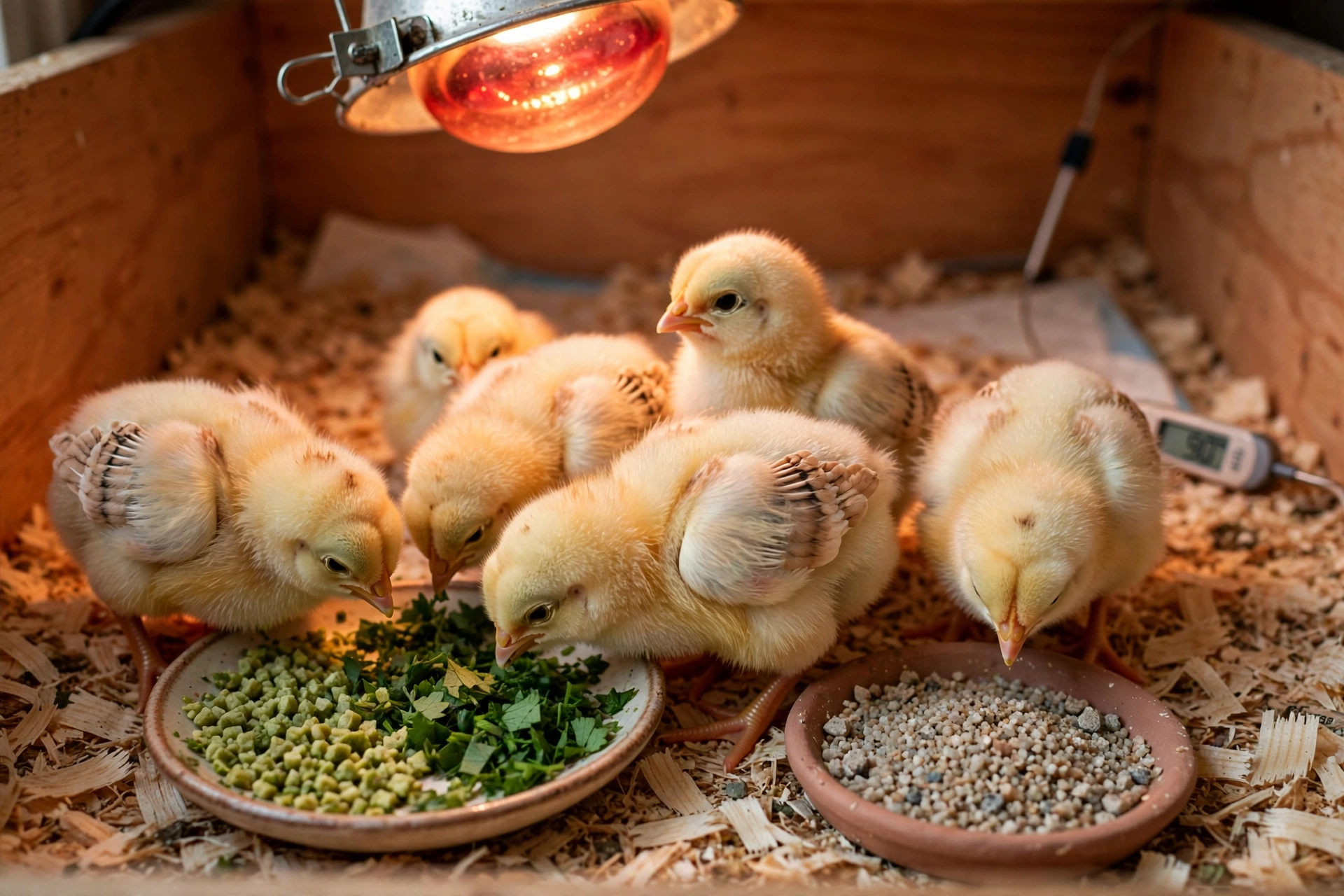
Starter alone does not need grit, because it is made to dissolve. The moment anything else enters the menu, a chopped green, a crumb of egg or a few mealworms, grit becomes part of the meal. Offer it in a small separate dish and let chicks take what they need. It costs little, it keeps for months, and it removes the one risk that follows every treat you offer.
Best First Treats for Baby Chicks
The first treats share three traits. They are soft, they are small, and they sit on the Safe side of our food checker.
- A little cooked oatmeal, plain and cooled, the same serve as in Can Chickens Eat Oatmeal?
- Finely chopped greens and celery, cut smaller than you would for hens
- Plain scrambled egg, cooked with no butter and no salt, cooled and crumbled
- Tiny amounts of mealworms, once grit is available, as an occasional extra rather than a habit
Offer one new treat at a time, in the morning, and watch the brooder afterwards. A chick that has eaten starter, tried a crumb of something new and gone back to the heat lamp has had exactly the right first treat day.

Can Baby Chicks Eat Celery?
Yes, from treat age, and the prep matters more for chicks than for hens. Celery itself is rated Safe in our checker, with the note to chop small because the strings can be tough. For a chick, those strings are the whole risk, so celery gets chopped extra fine, almost minced, before it goes into the brooder.
Serve a pinch, not a pile, and remove what is left after a short while so the brooder bedding stays clean. Our full guide Can Chickens Eat Celery? covers the hen version of the same food, and the chick rule is its younger sibling. Finer chopping, smaller amounts, same safe food.
How Much and How Often?
Tiny amounts, and less often than you expect. For chicks, treats are a tasting exercise, not a course. A pinch of chopped greens shared between the brood, or a teaspoon of cooked oatmeal between several chicks, is a full treat serve at two to three weeks old.
Starter stays the meal at every age in the chart. If chicks are filling up at the treat dish and drifting away from the feeder, treats have grown too big or too frequent. Pull them back for a few days and let starter do its quiet work again.
What Chicks Must Never Eat
The never list for hens is also the never list for chicks, word for word, and a chick’s small body makes every mistake on it less forgiving.
- Avocado
- Raw beans
- Chocolate
- Raw potato and green potato parts
- Apple seeds and stone fruit pits
- Mouldy food
- Salty food
There is no chick sized safe portion of any food on that list. When in doubt about a new food, check it on the homepage checker before it goes anywhere near the brooder, and if the checker says Unsafe, the conversation ends there.

FAQs
Can day old chicks eat treats? No. Day old chicks and first week chicks get chick starter and clean water only. Their first treats come at about two weeks old.
What treats can 2 week old chicks eat? Tiny, soft, chopped treats. A little cooked oatmeal, finely chopped greens or celery, or a crumble of plain scrambled egg, always with chick grit available.
Do chicks need grit for treats? Yes. Chick grit must be offered from the very first treat, because treats need grinding in the gizzard and chicks have no teeth.
Can baby chicks eat oatmeal? Yes, from about two weeks old. Cook it plain in water, let it cool, and serve a little with chick grit beside it. Can Chickens Eat Oatmeal? has the full recipe.
How much treat can a chick have? A pinch or a teaspoon shared between chicks is a serve. Treats stay rarer and smaller for chicks than for hens, and starter always stays the meal.
Keep Reading
