

Chicken Care & Health
Every keeper knows the moment. The rain stops, you open the run gate, and your hens are standing in brown soup up to their ankles, looking at you like you planned it. Mud is the most common run problem there is, and the most fixable, once you accept the one truth that changes everything. The bedding is only half the answer.
Water decides whether a run is muddy, and bedding decides how the hens live with what water remains. These 5 fixes run in the order that works. Stop the water getting in, lay the one bedding that beats mud in an open run, cover a corner, keep an emergency absorber for the worst spots, and feed the surface so it keeps working between big jobs.
Table of Contents 11 sections
- The Short Answer. Drainage First, Then Coarse Wood Chips
- Why Your Chicken Run Is Always Muddy
- Fix 1. Stop the Water Getting In
- Fix 2. Coarse Wood Chips, 4 to 6 Inches Deep
- Fix 3. Cover Part of the Run
- Fix 4. Pine Pellets for Emergency Wet Spots
- Fix 5. Deep-Litter Top-Ups
- Wood Chips vs Sand in a Chicken Run
- What Not to Put on a Muddy Run
- Why Mud Is a Health Problem, Not Just a Mess
- FAQs
At a Glance:
Best all-weather bedding: Coarse wood chips; Depth: 4 to 6 inches; The first fix: Drainage, before any bedding; Sand: Covered runs only
The 5 Fixes:
1. Stop the water getting in; 2. Coarse wood chips, deep; 3. Cover part of the run; 4. Pine pellets on wet spots; 5. Deep-litter top-ups
Good to Know:
Straw alone mats and moulds over mud; Droppings compost down into a chip layer; Top chips up as they break down
The Short Answer. Drainage First, Then Coarse Wood Chips
If you only do two things, do these. First, stop water flowing into the run, because no bedding on earth survives a run that acts as a pond. Second, lay coarse wood chips 4 to 6 inches deep. Chips are the best bedding for a muddy chicken run because rain drains straight through them, the hens walk on top instead of in the mud, and the whole layer slowly composts under their feet.
The remaining three fixes, a covered corner, pine pellets for emergencies and deep-litter top-ups, turn a fixed run into an easy one. And if you are still at the planning stage, the run surface belongs on the setup list early, which is where our “free Pet Chicken Starter Checklist” puts it.
Why Your Chicken Run Is Always Muddy
Mud has causes, and they are worth naming because each fix below answers one of them. Roof and yard runoff flows downhill into the run. The ground sits low, so puddles gather instead of draining. There is no cover, so every drop of rain lands in the run itself. And the hens have scratched the ground bare, so nothing drinks the water or holds the soil together.
Stocking makes it worse. The more hens on the same patch, the faster the ground goes bare and churns, which is one more reason the space figures in our guide “How Much Space Do 4 Chickens Need?” matter beyond comfort. A run can be muddy from water, from wear, or from both. Most are both, and the fixes stack the same way.
Fix 1. Stop the Water Getting In
Start outside the run, not inside it. Fill or regrade the low spots where puddles sit until the ground falls gently away. Dig a shallow diversion ditch along the uphill side so roof and garden runoff is carried around the run instead of through it. And gutter any coop or shed roof that currently dumps its rain straight into the run, because one roof can deliver more water than the sky does.
None of this is glamorous, and all of it is permanent. An hour with a spade removes water that bedding would have had to absorb every single week, forever. If your run sits in a genuinely low, wet hollow, be honest about it now. Drainage work or a relocated run will beat any material you spread inside it.
Fix 2. Coarse Wood Chips, 4 to 6 Inches Deep
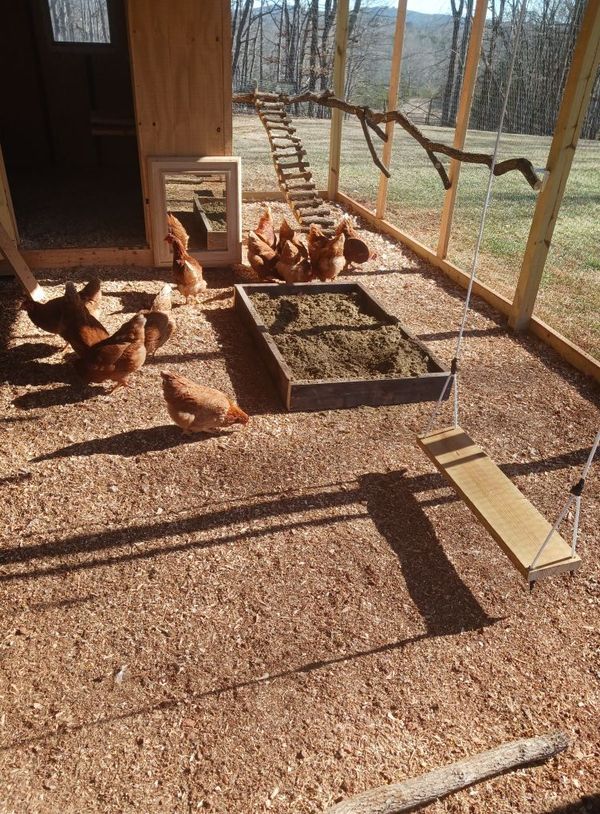
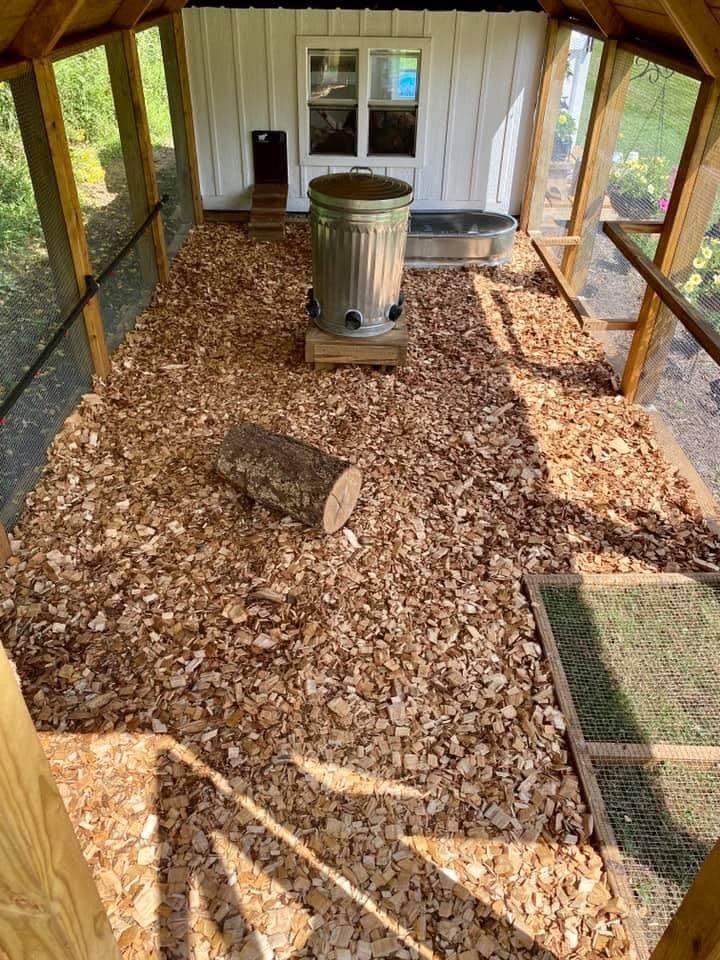
Here is the bedding answer itself. Coarse wood chips, the chunky kind from a tree surgeon or a load of aged ramial chips, spread 4 to 6 inches deep across the run. Rain falls through the gaps instead of pooling. Droppings drop into the layer and compost down where they land, worked by the hens scratching for the insects the chips attract. Feet stay up on the surface, out of the wet entirely.
Coarse is the whole secret. Fine shavings and sawdust pack down into a solid wet mat that behaves like the mud it covers, while chunky chips keep their structure for months. Fresh chips are usable, aged chips are better, and the layer wants a top-up forked in as it slowly breaks down into rich, dark compost you can steal for the garden.
Fix 3. Cover Part of the Run
You do not need to roof the whole run. Covering even half of it changes the flock’s whole winter. Under the roof the ground stays dry through any rain, so the feeder can live there without its contents turning to paste, the hens get a dust bathing corner that works in January, and there is always somewhere dry to stand.
A simple solid roof or a well-fixed tarp does the job, sloped so the water it catches runs off away from the run, never into it. The coop planning in our “Best Brahma Chicken Coop” guide treats the covered area as part of the build for exactly this reason. A cover is also what makes finer materials viable in the dry half, which brings us to the comparison everyone asks about.
Fix 4. Pine Pellets for Emergency Wet Spots
Some spots lose the fight no matter what you do. The gate where you walk daily, the patch under the pop door, the dip by the waterer. For those, keep a bag of pine bedding pellets, the compressed horse bedding kind. Scattered over a wet patch, the pellets drink up several times their own weight in water and break down into a soft, dry mulch within days.
Pellets are a fire extinguisher, not a floor. They are too costly to spread across a whole run and they break down fast, but as a same-day rescue for the worst square metre of mud they have no rival. Every mud-season keeper ends up with a bag by the gate.
Fix 5. Deep-Litter Top-Ups
Between chip loads, feed the surface with whatever dry, coarse material the garden gives you. Autumn leaves by the barrow load, hedge trimmings, spent plants that are chicken-safe, straw in thin scatterings mixed through rather than laid as a blanket. Fork it in, turn the layer over occasionally, and the run floor keeps rebuilding itself.
This is the deep-litter idea working outdoors. The hens do most of the labour, scratching new material in and old material down, and a run floor run this way stays dry on top, smells of almost nothing, and improves month by month instead of degrading.

Wood Chips vs Sand in a Chicken Run
The internet argues about this one because both sides are right, in different runs. Sand drains and dries beautifully in a roofed run in a dry climate, where rain never lands on it directly. Coarse construction sand there makes a clean, rakeable floor that some keepers genuinely love.
In an uncovered run in a rainy climate, sand fails, and it fails quietly. Rain soaks it, droppings mix in, and the whole surface slowly becomes the same mud with grit in it, with nowhere for the water to go. So the honest answer to wood chips vs sand in a chicken run is a question back. Is your run roofed and your climate dry? Sand is a fair choice. Anything else, and coarse wood chips are the all-weather default that will not let you down.
What Not to Put on a Muddy Run
Straw deserves its own warning because it is everyone’s first instinct. Laid on mud, straw mats down into a solid wet cap, holds the moisture under it, and moulds. As a thin scattering mixed into chips it is harmless. As the main fix it makes things worse while looking like help.
Fine sawdust compacts the same way chips refuse to. And the most common non-fix of all is adding more bare dirt to a muddy run, which produces, within one rainstorm, more mud. If a material cannot drain, absorb or build structure, it is not a run floor, it is future mud with extra steps.
Why Mud Is a Health Problem, Not Just a Mess
Mud would be worth fixing for the smell and the ruined shoes alone, but the real stake is the hens. Feet standing in wet filth day after day are feet at risk of infections such as bumblefoot, and the bacteria behind half the common flock illnesses thrive in warm, wet, dirty ground. Eggs laid anywhere near it come in coated, and a run that smells is a run whose ground has gone anaerobic and foul.
None of that needs a scare story attached. It just means the mud fix belongs on the health list, not the cosmetics list, somewhere in the same territory as the everyday care covered in our “chicken care and health” guide. Dry feet are healthy feet, and healthy feet carry a hen through winter.
FAQs
What is the best bedding for a muddy chicken run? Coarse wood chips, 4 to 6 inches deep, over drainage you fixed first. Chips let rain drain through, keep feet on top of the surface and compost down slowly. Nothing else matches them in an open run in a wet climate.
Can I use sand in a chicken run? Yes, in a covered run in a dry climate, where rain never lands on it. In an open run in wet weather sand mixes with droppings and turns into the same mud with grit in it, so use wood chips there instead.
How deep should wood chips be in a chicken run? 4 to 6 inches. Shallower than that and the hens scratch through to mud within weeks. Fork in a top-up as the layer breaks down, roughly once or twice a year in most runs.
Will wood chips make my run smell? No, the opposite when the layer stays aerobic. Chips drain, droppings compost down into the layer, and a chip run smells of almost nothing compared with bare mud. A smell means the layer is waterlogged and needs drainage work or a fresh top-up.
Is straw good for a muddy chicken run? Not on its own. Straw laid on mud mats into a wet cap, holds moisture underneath and moulds. Mixed in thin scatterings through a wood chip layer it is fine, but it is never the fix by itself.
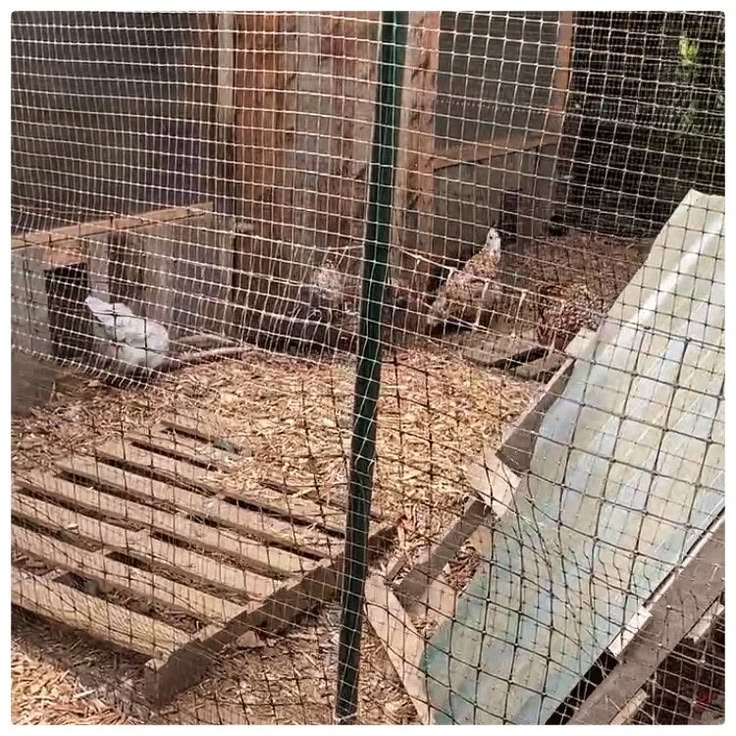
A covered corner earns its keep twice, because it is also the natural home for a dust bath. Our guide How to Make a Dust Bath for Chickens gives the size, the soil and sand mix and the simple upkeep.
Keep Reading
