

Chicken Care & Health
Four hens sounds like the smallest, simplest flock in the world, until you stand in the garden with a tape measure and realise nobody agrees on the numbers. One site says a tiny hutch is plenty. Another wants a small barn. The truth sits in the middle, and it is not complicated once you know the two figures every good guide is built on.
Four chickens need a 16 square foot coop and a 40 square foot run. This guide shows you where those numbers come from, gives you the table for flocks from 2 to 10 hens, adjusts the figures for heavy breeds and bantams, and explains the one exception free-ranging makes, and the one it does not.
Table of Contents 10 sections
- The Short Answer. 16 sq ft Coop, 40 sq ft Run
- Space for 4 Chickens at a Glance
- Coop Size for 4 Chickens. Why 4 sq ft per Hen
- Run Space. Why 10 sq ft per Hen
- The Space Table. 2 to 10 Chickens
- Heavy Breeds and Bantams. Adjusting the Numbers
- Roost Bar and Nesting Box Space
- Does Free-Ranging Change the Numbers?
- What Happens When Chickens Don’t Get Enough Space
- FAQs
At a Glance:
Coop for 4 hens: 16 sq ft (a 4 by 4 ft coop); Run for 4 hens: 40 sq ft (5 by 8 ft, or 4 by 10 ft); Roost bar: About 4 feet in total; Nesting boxes: 1 to 2
Per Hen:
Inside the coop: 4 sq ft per hen; In the run: 10 sq ft per hen; On the roost: 8 to 12 inches per hen
Good to Know:
4 and 10 are the comfort target, not a legal minimum; Free-ranging shrinks the run figure, never the coop figure; Only usable floor space counts
The Short Answer. 16 sq ft Coop, 40 sq ft Run
Four standard hens need 16 square feet of coop and 40 square feet of run. In real shapes, that is a 4 by 4 foot coop and a run of 5 by 8 feet, or 4 by 10 if your garden is long and narrow. Add roughly 4 feet of roost bar and 1 to 2 nesting boxes, and the whole space budget for the most popular starter flock is settled.
Planning the build from scratch? The coop and run sit inside the wider setup, and our “free Pet Chicken Starter Checklist” lays out the full list in build order, so the space decisions come before the shopping ones.
Space for 4 Chickens at a Glance
Everything in this guide hangs on two numbers. Four square feet per hen inside the coop, and 10 square feet per hen in the run. Multiply by your hens and you have your sizes. The sections below explain why those two figures work, where the lower published minimums fall short, and how to adjust them for your breeds.
Coop Size for 4 Chickens. Why 4 sq ft per Hen
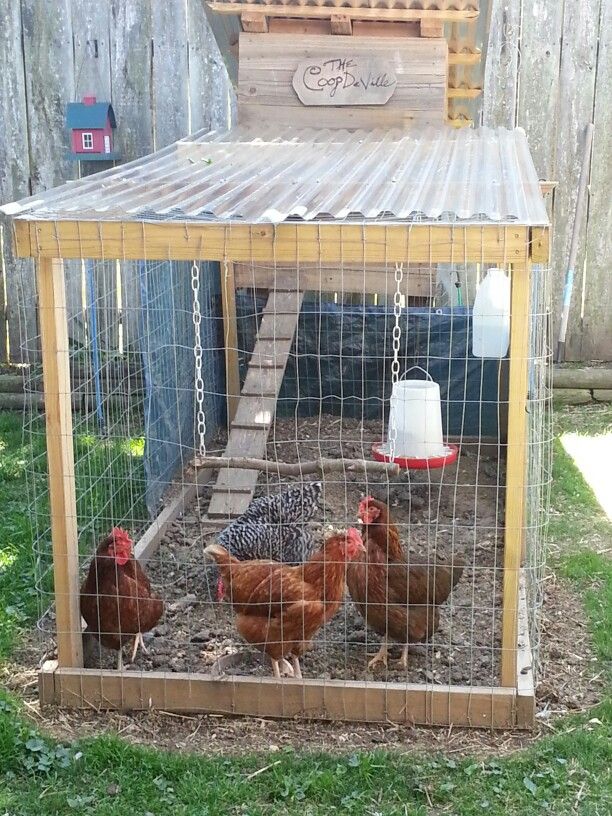
The coop is the hens’ bedroom, dining shelter and bad-weather refuge in one, and all four hens are inside it together every single night. At 4 square feet per hen, each bird can turn, flap, reach the feeder and settle without standing on her flockmates. A 4 by 4 foot coop gives you exactly that for four hens, with the roost along one wall and the boxes external or tucked without eating the floor.
You will see lower figures quoted, 3 square feet and sometimes less, presented as minimum space for backyard chickens. Hens can survive those numbers, and that is all that can be said for them. The 4 square foot figure is the planning target that keeps a pet flock calm, and for birds you handle and enjoy daily, calm is the whole point.
Run Space. Why 10 sq ft per Hen
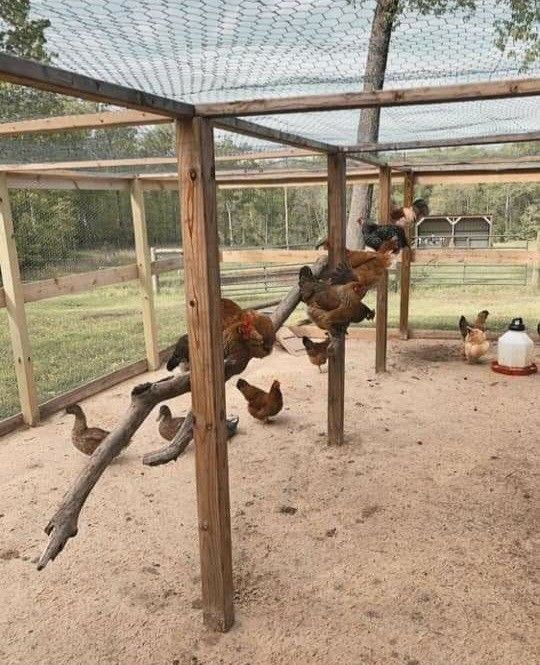
The run is where hens spend their waking day, scratching, dust bathing and working out the flock’s social order. Ten square feet per hen gives 40 square feet for four, enough ground that the grass and soil stand some chance, the low-ranking hen can step out of the boss’s way, and nobody has to stand in mud or droppings all day.
Runs can be any shape that reaches the total. Five by eight feet is the common build, 4 by 10 suits a narrow side garden, and an L shape around a corner works just as well. Measure the ground the hens can actually walk on, the same rule as the coop floor.
The Space Table. 2 to 10 Chickens
The same 4 and 10 rule, worked out for the flock sizes people actually keep. Find your hen count and read across.
| Hens | Coop (sq ft) | Run (sq ft) |
|---|---|---|
| 2 | 8 | 20 |
| 4 | 16 | 40 |
| 6 | 24 | 60 |
| 8 | 32 | 80 |
| 10 | 40 | 100 |
One honest warning from every experienced keeper. Chicken maths is real, and flocks grow. If there is any chance your four will become six, build for six now. Extending a coop costs far more than the extra timber would have.
Heavy Breeds and Bantams. Adjusting the Numbers
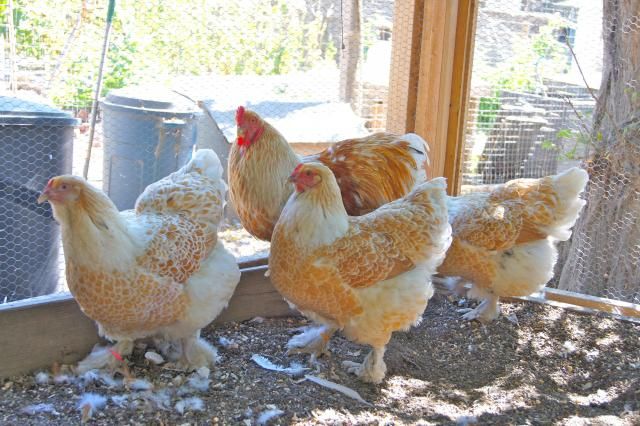
The 4 and 10 rule is written for standard hens. Big breeds need more. Brahmas, Orpingtons and Cochins are heavy, broad birds, and each one wants closer to 5 or 6 square feet of coop space, so four of them need a 20 to 24 square foot coop rather than 16. It is no accident that the calmest breeds on our “friendliest chicken breeds” list are mostly these heavy hens, and they stay calm partly when nobody is standing on anybody else. The “Best Brahma Chicken Coop” guide works through a heavy-breed build in full.
Bantams go the other way, managing well on about 2 to 3 square feet of coop space each. Small is not a licence to crowd, though. A bantam still needs to escape a bully, reach the feeder and roost in peace, so treat 2 to 3 as her genuine allowance, not a starting point for squeezing in extras.
Roost Bar and Nesting Box Space
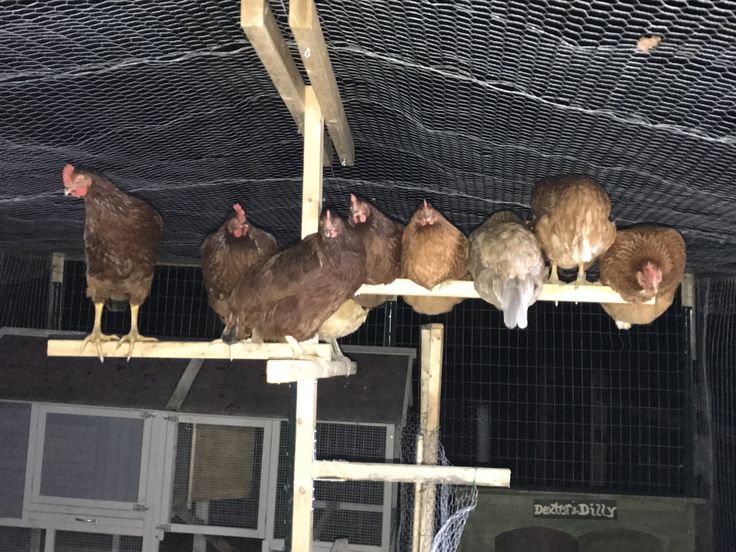
Two smaller allowances complete the budget. On the roost, allow 8 to 12 inches of bar per hen, which comes to roughly 4 feet for four hens. They will huddle together at one end most nights whatever you provide, but every hen needs her own place on the bar available, especially in summer when they spread out to cool down.
Nesting boxes follow their own ratio of one box per 3 to 4 hens, so four hens need just 1 to 2 boxes. Our guide “How Many Nesting Boxes for 6 Hens?” gives the full ratio table and the box sizes for standard and large breeds.
Does Free-Ranging Change the Numbers?
Half of them. If your hens range the garden for most of the day, the run figure relaxes, because the garden itself becomes the run and a smaller attached pen serves as a safe holding area. Keepers whose birds range daily often work with a modest run without any crowding problems at all.
The coop figure never relaxes. However wide the hens wander by day, all four are shut in together all night, every night, and on storm days and high-alert predator days they may be shut in around the clock. The coop must fit the flock at its full size, full stop. Count only usable floor space while you are at it. Floor taken by internal nest boxes, feeders and waterers is not hen space, which is why external nest boxes are such a smart design in a small coop.
What Happens When Chickens Don’t Get Enough Space
Crowding rarely announces itself as a space problem. It arrives as behaviour. Hens with too little room get bored and stressed, and stressed hens pick at each other. Feather pecking starts, then bullying at the feeder, then a low-ranking hen too frightened to eat or roost with the flock. Our article “Why Do Chickens Peck Each Other?” covers the causes and fixes in depth, and lack of space sits near the top of the list.
The ground suffers too. Too many hens on too little run turns grass to mud and mud to a smell no neighbour loves. If your flock will be shut in for long stretches, through bad weather or a local predator problem, size up from the target rather than down. Space is the cheapest behaviour medicine there is.
FAQs
How many square feet per chicken in the coop? Plan on 4 square feet per hen inside the coop, which gives 16 square feet for 4 hens. Some guides quote 3 square feet as a minimum, and hens can manage at that level, but 4 is the figure that keeps a small pet flock calm and pecking-free.
What is the minimum space for backyard chickens? The lowest figures commonly published are about 3 to 4 square feet per hen in the coop and 8 to 10 in the run. Treat those as floors, not targets. The comfortable planning numbers are 4 square feet inside and 10 outside, and heavy breeds need more again.
Can 4 chickens live in a small backyard? Yes, comfortably. The whole setup for four hens is a 16 square foot coop and a 40 square foot run, 56 square feet in total, which fits along one fence line of most gardens. Free-ranging time in the rest of the garden makes a small yard feel bigger still.
Do free-range chickens need less space? Less run, the same coop. Hens that range all day use the garden as their run, so the attached pen can be smaller. But all of them sleep shut inside together every night, so the coop allowance of 4 square feet per hen never shrinks.
How much run space per chicken is enough? Ten square feet per hen is the planning figure, so 40 square feet for 4 hens. It is enough room for the ground to cope, for hens to scratch and dust bathe, and for a low-ranking hen to step aside when the flock’s boss walks through.
Space is only half the run story, because a well-sized run can still turn to soup. Our guide Best Bedding for a Muddy Chicken Run starts with drainage, then coarse wood chips 4 to 6 inches deep.
Once the run size is right, the next step is keeping that run safe at night. Read How to Predator Proof a Chicken Coop, Step by Step for hardware cloth, predator aprons, raccoon proof latches and the dusk check.
Keep Reading
