
Chicken Care & Health
Six hens, six nesting boxes? It feels fair, one each, and it is the first thing most new keepers plan when they sketch a coop. Then the hens move in, all six queue for the same single box, and five boxes sit empty while a traffic jam forms at the favourite. The truth is simpler and cheaper than the sketch. Hens share, happily, and they need far fewer boxes than you think.
Six hens need just 2 nesting boxes. This guide explains the ratio behind that number, gives you the box counts for flocks from 2 to 12 hens, covers the right box size for standard hens and big breeds like Brahmas, and finishes with where to place the boxes and what to put in them so your hens actually use them.
Table of Contents 9 sections
At a Glance:
Boxes for 6 hens: 2; The ratio: 1 box per 3 to 4 hens; A third box: Optional buffer, never a requirement; One box per hen: Never needed
Box Sizes:
Standard hens: 12 by 12 by 12 inches; Large breeds: 14 by 14 by 14 inches; Bantams: About 10 by 10 inches; Too big: Invites two hens in and broken eggs
Good to Know:
Hens share boxes and queue for a favourite; A fake egg in each box spreads the laying out; Place boxes lower than the roost bars
The Short Answer. 2 Boxes for 6 Hens
Two. The rule behind it is one nesting box for every 3 to 4 hens, a ratio the coop guides agree on, and six hens land neatly at 2 boxes. If your coop design makes a third box easy, it works as a comfortable buffer, and some keepers like having it. But it is a luxury, not a need, and six individual boxes would be wasted space, wasted money and a cleaning chore nobody enjoys.
If you are setting up your first coop from scratch, our “free Pet Chicken Starter Checklist” walks through the whole setup, boxes included, in the order you actually build it.
Nesting Boxes at a Glance
The numbers in one breath. One box serves 3 to 4 hens because hens lay at different times of day and each visit lasts well under an hour. Six hens, 2 boxes. A standard box is a 12 inch cube. Big breeds need a 14 inch cube. Placement and bedding matter as much as the count, and both are covered below.

The Flock-Size Table. Boxes for 2 to 12 Hens
Work your flock size down this table and take the number as your build target.
| Hens | Nesting boxes |
|---|---|
| 2 to 4 hens | 1 box (2 is comfortable) |
| 6 hens | 2 boxes |
| 8 hens | 2 to 3 boxes |
| 10 to 12 hens | 3 to 4 boxes |
Notice what the table never says. At no flock size does the answer become one box per hen. Small flocks round up a little because one box is a lonely minimum, and after that the ratio does the work all the way up.
Why Hens Share, and Why They All Queue for One Box
Hens are not being difficult when they share. A hen lays one egg roughly every day or so, the laying itself takes a short visit, and the flock’s laying hours stagger naturally across the morning. Two boxes can serve six hens without a single genuine clash, because the hens are almost never all ready at the same moment.
The favourite box is a different puzzle, and every keeper meets it. One box becomes the flock’s chosen one, hens queue for it, sometimes a hen climbs in alongside the current occupant, and the identical box beside it goes ignored. Nobody fully knows why one box wins. What helps is a trick breeders have used for years. Put a fake or ceramic egg in each box. Hens read an egg as a review that says this spot is safe and approved, and the laying spreads out across the boxes far more evenly.
What Size Should a Nesting Box Be?
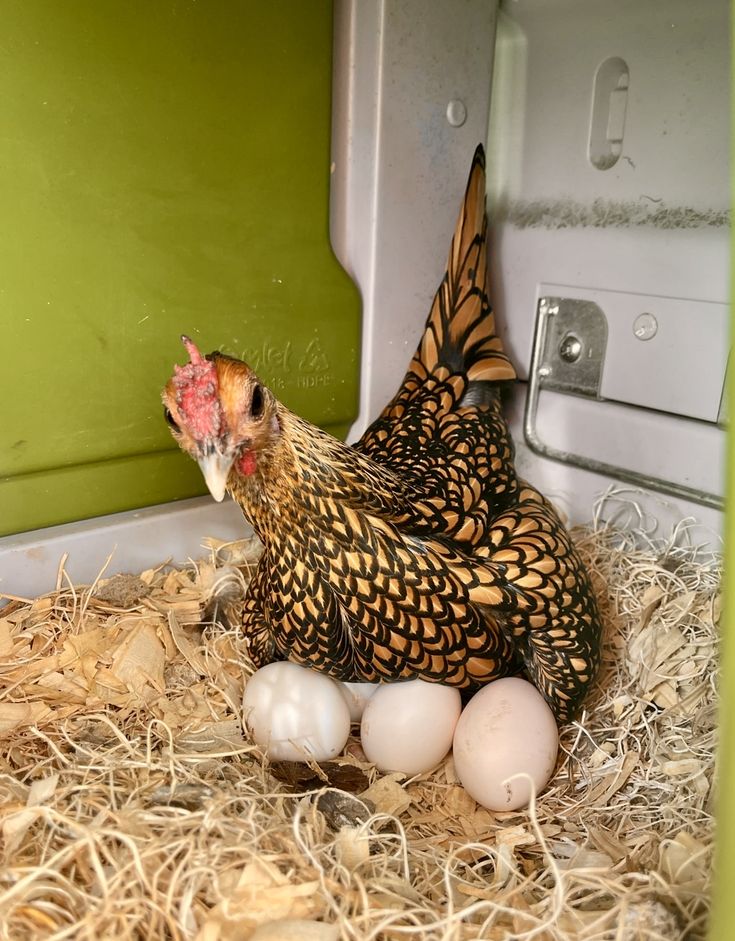
For standard hens, a 12 by 12 by 12 inch cube is the settled size. Big enough to turn around in, small enough to feel enclosed and safe, which is what a laying hen is looking for. Go much bigger and two hens will climb in together, jostle, and crack the eggs the box was built to protect.
Large breeds need the larger box, 14 by 14 by 14 inches. Brahmas, Orpingtons and Cochins are substantial hens, and a standard cube is a squeeze that can put them off laying inside at all. If you keep the big gentle breeds, the coop planning in our “Best Brahma Chicken Coop” guide works through their space needs properly. At the other end of the scale, bantams and Silkies are content in about a 10 by 10 inch box.
Where to Place Nesting Boxes
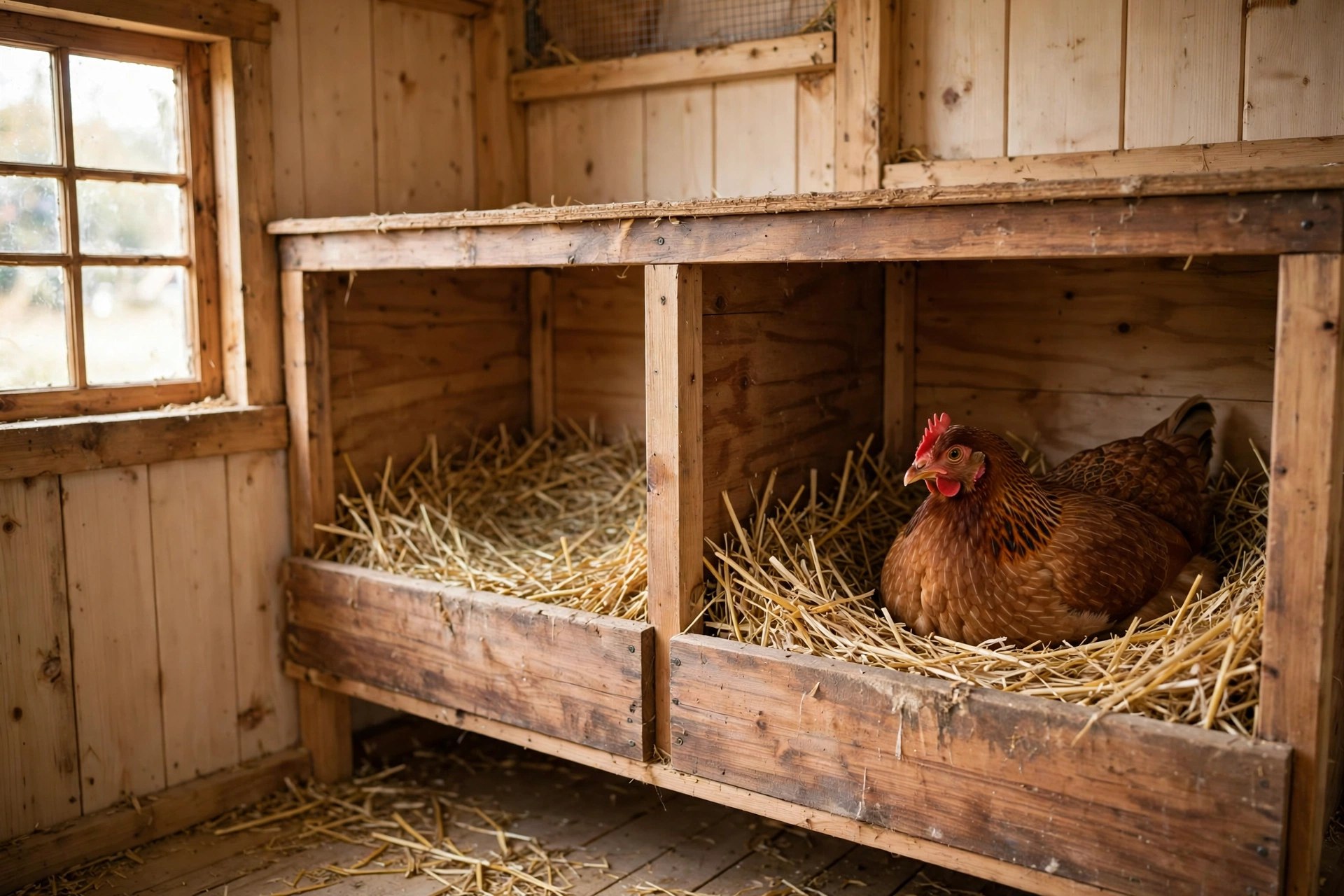
Placement decides whether the boxes get used for eggs or abused for everything else. Hens look for quiet, dim and private when they lay, so put the boxes inside the coop in the calmest corner you have, away from the bustle of feeders and waterers.
The golden rule is height. Boxes must sit lower than the roost bars. Hens sleep at the highest point they can reach, so boxes placed above the roosts turn into bedrooms, and a slept-in box is a fouled box by morning. Raise the boxes a little off the floor so damp bedding never reaches them, give the hens an easy hop up with a perch rail in front to land on, and fit a sloped top so nobody can roost on the roof of the boxes and soil them from above.

What to Put Inside. Nesting Box Bedding
Bedding has three jobs. Cushion the egg so it does not crack on landing, keep it clean until you collect it, and make the box feel like a nest worth using. Straw is the classic choice and hens love shaping it into a hollow. Pine shavings are absorbent and easy to spot-clean. Hemp is soft, low dust and lasts well. Purpose-made nesting pads give the tidiest finish of all.
Keep it fresh without fussing. A quick tidy when you collect eggs, picking out any droppings or broken shell, and a full bedding change roughly once a month keeps boxes sweet. Hens refuse dirty boxes and lay on the floor instead, so the bedding is doing quiet persuasion work every single day.
When Hens Won’t Use the Boxes
Three problems cover almost every complaint, and each has a simple fix. Floor eggs usually mean young pullets who have not learned yet, or boxes that are dirty, brightly lit or hard to reach. Fake eggs in the boxes teach pullets where the approved spot is, and most come round within a week or two.
Sleeping in the boxes is the second classic. Young hens especially love the enclosed feel of a box at night, and every night spent there soils the bedding. Lift sleepers onto the roost each evening for a few nights, or block the boxes after laying hours and reopen them in the morning, and the habit breaks. The third problem, a hen laying in a hidden corner of the run, is usually a box complaint in disguise. Check the bedding, the privacy and the queue at the favourite box before blaming the hen.
FAQs
How many nesting boxes per chicken do I need? One box for every 3 to 4 hens. That ratio gives 2 boxes for 6 hens, 2 to 3 for 8 hens, and 3 to 4 for a flock of 10 to 12. Hens share willingly and lay at different times, so a box per hen is never needed.
Will hens share a nesting box? Yes, happily. Sharing is the normal pattern, and most flocks take it further by choosing one favourite box and queuing for it while others sit empty. A fake egg placed in each box encourages the hens to spread their laying out.
What size should a nesting box be? A 12 by 12 by 12 inch cube suits standard hens. Large breeds such as Brahmas, Orpingtons and Cochins need 14 by 14 by 14 inches, and bantams are content with about 10 by 10 inches. Oversized boxes invite two hens in together and end in broken eggs.
Where should nesting boxes be placed? Inside the coop, in a quiet dim corner, and always lower than the roost bars so hens do not sleep in them. Raise them slightly off the floor, add a perch rail in front for access, fit a sloped top, and keep them away from feeders and waterers.
Why do all my hens lay in one box? Because flocks pick a favourite, for reasons only hens understand, and an occupied or recently used box reads as the safe, approved spot. It does no harm. If the queue causes squabbles, a fake or ceramic egg in each of the other boxes usually spreads the laying out.

Boxes are only one part of the setup. Our guide How Much Space Do 4 Chickens Need? works out the coop and run sizes that keep a small flock calm, roost bar included.
If the eggs keep disappearing even though the box count is right, read Why Do Chickens Eat Their Own Eggs and How to Stop It, which works through why hens start eating eggs and the fixes in order, from the nest and the diet to rollaway boxes.
