
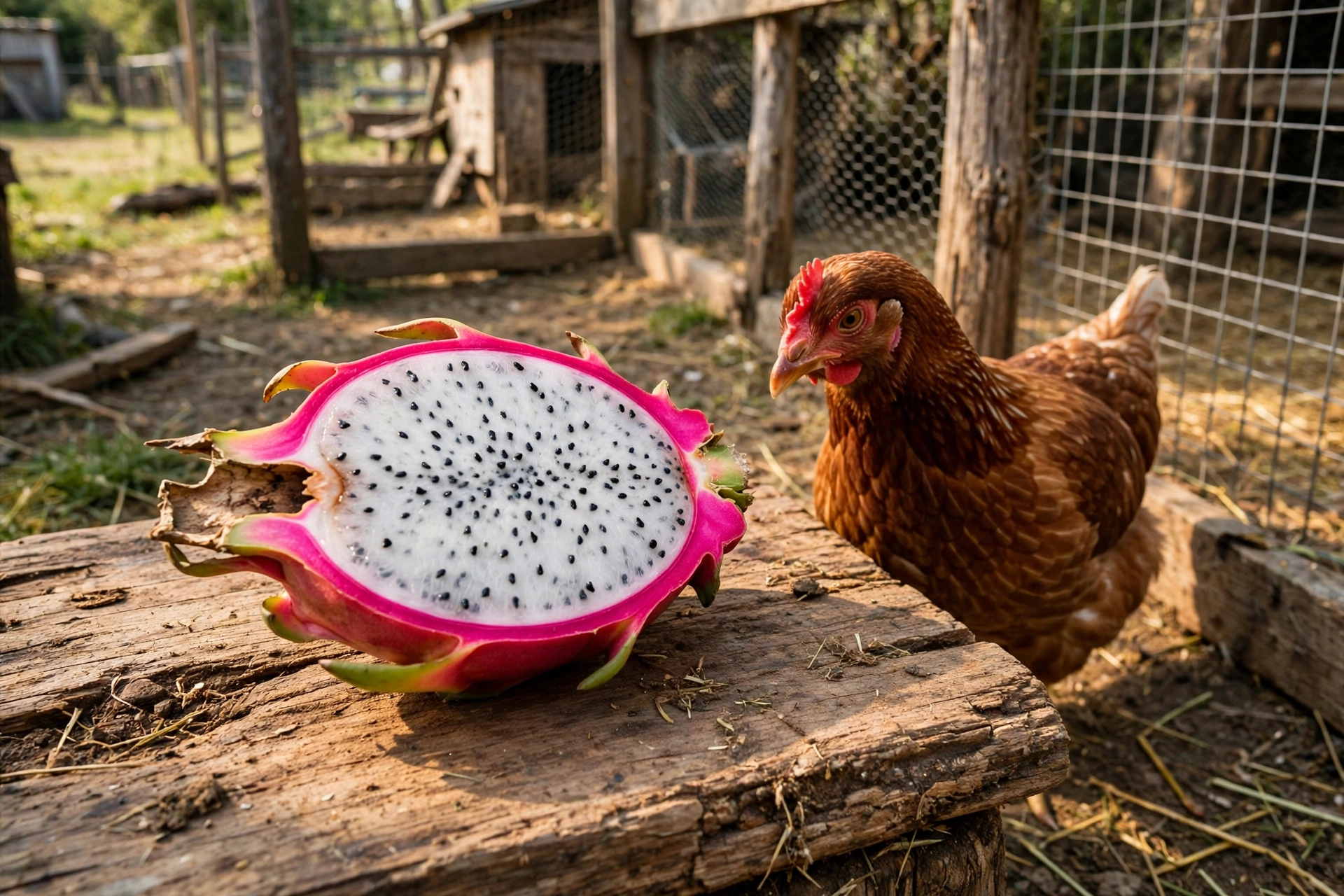
Dragon fruit looks like something from another world, with bright pink skin, green tipped scales and a soft white centre dotted with tiny black seeds, and it is the kind of fruit a keeper wonders about the moment it appears in the fruit bowl. It is not a fruit most flocks see every day, and that is part of its charm. When a piece is left over from breakfast, the question is a natural one, and the answer is a happy one for any hen that likes a sweet treat.
The short answer is yes. Dragon fruit is a safe treat for chickens, flesh only, and it makes a juicy and refreshing extra for a flock that enjoys fruit. It is not a food you need to worry about, as long as you serve the flesh and leave the skin and the seeds out of the bowl. A little care with the serving is all it takes.
This guide covers everything you need to know before you serve it. You will learn what dragon fruit is and why hens like it, what the flesh only rule means, how to serve it so every hen gets a share, how much to give, whether baby chicks can eat it, and when to hold it back. By the end, you will know exactly how dragon fruit fits into your flock’s treats, and why it stays a rare treat rather than a staple.

Table of Contents
- Are Dragon Fruit Safe for Chickens
- What Is Dragon Fruit
- The Flesh Only Rule
- How to Serve Dragon Fruit to Chickens
- Dragon Fruit Skin and Seeds
- How Much Dragon Fruit Can Chickens Eat
- Can Baby Chicks Eat Dragon Fruit
- When Not to Feed Dragon Fruit
- Why Hens Like Dragon Fruit
- Fitting Dragon Fruit Into the Treat Routine
- Frequently Asked Questions
Quick Facts
At a Glance Dragon fruit is Safe. Flesh only. Scoop the soft flesh out of the skin and serve that, and leave the skin and the seeds out of the treat bowl.
Good to Know Dragon fruit is juicy and mildly sweet, with vitamin C and a soft texture that hens can peck apart easily. It is a rare treat, not a staple, and a little goes a long way.
Watch Out Keep treats under 10 percent of daily intake, since too much sweet fruit at once can loosen droppings. Never feed mouldy or overripe fruit, and introduce any new food slowly.
Are Dragon Fruit Safe for Chickens
Is dragon fruit safe for chickens. Yes, it is. Our food checker lists dragon fruit as Safe, with the note Flesh only. That is the whole verdict, and it is a simple one, because there is nothing tricky about this fruit once you know the rule. The soft flesh inside is safe, and the skin and the seeds stay out of the bowl.
Dragon fruit belongs to the safe fruits that chickens can eat as an occasional treat, and it sits in the same friendly group as mango, papaya and berries. It is not one of the foods that needs a warning or a limit beyond the normal treat rule and the flesh only rule, and it does not carry the cautions that some other fruits do. A ripe fruit, scooped and served in a sensible amount, is simply good food for a hen.
If you have ever been unsure about a new and exotic fruit, dragon fruit is a safe place to start, as long as you follow the one rule. It is mild, it is soft, and most flocks take to it straight away. Offer a few small cubes first and watch how your birds respond, and you will likely find that dragon fruit becomes one of the treats they look forward to on the rare days it appears.
What Is Dragon Fruit
Dragon fruit is the fruit of a climbing cactus, and it grows in warm tropical places. The outside is bright pink or sometimes yellow, with green tipped scales that give it its dragon name, and the inside is soft white or pink flesh dotted with tiny black seeds. The taste is mild and lightly sweet, a little like a cross between a kiwi and a pear, and the flesh is juicy without being sharp or sour.
You will find dragon fruit in larger supermarkets and fruit shops, often sold by the piece, and it is more costly than everyday fruit like apples or bananas. That price is one reason it stays a rare treat for a flock rather than a regular one. A single fruit goes a long way though, because a few cubes are plenty for a small flock, and the rest can go to the kitchen.
A ripe dragon fruit feels slightly soft when you press it gently, and the skin is bright and even in colour. A fruit that is rock hard is not yet ripe, and a fruit that is very soft or wrinkled has gone past its best. Pick a ripe one, keep it in a cool place until you are ready to serve it, and use it within a day or two of cutting it open. Fresh and ripe is the only way to serve it to your hens.
The Flesh Only Rule
The flesh only rule is the one thing to remember with dragon fruit, and it is worth understanding properly before you serve it. The checker verdict is flesh only, which means the soft flesh inside the fruit is the treat, and nothing else from the fruit goes into the bowl. The skin is not eaten, and the seeds stay out too, so the serving is just the scooped flesh, cut into small pieces.
The skin is thick, tough and waxy, and it is not a food for hens. It does not tear apart the way the flesh does, and it has no place in the treat bowl. Cut the fruit in half, scoop the flesh out with a spoon, and put the empty skin straight in the bin or the compost. There is no need to offer the skin to see if the hens want it, because the verdict is clear, and the flesh is the part they enjoy.
The seeds need the same care. The flesh is dotted with tiny black seeds, and the rule keeps them out of the bowl along with the skin. Scoop the flesh, pick out any seeds you can see, and serve the clean soft flesh only. It takes an extra minute, and it is the minute that makes the treat safe and simple. Once you have done it a few times, the habit becomes automatic, and you will not need to think about it again.
How to Serve Dragon Fruit to Chickens
Serving dragon fruit is easy, and a little care at the start makes sure every hen gets a fair share. Wash the outside of the fruit well first, because dust and dirt sit on the skin, and a good rinse under running water takes care of it. Dry it, cut it in half with a clean knife, and scoop the flesh out with a spoon.
Cut the scooped flesh into small bite size cubes, about the size of a pea or a little larger, so every hen can pick up a piece without a struggle. Small cubes are easy for every bird to eat, and scattering them gives the lower hens in the pecking order a chance to eat without being pushed aside by the bold ones. A bowl works well too, and a shallow dish keeps the cubes clean and off the ground.
Serve the cubes in the morning or in the cool of the evening, when the hens are active and ready to peck. Clear away anything the hens leave behind at the end of the day, because fruit left on damp ground overnight will go soft and attract flies. A quick tidy up after treat time keeps the run clean and the flock safe, and it takes no more than a minute.

Dragon Fruit Skin and Seeds
Can chickens eat dragon fruit skin. No, they cannot, because the checker verdict is flesh only, and the skin is not part of the treat. The skin is thick and waxy, and hens cannot tear it apart or digest it the way they can the soft flesh. It belongs in the bin or the compost, not in the run, and there is no reason to test it, because the flesh is the part your hens will love.
Can chickens eat dragon fruit seeds. The answer follows the same rule, because the verdict is flesh only, and the seeds stay out of the bowl along with the skin. The seeds are small and hard, and they add nothing your hens need, so scoop the flesh and leave the seeds behind where you can see them. A few tiny seeds hidden in the flesh are hard to avoid completely, and the care is in the serving, so take the minute to pick out what you can and serve clean flesh.
This is one of the places where dragon fruit is different from some other fruits. With some fruits the seeds are fine, and with others they must be removed, so the rule changes from fruit to fruit, and the checker is the guide. For dragon fruit the rule is flesh only, and that is the rule to follow every time. Keep the serving simple, keep it to the flesh, and your hens get a safe and sweet treat.
How Much Dragon Fruit Can Chickens Eat
How much dragon fruit can chickens eat. The answer follows the same treat rule as every other extra food. Keep treats under 10 percent of daily intake, and let the balanced layer feed do the main work of feeding your hens. Dragon fruit is a rare treat, not a staple, and a hen that fills up on sweet fruit will eat less of the feed that gives her the protein and energy she needs to lay well.
A few small cubes per hen, once in a while, is a sensible amount for most flocks. Half a fruit shared between four or five hens is about right, and you can offer it when you have a ripe fruit to spare, as long as the total treats for the day stay small. Watch the droppings after a serving, because too much sweet fruit at once can loosen droppings, and that is your sign to cut back a little next time.
The 10 percent rule is worth keeping in mind for every treat, not just dragon fruit. A hen eats roughly a cup of feed a day, so treats should stay to a small handful of extras in total. Mix dragon fruit in with the other treats your flock enjoys across the week, rather than giving a large amount of any one thing on a single day, and your hens will get the variety without losing the balance of their diet.
Can Baby Chicks Eat Dragon Fruit
Can baby chicks eat dragon fruit. Yes, they can, but only once they are old enough for treats, and only in tiny soft pieces. Chicks under two weeks old should eat nothing but their starter feed, because they need every bite to be the balanced nutrition that helps them grow. After about two weeks, you can start offering tiny tastes of soft foods, and dragon fruit can be one of them.
For chicks, scoop the flesh and cut it into pieces so small that a little beak can manage them, and offer just a pinch at a time. The flesh only rule still applies, so no skin and no seeds, and the pieces should be soft and ripe. Make sure the chicks also have chick grit available, because they need grit to grind up anything that is not starter feed. Without grit, even soft fruit can sit undigested in the crop.
Introduce new foods slowly, and dragon fruit is no exception. Offer a tiny amount one day, watch the chicks the next day, and only offer a little more once you are sure it agrees with them. A chick that is eating well, drinking well and growing steadily is a chick that is ready for the occasional treat, and dragon fruit is a gentle one to start with, as long as the pieces are tiny and the amount is small.
When Not to Feed Dragon Fruit
There are times to hold dragon fruit back, and knowing them keeps a good treat from causing a problem. Never feed mouldy or overripe fruit. A dragon fruit that has gone very soft, wrinkled, sour smelling or spotted with mould belongs in the compost, not in the run, and the same goes for cut flesh that has sat in the fridge too long and turned slimy or sour.
Do not feed dragon fruit that is unripe and hard, because hard flesh is difficult for hens to peck apart and can upset the gut. Wait until the fruit yields a little to gentle pressure, and use it while it is fresh and ripe. Do not feed fruit that has been seasoned, sweetened or mixed into a dish for people, because salt, sugar, spices and sauces have no place in a hen’s diet. Only plain ripe flesh goes to the flock.
Hold the treat back for a day or two if a hen already has loose droppings, because sweet and juicy fruit can make them worse. Hens that are unwell should stick to their layer feed and fresh water until they are back to normal, and our Chicken Care and Health pillar has more on routine care that keeps hens healthy. A treat is meant to be a pleasure, and the best time for it is when the flock is fit and well.
Why Hens Like Dragon Fruit
Hens like dragon fruit for the same reasons people do, because it is sweet, juicy and soft, and it looks interesting too. The bright pink flesh of some types catches a hen’s eye straight away, and chickens are drawn to colour in their food. A bowl of pink or white cubes stands out against the ground, and the bold hens will be over to inspect it within seconds.
The soft texture is another part of the appeal. Hens do not have teeth, so they tear and peck their food apart, and soft fruit is easy work for a beak. Dragon fruit flesh gives way with a gentle peck, and even older hens or hens with a sore beak can manage it. The juice in the flesh is a small bonus too, because it gives them a little extra moisture, especially on a hot day when they need every drop they can get.
Dragon fruit also gives hens something new to explore, and that matters more than it sounds. A flock that gets a new taste or a new colour now and then is a calmer and more interested flock than one that eats the same treats every day. A rare fruit like dragon fruit turns treat time into a small event, and watching the hens crowd around it is half the fun for the keeper. For a wider look at what else belongs in the treat bowl, our guide on what chickens can eat covers the full list of safe foods.
Fitting Dragon Fruit Into the Treat Routine
Dragon fruit fits easily into a treat routine once you know the pattern, and its place is as a rare and special extra. Offer it once in a while, in small amounts, alongside the other safe foods your flock enjoys, and keep the total treats for the day under that 10 percent line. A dragon fruit day can be followed by a mango day, and the day after that can be something different altogether, like a few berries or a handful of mealworms.
Mango is the closest match in the fruit bowl, because it is sweet, soft and tropical, and hens love it just as much. Our guide on can chickens eat mango covers it in full, and mango is a good choice when dragon fruit is out of season or too costly. Papaya is another tropical fruit that sits beside dragon fruit, and our guide on can chickens eat papaya explains how to serve it. Rotating between the three across the weeks gives your hens variety, and variety keeps treat time interesting for them. Guava is another sweet tropical fruit that fits the same pattern, and our guide on can chickens eat guava explains how to serve it ripe, seeds and all.
If you buy dragon fruit for the kitchen, the pieces you do not use can go straight to the hens instead of the bin, and nothing goes to waste. One fruit a month is plenty for a small flock, and the hens will get fresh fruit on a regular basis without the cost becoming a burden. Introduce new foods slowly whenever you add something to the routine, start with a few cubes, watch the droppings and the birds for a day, and then make it an occasional part of the week if all is well.

Frequently Asked Questions
Can chickens eat dragon fruit?
Yes, chickens can eat dragon fruit, flesh only. Scoop the soft flesh out of the skin, cut it into small cubes, and serve a few pieces per hen as an occasional treat. Keep the skin and the seeds out of the bowl, and keep treats under 10 percent of daily intake.
Is dragon fruit safe for chickens?
Yes, dragon fruit is safe for chickens. Our food checker lists dragon fruit as Safe, with the note Flesh only. The soft flesh inside is safe, and the skin and the seeds stay out of the treat bowl.
Can chickens eat dragon fruit skin?
No, chickens should not eat dragon fruit skin. The checker verdict is flesh only, and the skin is thick, tough and waxy. Cut the fruit in half, scoop the flesh out, and put the skin in the bin or the compost.
Can chickens eat dragon fruit seeds?
No, the seeds stay out of the treat bowl along with the skin. The checker verdict is flesh only, so scoop the flesh and leave the seeds behind where you can see them. The seeds are small and hard, and they add nothing your hens need.
Can baby chicks eat dragon fruit?
Yes, baby chicks can eat dragon fruit once they are past two weeks old, but only the soft flesh, cut into tiny pieces and offered in small amounts. Chicks under two weeks old should eat starter feed only. Make sure chicks have grit available when they eat anything other than starter feed, and introduce new foods slowly.
How much dragon fruit can chickens eat?
Keep dragon fruit and all other treats under 10 percent of daily intake. A few small cubes per hen, once in a while, is a sensible amount, and half a fruit shared between four or five hens is about right. Dragon fruit is a rare treat, not a staple, so offer it occasionally rather than every day.
Keep Reading
What Can Chickens Eat and the full feeding pillar for safe foods and treats.
Can Chickens Eat Mango and the sweet tropical fruit hens love.
Can Chickens Eat Papaya and the soft tropical fruit that sits beside dragon fruit.

Nusrat
Author, TheChickenPet.com