

Chicken Breeds
You chose an Australorp for her eggs and her easy going nature, and now she has parked herself in the nest box and refuses to leave. She fluffs up when you reach in, she growls at the other hens, and she has stopped laying entirely. If you are wondering whether Australorps even do this, and what it means for your flock, you are in the right place.
Yes, Australorps do go broody, moderately and very much on their own terms. They are not the relentless sitters some breeds are, and some hens never sit at all. This guide explains why the breed sits in the middle ground, how to read the signs, whether Australorps make good mothers, and the kind ways to break a broody spell when you do not want chicks.
Table of Contents 8 sections
- The Short Answer. Yes, Moderately, and It Depends on the Hen
- Why Australorps Are Middle-Ground Brooders
- Broody Hen Signs. How to Tell With an Australorp
- Are Australorps Good Mothers?
- Australorp vs Silkie. The Broodiness Comparison Owners Actually Mean
- How to Break a Broody Australorp
- What a Broody Spell Costs in Eggs
- FAQs
At a Glance: Broodiness: Moderate; Eggs per year: 250 to 300, brown; Mothering: Calm and attentive when she sits; Laying while broody: Stops completely; Most likely season: Spring and summer
Laying Facts: Eggs per year: 250 to 300; Egg colour: Brown; While sitting: No eggs for the sitting spell, about 21 days for a hatch; After hatching: Raising chicks before laying resumes
Good to Know: Varies a lot by hen and bloodline; Much less relentless than a Silkie; A sitting hen can hatch fertile eggs or raise day-old chicks
The Short Answer. Yes, Moderately, and It Depends on the Hen
Australorps can and do go broody, but they sit in the middle of the broodiness scale. In our “friendliest chicken breeds” guide the Australorp earns her place with a calm, gentle, hardy temperament and the strongest laying figures in that list. Broodiness was never bred into her as a feature, and it was never fully bred out either. What you get is a hen who may sit once a year, may sit every spring, or may ignore the whole idea for her entire life.
That unpredictability is the honest answer to the question, and it is actually good news for most pet keepers. A broody Australorp is an occasional event you manage, not a season-long campaign. And when she does sit, she tends to do the job properly, which the mothering section below covers.
Why Australorps Are Middle-Ground Brooders
The Australorp was developed in Australia from Black Orpington stock, and Orpingtons are a mothering breed. That ancestry left the instinct in place. An Australorp hen who decides to sit is drawing on real Orpington heritage, and keepers have relied on Australorps as sitters and mothers for generations.
Working the other way, the breed was then selected hard for laying. Australorps became famous as record-breaking layers, and every generation chosen for eggs was a generation selected away from sitting, because a sitting hen lays nothing. The result is a breed pulled in two directions, which is why the tendency varies so much by bloodline and by individual hen. Two keepers can honestly report opposite experiences with the same breed, and both are telling the truth about their own birds. If sitting matters to you, ask the breeder about the actual line, because that tells you more than the breed name does.
Colour makes no difference here. The black, blue and white varieties share the same temperament, and our “Blue Australorp” guide covers that variety in full if you keep the blue form.

Broody Hen Signs. How to Tell With an Australorp
A hen thinking about sitting behaves differently for a few days before she commits, and an Australorp shows the standard set of signs clearly. You are looking for a pattern, not one behaviour on its own.
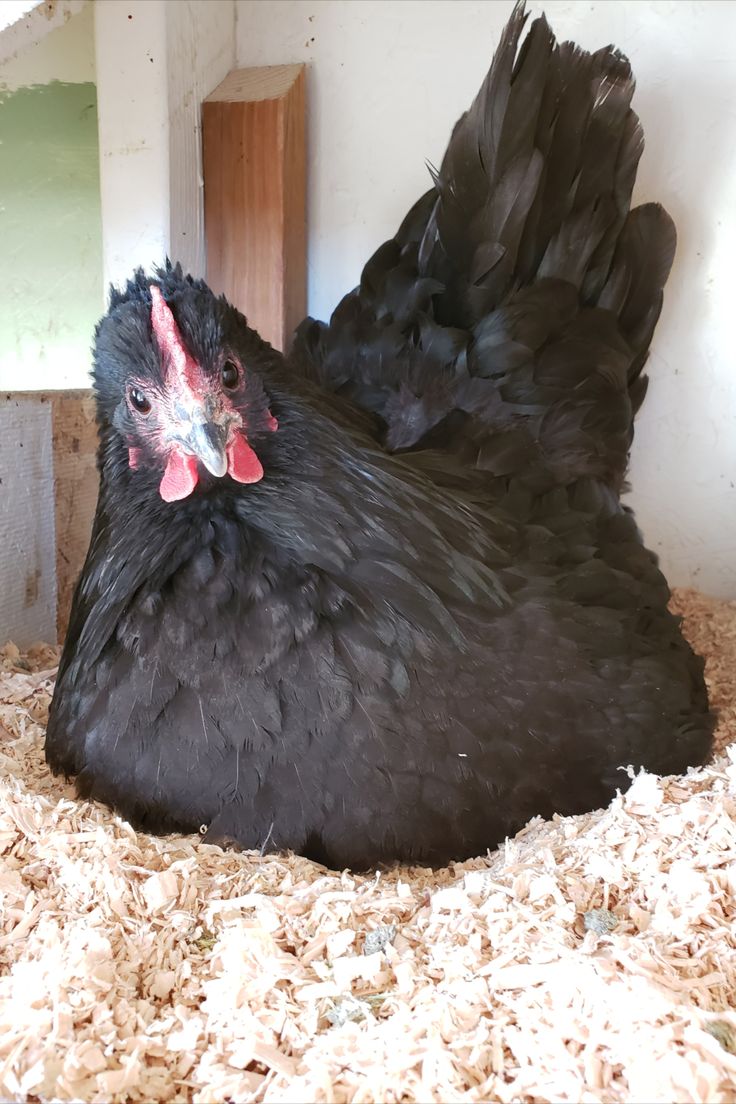
- She stays in the nest box all day and hurries back every time you take her out.
- She flattens herself over the eggs, puffs her feathers up to look bigger, and growls, screeches or pecks when a hand comes near.
- She plucks feathers from her breast and lines the nest with them, which also puts her warm skin directly against the eggs.
- She stops laying. A broody hen produces no new eggs, which is often the first sign a keeper notices.
- She leaves the nest only once or twice a day, briefly, to eat, drink, drop one very large dropping and take a quick dust bath.
- Her comb looks paler and smaller than usual while she sits.
One warm afternoon spent in the box is not broodiness. A hen who sleeps in the box overnight, twice in a row, with the flattened posture and the growl, has decided. That is the point where you choose between breaking the spell and letting her hatch, both covered below.
Are Australorps Good Mothers?
When an Australorp does commit to sitting, keepers rate her highly. She is an attentive, steady sitter who turns her eggs and defends the nest without the drama some breeds bring, and poultry writers have described Australorps as good brooders and mothers for a long time.
Her temperament with chicks is the same temperament she has everywhere else, calm and unflappable. She keeps the chicks close, teaches them to eat and drink, and warns them under her wings when something startles the flock. There is no special Australorp exception to the usual rules, so introduce her and the chicks back to the flock gradually, the way you would with any broody hen, and give her a quiet corner of her own for the first days after the hatch.
At the other end of the scale sits the Cochin, the champion sitter of the chicken world. Our guide How Often Do Cochins Go Broody? covers the breed that goes broody several times a year and fosters other hens’ eggs.
Australorp vs Silkie. The Broodiness Comparison Owners Actually Mean
Most owners asking about Australorp broodiness are really comparing her with the Silkie, the breed that made broodiness famous. The contrast is stark, and our guide “When Do Silkie Chickens Start Laying Eggs?” shows what relentless sitting does to a laying year.
| Breed | Broodiness |
|---|---|
| Silkie | Frequent, the most broody common pet breed |
| Australorp | Moderate, some hens never sit at all |
| Commercial laying hybrids | Rare, bred almost entirely out of them |
Think of it as a dial rather than a switch. The Silkie sits at one end, ready to mother anything round. The Australorp sits in the middle, willing in the right season but easily talked out of it. If you want a hen who will hatch for you every year without fail, that is the Silkie’s job. If you want eggs first and the occasional hatch as a bonus, the Australorp balance suits you better.
How to Break a Broody Australorp
If you do not want chicks, break the spell kindly and early, because every day of sitting costs her condition and costs you eggs. These are the standard methods keepers use, in the order to try them.
- Collect eggs promptly and often, so the nest is empty and uninviting whenever she checks it.
- Lift her off the nest every time you pass, set her outside with the flock, and block the nest box during the day if she keeps sneaking back.
- Use a broody breaker crate if she persists. A wire crate raised so air flows underneath, with food and water and no bedding or nest material, makes sitting uncomfortable enough that most hens give up within a few days and go back to roosting normally.
- Or let her hatch. If fertile eggs are available, or day-old chicks slipped under her at night, a sitting Australorp is a feature rather than a problem, as long as you are ready for about 21 days of sitting and then chick raising.
Skip the harsh folk methods you will see in old threads. No ice baths, no withholding food or water, ever. And keep an eye on her while she sits, because a hen who will not break and keeps losing condition needs a closer look. Our “Chicken Care and Health” guide walks through the basic health checks that tell a stubborn broody from an unwell hen.
What a Broody Spell Costs in Eggs
Here is the trade-off in plain numbers. An Australorp in lay gives you 250 to 300 brown eggs a year, the strongest rate among the friendly pet breeds. A broody spell stops that completely. The sitting itself runs about 21 days for a hatch, and if she raises the chicks she will not lay again until they are weaned, which adds several more weeks.
One spell a year, broken within a few days, costs you almost nothing and is just part of keeping hens. One full hatch a year costs roughly two months of eggs from that hen, and in exchange you get chicks raised by the best teacher there is. Neither answer is wrong. It depends on whether you keep Australorps for the eggs, the chicks, or, like most pet keepers, a happy mix of both.
FAQs
Do all Australorps go broody? No. The tendency varies a lot by bloodline and by individual hen. Some Australorps sit every spring, some sit once in their lives, and some never sit at all. The breed is best described as moderately broody, with the Orpington mothering instinct still present under generations of selection for laying.
How often do Australorps go broody? For hens who sit at all, once a year in spring or early summer is typical, when the days are long and warm. A determined hen may try a second time later in the season. Prompt egg collection and lifting her off the nest early make repeat spells less likely.
Will a broody Australorp stop laying? Yes, completely. A broody hen lays no eggs while she sits, which is about 21 days for a hatch, and she does not resume until after the chicks are weaned if she raises them. Breaking the spell within a few days gets her back to laying far sooner.
Are Australorps good mothers? Yes, when they sit they are usually very good at it. They are attentive, steady sitters, and their calm, gentle temperament carries into mothering, keeping chicks close and teaching them well. Reintroduce her and the chicks to the flock gradually, as with any breed.
How do I break a broody Australorp kindly? Start by collecting eggs often and lifting her off the nest whenever you pass. If she persists, a raised wire crate with airflow underneath, food and water, and no nesting material settles most hens within a few days. Never use ice baths or withhold food and water.

Keep Reading
