

Most hens fly over the fence for food, for safety, or for freedom, and the fix is to remove the reason, not just to block the flight. The spine of this guide is simple, wing clipping is a last resort, and the alternatives come first, taller fences, netting over the run, and breed choice, because some breeds fly more than others. This guide covers why chickens fly over fences, how high they can fly, what to fix in the yard, and when clipping is the right call.
Table of Contents
- The Short Answer. Fix the Reason, Then the Fence
- Why Chickens Fly Over Fences. Food, Safety and Freedom
- How High Can Chickens Fly
- Give Them a Reason to Stay. Food, Water and Space
- Taller Fences. How High Is High Enough
- Netting Over the Run. The Cheapest Fix
- Breed Choice. Some Breeds Fly More Than Others
- What Not to Do. Traps That Backfire
- Wing Clipping. The Last Resort
- FAQs
Most hens fly over the fence for food, for safety, or for freedom, and the fix is to remove the reason, not just to block the flight.
Give them food, water and space, raise the fence to 6 feet, or net over the run, and pick a heavy breed that flies less.
Wing clipping is the last resort, done on one wing only, and it must be done right, or the hen can be hurt.
The Short Answer. Fix the Reason, Then the Fence
Most hens fly over the fence for food, for safety, or for freedom, and the fix is to remove the reason, not just to block the flight. A hen that flies over the fence is telling you something. She is hungry, she is scared, or she is bored, and she is looking for food, for safety, or for freedom, on the other side of the fence. Block the flight without fixing the reason, and she will find another way out, over a different fence, through a gap, or under a gate. Wing clipping is a last resort, and the alternatives come first, taller fences, netting over the run, and breed choice, because some breeds fly more than others. Fix the reason, then the fence, and keep wing clipping for the hen that still flies when everything else is right. The rule is simple. A hen that has food, water, space and safety will stay in the yard, and a hen that does not will fly, no matter how high the fence is.

Why Chickens Fly Over Fences. Food, Safety and Freedom
Chickens fly over fences for food, for safety, and for freedom, and the fix is different for each reason. A hen flies for food when she is hungry, or when she sees food on the other side, like a garden, a compost heap, or a neighbour’s lawn, and she will fly to get it. The fix is to feed her well, with layer feed always available, and treats in the run, so she does not need to look elsewhere. A hen flies for safety when she is scared, by a dog, a fox, a hawk, or a loud noise, and she will fly to escape, over the fence, into a tree, or onto a roof. The fix is to make the run safe, with a roof, with netting, and with shelter, so she has somewhere to hide, and she does not need to fly away. A hen flies for freedom when she is bored, or crowded, or cooped up, and she will fly to explore, to find a dust bath, to find a sunny spot, or to find a mate. The fix is to give her space, with a run big enough for the flock, and things to do, like a dust bath, a perch, and treats scattered in the run, so she does not need to leave. The rule is simple. Find the reason, and fix the reason, and the flying will stop.
How High Can Chickens Fly
How high a chicken can fly depends on the breed, the age, and the health, but most hens can fly 4 to 6 feet, and light breeds can fly higher, up to 8 feet, for a short distance. A light breed, like a Leghorn, an Ancona, or a Hamburg, can fly high, because she is light, with strong wings, and she can clear a 6 foot fence, and she can fly into a tree, onto a roof, or over a wall. A heavy breed, like a Brahma, an Orpington, or a Plymouth Rock, can fly less, because she is heavy, with weaker wings, and she can only manage 3 to 4 feet, for a short distance, and she will not clear a 6 foot fence. A young hen flies better than an old hen, because she is lighter and stronger, and a healthy hen flies better than a sick hen, because she has more energy. The rule is simple. A 6 foot fence stops most heavy breeds, but it will not stop a light breed, and a light breed needs netting, or a roof, to keep her in.

Give Them a Reason to Stay. Food, Water and Space
Give them a reason to stay, with food, water and space, and the hens will stay in the yard, because they have everything they need. Feed them well, with layer feed always available, in a feeder that holds enough for the day, and fresh water, clean and full, in a waterer that does not run dry. A hen that is hungry will fly to find food, and a hen that is thirsty will fly to find water, so keep the feed and water full, and the hens will stay. Give them space, with a run big enough for the flock, at least 10 square feet per hen in the run, and 4 square feet per hen in the coop, so they are not crowded, and they have room to scratch, to dust bathe, and to move. A hen that is crowded will fly to find space, and a hen that is bored will fly to find something to do. Our guide to space for 4 chickens covers how much space a small flock needs, and it explains the coop and run sizes, and how to work them out for your flock. The rule is simple. A hen that has food, water and space will stay in the yard, and a hen that does not will fly, no matter how high the fence is.

Taller Fences. How High Is High Enough
A taller fence stops most hens, but how high is high enough depends on the breed, and a 6 foot fence is the standard for most flocks. A 4 foot fence is not high enough, because most hens can clear it, and a 5 foot fence is better, but a light breed can still clear it, and a 6 foot fence is the standard, because it stops most heavy breeds, and it stops most light breeds, except the lightest, strongest fliers. A 6 foot fence works best when it is solid, with no gaps, no perches on top, and no objects near it that the hens can use as a launch pad, like a compost bin, a wheelbarrow, or a low roof. A hen that can jump onto a bin, then onto the fence, then over, will do it, so move the objects away from the fence, and the hens will stay in. The fence should also be buried, or have a skirt, so the hens cannot dig under it, and it should be strong, so a dog cannot push it over, and it should be checked regularly, for gaps, for holes, and for loose boards. The rule is simple. A 6 foot fence, solid, with no launch pads and no gaps, stops most hens, and the ones it does not stop need netting.
Netting Over the Run. The Cheapest Fix
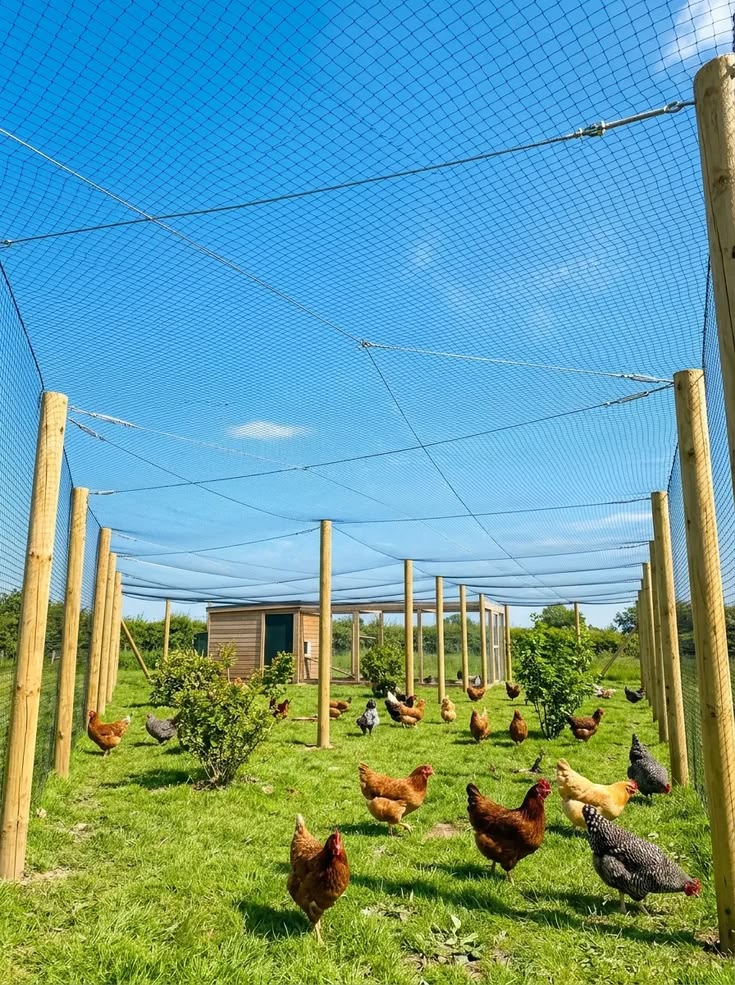
Netting over the run is the cheapest fix, and it is the one that works for every breed, because a hen cannot fly through netting, no matter how high she can fly. Netting is cheap, light, and easy to put up, and it covers the whole run, so the hens cannot fly out, and hawks cannot fly in, and it keeps the hens safe, from predators above, and from flying away. Use poultry netting, or deer netting, with small holes, so the hens cannot get their heads through, and stretch it tight, so it does not sag, and tie it down, so the wind does not lift it, and check it regularly, for holes, for tears, and for sagging. Netting works best when it covers the whole run, from fence to fence, and when it is high enough that the hens can walk under it, and when it is combined with a tall fence, so the hens cannot fly out the sides, and the netting cannot be lifted by the wind. The rule is simple. Netting over the run is the cheapest fix, and it works for every breed, and it keeps the hens safe from hawks too.
Breed Choice. Some Breeds Fly More Than Others
Some breeds fly more than others, and breed choice is the long term fix, because a heavy breed that flies less is easier to keep in the yard than a light breed that flies more. Light breeds, like Leghorns, Anconas, Hamburgs and Minorcas, fly well, because they are light, with strong wings, and they can clear a 6 foot fence, and they can fly into a tree, onto a roof, or over a wall, and they need netting, or a roof, to keep them in. Heavy breeds, like Brahmas, Orpingtons, Plymouth Rocks and Cochins, fly less, because they are heavy, with weaker wings, and they can only manage 3 to 4 feet, for a short distance, and they will not clear a 6 foot fence, and they are easier to keep in the yard. The breed matters most when you start a flock, because it is easier to pick a heavy breed at the start than to fix a flying problem later, with netting, with taller fences, and with clipping. The rule is simple. If you want hens that stay in the yard, pick a heavy breed, and if you already have a light breed, use netting, and keep clipping as a last resort.
What Not to Do. Traps That Backfire
Some fixes backfire, and they make the flying worse, or they hurt the hens, so do not use them. Do not lock the hens in the coop all day, because they will get bored, and stressed, and they will fly the first chance they get, and they will be more likely to fly, not less, because they have been cooped up. Do not use a fence with barbed wire on top, because the hens can get caught on it, and they can be hurt, and it does not stop them from flying, it just hurts them when they try. Do not chase the hens when they fly out, because they will get scared, and they will fly further, and they will be harder to catch, and they will learn to fly away from you, not toward you. Do not clip both wings, because clipping both wings does not stop the hen from flying, it just makes her fly lopsided, and she can still fly, and she can hurt herself landing, because she cannot balance. The rule is simple. Fix the reason, raise the fence, net the run, and keep clipping as a last resort, done right, on one wing only.
Wing Clipping. The Last Resort
Wing clipping is a last resort, done on one wing only, and it must be done right, or the hen can be hurt. Wing clipping is cutting the primary flight feathers on one wing, so the hen cannot fly straight, and she cannot clear the fence, and she will stay in the yard. It is done on one wing only, because clipping one wing makes the hen fly lopsided, and she cannot get lift, while clipping both wings lets her fly straight, and she can still clear the fence. Our guide to wing clipping covers how to clip wings safely, and when to leave them alone, and it explains which feathers to cut, how to hold the hen, and what to do if you cut too short. Clipping is a last resort, because it is stressful for the hen, and it must be done right, and it must be repeated, because the feathers grow back after a molt, and the hen will fly again, so it is not a one time fix, it is a regular job. The rule is simple. Try everything else first, food, water, space, taller fences, netting, and breed choice, and keep clipping for the hen that still flies when everything else is right.
FAQs
How do I stop my chickens flying over the fence.
Fix the reason first, then the fence. Give them food, water and space, raise the fence to 6 feet, or net over the run, and pick a heavy breed that flies less. Keep wing clipping as a last resort, done on one wing only.
Do chickens fly over fences.
Yes, most hens can fly 4 to 6 feet, and light breeds can fly higher, up to 8 feet, for a short distance. A 6 foot fence stops most heavy breeds, but it will not stop a light breed, and a light breed needs netting, or a roof, to keep her in.
How high can chickens fly.
Most hens can fly 4 to 6 feet, and light breeds can fly higher, up to 8 feet, for a short distance. A heavy breed, like a Brahma or an Orpington, can only manage 3 to 4 feet, for a short distance, and she will not clear a 6 foot fence.
How do I keep chickens in the yard.
Give them food, water and space, with at least 10 square feet per hen in the run, and 4 square feet per hen in the coop, and things to do, like a dust bath, a perch, and treats scattered in the run, so they do not need to leave. Raise the fence to 6 feet, or net over the run, and move any objects away from the fence that the hens can use as a launch pad.
Can chickens fly over a 6 foot fence.
Most heavy breeds cannot clear a 6 foot fence, but light breeds, like Leghorns and Anconas, can, because they are light, with strong wings, and they can fly higher, up to 8 feet, for a short distance. A light breed needs netting, or a roof, to keep her in.
Our guide to dandelions covers the leaves, the flowers and the roots, and the one rule is never from a sprayed lawn.
Keep Reading

Nusrat
Author, TheChickenPet.com