

Crack open an egg and find two bright yolks sitting side by side, and it feels like a small surprise from your own backyard flock. A double yolk egg is exactly what it sounds like, one shell holding two yolks instead of one, and it is one of the most common wonders new chicken keepers meet in their first year. The short answer is that your hen released two yolks close together, her body wrapped them in one shell, and the egg is perfectly safe to eat. It does not mean your hen is sick, and it does not mean she laid twins that will hatch into two chicks. It usually means she is young and her laying system is still finding its rhythm. This guide explains why double yolk eggs happen, which hens lay them most, whether they are safe to eat, why they almost never hatch, and the one risk worth watching when a hen keeps laying very large eggs.
Table of Contents
- The Short Answer. Two Yolks, One Shell
- How a Double Yolk Forms. The 25 Hour Line
- Why Young Hens Lay Them Most. The System Is Still Learning
- Which Hens Lay Them Most. Breeds, Feed and Light
- Are Double Yolk Eggs Safe to Eat. Yes, and Bigger Too
- Can Double Yolk Eggs Hatch. Almost Never
- The Risk to Watch. Egg Binding and Prolapse
- Double Yolks and the Laying Cycle. When They Fade
- Folklore. Good Luck, Twins and Old Warnings
- FAQs
At a Glance
A double yolk egg forms when a hen releases two yolks about an hour apart and one shell grows around both. It is most common in pullets aged about 18 to 28 weeks in their first weeks of laying. About 1 in 1,000 eggs overall has a double yolk.
Safe to Eat
Double yolk eggs are safe to eat and they are simply a bigger egg with more yolk. They are a sign of a young healthy layer, not a sick hen. Cook them just as you would any fresh egg from your flock.
Hatching
Twins almost never hatch from a double yolk egg because there is not enough space or white for two chicks to grow. A 2023 study found no live chicks emerged from double yolk eggs even when both embryos developed far. Do not set double yolk eggs in an incubator.
The Short Answer. Two Yolks, One Shell
A double yolk egg is one egg with two yolks inside a single shell. It happens when a hen releases two yolks into her oviduct close together, about an hour apart, and her body builds one shell around both of them instead of one. The egg is usually bigger than her normal eggs. When you crack it open you will see two bright yolks sitting side by side in the bowl, and that is the whole mystery. Nothing is wrong with the egg, and nothing is wrong with the hen.

Most double yolk eggs come from young hens in their first weeks of laying. A pullet who has just started to lay is still calibrating the timing of her cycle, and sometimes two yolks ripen at the same rate and drop together. Older hens near the end of their laying life can also produce them, because their timing grows less steady as they age. In both cases the cause is the same, and it is a timing wobble, not a disease.
So what does a double yolk egg mean. It means your hen is laying, and her system is working hard, and on that day it worked a little out of step. It is a normal quirk of backyard flocks. If you find one, enjoy it, and think of it as a small sign that your young layer is settling in.
The rule is simple. Two yolks in one shell means a timing wobble, not a sick hen.
How a Double Yolk Forms. The 25 Hour Line
To understand a double yolk egg, it helps to know how a normal egg is made. A hen builds an egg over about 24 to 26 hours, and the journey starts in her ovary. A yolk ripens inside a small sac called a follicle, and when it is ready the follicle splits open and the yolk drops into the oviduct, which is the long tube where the rest of the egg is built. The white is added first, then the membranes, and then the shell forms around the whole package in the shell gland.
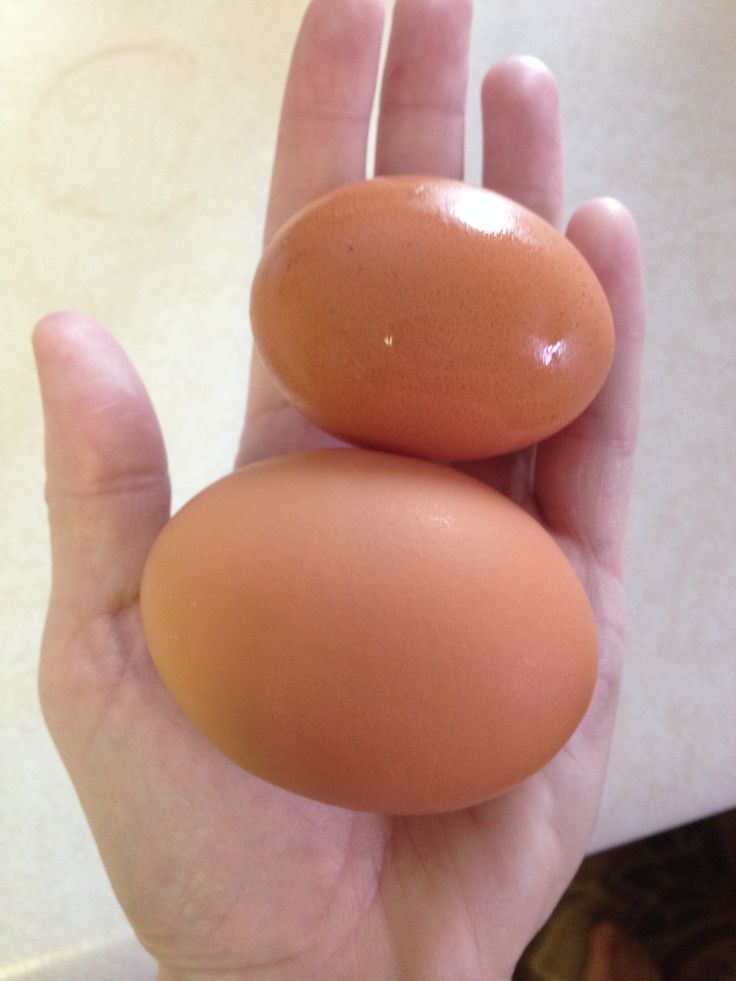
A double yolk egg follows the same path, but with a small difference at the start. Two follicles ripen at the same rate, and two yolks drop into the oviduct close together, about an hour apart. The oviduct does not pause between them, so it wraps both yolks in the same layers of white and then the same shell. The result is one large egg holding two yolks, and it still takes about the same 24 to 26 hours to form.
The trigger is hormonal timing. High levels of a growth hormone can push two follicles to mature at the same rate, and a young hen whose hormones are still settling is more likely to get that push. If you candle a double yolk egg, you may see two dark yolk shadows instead of one, and that is the easiest way to spot one without breaking it.
The rule is simple. Two yolks drop about an hour apart, and one shell grows around both.
Why Young Hens Lay Them Most. The System Is Still Learning
Pullets lay the most double yolk eggs, and there is a good reason for it. A young hen who has just started laying is running a brand new system, and her hormones are still learning the rhythm of the laying cycle. In the first weeks of laying, her ovary may ripen two follicles at once, and her oviduct may release them together, because the timing signals have not yet settled into a steady daily pattern.
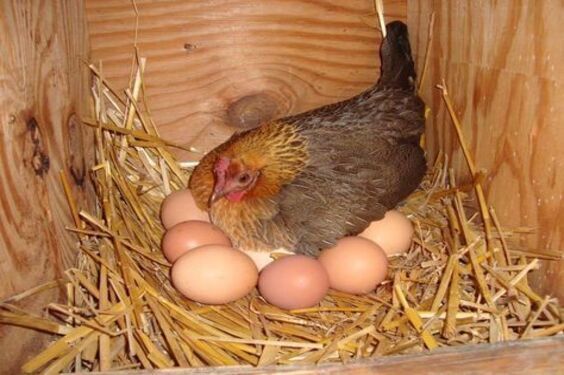
The numbers tell the story clearly. In some flocks, about 5 to 12 percent of eggs at the start of laying have double yolks. Over a hen’s whole life the rate settles to about 1 to 2 percent, and across all eggs laid the figure is about 1 in 1,000.
Most pullets start laying at about 18 to 28 weeks of age, and the double yolks usually appear in the first few weeks after that first egg. If you have just brought home point of lay pullets, do not be surprised to find a double yolk in the nesting box within the first month. It is one of the small pleasures of keeping young hens, and it usually fades away on its own as the hen matures. If you want the full picture of when laying begins and what those first eggs look like, read our guide to when do chickens start laying eggs.
The rule is simple. Young hens lay the most double yolks, and the rate fades as their system settles.
Which Hens Lay Them Most. Breeds, Feed and Light
Some hens are more likely to lay double yolk eggs than others, and breed is the first thing to look at. Heavier breeds like Buff Orpingtons are more prone to double yolks, because their larger bodies and slower maturing systems give two follicles more chance to ripen together. High output layers like Leghorns and ISA Browns also produce more double yolk eggs, but for a different reason, and that reason is simple. They lay more eggs overall, so even a low rate of double yolks adds up to more of them in the basket.
Age matters at both ends of a hen’s laying life. Young pullets lay the most, as the last section explained, and older hens near the end of laying can also produce them, because their timing grows less steady again as their reproductive system winds down.
Feed and light play a part too, and both are things you can control. Overfeeding can push a hen’s body to ripen follicles faster than her oviduct can pace them, and that extra push can tip two yolks into the same egg. Extra light has a similar effect, because light drives the hormones that control laying, and a sudden jump in day length can throw the timing off. Keep feed measured and regular, keep light changes gradual, and let the flock settle into a steady rhythm.
The rule is simple. Heavy breeds and high output layers give you more double yolks, and steady feed and light keep the rate low.
Are Double Yolk Eggs Safe to Eat. Yes, and Bigger Too
Yes, double yolk eggs are safe to eat, and this is the question most keepers ask first. A double yolk egg is just a bigger egg with more yolk, and there is nothing in it that makes it unsafe. It comes from a healthy hen, it is made the same way as a normal egg, and it cooks the same way too.
The extra yolk does change the egg a little in the kitchen. A double yolk egg has more yolk and more fat than a single yolk egg, so it tastes a little richer, and it is a little higher in calories. Use it for frying, scrambling, or baking, and remember that it counts as roughly one and a half eggs in a recipe, so adjust the rest of your ingredients if you are baking something precise.
Some people worry that a double yolk means the hen is sick, or that the egg carries something harmful. It does not, and a double yolk is a sign of a young healthy layer, not a sick hen. The same goes for the shape of the egg. A double yolk egg is often longer and a little lumpy, and that is normal too, because the shell had to stretch around two yolks instead of one. A strange shape alone is never a reason to throw an egg away. If the shell is cracked or the egg smells off, throw it away. Store double yolk eggs the same way as the rest of your eggs.
The rule is simple. Double yolk eggs are safe to eat, and they are simply bigger and richer than a normal egg.
Can Double Yolk Eggs Hatch. Almost Never
This is the question that follows the wonder, and the answer is almost never. A double yolk egg can be fertilized, and two embryos can start to grow inside it, but almost no double yolk egg ever hatches into live chicks. Two chicks need room to grow, room to turn, and room to break out of the shell, and one egg simply does not have enough of any of those things. There is also not enough white to feed two growing embryos, so one usually grows faster and outcompetes the other, and the weaker embryo stops developing.
A 2023 study looked at this closely, and the result was clear. Even when both embryos developed far inside double yolk eggs, no live chicks emerged from them.
So do double yolk eggs mean twins. In a loose sense, yes, because two yolks could each become a chick, and that is why people call them twin eggs. But in a real sense, no, because those twins almost never hatch, and a double yolk egg is not a reliable way to get two chicks from one egg. If you want twins, you are better off hatching two normal eggs. Do not set double yolk eggs in an incubator.
If you are thinking about fertility and hatching in general, read our guide to how to tell if a chicken egg is fertilized.
The rule is simple. Double yolk eggs almost never hatch, so eat them and incubate normal eggs instead.
The Risk to Watch. Egg Binding and Prolapse
Double yolk eggs are harmless on their own, but there is one risk worth watching, and it belongs to the hen, not the egg. A hen who keeps laying very large double eggs can be at higher risk of egg binding and vent prolapse. Egg binding means an egg gets stuck inside the hen and she cannot pass it, and prolapse means part of her vent pushes out with the egg and stays out.
The link is size. A double yolk egg is bigger than a normal egg, and a hen who has to pass very large eggs again and again puts more strain on her vent and her oviduct.
Watch her behaviour after she lays. A hen who is egg bound will often sit hunched and puffed up, strain without producing an egg, walk with a waddling gait, and lose interest in food and water. A hen with a prolapse will show a red bulge at her vent, and other hens may peck at it, which can make it worse fast. If you see straining or a bulge, act at once, and keep her separate from the flock so the others cannot peck at her vent.
Call a vet if she strains for more than a few hours, if a bulge appears and does not go back in, or if she looks weak and stops eating and drinking. Do not try to pull a stuck egg out yourself, because a broken egg inside a hen can cause a dangerous infection. If you want to know the warning signs in detail, read our guide to egg bound hen.
The rule is simple. Watch a hen who lays very large double eggs often, and call a vet if she strains or a bulge appears.
Double Yolks and the Laying Cycle. When They Fade
Double yolk eggs follow the laying cycle, and they fade as the cycle settles. In a young flock, they appear in the first weeks of laying, when the rate can reach about 5 to 12 percent of eggs, and then they thin out as the pullets mature. By the time a hen is laying steadily in her first full season, the rate has dropped to about 1 to 2 percent over her life, and most weeks you will see none at all.
The pattern is not a straight line, and a few things can bring double yolks back. A sudden change in light, such as the longer days of spring or a new lamp in the coop, can nudge the hormones and produce a small burst of double yolks. An older hen near the end of her laying life may also produce them again, because her timing grows less steady as she ages.
If you track your eggs, you will see the pattern clearly. Keep a simple note of the date and the size of any double yolk egg you find, and after a few months you will see them cluster in the early weeks and thin out after that.
Most keepers find that double yolks become a rare treat after the first season. If you want the full picture of how often a hen should lay, read our guide to do chickens lay eggs every day.
The rule is simple. Double yolks fade as the laying cycle settles, and a burst now and then is normal.
Folklore. Good Luck, Twins and Old Warnings
Long before anyone knew about follicles and hormones, people had stories about double yolk eggs, and those stories are still told today. In many cultures a double yolk is called good luck, and it is read as a sign of fertility and abundance.
The twin idea runs through the folklore too. A double yolk was often said to mean twins, and in farming families that was a hopeful sign, because twins in a flock meant more birds and more eggs.
Not every old story is cheerful, and Britain holds the darkest one. There, a double yolk was once read as a warning of death, and finding one was said to mean that someone in the household would die soon.
Triple yolks are possible but very rare, and they have their own small place in the folklore. A triple yolk egg is larger still, and it is so uncommon that most keepers will never see one in a lifetime of collecting eggs. If you ever find one, take a photo before you crack it, because it is the kind of thing other keepers love to see. Some keepers still crack a double yolk egg with a wish in mind, and that small ritual is part of what makes backyard keeping fun. The old stories are fun, and they are worth knowing, but they are not a guide to keeping chickens. The science is simpler, and it is kinder too.
The rule is simple. Folklore calls a double yolk luck or twins, and science calls it a timing wobble.
FAQs
Are double yolk eggs safe to eat.
Yes, they are safe to eat. A double yolk egg is simply a bigger egg with more yolk, and it is made the same way as a normal egg by a healthy hen. Cook it just as you would any fresh egg, and count it as roughly one and a half eggs in a recipe.
Why do chickens lay double yolk eggs.
A hen lays a double yolk egg when two yolks drop into her oviduct close together, about an hour apart, and one shell forms around both. The cause is hormonal timing, and high levels of a growth hormone can make two follicles mature at the same rate. It is most common in young pullets aged about 18 to 28 weeks whose laying systems are still calibrating.
Can double yolk eggs hatch.
Almost never. Two embryos can start to grow, but there is not enough space or white for two chicks, and one embryo usually outcompetes the other. A 2023 study found no live chicks emerged from double yolk eggs even when both embryos developed far, so do not set them in an incubator.
Do double yolk eggs mean twins.
In a loose sense, yes, because two yolks could each become a chick, and that is why people call them twin eggs. In a real sense, no, because those twins almost never hatch. A double yolk egg is not a reliable way to get two chicks from one egg, so hatch two normal eggs instead.
How common are double yolk eggs.
About 1 in 1,000 eggs overall has a double yolk. In some flocks the rate is about 5 to 12 percent of eggs at the start of laying, and it settles to about 1 to 2 percent over a hen’s life. Young pullets lay them most, and older hens near the end of laying can also produce them.
If you are just starting out with backyard chickens, grab our free starter checklist and keep it by the coop for those first exciting weeks of collecting eggs.
If you are looking for a summer treat to try next, read our guide to can chickens eat apricots.
Keep Reading
- When Do Chickens Start Laying Eggs
- Do Chickens Lay Eggs Every Day
- Blood Spots in Chicken Eggs
- Egg Bound Hen
- How to Tell If a Chicken Is Broody

Nusrat
Author, TheChickenPet.com