
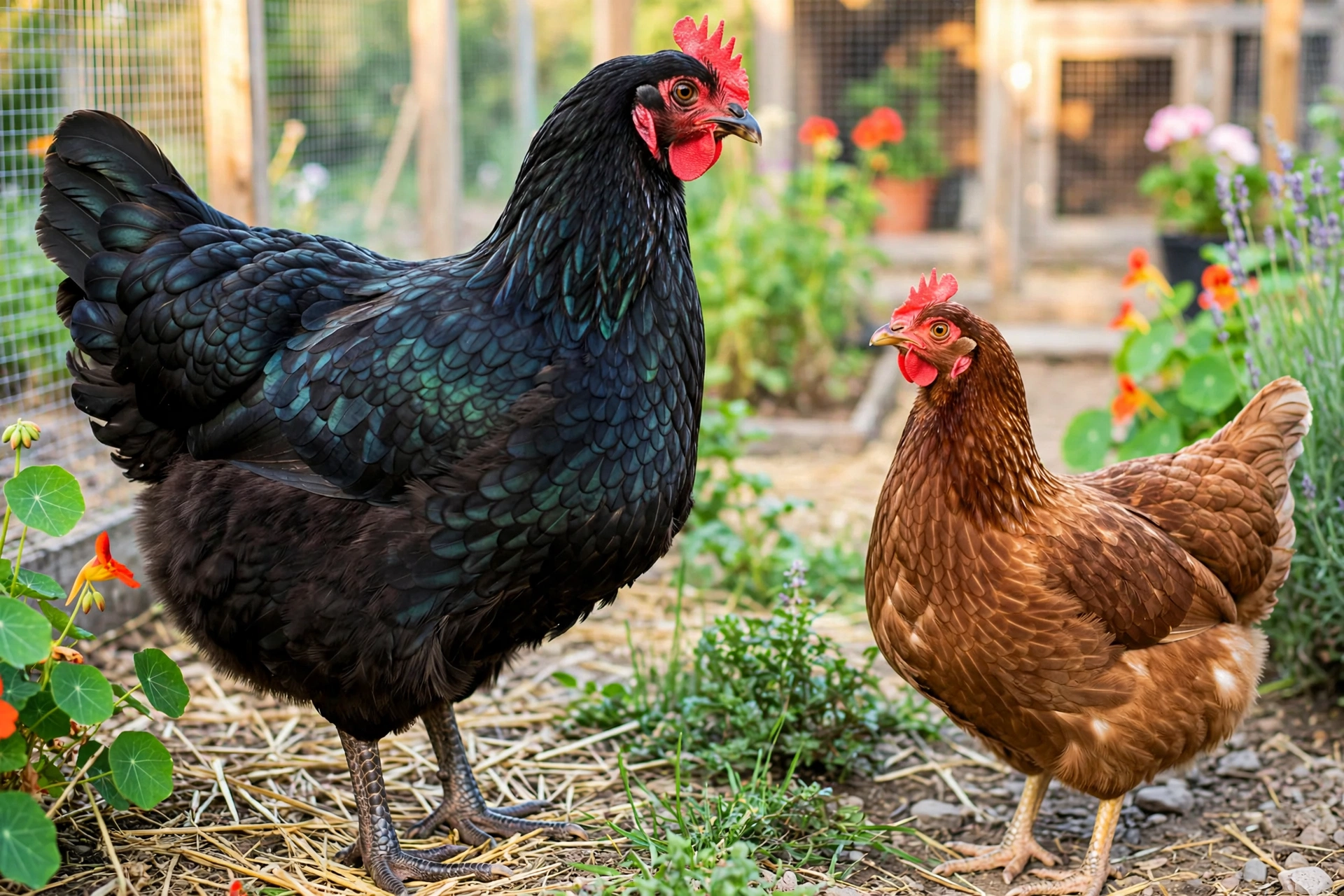
Jersey Giants are the gentle giants of the chicken world. They are the biggest chicken breed of all, with roosters reaching up to about 13 lb and hens up to about 10 lb, yet they are calm, friendly and slow moving birds that fit well into a backyard flock. If you are thinking of keeping them, or you already have a young Jersey Giant growing fast in your coop, one question matters more than most, and that is how many years you can expect to share with your bird.
The short answer is that Jersey Giants usually live 6 to 10 years. That puts the Jersey Giant lifespan among the longest of the heritage breeds, and a well cared for hen can still be pottering around the garden at eight or nine years old. Like every breed, the exact number depends on where your bird came from, how it is fed and housed, and how much care it gets as it grows older and heavier.
In this article we look at how long Jersey Giant chickens live, how their slow growth shapes their lifespan, how long they keep laying eggs, what affects their health, and how to help yours live longer. We also cover rooster lifespan, broodiness, and the signs that tell you your Jersey Giant is getting old.

Table of Contents
At a Glance
Lifespan 6 to 10 years
Size Roosters up to about 13 lb, hens up to about 10 lb
Temperament Calm, gentle and friendly
Maturity Slow, reaching full size at 8 to 9 months
Laying Life
Eggs Around 150 to 200 large brown eggs a year in the first years
First eggs At around 6 to 8 months old
Broodiness Occasionally broody, not very often
Good to Know
Cold hardiness Very good in cold weather
Heat Needs shade and cool water in hot weather
Perches Low perches and ramps suit their heavy bodies
How Long Do Jersey Giant Chickens Live
Most Jersey Giants live 6 to 10 years. A hen that comes from a good breeder, eats a balanced diet and lives in a safe coop can reach the top of that range, while a bird from a hatchery line bred mainly for fast growth may live a shorter life. Six years is a fair expectation for an ordinary backyard Jersey Giant, and eight to ten years is a good long life for the breed.
That is a long life for a chicken, and it is one of the reasons Jersey Giants are loved by keepers who want a steady flock rather than a bird that burns out quickly. For comparison, Silkies live around 7 to 9 years, Rhode Island Reds live around 5 to 8 years and Buff Orpingtons live around 8 to 10 years, so Jersey Giants sit right at the long lived end of the heritage breeds.
Jersey Giants are sometimes confused with Australorps, so here is the plain difference. Both are big black birds with a single comb, but Jersey Giants are much bigger, slower to mature and lay fewer eggs than Australorps, so if your black hen is huge and still growing at seven months old, she is more likely a Jersey Giant than an Australorp.
The black Jersey Giant lifespan is the same 6 to 10 years as the breed in general. Black is the original and best known colour of the breed, and the white and blue varieties share the same lifespan too, since colour makes no difference to how long these birds live.
Size is the first thing to understand about Jersey Giant lifespan. These birds were bred in New Jersey in the late 1800s to be a large table bird, and they are still the heaviest breed kept in backyards today. A rooster can reach up to about 13 lb and a hen up to about 10 lb, which is roughly twice the weight of many laying breeds. That great size is part of their charm, but it also shapes how they should be kept, because a very heavy bird puts more strain on its legs and joints than a light one.
Slow growth is the second thing that shapes their lifespan, and it works in their favour. Jersey Giants take 8 to 9 months to reach full size, which is much slower than most breeds, and slow growth is linked with a longer life in chickens. A bird that grows steadily and matures late often stays healthier for longer than a bird pushed to grow fast and lay early. So the long wait for your Jersey Giant to fill out is not a problem, it is one of the reasons the breed lives so long.
Heritage or Hatchery Birds
Where your Jersey Giant came from makes a real difference to how long it is likely to live. Heritage birds from a breeder who selects for health, size and a long productive life tend to live at the upper end of the 6 to 10 year range. Hatchery birds, which are bred in large numbers and often selected for fast growth and egg numbers, tend to live shorter lives, sometimes only five or six years.
This is not a hard rule, and plenty of hatchery Jersey Giants live long happy lives. But if a long lifespan matters to you, it is worth asking the breeder or hatchery how long their birds usually live and what they select for. A breeder who keeps older breeding birds and can tell you about the grandparents of your chicks is a good sign, because long lived parents usually pass that strength on to their chicks.
The price of the bird is not a reliable guide on its own. A cheap chick from a hatchery can outlive an expensive chick from a breeder if the cheap one gets better care, better feed and a safer coop. Breeding is only one part of the picture, and the daily care you give your bird matters at least as much. Even so, starting with a healthy chick from a line known for long life gives your Jersey Giant the best possible start.
When you buy chicks, look for bright eyes, clean legs, a dry vent and an alert, active chick that eats and drinks well. Avoid chicks that sit hunched, look sleepy all the time or have pasty droppings stuck around the vent, since these are signs of a weak chick. A healthy start in the first few weeks sets the pattern for the years that follow, and Jersey Giants that grow up strong and steady tend to stay strong for longer.
Lifespan or Laying Life
A Jersey Giant hen does not lay eggs for as long as she lives, and knowing how the two timelines differ helps you plan your flock. Laying life and lifespan are two different things, and a hen can live for several years after her best laying years are behind her.
Jersey Giants start laying later than most breeds because they mature slowly. When do Jersey Giants start laying eggs is a common question, and the answer is usually at around 6 to 8 months old. Some pullets start a little earlier and some a little later, and a hen hatched late in the season may wait until the days lengthen in spring before she lays her first egg. Do not worry if your Jersey Giant is still not laying at six months, since slow maturity is normal for this breed.
Once she starts, a Jersey Giant hen lays around 150 to 200 large brown eggs a year in the first years. That is a respectable number for a heritage breed, though it is fewer than a dedicated laying breed. She lays best in her first two years, and her numbers will fall gradually after that, which is normal for every breed. If you want the full picture of how laying changes with age, our guide on how long hens lay eggs for explains the pattern in more detail.
So how long do Jersey Giants lay eggs for in total. Most hens lay well for two to three years, then keep laying at a slower rate for a few more years. A four or five year old Jersey Giant may still give you two or three eggs a week in the laying season, and some older hens keep laying an egg now and then right into old age. The eggs often stay large even as the number falls, so an old hen can still earn her keep in the laying basket.
Winter usually brings a break in laying, and Jersey Giants are no different. Short days and cold weather slow laying down, and many hens stop altogether for a few weeks in the middle of winter. This rest is good for them, and a hen that takes a proper winter break often lays better and lives longer than one pushed to lay all year round with extra light. Letting your Jersey Giants follow the seasons is one of the simplest ways to support a long life.
If you are new to keeping chickens and wondering when to expect that first egg, our guide on when chickens start laying eggs covers the signs to watch for, from reddening combs to the first small pullet egg in the nest box.
What Affects Their Lifespan
Several things decide whether a Jersey Giant lives five years or ten, and most of them are in your hands as the keeper. Genetics sets the starting point, and daily care decides how far the bird gets.
Feed is the biggest everyday factor. Jersey Giants need a balanced layer feed once they start laying, with enough protein to support their large bodies and enough calcium for strong eggshells. Growing birds need a good grower feed, and chicks need a proper starter feed, because a bird that is fed well while it is growing builds the bones and organs that carry it through a long life. Treats are fine in small amounts, but too many treats push out the balanced feed and can lead to an overweight bird, which is a real risk for a breed this heavy. Fresh clean water matters just as much, and a Jersey Giant drinks more than a smaller bird, so check the water every day.
Weight and joints are the weak point of the breed. A bird that weighs 10 to 13 lb puts a lot of pressure on its legs every time it jumps down from a perch, and leg and foot problems are the most common health trouble in Jersey Giants. Low perches, no higher than about 18 inches off the ground, and a ramp up to the coop door take a lot of strain off the joints. Soft dry bedding under the roost helps too, because it cushions the landing when a heavy bird hops down in the morning. Bumblefoot, which is a sore on the foot that can turn into a deep infection, is more likely in heavy birds that land hard on rough ground, so keep the run free of sharp stones and hard rough surfaces.
Housing and space matter as well. Jersey Giants are calm birds that do not fly much, but they still need room to move, scratch and dust bathe. A crowded coop spreads disease and stress, and stress shortens a chicken’s life. Give each Jersey Giant at least 4 square feet inside the coop and 10 square feet in the run, and more if you can, since a big bird in a small space is an unhappy bird. Good ventilation keeps the air fresh without draughts, and a dry coop keeps feet and feathers healthy.
Cold weather suits Jersey Giants well. They are a hardy breed with dense feathering and a large body that holds heat, and they cope with cold winters far better than many lighter breeds. They still need a dry draught free coop and unfrozen water in winter, but they do not need extra heating. Heat is the bigger risk, because a very large black bird absorbs the sun and can overheat on a hot day. Shade, cool water and good airflow in the coop are essential in summer, and a shallow dish of water to stand in can help a hot Jersey Giant cool down.
Disease and parasites shorten lives when they go unnoticed, so check your birds regularly. Look at the eyes, comb, vent and legs once a week, and watch how they move and eat. Mites and lice, worms, and respiratory troubles all take a toll if they are left to build up, and an older heavy bird is less able to fight them off than a young one. Our chicken care and health guide covers the routine checks that catch problems early, when they are easiest to treat.
Predators are a risk for every free ranging flock, and Jersey Giants are slow moving birds that cannot fly away from danger. A secure run with buried wire and a coop that locks tight at night protects them far better than speed ever could. Their size puts off some smaller predators, but a fox or a dog will still take a Jersey Giant, so do not rely on size alone to keep them safe.
Broodiness and Laying
Do Jersey Giants go broody a lot is a question many keepers ask, and the answer is no, they are only occasionally broody. A Jersey Giant hen may go broody once in a while, but the breed is not known as a strong broody breed, and most hens will lay through the season without trying to sit.
When a Jersey Giant does go broody, she makes a good mother. She is big enough to cover a large clutch of eggs, and her calm nature means she usually sits steadily and looks after her chicks well. Her size is a help here, since she can keep a dozen eggs warm without trouble, and she is patient with chicks under her. If you want to hatch chicks naturally, a broody Jersey Giant is a fine choice, just do not count on it happening every year.
Broodiness pauses laying, because a broody hen stops laying while she sits and for a while after her chicks hatch. If you do not want chicks, break the broodiness gently by lifting her off the nest a few times a day and blocking access to the nest box for a few days, and she will usually return to laying within a couple of weeks. Do not let a hen sit on an empty nest for weeks on end, since she will eat and drink very little while she sits, and that weakens her over time.
A broody spell is not a health problem, and it does not shorten a hen’s life if it is handled well. In fact a hen that takes a break from laying now and then may lay for longer overall, since her body gets a rest from producing eggs. The birds that burn out fastest are usually the ones pushed to lay without a break, so a little broodiness now and then is nothing to worry about.
Signs of an Ageing Jersey Giant
An ageing Jersey Giant slows down gradually, and the changes are easy to spot once you know what to look for. Most hens start to show their age from around five or six years old, though some stay sprightly for longer.
The first sign is usually fewer eggs. A hen that once laid four or five eggs a week may drop to two or three, and then to one or two, and the laying season may get shorter each year. This is normal ageing, not illness, and an old hen that still lays an egg now and then is doing well. Her eggs may also get thinner shelled, which is another sign that her body is slowing down.
Movement changes too. An old Jersey Giant walks more slowly, takes longer to get up in the morning, and may stop jumping up to favourite perches. She may prefer to sleep on a low perch or even on the coop floor, and she may need a ramp where she once hopped up easily. Stiffness in the legs is common in old heavy birds, and a hen that limps or holds one foot up should be checked for bumblefoot or joint trouble.
Feathers tell a story as well. The glossy green sheen on a black Jersey Giant fades with age, and the feathers may look duller and more worn, especially after the moult. An old hen may moult more slowly and take longer to grow her new feathers back, and her comb may look paler and less upright than it did in her prime. Her legs may look thicker and rougher, with raised scales that come with age.
Behaviour changes in a gentle way. An old Jersey Giant often becomes even calmer and more affectionate, following the keeper around the garden and settling down for a rest in a sunny spot. She may spend more time resting and less time scratching and foraging, and she may eat a little less. She may also drop down the pecking order as younger birds push past her, so watch that she still gets her share of feed and water.
None of these signs on their own mean your hen is ill, and an old Jersey Giant can live happily for years with slower legs and fewer eggs. What matters is a change from her normal pattern, so a hen that suddenly stops eating, sits fluffed up and alone, or struggles to breathe needs attention straight away, whatever her age.

How to Help Yours Live Longer
You cannot change your Jersey Giant’s genetics, but you can do a lot to help her reach ten years old. The care that adds years to a Jersey Giant’s life is mostly simple, steady, everyday care rather than anything fancy.
Start with the coop and run. Keep perches low, at about 18 inches or less, and give the birds a ramp to walk up to the coop instead of a steep step. Put deep soft bedding under the roosts so heavy birds land gently, and keep the floor dry and free of sharp stones. Give them plenty of space, since a crowded coop spreads disease and stress, and make sure every bird can reach feed and water without being pushed away by bolder flock mates.
Feed them well and keep treats small. A good quality layer feed with oyster shell on the side gives a laying hen the calcium she needs, and growing birds need a proper grower feed until they are ready to lay. Kitchen scraps and treats should stay a small part of the diet, no more than a tenth of what they eat in a day, so the balanced feed does the main work. Keep the water clean and full, and check it twice a day in hot weather, since a big bird drinks a lot and dehydration hits a heavy bird hard.
Protect them from heat in summer and damp in winter. Shade cloth over part of the run, cool water, and a coop with good airflow help Jersey Giants through hot days, and a dry draught free coop with dry bedding keeps them comfortable through cold nights. Frozen water is a common winter problem, so check drinkers every morning in cold weather and swap in fresh water.
Keep up with health checks and parasite control. Look over each bird once a week, checking eyes, comb, vent, legs and feet, and watch for mites and lice around the vent and under the wings. Worm your flock as needed and keep the coop clean, since a clean coop means fewer parasites and fewer germs. A dust bath area with dry soil and a little wood ash lets the birds keep their own feathers clean and free of pests.
Handle them gently and keep stress low. Jersey Giants are calm birds that enjoy human company, and gentle handling from a young age keeps them tame and easy to check over. Sudden changes, new birds thrown in without introduction, dogs chasing the flock and loud scares all raise stress, and stress over time wears a bird down. Introduce new birds slowly, keep dogs away from the run, and give the flock a steady routine.
Finally, let them rest. Do not push laying with extra light through the winter, and let a broody hen take her break if she wants one. A hen that follows the seasons and takes a proper winter rest often lives longer than one pushed to lay all year round. Jersey Giants are slow steady birds, and their care should match their pace, calm, regular and unhurried.

Jersey Giant Rooster Lifespan
Jersey Giant rooster lifespan is much the same as the hens, at around 6 to 10 years. A rooster from a good line that is well fed and kept safe from predators can live as long as any hen, and many keepers find their Jersey Giant rooster becomes a calm old gentleman of the flock in his later years.
Roosters sometimes live a little shorter than hens, and there are a few reasons for that. A rooster that spends his days guarding the flock, chasing off rivals and mating may wear himself out faster than a hen, and roosters that fight with other roosters can pick up injuries that shorten their lives. Jersey Giant roosters are known for being calm and gentle for such large birds, which helps, since a placid rooster is less likely to fight and less likely to be injured.

Keeping only one rooster in a flock removes the biggest cause of rooster trouble, which is fighting between males. A single Jersey Giant rooster with a good number of hens, at least eight to ten hens per rooster, has a settled life and is less likely to overmate individual hens. Too few hens means the rooster mates the same hens again and again, which wears their feathers and stresses them, and that is hard on the hens too.
Roosters need the same leg and joint care as the hens, and arguably more, since they are the heaviest birds in the flock at up to about 13 lb. Low perches and ramps matter just as much for a rooster, and a rooster that starts limping should be checked for bumblefoot or a sprain early, before it becomes a lasting problem. A rooster that cannot walk well cannot guard his flock, eat properly or mate, so sore feet hit a rooster harder than most keepers expect.
An old Jersey Giant rooster slows down like an old hen. He may crow less, guard less keenly and spend more time resting in the sun, and younger roosters may challenge him if they are kept together. Give an old rooster a safe place to eat and rest where younger birds cannot push him around, and he can enjoy a long retirement at the head of his flock for years.
Frequently Asked Questions
How long do Jersey Giants lay eggs?
Most Jersey Giant hens lay well for two to three years, then keep laying at a slower rate for a few more years. A hen may still lay an egg now and then at five or six years old, though the number drops each year. Laying life is shorter than lifespan, so a hen can live several years after her best laying years are behind her.
When do Jersey Giants start laying eggs?
Jersey Giants usually start laying at around 6 to 8 months old, later than most breeds because they mature slowly. Some pullets start a little earlier and some a little later, and a hen hatched late in the season may wait until spring before she lays her first egg. Slow maturity is normal for this breed and is linked with its long lifespan.
Are Jersey Giants good for beginners?
Yes, Jersey Giants are good for beginners. They are calm, gentle and friendly birds that are easy to handle, and they cope well with cold weather and with being kept in a run. The main thing a beginner needs to remember is their size, so give them low perches, ramps, plenty of space and a strong coop, and they are as easy to keep as any other heritage breed.
Do Jersey Giants go broody a lot?
No, Jersey Giants do not go broody a lot. They are only occasionally broody, and most hens lay through the season without trying to sit. When a hen does go broody she usually makes a good mother, since she is big enough to cover a large clutch and calm enough to sit steadily.
How big do Jersey Giants get?
Jersey Giants are the biggest chicken breed, with roosters reaching up to about 13 lb and hens up to about 10 lb. They take 8 to 9 months to reach full size, which is much slower than most breeds. Their large size is why low perches, ramps and plenty of space matter so much for this breed.
What is the black Jersey Giant lifespan?
The black Jersey Giant lifespan is the same as the breed in general, at 6 to 10 years. Black is the original colour of the breed, and the white and blue varieties live just as long, since feather colour makes no difference to lifespan. A black Jersey Giant from a good breeder with steady care can reach the top of that range.

Author, TheChickenPet.com