
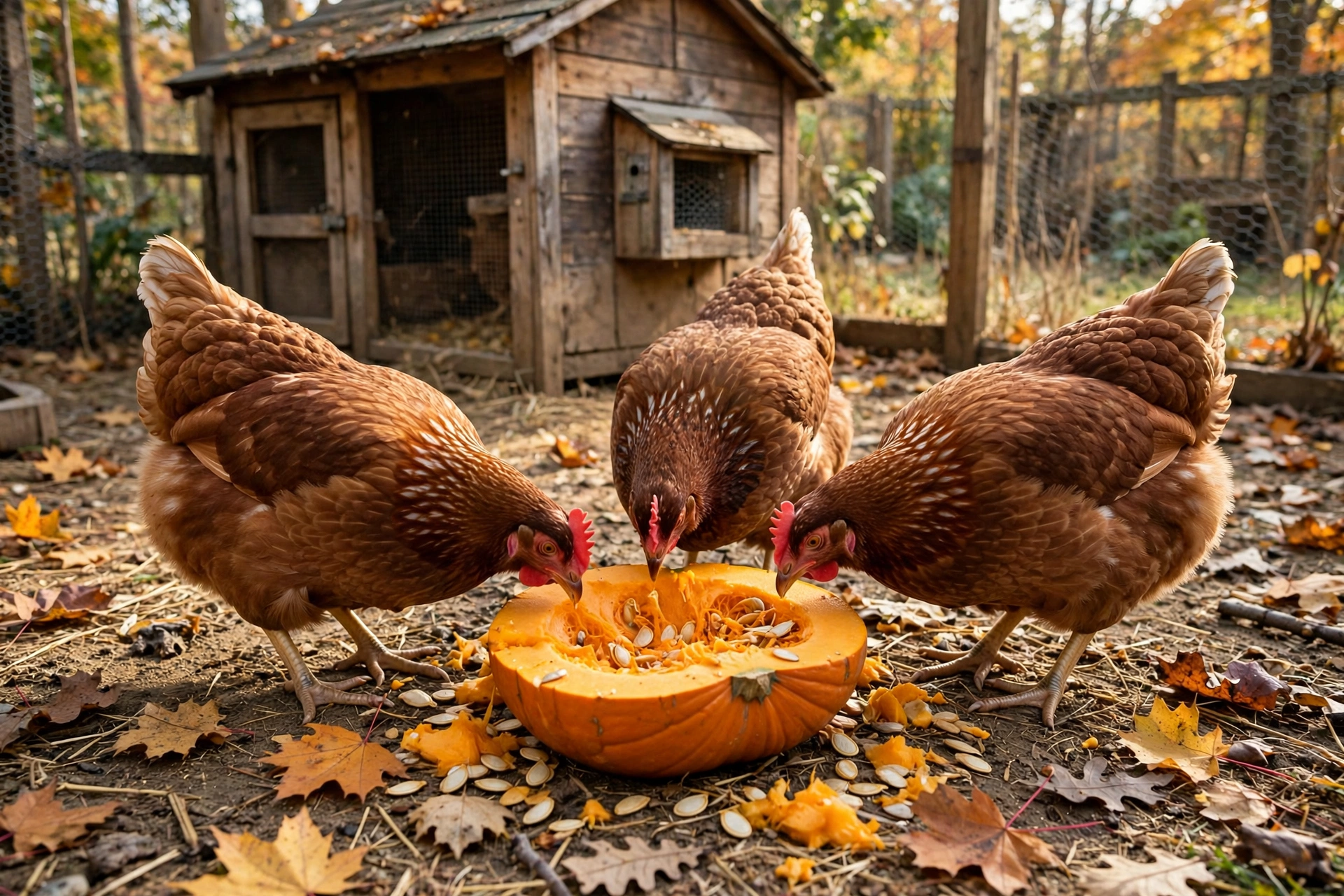
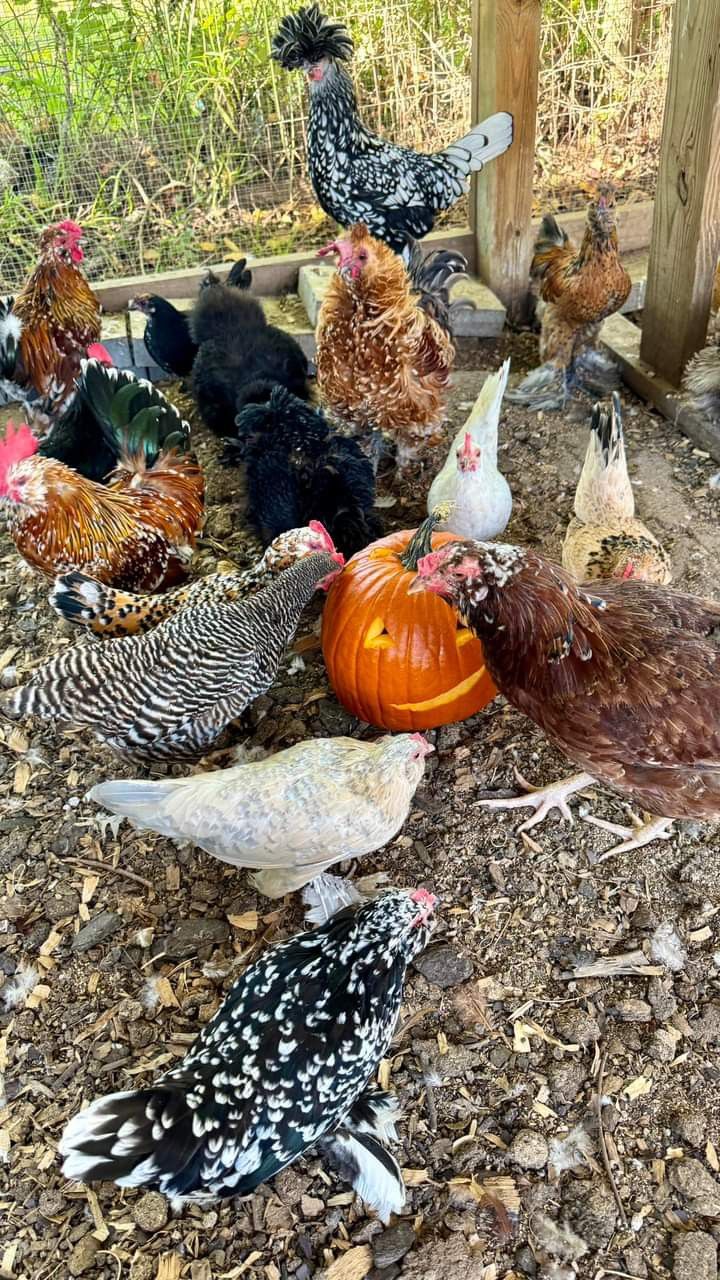
Can chickens eat pumpkin? Yes, and in late October it is one of the easiest treats you will ever give a flock. Halve a fresh pumpkin, set it cut side up in the run, and step back. The hens will do the rest, pecking at the flesh, picking out the seeds and turning a whole pumpkin into a boredom buster that keeps them busy for hours.
This guide gives the short answer first, then the serving details that matter. It covers raw and cooked pumpkin, seeds, skin, the stringy guts, leaves, carved Halloween pumpkins and leftover pie, and it answers the dewormer claim honestly. Every verdict here matches our own food checker, so what you read here will never contradict the checker on the homepage.
Table of Contents 10 sections
- The Short Answer. Yes, Flesh and Seeds, Raw or Cooked Plain
- How to Serve Pumpkin to Chickens
- Can Chickens Eat Pumpkin Seeds?
- Do Pumpkin Seeds Deworm Chickens?
- Skin, Rind and the Stringy Guts
- Carved Pumpkin and Leftover Pie
- Can Chickens Eat Pumpkin Leaves and Other Squash?
- How Much and How Often?
- Can Baby Chicks Eat Pumpkin?
- FAQs
Pumpkin flesh and seeds are safe, raw or cooked plain. Halve a fresh pumpkin and let the flock work at it, or serve chunks of flesh. Seeds are safe raw or dried and are a favourite treat.
Pumpkin is a treat, not a layer feed replacement. Treats stay at about 10 percent or less of the diet, and layer feed stays the base, so laying hens still get the nutrition that actually supports eggs.
Seeds do not deworm chickens, and a hen with worms needs a real diagnosis and treatment. Carved pumpkin is only food while it is fresh and clean, with no candle wax, no soot and no mould or rot. Pumpkin pie is caution only, because the pie adds sugar and dairy.
The Short Answer. Yes, Flesh and Seeds, Raw or Cooked Plain
Can chickens eat pumpkin? Yes. The flesh and the seeds are both safe, and they are safe raw or cooked plain. That is the whole short answer, and it matches our food checker exactly. If you only remember one line from this article, remember that one, because most of the confusion about pumpkin comes from people mixing up the fruit itself with pie, carved leftovers and old pumpkins that have gone bad.
The best way to serve it is also the simplest. Halve a fresh pumpkin and set it in the run cut side up. Hens peck through the flesh, pick out the seeds and work at the stringy centre, which is why pumpkin is such a good boredom buster. You do not need to cook it, peel it or scoop it out for them, and you do not need to buy anything special. A plain pumpkin from the kitchen or the garden is already the right food.
How to Serve Pumpkin to Chickens
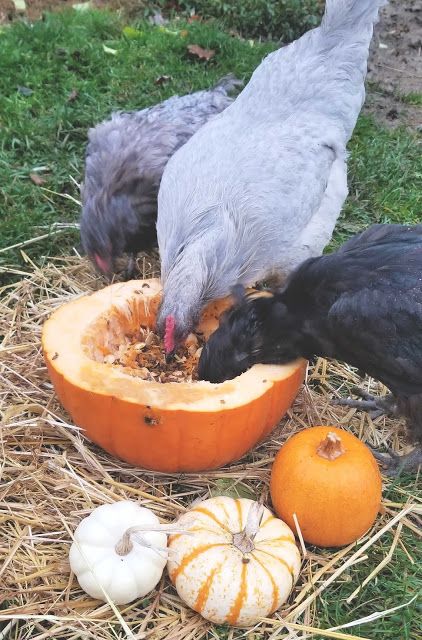
How to serve pumpkin to chickens starts with a fresh, sound pumpkin. Cut it in half and place it cut side up where the hens can reach it easily, or cut it into large chunks if you have a small flock and want to spread the treat around. Hens are good at working through soft flesh on their own, and a halved pumpkin gives them something to peck at for a long time, which is exactly what a bored flock needs on a dull autumn day.
Can chickens eat raw pumpkin? Yes, raw is fine, and it is the normal way to serve it. Can chickens eat cooked pumpkin? Yes, as long as it is cooked plain, with nothing added. Plain mashed or roasted pumpkin is the same food, just softer, which can help older hens or a hen that is a little off her food. What you should not serve is pumpkin cooked with butter, sugar, spice or salt, because those additions turn a safe treat into something the flock does not need. Keep it plain, in either form, and the verdict stays safe.
Can chickens eat pumpkin guts? Yes, in the practical sense. The stringy pulp and seeds inside a halved pumpkin are part of the whole fruit, and hens peck through them happily when they work at a halved pumpkin. You do not need to scoop the centre out first, and you do not need to clean the seeds before serving them. Just halve the pumpkin, set it down and let the flock sort the flesh from the seeds themselves.
Can Chickens Eat Pumpkin Seeds?
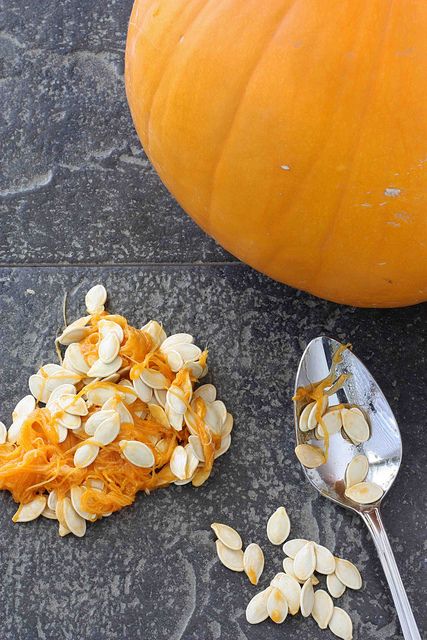
Can chickens eat pumpkin seeds? Yes, and seeds are one of the most popular parts of the whole pumpkin. Our food checker rates pumpkin seeds safe, raw or dried, and calls them a natural favourite. That matches what keepers see in the run, because hens pick seeds out first and come back for them long after the flesh is gone.
Serve seeds as they come from the pumpkin, raw and in the flesh, or scatter dried seeds as a treat on their own. There is no need to roast them, salt them or shell them for adult hens, and plain seeds need no preparation at all. Seeds still count inside the treat amount, so a handful scattered for a small flock is plenty, and seeds are not a replacement for layer feed. They are a treat the flock loves, inside a diet that is still built on proper feed.
One seed warning is worth stating plainly. Seeds bought for people are often salted or flavoured, and those are not the same food. Only serve plain, unsalted seeds, straight from a fresh pumpkin or dried plain at home. Salted snack seeds belong in the kitchen, not in the run.
Do Pumpkin Seeds Deworm Chickens?
Pumpkin as a natural dewormer is a myth, and this is the section where an honest answer matters more than a popular one. Pumpkin seeds are widely claimed online to deworm chickens, but there is no solid evidence they treat or prevent worms, and our food checker does not claim it either. Seeds are a safe and popular treat, and that is all they are. They are not medicine.
A hen with worms needs a real diagnosis and treatment, not pumpkin. Worms show up as weight loss, pale combs, dirty vent feathers, a drop in laying or worms visible in droppings, and a keeper who sees those signs should get the flock checked and treated properly rather than hoping seeds will fix it. Our Care and Health pillar puts worming into the wider health routine, and it is the right place to start if you are unsure whether your flock has a health problem at all.
This does not make pumpkin useless. A flock that is healthy and well fed copes better with most problems, and a boredom busting treat like a halved pumpkin keeps hens active and foraging, which is good for them in its own right. Just do not let a treat stand in for treatment. Enjoy the pumpkin for what it is, a safe seasonal food, and treat worms with a real wormer when worms are actually present.
Skin, Rind and the Stringy Guts
Can chickens eat pumpkin skin? This is a practicality question, not a separate safety verdict, and it is worth answering that way. Our food checker does not rate pumpkin skin separately, so this article does not invent a verdict for it. What happens in practice is simple. Hens peck through soft flesh easily, but the tough outer rind of a mature pumpkin is hard for them to break down on their own, so they mostly leave it.
That is why halving or chunking the pumpkin is the practical serve. Cut the pumpkin open and the hens can reach everything worth eating without fighting the rind. Uneaten rind can go to compost when you clear up, and there is no need to peel a pumpkin before serving it. Peeling is extra work that does not help the flock, and a halved pumpkin already gives them full access to the flesh, seeds and stringy centre.
The same practical point covers the stringy guts. Hens work through the pulp and seeds inside a halved pumpkin without any help, and there is no need to scoop or clean anything first. If a piece of rind or pulp is still sitting in the run when you do your next check, pick it up and compost it, because old scraps in the run are a hygiene problem even when the food itself started out safe.
Carved Pumpkin and Leftover Pie
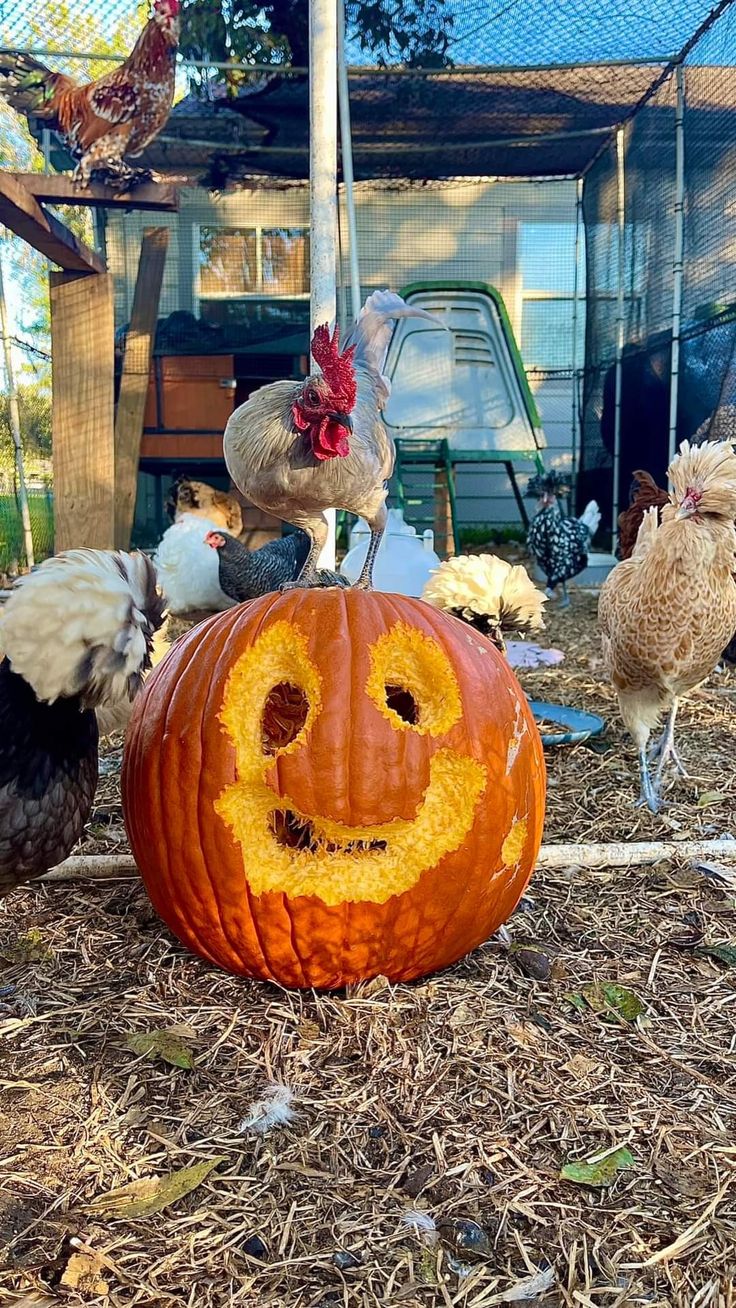
Can chickens eat carved pumpkin and jack o lantern leftovers? Only if the carved pumpkin is still fresh and clean. A pumpkin carved today, with no candle wax, no soot and no mould or rot, is the same safe food as an uncarved pumpkin, and hens will enjoy it just the same. A pumpkin that has sat out carved for days is not food, no matter how much of it is left, because mould and rot set in fast once the skin is cut.
Check a carved pumpkin before it goes to the flock. If it smells off, feels slimy, shows mould or has candle wax or soot on the cut faces, compost it instead. Hens should never be given a pumpkin that has had a candle burning inside it, because wax and soot are not part of their food, and a rotten pumpkin is a general no across all our food guides. When in doubt, throw it out, because a fresh pumpkin is cheap and a sick hen is not.
Can chickens eat pumpkin pie? Only in small amounts, and only as a caution food. Our food checker rates pumpkin pie as caution, because the pumpkin itself is a great food and the pie adds sugar and dairy. A tiny scrap of plain pie filling is not a disaster, but pie is not a flock treat to hand out by the slice, and the pastry, sugar and cream in a normal serving are exactly what hens do not need. If you have leftover pie, keep the hens to the plain pumpkin instead, and keep the pie for people.
Can Chickens Eat Pumpkin Leaves and Other Squash?
Can chickens eat pumpkin leaves? Yes, young leaves are safe, fresh or cooked, according to our food checker. Young, tender leaves from a pumpkin plant are a perfectly good green for hens, and they fit the same pattern as other garden greens, fresh, clean and served as part of a varied treat mix. Older, tough leaves are less appealing and less useful, so pick young leaves if you are offering them at all.
Other squash follows the same logic as pumpkin, because pumpkin is itself a winter squash. Plain flesh and seeds from squash like butternut are safe treats in the same way, served halved or chunked, raw or cooked plain, inside the same treat amount. The rule that never changes is plain and fresh first. A squash cooked with butter, sugar or spice is a kitchen dish, not flock food, and a squash that has gone mouldy belongs on the compost heap.
If you grow pumpkins or squash yourself, the garden gives you two treats for one plant, the fruit in autumn and the young leaves through the growing season. Both are safe, both are simple to serve, and neither needs any special preparation beyond washing off garden dirt. That makes pumpkin one of the easiest garden foods to share with a flock, from leaf to fruit.
How Much and How Often?
How much pumpkin can chickens eat? Enough to count as a treat, and no more. Treats stay at about 10 percent or less of the diet, and layer feed is the base, the same rule that runs through every food article in this series. For a small flock, half a pumpkin shared between the hens is a generous treat, and a whole pumpkin is a boredom buster to work through over a day or two, not a meal replacement.
How often can you give it? In pumpkin season, a couple of times a week is plenty, and a whole pumpkin set out for the flock to work through counts as one treat event, not a daily ration. Outside the season, pumpkin is just an occasional treat like any other, and there is no need to buy pumpkins specially once the autumn glut is over. Our feeding pillar and our free Starter Checklist both put treats in the same place, a small, enjoyable part of a diet built on proper feed.
Clear up on time, every time. Remove uneaten pumpkin after a day or so in the run, sooner in warm weather, because mouldy or rotten food is a general no across the food series. A halved pumpkin left to rot in the run attracts flies, smells bad and teaches hens to eat spoiled food, which undoes all the good of a fresh treat. Serve fresh, let them enjoy it, then compost what is left.
Can Baby Chicks Eat Pumpkin?
Can baby chicks eat pumpkin? Only in the small, careful way our chick treats guide allows. Starter feed comes first, treats wait until chicks are a couple of weeks old and eating confidently, and chick grit must be available before any treat goes in. Soft pumpkin flesh in tiny amounts fits that rule, because it is soft, plain and easy for a young chick to manage.
Whole seeds do not suit very young chicks, and neither does a whole halved pumpkin they cannot work through. For chicks, serve a tiny amount of soft, mashed plain pumpkin, not seeds and not rind, and watch that every chick can reach it without being pushed aside. If the chicks are still on starter feed alone and are not yet eating confidently, wait. Pumpkin season comes back every year, and a chick that grows up on proper starter feed will enjoy pumpkin soon enough.
Our age by age chick treats guide sets out the full order, starter first, grit first, soft treats only, tiny amounts only. Pumpkin follows that order exactly, and it is a good first soft treat precisely because it is so simple. Just keep the amount tiny, keep it soft, and keep the seeds for the adult hens.
FAQs
Can chickens eat pumpkin? Yes. Flesh and seeds are safe, raw or cooked plain, and a halved fresh pumpkin is one of the best boredom busters you can give a flock. Keep treats at about 10 percent or less of the diet, with layer feed as the base.
Can chickens eat pumpkin seeds? Yes. Seeds are safe raw or dried and are a natural favourite. Serve them plain and unsalted, straight from a fresh pumpkin or dried plain at home. Salted snack seeds are not flock food.
Do pumpkin seeds deworm chickens? No, there is no solid evidence they treat or prevent worms. Seeds are a safe treat, not medicine. A hen with worms needs a real diagnosis and treatment, not pumpkin.
Can chickens eat carved pumpkin? Only while it is fresh and clean, with no candle wax, no soot and no mould or rot. A pumpkin that has sat out carved for days is not food and should be composted.
Can chickens eat pumpkin pie? Only in small amounts, as a caution food. The pumpkin itself is great, but pie adds sugar and dairy. Keep the hens to plain pumpkin and keep the pie for people.

WRITTEN BY
Nusrat
Author, TheChickenPet.com