

Hatching your own chicks in an incubator is one of the most rewarding parts of keeping chickens, and it is also one of the easiest to get wrong by rushing. Fertile eggs need steady warmth, the right humidity, regular turning, and then a quiet lockdown while they hatch. This guide shows how to hatch chicken eggs at home in about 21 days, from choosing the eggs to moving dry, fluffy chicks into the brooder. It covers the incubator temperature for chicken eggs, the chicken egg incubation humidity at each stage, candling chicken eggs day 7 and day 14, and lockdown day 18 chicken eggs, plus what to do when a chick is stuck hatching.
Table of Contents
- 1. The Short Answer. 21 Days at 99.5 Degrees
- 2. Do You Need a Rooster and Which Eggs to Set
- 3. Setting Up the Incubator Before Day 1
- 4. Temperature and Humidity for Days 1 to 18
- 5. Turning the Eggs 3 to 5 Times a Day
- 6. Candling on Day 7 and Day 14
- 7. Lockdown on Day 18. Stop Turning and Raise the Humidity
- 8. Hatch Day and When a Chick Is Stuck
- 9. Moving Chicks to the Brooder
- 10. FAQs
Chicken eggs hatch in about 21 days.
Run a forced air incubator at 99.5 to 100 degrees Fahrenheit.
Turn the eggs 3 to 5 times a day until day 18, then stop turning completely.
Candle on day 7 and day 14.
Lock down on day 18 with humidity at 65 to 70 percent.
Most chicks pip on day 20 and hatch on day 21.
Hatching needs fertile eggs, which need a rooster.
Never wash hatching eggs.
Keep the lid closed during lockdown and hatch.
1. The Short Answer. 21 Days at 99.5 Degrees
How long do chicken eggs take to hatch. About 21 days from the day you set fertile eggs in a warm incubator to the day the chicks hatch. Days can vary by a day either way, and bantam eggs tend to hatch earlier, at around 19 days, so they should be locked down at day 16. The single most important factor is steady temperature. A forced air incubator should run at 99.5 to 100 degrees Fahrenheit, which is 37.5 to 37.8 degrees Celsius, for all 21 days. If you are choosing between hatching and buying chicks, be honest with yourself before you start. Hatching is slow, uncertain and needs 21 days of daily attention, while buying day old chicks is faster and more predictable. Hatching is worth it when you want chicks from your own hens or a specific breed. It is not the quick way to fill a coop.
2. Do You Need a Rooster and Which Eggs to Set
Do I need a rooster to hatch eggs. Yes. Hatching needs fertile eggs, and fertile eggs need a rooster with the hens. Choose the eggs with care, because a bad egg at the start can spoil the rest of the batch. Use eggs that are no more than about 7 days old, since hatch rates fall as eggs age. Store them pointy end down in a cool place before setting, and let cold eggs warm to room temperature before they go in. Never set cracked, dirty or misshapen eggs. A crack lets bacteria in, and a misshapen egg often has a weak shell or a poor air cell. Never wash hatching eggs, since washing strips the protective bloom that seals the shell against bacteria. If an egg is a little dirty, leave it, or set a clean one instead.
3. Setting Up the Incubator Before Day 1
Run the incubator empty for 24 hours first to prove it holds steady. This is the step most beginners skip, and it is the step that saves the most hatches. Always check the display against a separate thermometer and hygrometer at egg height, and never rely on the incubator display alone. A forced air incubator has a fan that circulates the air, so the temperature is even throughout. A still air incubator has no fan, so warm air rises and the top of the egg is warmer than the bottom. That difference is why the two types run at different temperatures, which the next section covers in full.
4. Temperature and Humidity for Days 1 to 18
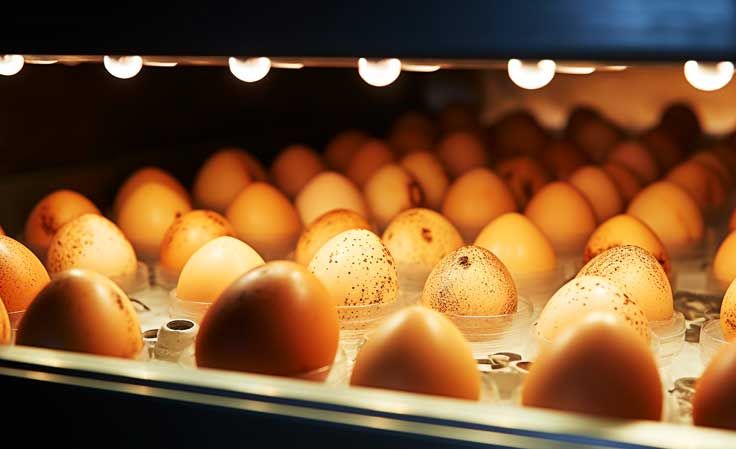
The incubator temperature for chicken eggs depends on the type of incubator. Run a forced air incubator at 99.5 to 100 degrees Fahrenheit, which is 37.5 to 37.8 degrees Celsius, for all 21 days. A still air incubator runs a bit higher, around 101 to 102 degrees measured at the top of the egg. Do not mix the two figures up. A still air temperature used in a forced air incubator will cook the eggs, and a forced air temperature used in a still air incubator will leave them too cool. The chicken egg incubation humidity for days 1 to 18 should be roughly 45 to 55 percent. Keep the room steady and the incubator lid closed as much as you can. Every time the lid opens, temperature and humidity drop, and the eggs cool. Short openings for turning and candling are fine. Check the water channels daily and top them up as needed, but do it quickly and close the lid straight away.
| Stage | Temperature | Humidity | Turning |
|---|---|---|---|
| Days 1 to 18 | Forced air 99.5 to 100 degrees Fahrenheit, still air 101 to 102 degrees at the top of the egg | 45 to 55 percent, judge by air cell size at day 18 | 3 to 5 times a day |
| Day 7 and day 14 | Same as above | Same as above | Candle, then keep turning |
| Day 18 lockdown | Same as above | Raise to 65 to 70 percent | Stop turning completely |
| Day 20 to 21 | Same as above | 65 to 70 percent, lid closed | No turning, no candling, no moving |
5. Turning the Eggs 3 to 5 Times a Day
How often to turn chicken eggs in incubator. Turn the eggs at least 3 times a day, and 3 to 5 times is the usual guidance, through day 18. Turning stops the embryo sticking to the shell, and an egg left in one position for too long can lose the chick that way. An automatic turner does this for you, and it is worth using if your incubator has one. If you turn by hand, mark one side of each egg with a pencil, with an X on one side and an O on the other, so no turn is missed. Roll each egg gently to the other side, do not lift and drop it, and close the lid as soon as you are done. When to stop turning chicken eggs. Stop turning completely on day 18, at lockdown. From that point the chick needs to settle into its hatching position, and turning would disturb it. Remove the turner trays on day 18 as well, so the chicks have a flat surface to hatch on and no tray to get stuck under.
6. Candling on Day 7 and Day 14
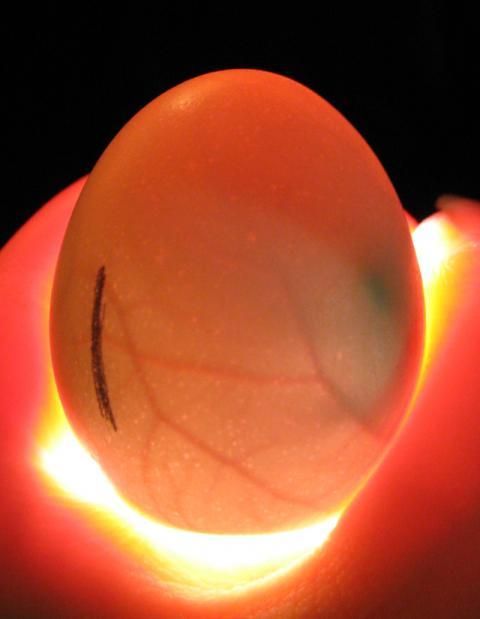
Candling is how you look inside an egg without opening it. Candle in a dark room with a bright LED candler held against the blunt end of the egg. The light shines through the shell and shows what is growing inside. Candling chicken eggs day 7 is the first real check. On day 7 a fertile egg shows veins spreading from a dark spot, like a tiny spider with red threads. A clear egg with no veins and no dark spot is infertile, and it will never hatch. On day 14 the egg should be mostly dark inside, with a sharp air cell at the blunt end. The dark mass is the growing chick filling the egg, and the air cell is the pocket of air it will use for its first breaths before pipping. If an egg is still clear on day 14, remove it. A last candle on day 18 shows the air cell before lockdown, and then the eggs go back in and are not candled again.
7. Lockdown on Day 18. Stop Turning and Raise the Humidity
Lockdown day 18 chicken eggs means three changes at once, and then no more changes until the hatch is over. On day 18, stop turning, remove the turner trays, raise humidity to about 65 to 70 percent, and keep the lid closed until the hatch is over. Do not turn, candle or move the eggs again. The higher humidity matters because the membrane inside the shell must stay soft and flexible while the chick works its way out. If the air is too dry, the membrane dries and tightens around the chick, a problem keepers call shrink wrapping, and the chick can get stuck. Opening the lid drops humidity fast, which is why the lid stays closed through lockdown and hatch.
8. Hatch Day and When a Chick Is Stuck
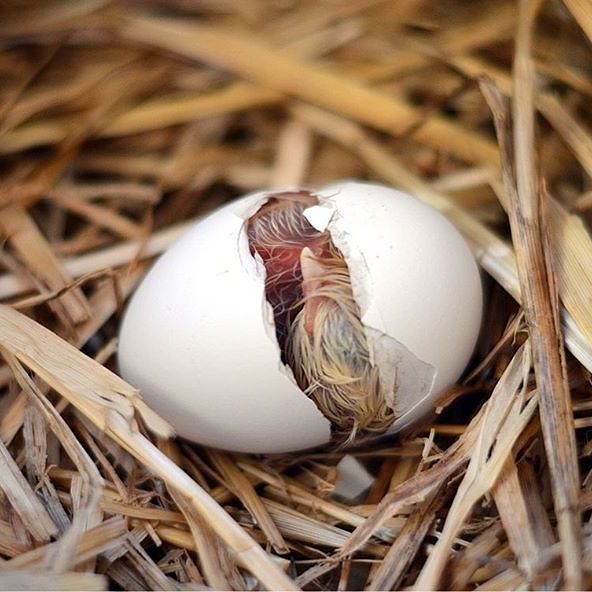
Most chicks pip on day 20 and hatch on day 21. A chick can take many hours from first pip to fully out, and that is normal. Do not open the lid to help, and do not pull a chick out of the shell. What to do when a chick is stuck hatching. First, wait. A chick that has pipped and then rests for hours is usually fine, and it is gathering strength for the next push. Opening the lid to check drops the humidity and can shrink wrap the chick in the membrane, which is the very problem you are trying to avoid. Help only if the membrane has dried and the chick is clearly stuck after a long struggle, and even then hands off first, with a vet or an experienced keeper as the next step, not a do it yourself shell peel. Leave hatched chicks in the incubator until they are dry and fluffy, then move them to a preheated brooder. A wet chick moved too early chills quickly. Chicks can stay in the incubator for up to a day after hatching, living off the yolk they absorbed before hatch, so there is no rush to move them while others are still hatching.
9. Moving Chicks to the Brooder
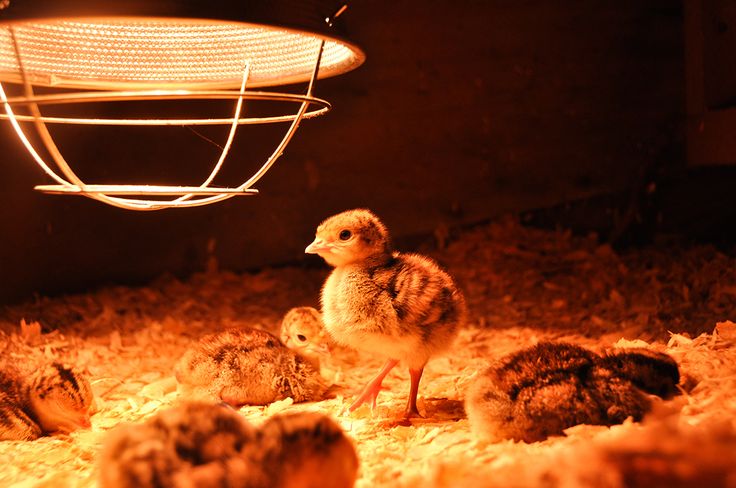
The brooder should be ready by day 18, warm, dry and safe before the first chick arrives. It needs a heat source, clean bedding, fresh water in a shallow drinker that a chick cannot fall into, and chick starter feed. Our full brooder setup guide covers the temperatures and layout in detail, so this section covers only the move itself.
Move each chick once it is dry and fluffy. Pick it up gently, carry it in warm hands, and set it down in the brooder near the heat and near the water. Dip its beak gently in the water once, so it learns where to drink, and then leave it to find the feed on its own. Watch the chicks for the first hour in the brooder. Chicks huddled tightly under the heat source are too cold, chicks pressed against the far walls are too hot, and chicks spread comfortably around the brooder are just right.
For first week feeding after hatch, see our baby chick treats guide, and for what comes after hatch, see our chick sexing guide.
10. FAQs
How long do chicken eggs take to hatch.
About 21 days. Most chicks pip on day 20 and hatch on day 21. Days can vary by a day either way, and bantam eggs tend to hatch earlier, at around 19 days, so they should be locked down at day 16.
What is the incubator temperature for chicken eggs.
Run a forced air incubator at 99.5 to 100 degrees Fahrenheit for all 21 days. A still air incubator runs a bit higher, around 101 to 102 degrees measured at the top of the egg. Always check the display against a separate thermometer at egg height.
What humidity should chicken eggs be at in an incubator.
Keep humidity at roughly 45 to 55 percent for days 1 to 18, then raise it to about 65 to 70 percent for lockdown and hatch. Judge by air cell size at day 18, about a third of the egg with a clear, often slanted edge, rather than by a fixed reading alone.
How often to turn chicken eggs in incubator, and when to stop turning chicken eggs.
Turn the eggs 3 to 5 times a day through day 18, then stop turning completely at lockdown. Remove the turner trays on day 18 and do not turn, candle or move the eggs again until the hatch is over.
What to do when a chick is stuck hatching.
Wait first, because a chick can take many hours from first pip to fully out and that is normal. Do not open the lid and do not pull the chick out of the shell. Help only if the membrane has dried and the chick is clearly stuck after a long struggle, and even then get a vet or an experienced keeper involved rather than peeling the shell yourself.
Also see What to Put in a Chicken First Aid Kit Before You Need It

Author, TheChickenPet.com