
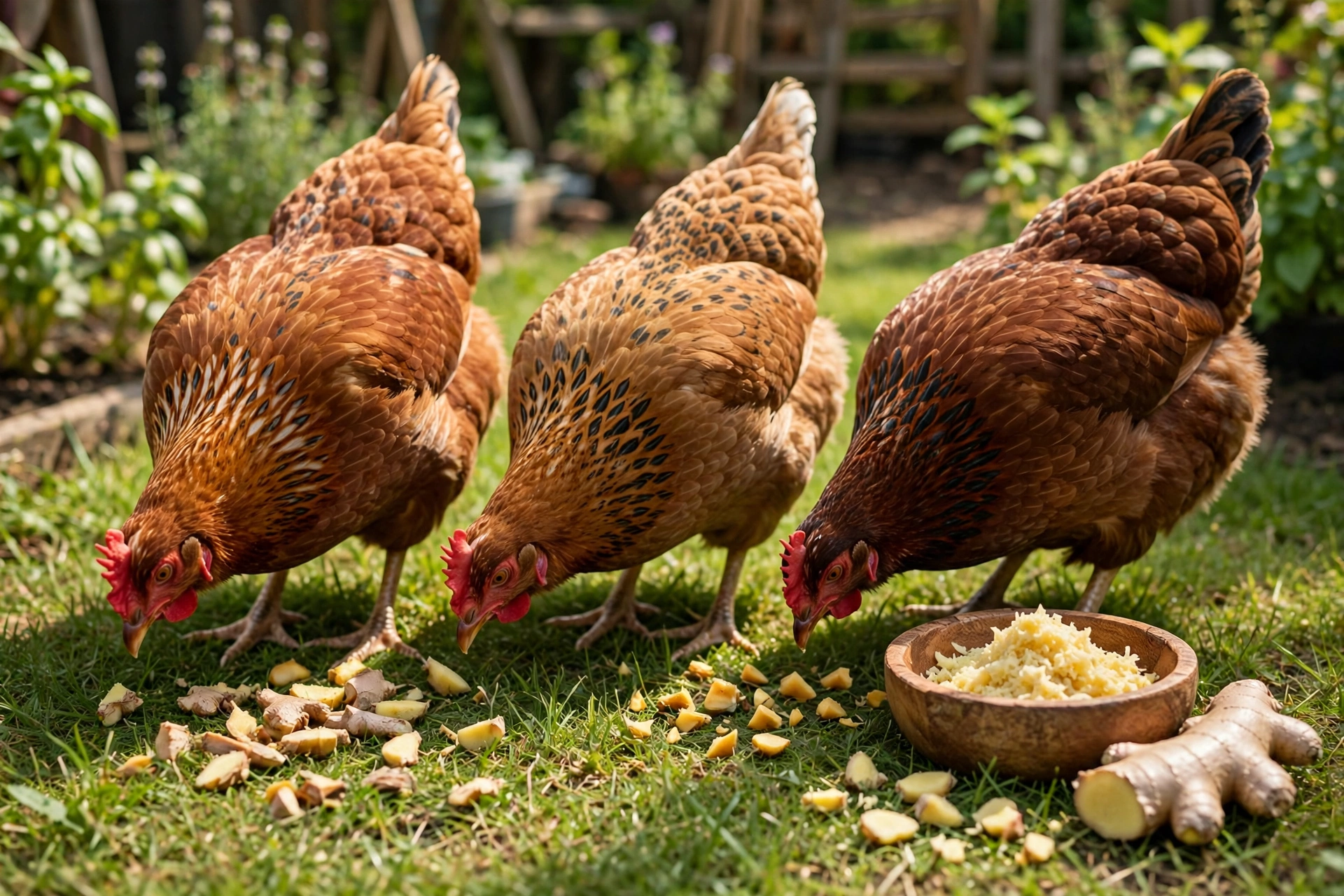
Yes, chickens can eat ginger, but only in small amounts. Our own food checker gives ginger a Caution verdict, with the note “Small amounts, grated, strong and warming”, and that note is the whole guide in six words. Ginger is a spice, not a feed and not a medicine, so the serving stays tiny, the ginger is grated or powdered, and it is mixed into feed or mash rather than served on its own. This guide covers fresh ginger, ginger powder, how much to serve, the winter warming angle, and the claims about ginger that are not true.
Table of Contents
- The Short Answer. Yes, in Small Amounts Only
- What the Food Checker Says. One Caution Verdict
- Fresh Ginger for Chickens. Grate It First
- Ginger Powder for Chickens. A Pinch Goes a Long Way
- How to Serve Ginger. Grated and Mixed In
- How Much and How Often. A Little Goes a Long Way
- Ginger in Winter. The Warming Treat Angle
- What Ginger Does Not Do. No Dewormer, No Cure
- Ginger and Garlic. Two Spices, One Small Amount Rule
- Can Baby Chicks Eat Ginger. Wait Until They Are Older
- Ginger and the Herb Rule. Fresh Only, Never Oils
- FAQs
At a Glance. Ginger is Caution on our food checker, with the note “Small amounts, grated, strong and warming”. Fresh root grated, or a pinch of powder, mixed into feed or mash. Never a whole chunk, never ginger oil, never pickled or sugared ginger.
The Serving Rule. About a teaspoon of grated fresh ginger, or a pinch of powder, for a small flock, once or twice a week at most. Mix it into feed or mash so every hen gets a little and no hen gets a lot.
The Honest Limit. Ginger is a spice, not a medicine. The laying trials mixed set amounts into complete feed for weeks, and they give no teaspoon dose for backyard hens. Too much irritates the crop and can cause diarrhoea. It is not a dewormer and it does not cure anything.
The Short Answer. Yes, in Small Amounts Only
Can chickens eat ginger. Yes, they can, but only in small amounts. Our food checker gives ginger a Caution verdict, with the note “Small amounts, grated, strong and warming”, and the word to hold onto is Caution. Ginger is not unsafe, and it is not freely safe either. It sits in the middle, a spice that is fine in a tiny amount and a problem in a large one.
Is ginger safe for chickens in general. Yes, in the form and amount the checker describes, grated and small. A teaspoon of grated fresh ginger mixed into feed for a small flock is a reasonable treat. A whole chunk of raw ginger, a spoonful of powder, or ginger served every day is not the same food, and the amount is what turns a safe spice into an irritant.
The reason for the Caution is the strength of the spice. Ginger is hot and pungent, and a hen’s crop is a small, soft pouch. A little grated ginger mixed into mash passes through without trouble. A lot of it can irritate the crop and the gut, and too much can cause loose droppings. That is why the serving is measured in teaspoons and pinches, not handfuls, and why ginger is a sometimes treat rather than a daily one.
What the Food Checker Says. One Caution Verdict
Our homepage food checker gives ginger one clear answer, and it is worth quoting exactly, because the checker is the same tool readers use on the site. For “ginger” the checker says CAUTION, with the note “Small amounts, grated, strong and warming”. For “fresh ginger” it says CAUTION, with the same note. For “ginger powder” it says CAUTION, with the same note. For “ginger root” it says CAUTION, with the same note. For “ginger for chickens” it says CAUTION, with the same note. All five are genuine live results, confirmed on the homepage on 2026-11-20, and a nonsense control query returned no verdict at all, which confirms the ginger queries matched the checker’s own list. If you want the full safe and toxic list, read our guide to what can chickens eat.
| Form | Checker verdict | Checker note |
|---|---|---|
| Ginger | Caution | Small amounts, grated, strong and warming |
| Fresh ginger | Caution | Small amounts, grated, strong and warming |
| Ginger powder | Caution | Small amounts, grated, strong and warming |
| Ginger root | Caution | Small amounts, grated, strong and warming |
The identical note for every form deserves one line of explanation. The checker holds a single ginger entry, and the fresh, powder and root forms all resolve to it, rather than having separate entries of their own. That is not a fallback to a different food. It is one genuine entry covering the whole spice, and the article follows it exactly, with no separate verdict invented for any form.
Fresh Ginger for Chickens. Grate It First
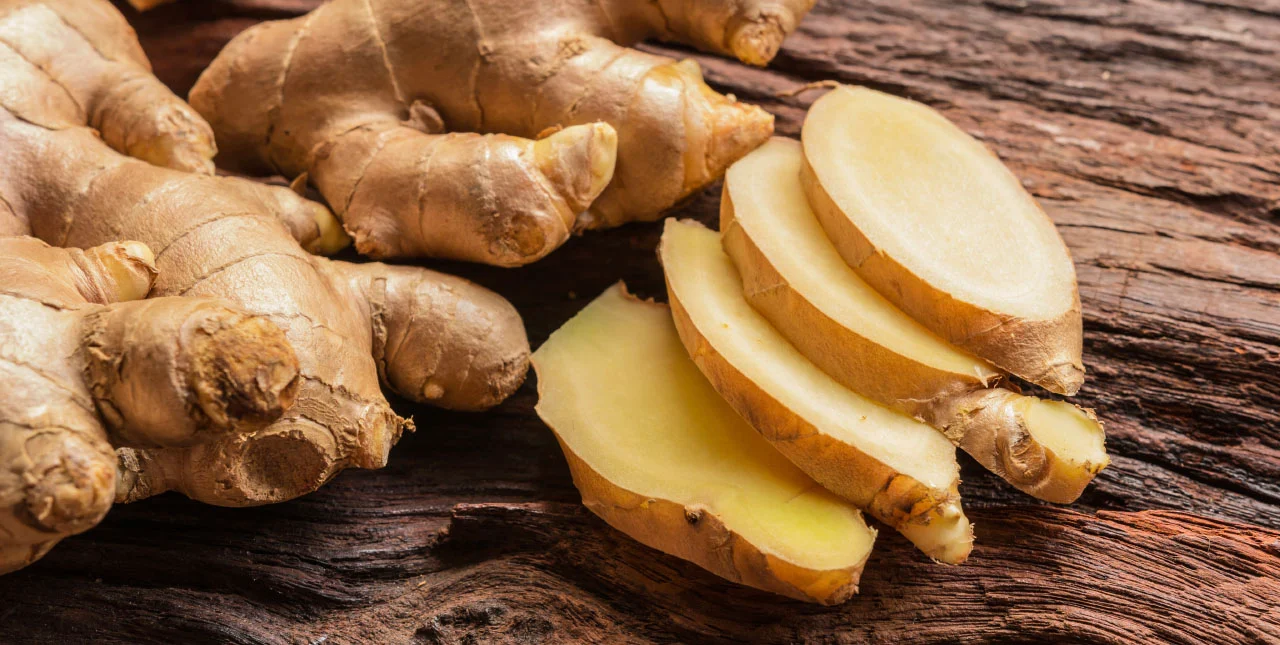
Can chickens eat fresh ginger. Yes, and fresh root is the best form to start with, because you can see exactly what you are serving and grate it as fine as you like. Peel a small piece of fresh ginger root, grate it on the fine side of a box grater, and mix the shreds into feed or mash. Grating matters, because a hen cannot chew, and a whole chunk of raw ginger is hard, fibrous and far too strong in one peck. Grated ginger spreads through the feed, every hen gets a little, and no hen gets a mouthful of pure spice.
Fresh ginger root keeps well in the fridge, and a single small root lasts a flock several weeks at the serving size in this guide. Choose a firm root with smooth skin and no soft or mouldy spots, and cut away any part that has gone soft before you grate it. There is no need to buy a large root, and no need to serve ginger every day just because it is in the fridge.
Do not serve ginger in slices or chunks. A hen that pecks a slice of raw ginger gets the full heat of the spice in one bite, and most hens will drop it and walk away. That is not a disaster, but it is a wasted treat, and a hen that does swallow a large chunk can end up with an irritated crop. Grated is the only fresh form worth serving, and the checker note says so, “Small amounts, grated”.
Ginger Powder for Chickens. A Pinch Goes a Long Way
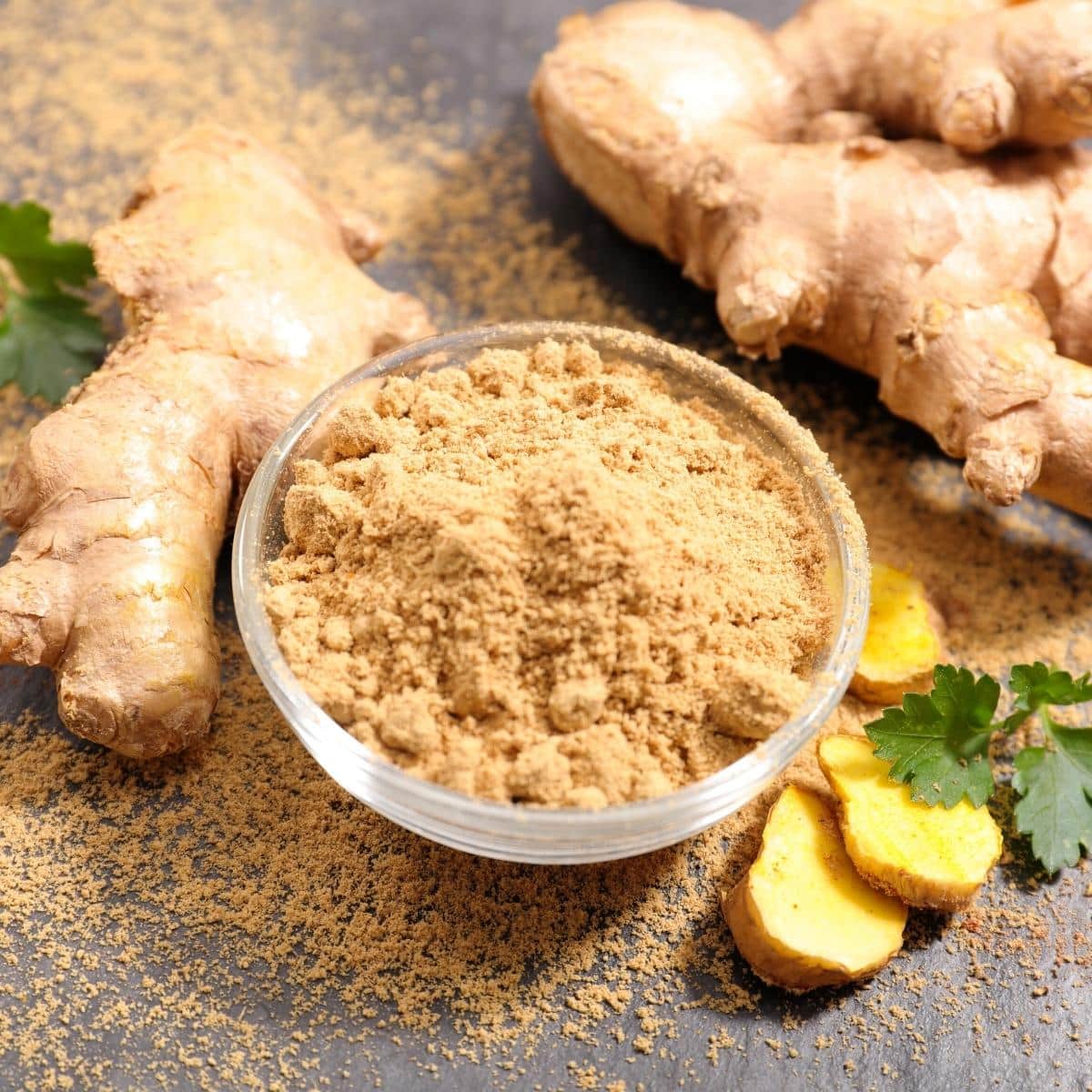
Can chickens eat ginger powder. Yes, and powder is the easiest form to measure, because a pinch is all a small flock needs. Ground ginger is much more concentrated than fresh root, so the serving shrinks to match. A pinch of powder stirred into a scoop of feed, or mixed into a bowl of mash, is plenty for a small flock, once or twice a week at most.
The concentration is the thing to respect. A teaspoon of grated fresh ginger is mostly water and fibre, with a little spice in it. A teaspoon of powder is pure spice, and it would be far too much for a flock in one serving. If you switch from fresh to powder, cut the amount right down, and if you switch from powder to fresh, the amount goes up again. The two forms are not interchangeable spoon for spoon, and treating them as if they were is the most common mistake with this spice.
Buy plain ground ginger with nothing else in the jar, and check the label before you serve it. Ginger powder that is mixed with salt, sugar, or other spices is not the same food, and seasoned blends stay out of the run. The same goes for ginger that has been sweetened or crystallised, which is a sugar treat with ginger flavour, not ginger at all. Plain powder, a pinch at a time, is the only powdered form to serve.
How to Serve Ginger. Grated and Mixed In
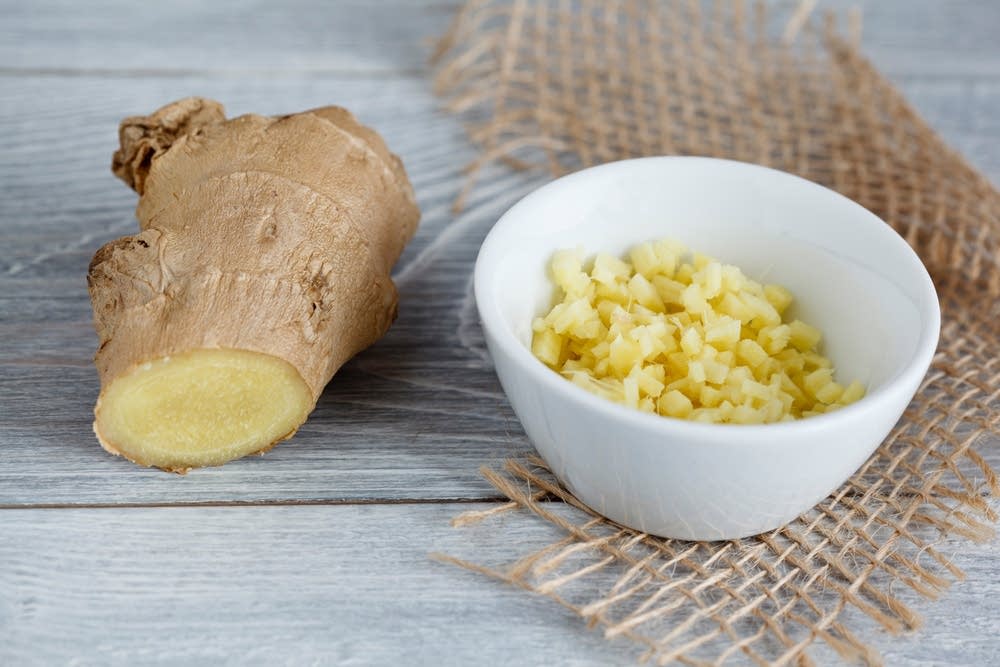
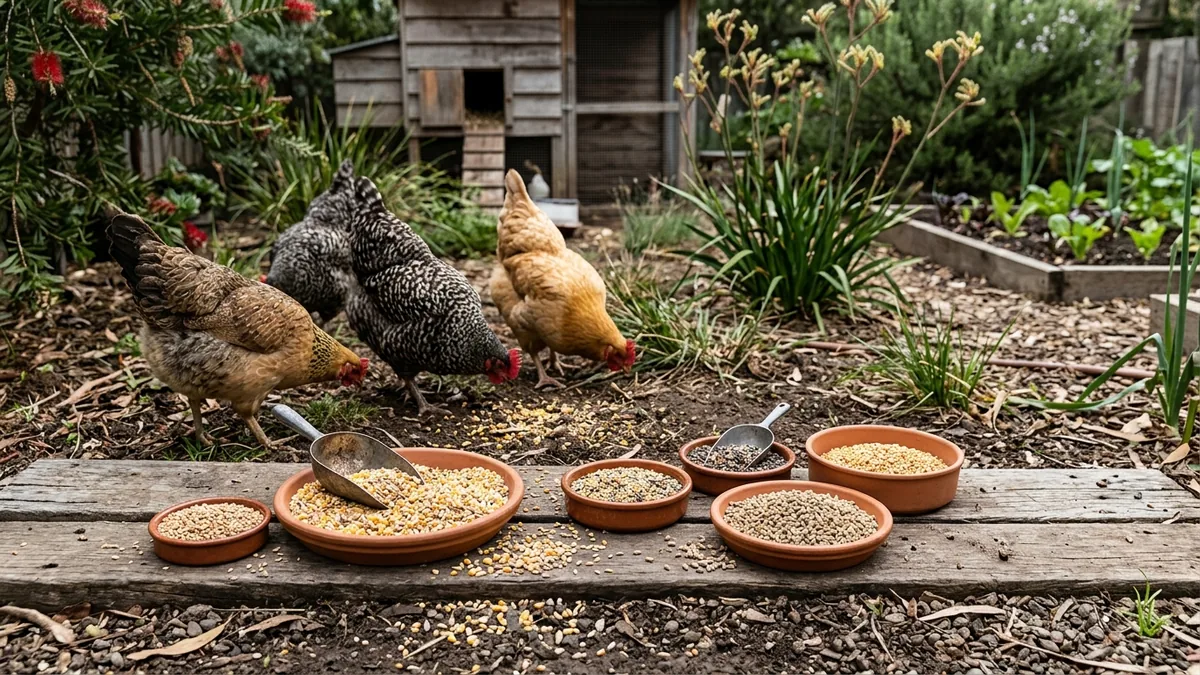
How to serve ginger to chickens is simple, and the steps are the same each time. Peel a small piece of fresh root and grate it fine, or measure out a pinch of plain powder. Stir the ginger into a scoop of layer feed, or into a bowl of warm mash, so it is spread evenly through the food. Scatter the mash or feed in the run as usual, and let the hens find the ginger while they peck.
Mixing it in matters more with ginger than with most treats, because ginger is strong and hens are picky. A pile of grated ginger on its own will mostly be ignored, because the smell is sharp and the taste is hot, and a hen that does try it gets too much at once. Mixed into feed, the ginger becomes a flavour in a familiar food, every hen gets a little, and nobody gets a mouthful of pure spice.
A few rules apply every time. Never serve ginger oil or ginger extract, because concentrated oils are far too strong for a hen and the herb programme covers that rule in detail. Never serve pickled ginger from a sushi tray, because it is soaked in vinegar with sugar and salt. Never serve crystallised or candied ginger, because it is mostly sugar. Never serve ginger ale, ginger beer or ginger tea, because they are sweet, fizzy or brewed for people, not for hens. Fresh grated root or a pinch of plain powder, mixed into feed, is the whole serving method.
How Much and How Often. A Little Goes a Long Way
Ginger is a treat, and the amount matters as much as the choice of form. A good serving is about a teaspoon of grated fresh ginger, or a pinch of powder, for a small flock of four to six hens, once or twice a week at most. Treats of every kind together should stay under about 10 percent of what your hens eat in a day, because layer feed is what makes eggs, and treats only dilute it.
The honest limit is worth stating plainly. The laying trials that keepers quote mixed set amounts of ginger into complete feed for weeks, and they give no teaspoon dose for backyard hens. There is no official number of grams per hen, and any article that gives one is guessing. The teaspoon and the pinch in this guide are practical serving sizes for a pet flock, not a veterinary dose, and they sit well inside the Caution the checker gives.
Too much ginger has a clear sign, loose droppings. If your hens develop watery droppings after a ginger serving, the amount was too much, or the serving was too often, and the fix is simple, stop the ginger for a week and let the gut settle. A hen that eats too much ginger may also go off her feed for a day, because the spice has irritated her crop. Neither problem is an emergency on its own, but both are a sign to cut the amount right down or drop ginger from the treat list entirely.
Ginger in Winter. The Warming Treat Angle
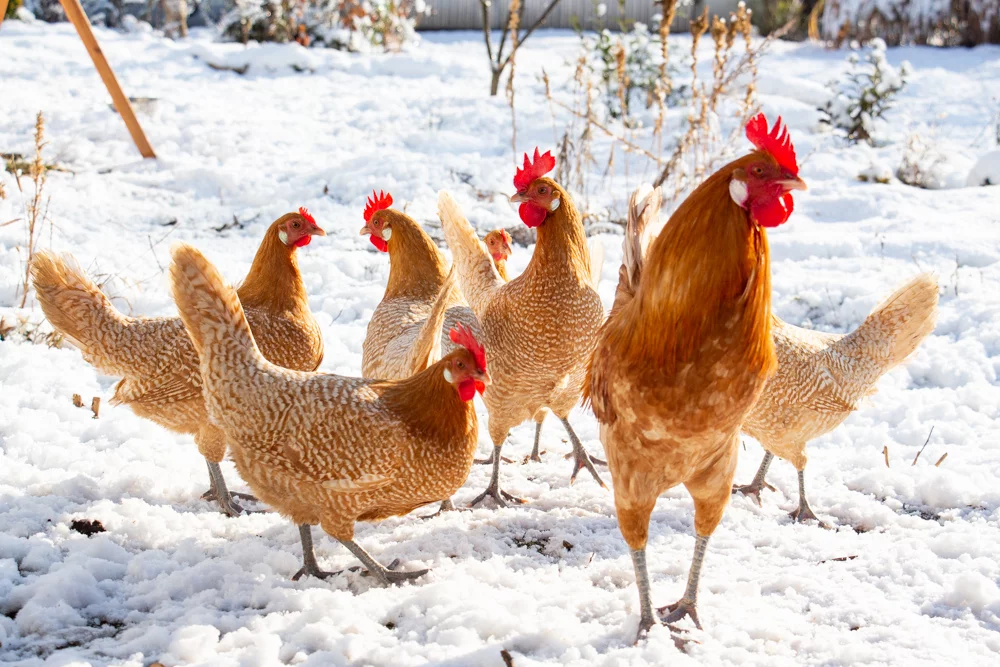
Ginger is often called a warming spice, and the checker note says it plainly, “strong and warming”. That is why ginger shows up in winter feeding talk, and it is a fair reason to serve it in the cold months, as long as the amount stays small. A little grated ginger in warm mash on a cold morning is a pleasant treat for a flock, and it fits the winter feeding routine our guide to what to feed chickens in winter lays out.
Warming does not mean heating. Ginger does not raise a hen’s body temperature, and it does not replace a draught free coop, dry bedding, or unfrozen water. A hen in a cold, damp coop needs shelter and warmth first, and no spice in the feed fixes that. Ginger is a small comfort in the feed bowl, not a winter care plan, and the winter guide covers the care that actually matters, water that stays liquid, extra feed for the cold, and a dry place to roost.
If you serve ginger in winter, keep the same small amount and the same once or twice a week rhythm. Cold weather is not a reason to double the dose, and a hen that is already stressed by the cold is the last bird to load with a strong spice. The warming angle is a reason to choose ginger over a blander treat on a cold day, not a reason to serve more of it.
What Ginger Does Not Do. No Dewormer, No Cure
Ginger has a long list of claims attached to it, and most of them do not survive a close look. The biggest is the dewormer claim, that ginger kills worms in chickens. It does not. No kitchen spice replaces a proper worming treatment, and a flock with worms needs a vet or a licensed wormer, not a stronger spice. The same goes for the claim that ginger cures respiratory illness, or that it boosts laying. Ginger may support general health in the way any fresh food does, but it is not a treatment for anything, and it does not make hens lay more eggs.
The laying trials are often quoted as proof, and they deserve an honest reading. The trials mixed measured amounts of ginger into complete feed for weeks, and they reported small changes in laying and egg quality. Those trials used set amounts in controlled feed, not teaspoons scattered in a run, and they do not give a dose a backyard keeper can copy. A small treat of grated ginger is a reasonable thing to feed, and it is not a laying supplement, and the two should not be confused.
If a hen is sick, ginger is not the answer. A sneezing hen, a hen with a swollen eye, or a hen that has stopped eating needs the care in our health guide, and a vet if she does not improve. A spice in the feed bowl is a treat for healthy hens, and treating it as medicine delays the care a sick bird actually needs.
Ginger and Garlic. Two Spices, One Small Amount Rule
Ginger and garlic are often mentioned together, because both are kitchen spices with strong flavours and big health claims, but they are different foods with different rules. Ginger is Caution on our checker, “Small amounts, grated, strong and warming”. Garlic is also a Caution food, in tiny amounts only, because large doses harm blood cells, and the garlic article in this programme covers it in full.
The two spices share one habit, small amounts only, and one warning, neither is a medicine. Garlic is not a dewormer either, and it is not an antibiotic or a respiratory cure, and the same is true of ginger. Keepers who feed both should keep them separate in the week, a little ginger one day and a little garlic another, rather than loading both spices into the same feed on the same day.
Do not mix the two up in the kitchen. Garlic salt, seasoned garlic, and garlic bread are all out of the run, just as pickled and candied ginger are out. Plain fresh ginger and plain garlic, each in its own tiny amount, are the only forms worth serving, and neither one replaces proper feed, clean water, or vet care when a bird is ill.
Can Baby Chicks Eat Ginger. Wait Until They Are Older
Can baby chicks eat ginger. Not yet. Chicks under four weeks should eat starter feed only, because their digestion is still developing, and they need the balanced nutrition in the starter to grow properly. A strong spice like ginger is too much for a very young chick, even in a small amount, and there is no reason to rush it.
When your chicks are old enough for treats, around four to six weeks, you can offer a tiny pinch of grated ginger mixed into their feed, about a crumb per chick, and only once in a while. The pieces must be grated very fine, because a chick cannot manage a chunk, and always have chick grit available when you offer any treat, because chicks need grit in their gizzard to grind food that is not starter crumb.
Most keepers will find it simpler to wait until the chicks are six to eight weeks old before offering ginger at all, and there is no rush. Starter feed is the right food for young birds, and treats can wait. When ginger does arrive, keep the same small amount rule as for adult hens, and watch the droppings, because a young gut is the first to show it when a spice is too strong.
Ginger and the Herb Rule. Fresh Only, Never Oils
Ginger sits beside the kitchen herbs in the feeding programme, and the same rule covers them all. Our guide to herbs explains the herb and spice rule in full, and ginger follows it exactly. Fresh is the form to serve, dried is fine in a pinch, and concentrated oils are never fed to chickens. Ginger oil, like oregano oil and other essential oils, is far too strong for a hen, and a drop of oil is not the same as a teaspoon of grated root.
The herb guide also covers the fresh only habit, and it applies to ginger too. Serve the spice as it grows, grated root or plain powder, with nothing added. Salted, sugared, pickled or seasoned ginger is a different food, and it stays out of the run. The checker verdict for ginger covers plain ginger only, and every extra you add moves the food away from that verdict.
If you grow ginger yourself, the root is the only part to serve. Ginger leaves and stems are not a food for chickens, and they should not be offered. The root is the spice, the leaves are garden waste, and the two should not be confused at serving time.
FAQs
Can chickens eat ginger.
Yes, in small amounts. Our food checker gives ginger a Caution verdict, with the note “Small amounts, grated, strong and warming”. Serve it grated or as a pinch of powder, mixed into feed or mash, once or twice a week at most.
Is ginger safe for chickens.
Yes, in the small amounts the checker describes. Fresh ginger grated fine, or a pinch of plain powder, is safe for healthy hens. Whole chunks, large amounts, ginger oil, pickled ginger and candied ginger are not safe ways to serve it.
Can chickens eat fresh ginger.
Yes, and fresh root is the best form to start with. Peel a small piece, grate it fine, and mix about a teaspoon into feed for a small flock. Do not serve ginger in slices or chunks, because a hen gets the full heat of the spice in one bite.
Can chickens eat ginger powder.
Yes, and powder is the easiest form to measure. A pinch of plain ground ginger stirred into a scoop of feed is plenty for a small flock. Powder is far more concentrated than fresh root, so the amount is much smaller, and seasoned or sweetened blends stay out.
Can baby chicks eat ginger.
Not until they are older. Chicks under four weeks should eat starter feed only. From about four to six weeks you can offer a tiny pinch of grated ginger mixed into feed, and most keepers wait until six to eight weeks. Always have chick grit available when you offer any treat.
Does ginger help chickens lay more eggs.
There is no reliable proof that it does. The laying trials mixed set amounts into complete feed for weeks and do not give a dose a backyard keeper can copy. Ginger is a small treat for healthy hens, not a laying supplement, and it is not a dewormer or a cure for anything.
If you are just starting out with backyard chickens, grab our free starter checklist and keep it by the coop for those first weeks of trying new treats.
For the health side of keeping chickens, read our guide on whether backyard chickens need vaccines and which ones matter.

Nusrat
Author, TheChickenPet.com