
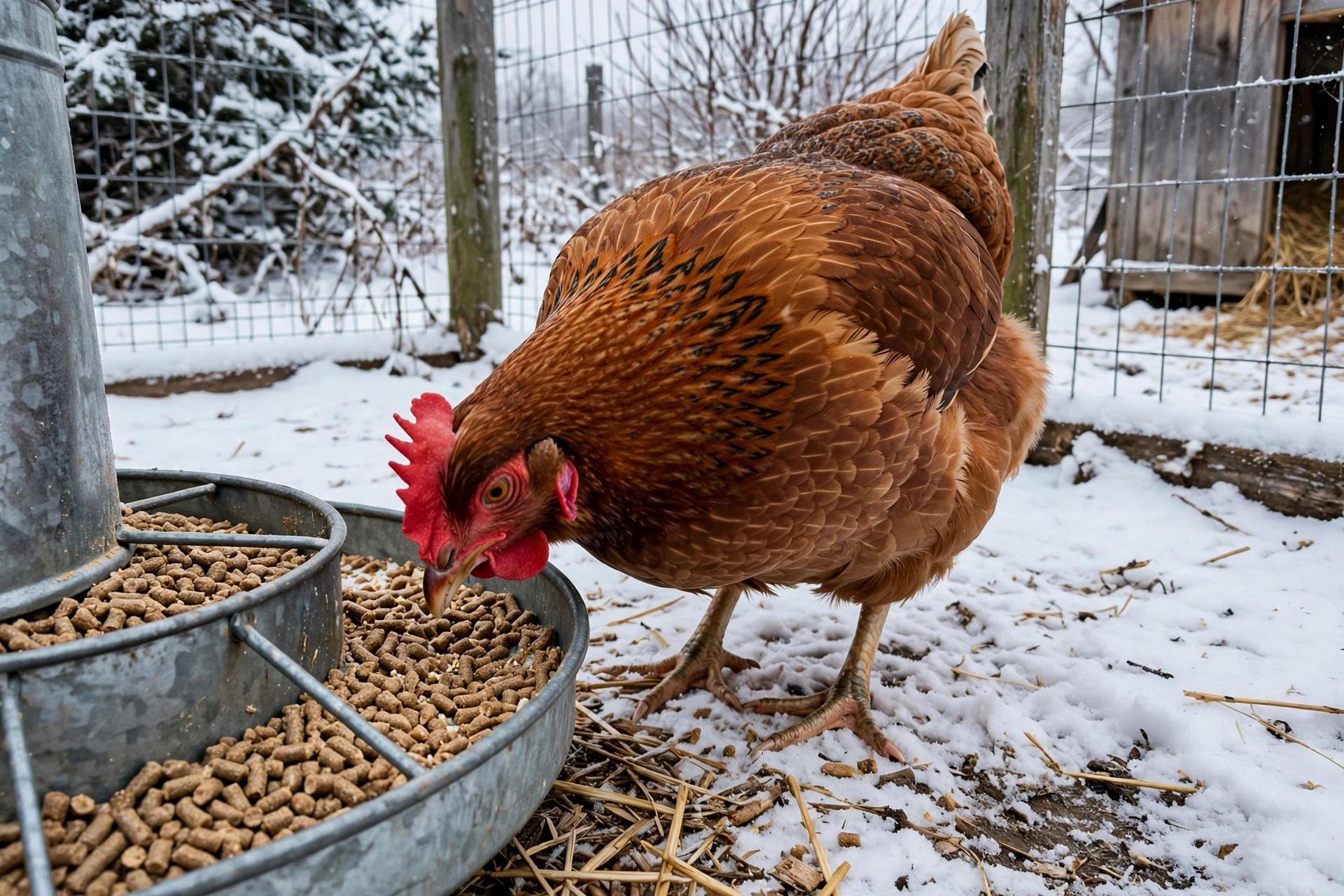
What to feed chickens in winter is a question every keeper asks as soon as the first cold snap arrives. The short answer is reassuring. Winter feeding is mostly the same feeding, with a little more of it. The base stays a complete layer feed, the hens get 10 to 20 percent more of it in cold weather, and the treats change with the season. This guide sets out the winter base, the extra feed, the treats that help, and the summer treats to stop giving them.
The mistake to avoid is swapping the base for treats. Scratch grains, kitchen scraps and warm mash all feel like winter care, and in small amounts they are, but none of them replaces layer feed. A hen that fills up on scratch in winter is a hen short on protein and calcium, and she will show it in fewer eggs and weaker shells. Keep the layer feed first, keep oyster shell free choice, keep the water liquid, and let the treats stay treats.
Table of Contents
- 1 The Short Answer. Same Feed, a Little More of It
- 2 The Winter Base. Layer Feed at 16 to 18 Percent Protein
- 3 Do Chickens Need More Food in Winter
- 4 How Much Extra Feed to Give
- 5 Scratch Grains in Winter. Evening Treat Only
- 6 Warm Treats That Help on Cold Days
- 7 What to Stop Giving Them in Winter
- 8 Oyster Shell and Grit in Winter
- 9 Water Matters as Much as Feed
- 10 A Simple Winter Feeding Day
- 11 FAQs
Quick Facts
At a Glance The winter base is a complete layer feed at 16 to 18 percent protein, with 10 to 20 percent more feed in cold weather, and oyster shell kept free choice.
Winter Feeding Scratch grains are only an evening treat, up to about 10 percent of the diet. Watery summer treats are swapped out for winter, and treats never replace layer feed.
Good to Know A hen that cannot drink cannot lay, so unfrozen water matters as much as feed in winter. Light, feed and water work together, and no one of them fixes a flock on its own.
The Short Answer. Same Feed, a Little More of It
What to feed chickens in winter? The same complete layer feed as the rest of the year, at 16 to 18 percent protein, with 10 to 20 percent more of it in cold weather. That is the whole answer in one line, and everything else in this guide is a detail around it. Winter chicken feed is not a different feed. It is the same feed, offered in a larger amount, because a hen burns more energy keeping warm. The treats change, the water needs more attention, and the evening scratch has a real job to do, but the base does not change. Our feeding pillar sets out the safe and toxic foods that sit behind every feeding decision in this guide, and winter is the season when those rules matter most, because a hen short on feed in cold weather feels it at once.
The Winter Base. Layer Feed at 16 to 18 Percent Protein
The winter base is a complete layer feed at 16 to 18 percent protein. Complete means the feed already holds the protein, energy, vitamins and minerals a laying hen needs, in the right balance, so the keeper does not have to build the diet from scraps and extras. That balance is the reason layer feed stays first in winter. A hen laying through the cold months needs protein for eggs and feathers, and calcium for shells, and layer feed is made to supply both. A flock on scratch grains and scraps instead of layer feed will not lay well whatever else the keeper does, because the protein and calcium are missing. Check the bag when buying. The protein figure is printed on it, and the range to look for is 16 to 18 percent. If the feed on offer falls below that, it is not the right base for laying hens in winter. Keep the feeder full and dry, and keep it where rain and snow cannot soak it, because wet feed spoils fast and hens will not eat it.
Do Chickens Need More Food in Winter
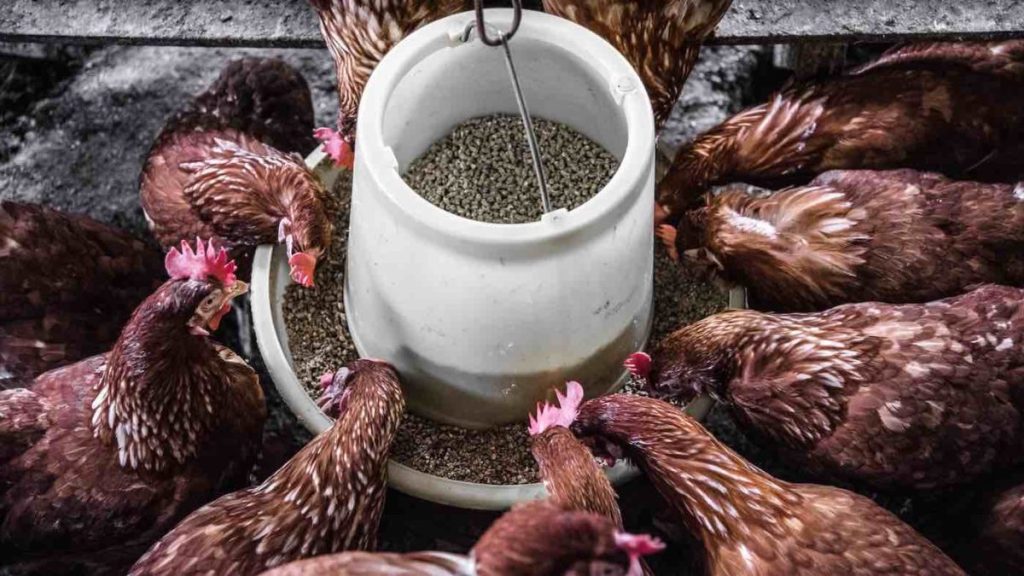
Do chickens need more food in winter? Yes, they do. A hen keeps warm by burning energy, and cold weather asks more of her than summer does. She still needs feed for eggs and feathers, and on top of that she needs fuel for warmth, so the same flock eats more in winter than it did in summer. That is normal, and it is not a sign that the feed is wrong or that the hens are greedy. It is the cost of staying warm. The increase is modest, not double, and the next section gives the figure to work to.
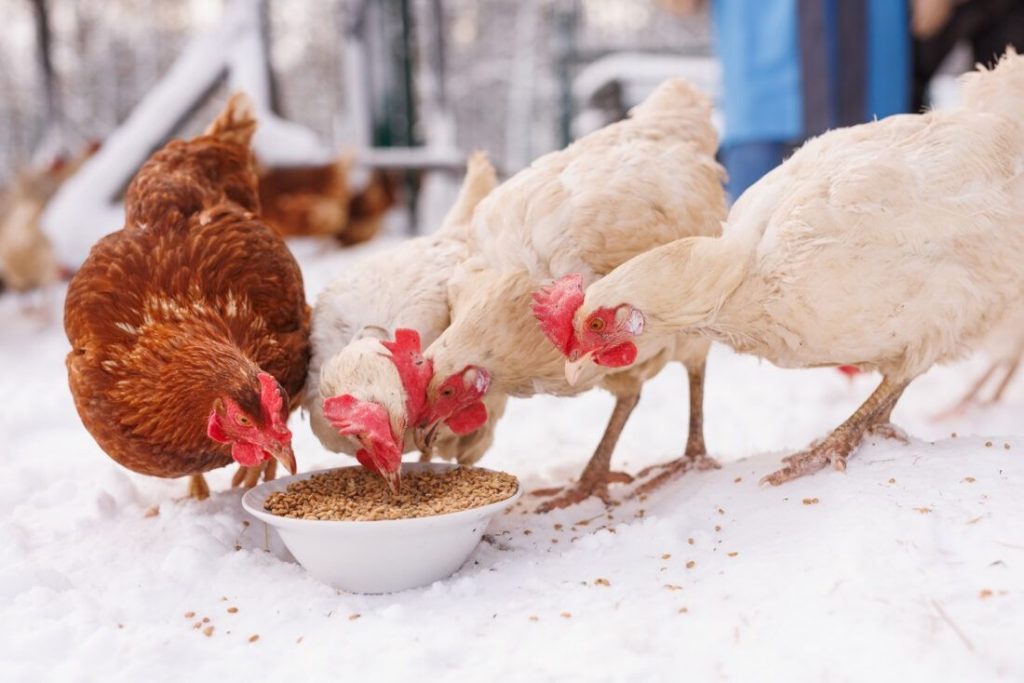
Watch the hens rather than the calendar. A flock that leaves the feeder empty by mid afternoon in a cold snap needs more feed. A flock that leaves feed uneaten overnight is getting enough. Cold, wind and snow all push the need up, and a mild spell brings it back down again, so the amount moves with the weather, not with a fixed date.
How Much Extra Feed to Give
Hens need 10 to 20 percent more feed in cold weather. That is the figure to work to, and it is easy to apply. If a flock eats about 10 scoops of layer feed a day in summer, it needs about 11 to 12 scoops in a cold spell. The keeper adds the extra to the feeder, not to the treat bowl, because the extra must be layer feed, with its protein and calcium, not extra scratch. The table below shows the idea in plain form.
| Weather | Extra layer feed about | What stays the same |
|---|---|---|
| Mild cold | 10 percent more | Layer feed at 16 to 18 percent protein, oyster shell free choice |
| Hard cold or snow | 20 percent more | Layer feed at 16 to 18 percent protein, oyster shell free choice |
| Mild spell | Back to the usual amount | Layer feed at 16 to 18 percent protein, oyster shell free choice |
Give the extra in the morning, so the hens fill up early and have fuel for the day, and check the feeder again in the afternoon. If it is empty and the hens are still looking for food, add a little more layer feed, not a handful of scratch. If feed is left overnight, the amount is right or a touch high, and there is no need to add more the next morning. Do not judge the amount by the egg basket alone. Laying also answers to light, and our winter light guide explains the 14 to 16 hour light target that works alongside feed.
Scratch Grains in Winter. Evening Treat Only
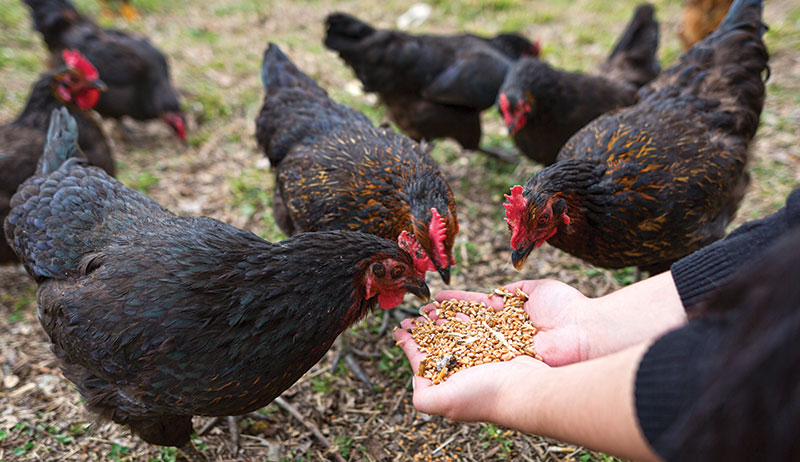
Scratch grains in winter for chickens have one proper job, and it is in the evening. A small scatter of scratch in the late afternoon gives the hens something to scratch for as they settle, and the grains keep them busy and warm as they digest them overnight. That is the whole job, and it is a treat, not a meal. Scratch grains are only an evening treat, up to about 10 percent of the diet. That limit matters because scratch is mostly energy with little protein and almost no calcium, so a hen that fills up on it is a hen short on the very things she needs to lay. The practical rule is simple. Scatter a small handful per hen in the evening, on dry ground or in the run, and never fill the feeder with scratch. Never offer scratch in the morning in place of layer feed, and never offer it as the main feed on a cold day because it feels warming. Warmth comes from the extra layer feed, and scratch is only the evening extra on top of it. If the flock is already getting 10 to 20 percent more layer feed, the scratch stays inside its small share, and the diet stays balanced.
Warm Treats That Help on Cold Days
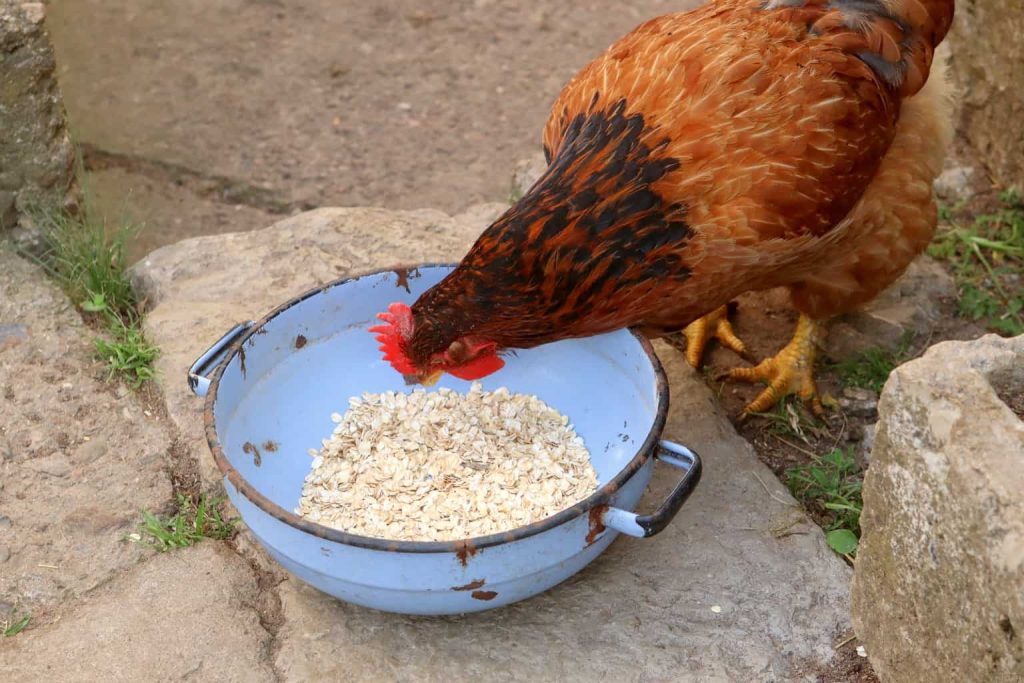
Warm treats help on cold days, and the best of them are the ones the flock already knows. A warm bowl of oatmeal is the classic winter treat, and our oatmeal guide sets out how to offer it, warm and plain, as a small treat rather than a meal. Mealworms are another good cold weather treat, because they bring protein with the energy, and our mealworms guide sets out the amount, a small handful a few times a week, from about 3 weeks of age, inside the 10 percent treat rule. The rule for every warm treat is the same. It is small, it is plain, it is offered in the daytime so the hens can eat it before it goes cold, and it never replaces layer feed. Warm mash made from the flock’s own layer feed and warm water is the safest warm treat of all, because it is the same balanced feed in a warmer form. Avoid warm treats with salt, sugar, seasoning or fat, and avoid anything mouldy or stale, because a cold hen is no better placed to cope with spoiled food than a summer hen is.
What to Stop Giving Them in Winter
What to stop giving chickens in winter is mostly the summer menu. Watery summer treats are swapped out for winter, because they add water and little warmth, and they chill a hen rather than feed her. A treat that was perfect on a hot day is the wrong treat on a freezing one. Stop offering large amounts of watery fruit and vegetables as a daily treat, and stop any treat that has gone soft, mouldy or frozen in the run. Stop the habit of tipping kitchen scraps into the run as a meal. Scraps are not a balanced feed, and in winter they displace layer feed at the very time the hens need it most. Stop offering scratch in the morning, and stop filling the feeder with anything but layer feed. The feeding pillar lists the foods that are never safe, in any season, and winter does not change that list. If a food was unsafe in summer, it is unsafe in winter too, and no cold weather excuse makes it safe.
Oyster Shell and Grit in Winter
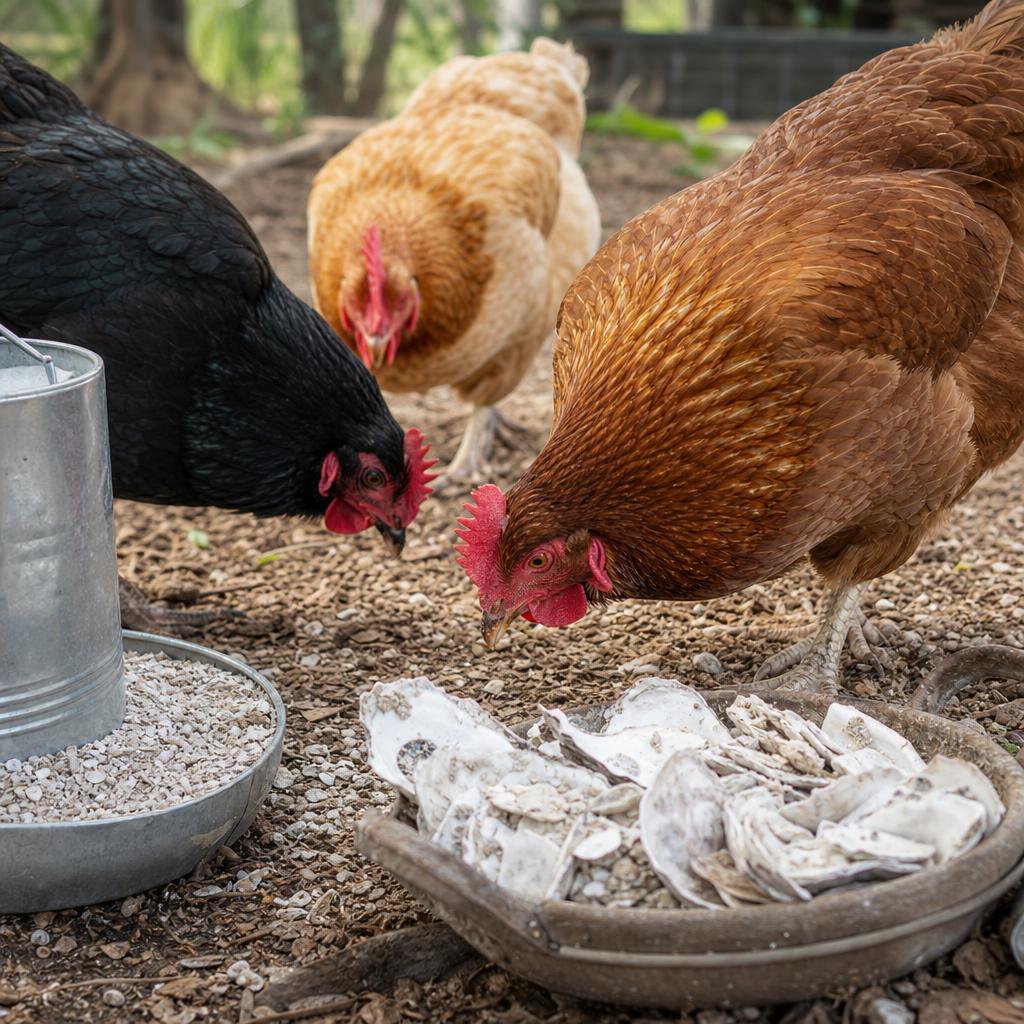
Oyster shell is kept free choice in winter, exactly as in summer. That means a small dish of oyster shell sits beside the feeder at all times, and the hens take what they need, when they need it. Do not mix it into the feed, and do not take it away in winter because laying has slowed. A hen that is laying, even a few eggs a week, still needs calcium for shells, and a hen that takes shell when she needs it keeps stronger shells than a hen that gets it only when the keeper remembers. Grit stays free choice too, for the same reason. Hens need grit to grind their feed, and in winter, when the ground is frozen or covered in snow, they cannot always find grit for themselves in the run. A small dish of grit beside the oyster shell covers that gap. Check both dishes weekly, and top them up when they run low, because an empty dish is easy to miss in a cold coop.
Water Matters as Much as Feed
A hen that cannot drink cannot lay, so unfrozen water matters as much as feed in winter. Hens drink less when water is icy, and they stop drinking altogether when it freezes solid, and a flock without water will not lay whatever the feed does. Check the waterer twice a day in a cold snap, morning and afternoon, and break the ice or swap in fresh water each time. Our frozen water guide covers keeping it liquid, and it is worth reading before the first hard frost. Put the waterer where the hens can reach it without crossing deep snow, and keep it out of the wind so it freezes more slowly. Do not add anything to the water to stop it freezing unless the guide says it is safe, and never offer hot water, which freezes just as fast and can scald a hen that drinks at once. Feed and water work together, and the winter feeding plan is only half a plan without liquid water alongside it.
A Simple Winter Feeding Day
A simple winter feeding day needs no special equipment, only a steady routine. The checklist below covers it in order, from morning to evening, and it works for a small backyard flock.
- Morning, fill the feeder with layer feed at 16 to 18 percent protein, adding 10 to 20 percent more than the summer amount in cold weather.
- Morning, check the waterer, break the ice or swap in fresh water, and check the oyster shell and grit dishes.
- Midday, offer a small warm treat if the day is very cold, plain oatmeal or warm mash, inside the usual small share of the diet.
- Afternoon, check the waterer again, and top up the feeder with layer feed if it is empty.
- Evening, scatter a small handful of scratch grains per hen as the evening treat, up to about 10 percent of the diet, and lock the coop with the feeder dry and covered.
That routine covers the whole winter feeding plan in five steps. It keeps layer feed first, water liquid, shell free choice, and treats small and in their place. If the flock is also getting morning light for winter laying, the light timer and the feeding routine work together, and the egg basket answers to both, not to either one alone.
FAQs
What should I feed my chickens in winter?
A complete layer feed at 16 to 18 percent protein, with 10 to 20 percent more feed in cold weather, and oyster shell kept free choice. Treats stay small, and scratch grains are only an evening treat.
Do chickens need more food in winter?
Yes. A hen burns more energy keeping warm, so the same flock eats 10 to 20 percent more feed in cold weather. Add the extra as layer feed, not as extra treats.
Can I give chickens scratch grains in winter?
Yes, as an evening treat only, up to about 10 percent of the diet. Scatter a small handful per hen in the late afternoon, and never fill the feeder with scratch or offer it in place of layer feed.
What treats are good for chickens in winter?
Small plain warm treats, such as warm oatmeal or warm mash made from layer feed, and mealworms in a small handful a few times a week. All of them stay inside the usual small share of the diet and never replace layer feed.
What should I stop feeding chickens in winter?
Watery summer treats in large amounts, kitchen scraps as a meal, and anything mouldy, stale or frozen in the run. Foods that were unsafe in summer stay unsafe in winter too.
Winter feeding comes down to one steady habit. Keep the layer feed first, give a little more of it when it is cold, keep the shell free choice and the water liquid, and let the treats stay treats. Set that routine, check the feeder and the waterer twice a day, and the flock will come through the cold months in good shape. For the wider winter routine, light, housing and health checks, see our Care and Health pillar guide and our feeding pillar.
For the other half of winter care, see Chicken Coop Ventilation in Winter Without Creating a Draft, which explains how to place high vents above the roosts so moist air escapes without chilling the hens.
Keep Reading
- What Can Chickens Eat?
- How to Keep Chicken Water from Freezing
- Can Chickens Eat Mealworms?
- Free Starter Checklist

Nusrat
Author, TheChickenPet.com