
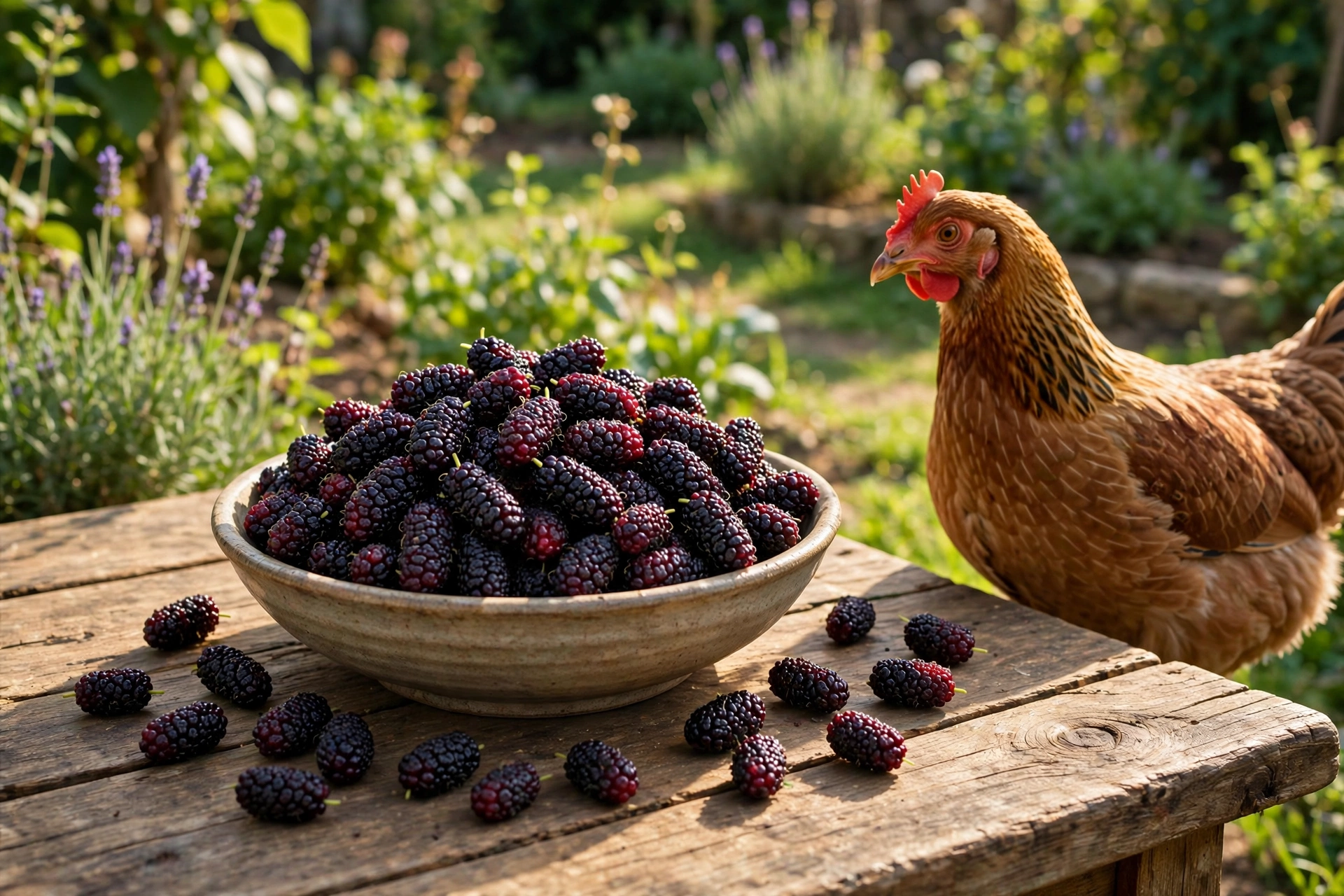
If you have a mulberry tree in your garden, you already have a free treat for your flock. When the berries ripen, they fall in a soft purple rain, and hens hurry over to pick them up before they even hit the ground. It is one of the simplest pleasures of keeping chickens, a tree that feeds the birds and shades them at the same time.
Ripe mulberries are safe for chickens, and they are a genuinely good treat. They carry vitamin C, iron, calcium and antioxidants, and hens love their sweet flavour. Our food checker lists mulberries as Safe, with the note “Fresh off the tree is fine”, and that is exactly how most keepers offer them, picked fresh or gathered from under the tree on the day they fall.
This guide covers which mulberries are safe, what to do about the leaves, why unripe berries should stay on the tree, how much to offer, and how a mulberry tree can become one of the best things in your run. It also covers the purple droppings that surprise new keepers, and the mess that comes with a heavy crop.

Table of Contents
- Are Mulberries Safe for Chickens
- What Is in a Mulberry
- White, Red and Black Mulberries
- Can Chickens Eat Mulberry Leaves
- Can Chickens Eat Unripe Mulberries
- How Many Mulberries to Offer
- A Mulberry Tree for Chickens
- Do Mulberries Stain Chicken Droppings
- The Mess and the Insects
- When to Skip Mulberries
- Frequently Asked Questions
Quick Facts
At a Glance Ripe mulberries are Safe for chickens, and our food checker notes “Fresh off the tree is fine”. White, red and black mulberries are all fine when fully ripe.
Leaves Too Mulberry leaves are edible and nutritious, and hens may nibble them. Unripe green berries can upset the gut, so only offer ripe fruit.
Good to Know Purple droppings after a mulberry feast are normal and pass quickly. Keep fruit as a treat, not the menu, and rake up the drop if hens gorge.
Are Mulberries Safe for Chickens
Are mulberries safe for chickens. Yes, ripe mulberries are safe for chickens, and they are one of the easiest treats you can offer. Our food checker lists mulberries as Safe, with the note “Fresh off the tree is fine”. That is the whole verdict, and it matches what keepers see in practice. Hens eat ripe mulberries eagerly, and the fruit causes no trouble when it is offered in sensible amounts.
The key word is ripe. A fully ripe mulberry is soft, dark and sweet, and it comes away from the stem with the lightest touch. That is the berry your hens should eat. An unripe berry is firm, green or pale, and it can upset the gut, so it should stay on the tree until it ripens. The rest of this guide explains how to tell the difference and how much to offer.
Mulberries fit well into a varied diet of layer feed, greens and the odd treat. If you are building a list of safe foods for your flock, our guide on what chickens can eat covers the full range, and mulberries sit comfortably among the safe fruits there.
What Is in a Mulberry
A ripe mulberry is mostly water and natural sugars, which is why hens find it so sweet. Along with that sweetness it carries vitamin C, iron, calcium and antioxidants. None of those makes a mulberry a health food on its own, but together they make it a better treat than many of the scraps that end up in the run.
Vitamin C supports general health, iron helps carry oxygen in the blood, and calcium is always useful for a laying hen, since every eggshell draws on her calcium supply. Antioxidants are the plant compounds that give dark berries their deep colour, and they are part of what makes berries a good food in general.
None of this means mulberries should replace feed. Layer feed is balanced for a hen’s needs in a way no single fruit can match, and fruit is a treat that sits on top of it. Think of mulberries as a seasonal bonus, a sweet extra that arrives with the summer and disappears again, not as a food group.
White, Red and Black Mulberries
White, red and black mulberries are all fine for chickens when they are fully ripe. The colour of the berry is a matter of variety, not of safety, and hens are happy with any of them. The difference is in flavour and sweetness, and even that matters more to the keeper than to the hen.
White mulberries ripen to a pale cream or soft pink, and they are often the sweetest of the three, with very little tartness. Red mulberries turn a deep red and then almost black as they ripen, and they have a little more tang than the white ones. Black mulberries ripen to a dark purple black, and they are rich and sweet, with the deepest colour of all.
Whichever kind you grow, the rule is the same. Wait until the berry is fully coloured, soft to the touch and ready to fall. A white mulberry that is still green is unripe, just as a black mulberry that is still red is unripe, so judge by softness and by how easily it leaves the stem, not by colour alone.
If your hens already enjoy other dark berries, mulberries will fit right in. Our guide to blackberries covers another dark berry your flock may meet, and the same ripe only rule applies there too.
Can Chickens Eat Mulberry Leaves
Can chickens eat mulberry leaves. Yes, mulberry leaves are edible and nutritious, and hens may nibble them when they fall or when a low branch hangs within reach. The leaves are a green, not a fruit, and they offer different goodness from the berries, including fibre and minerals. A hen that pecks at a fallen leaf is doing herself no harm.
Most hens do not eat many leaves by choice. The berries are the prize, and the leaves are something to peck at in passing. That is fine, since leaves should never be more than a small part of what a hen eats in a day. Layer feed and a good range of greens do the real work, and mulberry leaves are a pleasant extra.
Fallen leaves in the run are safe to leave where they are, and hens will scratch through them happily. The one thing to skip is the woody stems. Stems are tough, offer nothing worth eating, and are best left out of the treat bowl. Offer the fruit and the soft leaves, and leave the woody stems behind.
Can Chickens Eat Unripe Mulberries
Can chickens eat unripe mulberries. No, unripe mulberries should not be offered, because green berries can upset the gut. An unripe mulberry is firm, sour and hard to digest, and a hen that eats several may end up with a runny dropping or a sore stomach. It is not a dangerous poison, but it is an avoidable upset, and there is no reason to risk it when ripe berries are so plentiful.
Telling ripe from unripe is easy once you know what to look for. A ripe mulberry is fully coloured for its variety, soft when you press it gently, and so loose on the stem that it falls with a touch or a light shake of the branch. An unripe berry holds firm, feels hard, and resists being picked. If you have to pull, it is not ready.
If your hens free range under the tree, they will mostly pick up the ripe fruit that has already fallen, which solves the problem on its own. The risk comes when a keeper picks berries by hand and takes them too early, or when a windfall shakes down green fruit along with the ripe. Gather the ripe berries, leave the green ones on the branch, and your flock will be fine.
How Many Mulberries to Offer
Mulberries are a treat, not the menu, and the amount matters. A small handful per bird, a few times a week while the tree is fruiting, is plenty. That gives every hen a sweet taste without filling her up on sugar and water when she should be eating her layer feed.
The danger is not the berry itself but the gorge. A mulberry tree in full crop drops a lot of fruit in a short season, and hens that live under it can eat far more than a handful. A hen that fills up on berries may eat less feed, lay fewer eggs, and end up with loose droppings for a day or two. None of that is serious on its own, but it is a sign the balance has tipped.
Rake up the drop if your hens gorge. A quick rake in the morning keeps the ground clear, stops fruit from fermenting in the heat, and lets you offer a measured handful later in the day instead. You can also pick the berries yourself and share them out, which gives every bird a fair share and keeps the greedy ones from eating the lot.
Mulberries go well alongside other soft berries as part of a varied treat routine. Our guide to raspberries and our guide to blueberries cover two more berries that work the same way, a small handful at a time.
A Mulberry Tree for Chickens
A mulberry tree for chickens is one of the best plantings you can make in or beside a run. Once it is established, it feeds your flock for free every summer, and it gives shade through the hottest part of the day. Hens love to rest in the shade under a tree, and a mulberry gives them a cool spot that also drops their favourite treat.
Plant the tree where the ripe fruit can fall inside the run or just beside it, so the hens can reach the fallen berries without wandering far. A tree planted in the run itself works well once it is big enough, since the trunk gives shade and the branches give cover from above. Keep the planting spot in mind for the long term, because a mulberry grows fast and spreads wide, and it will be there for many years.
Protect a young tree from scratching around its roots. Hens scratch hard, and they can bare the roots of a small tree in a season if they are left to it. A ring of stones, a low wire guard, or a simple fence around the base keeps their feet off the roots while the tree gets established. Once the tree is mature and its roots run deep, it can handle the scratching without trouble.
Fallen fruit also draws insects, and the hens eat those too, which is a bonus. Ants, beetles and other small insects gather on the fallen berries, and the hens snap them up as they pick through the fruit. It turns the ground under the tree into a small foraging patch, and it keeps the flock busy. For more on keeping the flock healthy around the run, the Chicken Care and Health pillar is a good place to start.

Do Mulberries Stain Chicken Droppings
Do mulberries stain chicken droppings. Yes, they do, and it is nothing to worry about. After a mulberry feast, droppings often turn a deep purple colour, and the white cap on a normal dropping may take on a purple tint too. That is just the pigment from the berries passing through, and it clears up within a day once the hens go back to their normal feed.
New keepers sometimes mistake purple droppings for blood, and that is an understandable worry. The difference is in the look and the bird. Mulberry droppings are a rich purple all through, the hen looks bright and well, and the colour fades fast. Blood in droppings looks red or dark and tarry, often comes with a hen that looks unwell, and does not clear up on its own.
Watch the bird, not just the dropping. If a hen is eating, drinking, laying and moving normally, purple droppings after berries are normal. If a hen looks dull, stops eating, or the strange droppings last more than a day or two after the berries are gone, that is worth a closer look at her health, whatever she has been eating.
The Mess and the Insects
A mulberry tree in full crop is a messy thing, and it is worth knowing before you plant one near a path or a patio. Ripe berries fall fast, they stain anything they land on, and they squash underfoot into a purple pulp. Paths, shoes and the run floor all take on the colour for a few weeks each year.
The mess has an upside. Fallen fruit draws insects, and the hens eat them. Ants arrive first, then beetles and flies, and the hens work the ground under the tree all day, picking up berries and insects together. It is good foraging, and it keeps the birds occupied in a way a bare run never does.
A little management keeps the mess in hand. Rake the fallen fruit every morning, and the ground stays clear enough to walk on. Put the raked fruit on the compost heap, where it breaks down quickly, or offer it to the hens in a bowl. Plant the tree away from washing lines, parked cars and light coloured paving, and the stains will stay where they belong, under the tree and in the run.
When to Skip Mulberries
Most mulberries are fine, but a few should be skipped. Woody stems are the first. They are tough, they offer nothing worth eating, and they can be sharp in a small beak, so leave them out of the treat bowl and off the ground where hens peck.
Mouldy or fermented fruit is the second. Berries that have sat on damp ground for days can go mouldy, and fruit that ferments in the heat can turn sour and alcoholic. A hen that eats fermented fruit may end up with an upset gut, and mouldy fruit is never worth the risk. Rake up old fallen fruit and offer only fresh berries.
Unripe green berries are the third, and the reason is covered above. They can upset the gut, so they should stay on the tree. Finally, skip mulberries for a day or two if a hen already has loose droppings or an upset stomach. Fruit and sugar will not help a sore gut, and plain feed and clean water are kinder until she is back to normal.

Frequently Asked Questions
Can chickens eat mulberries?
Yes, chickens can eat mulberries. Ripe mulberries are Safe, and our food checker notes “Fresh off the tree is fine”. Offer them as a treat, a small handful per bird a few times a week, and only offer fruit that is fully ripe and soft.
Are mulberries safe for chickens?
Are mulberries safe for chickens. Yes, ripe mulberries are safe for chickens. White, red and black mulberries are all fine when fully ripe, and the leaves are edible too. Only unripe green berries should be skipped, because they can upset the gut.
Can chickens eat unripe mulberries?
No, unripe mulberries should not be offered. Green berries can upset the gut and give a hen a runny dropping or a sore stomach. Wait until the berry is fully coloured, soft to the touch and ready to fall from the stem.
Do mulberries stain chicken droppings?
Yes, mulberries stain chicken droppings a deep purple colour after a feast. This is normal and it clears up within a day once the hens go back to their normal feed. If the hen looks dull or the strange droppings last more than a day or two, look at her health more closely.
Can chickens eat mulberry leaves?
Yes, chickens can eat mulberry leaves. The leaves are edible and nutritious, and hens may nibble fallen leaves or low branches. Skip the woody stems, and keep leaves as a small extra rather than a main feed.
Keep Reading
What Can Chickens Eat and the full feeding pillar for safe foods and treats.
Can Chickens Eat Blackberries and another dark berry your flock will love.
Can Chickens Eat Raspberries and the other soft berry to offer in small handfuls.

Nusrat
Author, TheChickenPet.com