
Chicken Care & Health
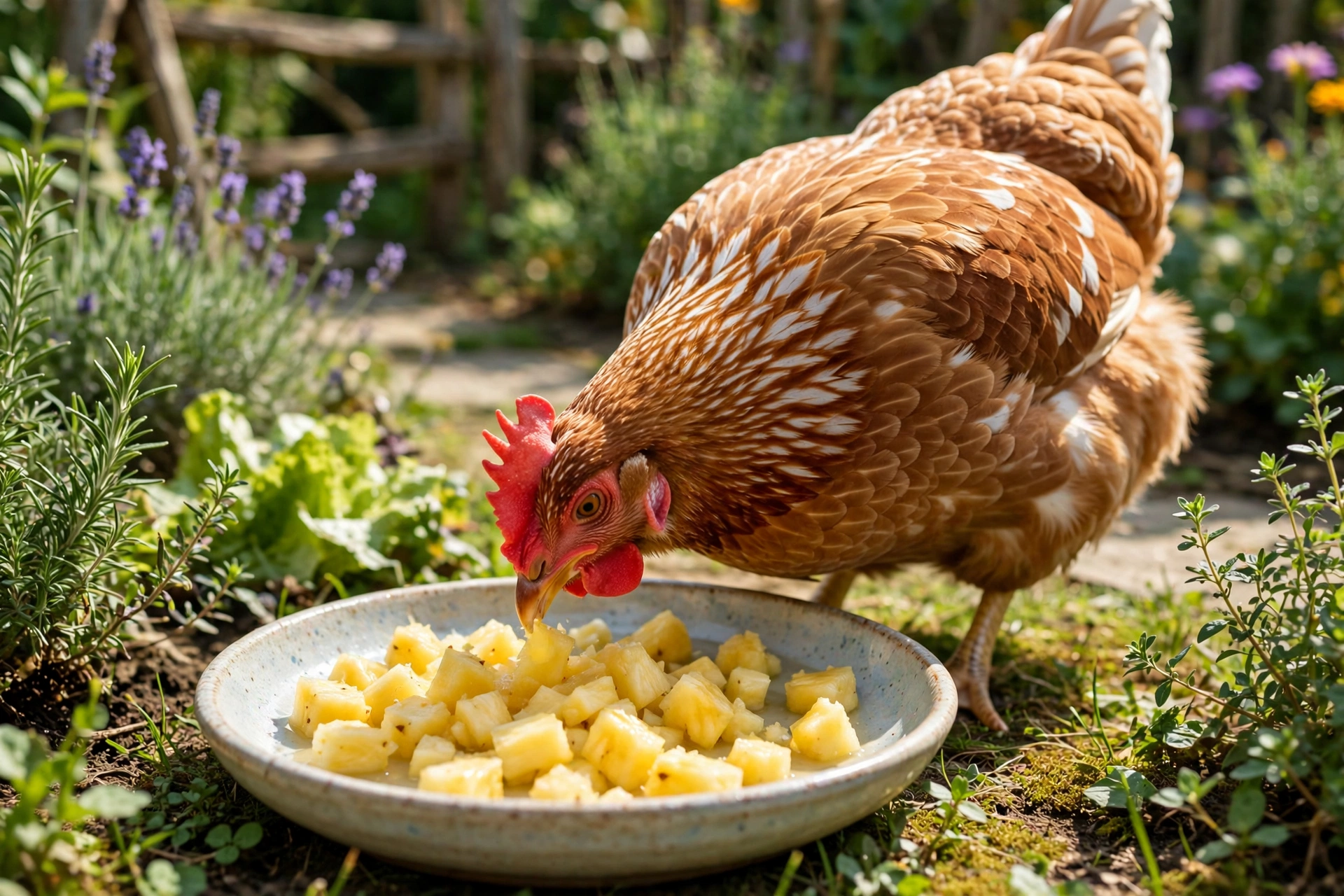
Pineapple is the fruit that starts an argument at the run gate. It is sweet, juicy and hens love it — but it is also acidic, it wears a spiky rind, and it hides a hard core right down the middle. So can chickens eat pineapple? Yes — but only one part of it, and only a little of that: the fresh, ripe flesh, chopped small, with the core out and the rind off, every time.
That is exactly how our homepage food checker rates pineapple — Safe, with its own note: “Fresh flesh, core removed.” This guide follows that line in every section, so what you read here will never contradict the checker or our Feeding pillar. For the full safe and toxic list, see What Can Chickens Eat? Safe & Toxic Foods for Pet Chickens.
Table of Contents 11 sections
- The Short Answer: Yes — Fresh Flesh Only, Core Out, Small Amounts
- How to Serve Pineapple
- Can Chickens Eat the Pineapple Core?
- Can Chickens Eat Pineapple Skin?
- Is Pineapple Too Acidic for Chickens?
- Canned or Dried Pineapple?
- How Much and How Often?
- Can Baby Chicks Eat Pineapple?
- When NOT to Feed It
- FAQs
- The Bottom Line
At a Glance: Pineapple is Safe for chickens — fresh, ripe flesh only, chopped small, with the core removed. The core is No and the rind (skin) is not served; both come off and out before serving.
Egg Laying: Pineapple for laying hens is fine in small treat amounts. Keep all treats at about 10% or less of the diet so layer feed still provides the protein and calcium hens need for eggs.
Good to Know: Fresh is the serve — canned pineapple in syrup and sweetened dried pineapple are out. The pineapple top (crown/leaves) is not a food serve. Baby chicks get starter feed first; tiny amounts of soft ripe flesh come later, with chick grit.
The Short Answer: Yes — Fresh Flesh Only, Core Out, Small Amounts
Can chickens eat pineapple? Yes — the fresh flesh, in small amounts. Is pineapple safe for chickens? Yes, it is rated Safe in our food checker, served as fresh flesh with the core removed. As fruit treats for hens go, pineapple is one of the most popular — sweet, soft and easy to peck once it is chopped.
But “safe” here has two limits built into it. The first is the part: flesh only, never the core and never the rind. The second is the amount: pineapple is sweet and acidic, so it is an occasional small treat, not a daily feed. Serve it the way the sections below describe — washed, topped, rind off, core out and chopped — inside the treat budget, and it is a treat your flock will queue up for.
If you ever want to check a different food in seconds, use the free checker on our homepage — and our free starter checklist covers the feeding basics for new keepers.
How to Serve Pineapple
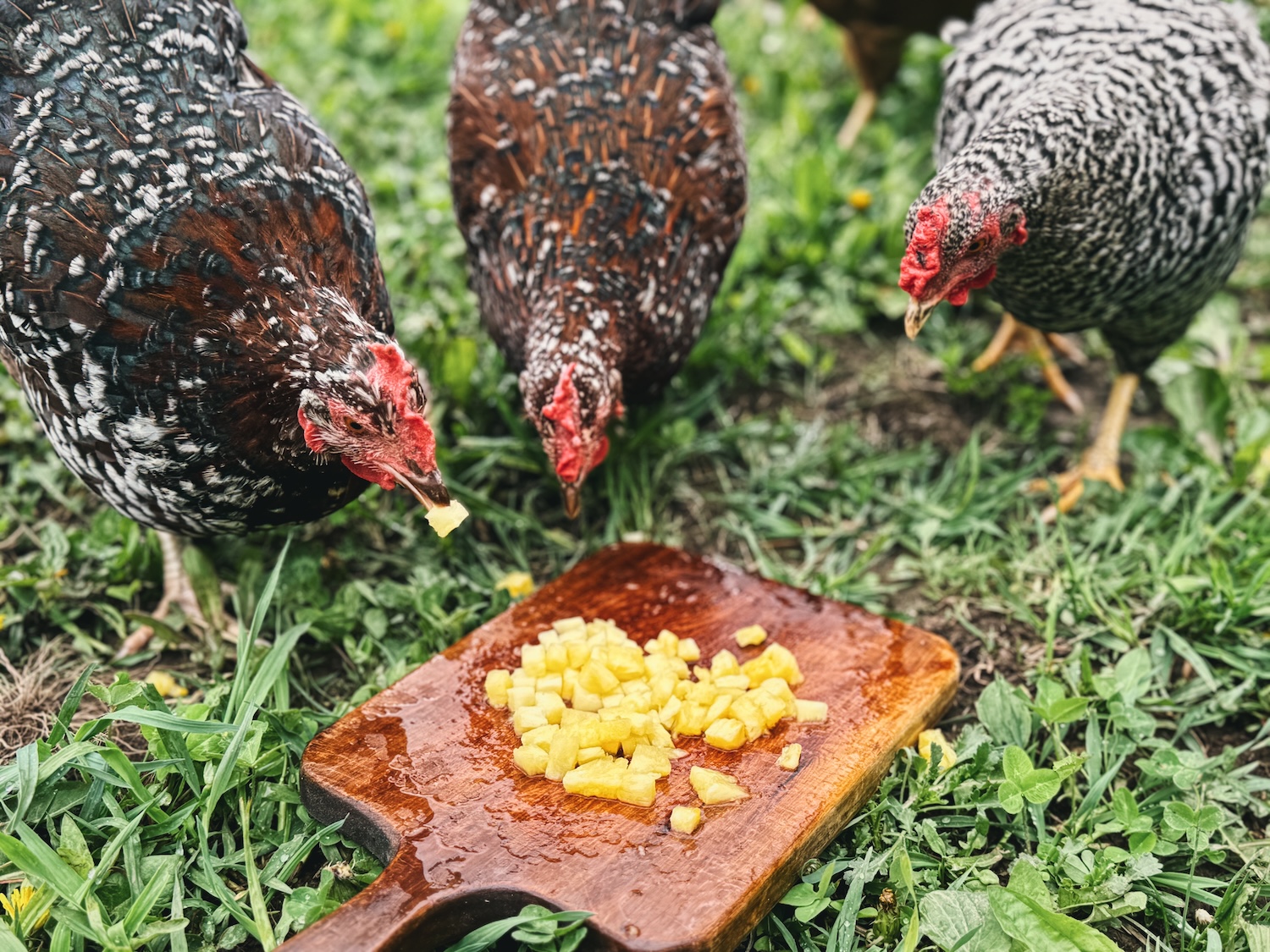
Serving pineapple safely is a short prep job, and none of the steps is optional:
- Wash the outside first, before you cut it, so anything on the rind does not travel onto the flesh on your knife.
- Cut off the top and the rind and set both aside for the compost or the bin — never for the run.
- Cut out the hard core down the centre and discard it where hens cannot reach it.
- Chop the ripe flesh into small, beak-size pieces and scatter them widely, or offer them in a shallow dish, so every hen gets a share and no hen can bolt a large chunk.
This table keeps every part of the fruit consistent with our checker. Note that the checker rates pineapple itself with the note “Fresh flesh, core removed” — it does not give separate verdicts for the rind or the tops, so those rows describe safe handling, not separate checker ratings:
| Part | Safe? | How to serve |
|---|---|---|
| Fresh ripe pineapple flesh | Yes — Safe | Wash, top and rind off, core out, chop small |
| Pineapple core | No | Never feed — the checker’s own note removes it |
| Pineapple skin / rind | No — not served | Flesh only — remove the rind in prep |
| Pineapple tops / leaves (crown) | Not a food serve | Compost it or plant it — do not offer it as a treat |
| Canned pineapple in syrup | No | Syrup is sugar — stick to fresh flesh |
| Sweetened dried pineapple | No | Sweetened — stick to fresh flesh |
| Mouldy or fermenting pineapple | No | Never feed mouldy or spoiled food |
Remove uneaten pineapple the same day. Cut tropical fruit spoils fast, draws flies and ferments quickly in summer heat, and mouldy or spoiled food is Unsafe, full stop.
Can Chickens Eat the Pineapple Core?
No. Can chickens eat pineapple core? No. Pineapple core for chickens is the one part this article is most direct about, because the checker is direct about it: its pineapple note says “Fresh flesh, core removed” — the core comes out before serving, every time.
The core is hard and fibrous, completely unlike the soft ripe flesh around it. It is not part of the serve, it is not softened by chopping, and a core chunk dropped in the run is exactly the kind of tough centrepiece a determined hen will worry at with nothing good to show for it. Quarter the fruit on the board, cut the core strip out of each quarter, and bin it where hens cannot tip it out again.
Can Chickens Eat Pineapple Skin?
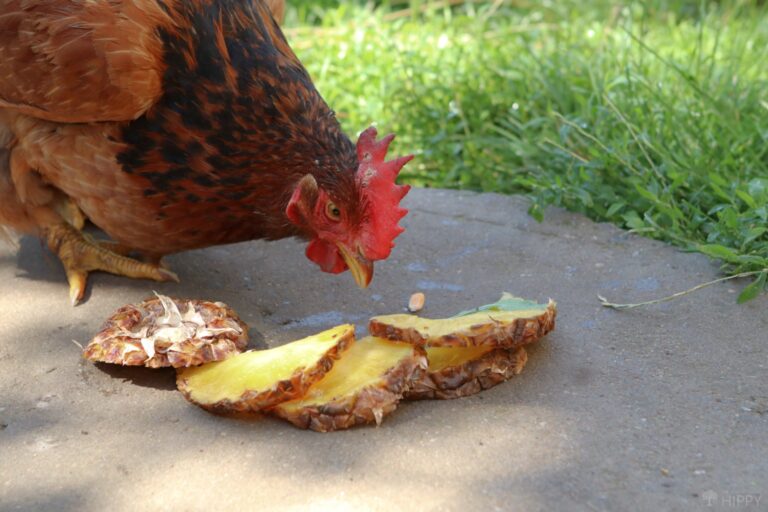
No — flesh only. Can chickens eat pineapple skin? The checker rates the flesh only, and the spiky rind is removed with the core as part of preparing that flesh. Pineapple skin is the same rind under its other name, and the answer does not change: it is not served, washed or not.
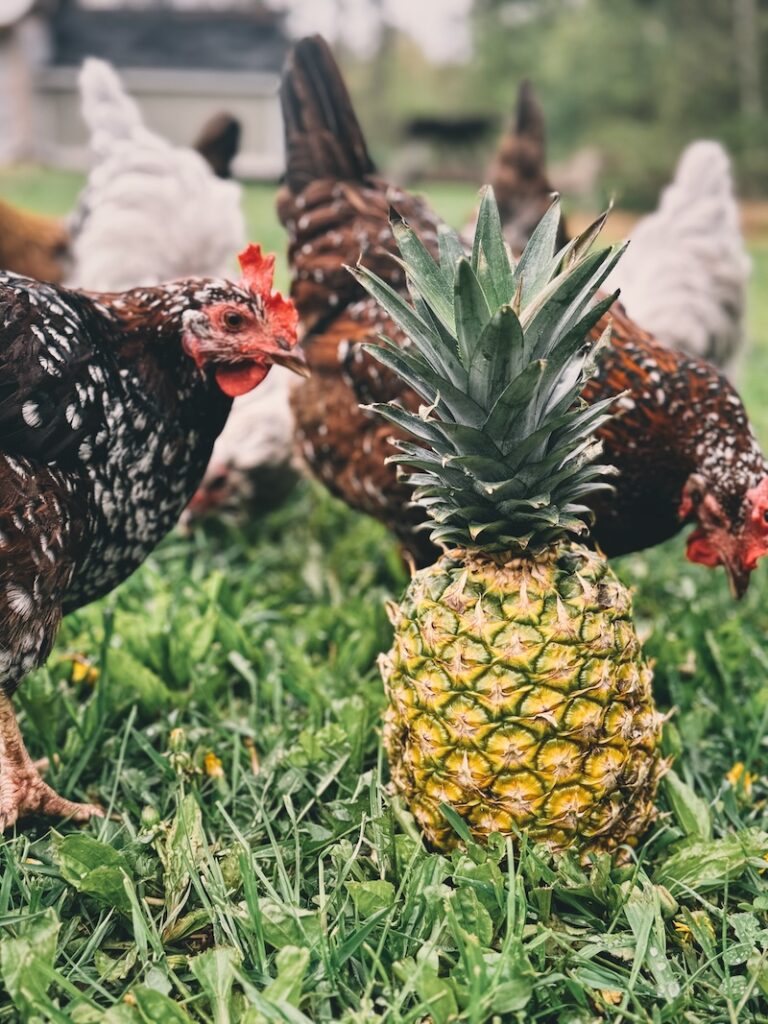
Do not soften this to “wash the rind well and offer it.” There is no benefit in the rind that is worth arguing with the rule, and hens prefer the flesh anyway. Rind off, core out, flesh chopped — that is the whole serve. Can chickens eat pineapple tops or leaves? The green crown is not a food serve either: there is no checker entry for it as a treat, so compost the top or plant it in the garden, and keep the feeding verdict on the flesh alone.
Is Pineapple Too Acidic for Chickens?
Is pineapple too acidic for chickens? In small, occasional amounts, no — and this is the question where older small-blog answers conflict the most. Some say the acidity makes pineapple a no; others serve it freely with no limits at all. Our checker’s settled verdict is Safe, and the way to hold both facts together is the small-amounts rule.
Pineapple flesh is acidic and sugary, so a large helping is a poor idea — it can upset a hen and it fills her up with sugar she does not need. A few small pieces of fresh flesh, once in a while, inside the treat budget below, is a different thing entirely: that is the serve the checker rates Safe. The acidity question is not settled by avoiding pineapple or by feeding it daily — it is settled by the amount.
Canned or Dried Pineapple?
No — fresh only. Can chickens eat canned pineapple? Not the tinned kind in syrup: “fresh” is the checker’s word for the serve, and canned pineapple in syrup is swimming in sugar. Sweetened dried pineapple is out for the same reason — it is concentrated, usually sweetened fruit, not the fresh flesh the checker rates.
If you have a tin or a bag of dried pineapple, keep it for people. For hens, buy or cut a fresh, ripe pineapple, prep it as above, and serve the flesh the same day. Unsweetened, plain frozen flesh pieces are the one stored form that stays close to fresh — freeze peeled, core-out flesh in small pieces and serve them plain on a hot day, lifting thawed leftovers the same day.
How Much and How Often?
How much pineapple can chickens eat? A few small flesh pieces per hen is the guide to hold in your head while you chop. For a small backyard flock of four to six hens, a cup or so of chopped fresh flesh shared across the flock is a generous single treat session — not a feed replacement.
How often? Once in a while, rotated with other safe treats rather than offered daily. The rule is the same one that applies to every treat in this series, from our Feeding pillar: treats, greens and scraps together should stay at about 10% or less of what hens eat in a day. Layer feed is the base — it carries the protein and the calcium that eggshells are made from — and pineapple is a small, sweet extra on top of it.
Offer it in the afternoon, after hens have eaten their morning feed, scatter it widely so no single hen can guard the dish, and lift anything uneaten the same day. Zucchini is the natural savoury partner in this series — a mild, watery garden vegetable that balances a sweet fruit day.
Can Baby Chicks Eat Pineapple?
Can baby chicks eat pineapple? Not at first, and only in a tiny, soft form later. For the first part of a chick’s life the answer is starter feed only: chick starter is balanced for growth, and a young chick’s digestive system is still developing. Treats wait — that is the position in our Feeding pillar, and our dedicated age-by-age guide to when baby chicks can eat treats is coming in this series.
For older growers that are eating starter confidently, a tiny amount of soft, ripe pineapple flesh — chopped very small — is acceptable, and only if chick grit is available, because anything other than starter needs grit to grind it in the gizzard. Never give chicks core or rind, and never a large chunk a small chick could struggle with. The acidity and sugar that make pineapple a small-amounts food for hens make it a smaller-amounts food still for chicks.
If in doubt, wait. Pineapple keeps for growers, and there is no benefit to rushing it. The free starter checklist covers the first-30-days feeding plan.

When NOT to Feed It
Pineapple flesh is safe, but these versions of pineapple are not. Keep all of them out of the run:
- The core — no, in any amount. The checker’s own note removes it before serving.
- The skin or rind — no. Flesh only, rind removed in prep, washed or not.
- The top or crown as a treat — not a food serve. Compost it or plant it instead.
- Canned pineapple in syrup — the syrup is sugar. Fresh flesh instead.
- Sweetened dried pineapple — sweetened and concentrated. Fresh flesh instead.
- Unripe, mouldy or fermenting fruit — serve ripe flesh only; mouldy food is Unsafe and can make hens ill quickly.
- Pineapple as a meal replacement — a sweet, acidic treat never replaces layer feed. Treat amounts only, inside the 10% rule.
Good feeding is part of good all-round care. For the wider daily routine — housing, health checks and laying — see our Care & Health pillar guide. And for a chopped green treat from the same garden routine, see our celery guide.
FAQs
Can chickens eat pineapple skin?
No. Can chickens eat pineapple skin? No — give only the fresh flesh, exactly as our food checker rates it. The spiky rind is removed with the core when you prep the fruit, and it is not served in any amount, washed or not. The pineapple top and leaves are not a food serve either.
Can chickens eat pineapple core?
No. Pineapple core for chickens is out — the checker’s own pineapple note says “Fresh flesh, core removed.” The core is hard and fibrous, so cut it out on the board and bin it where hens cannot reach it.
Can chickens eat canned pineapple?
No. Can chickens eat canned pineapple in syrup? No — the checker rates fresh flesh, and tinned pineapple in syrup is sugar. Sweetened dried pineapple is out for the same reason. Serve fresh, ripe flesh instead.
Is pineapple too acidic for chickens, and how much can they eat?
In small amounts, no. Pineapple is rated Safe, and the acidity and sugar are handled by the amount: a few small flesh pieces per hen, once in a while, inside the treat budget of about 10% or less of the day’s food, with layer feed as the base. Do not feed it daily or in large helpings.
Can baby chicks eat pineapple?
Only later, and only a little. Chicks should eat starter feed only at first. Once they are older growers eating starter well, a tiny amount of soft ripe flesh, chopped very small, is fine — but only with chick grit available, and never core or rind. If in doubt, wait.
The Bottom Line
So, can chickens eat pineapple? Yes — the fresh, ripe flesh, and only the flesh, and only a little of it. Wash the fruit, cut off the top and the rind, cut out the hard core, chop the flesh small, and pineapple becomes one of the sweetest fruit treats for hens in this series. Keep it inside the 10% treat budget, hold it back for very young chicks, and never let the core, the rind, a syrupy tin or sweetened dried fruit anywhere near the run. Sweet mango is the closest sibling treat in this series — flesh only, with its own two parts to remove. For any new food after this one, check it first in the homepage checker, and keep this guide’s pillar — What Can Chickens Eat? — as your master safe and toxic list.
For a soft vegetable treat to balance the sweet fruit days, read Can Chickens Eat Sweet Potatoes? — cooked and mashed is the safe serve.
