

A broody hen is easy to miss at first and hard to miss once you know what to look for. She stops laying, she moves into the nest box and she guards it like it holds treasure, even when it holds nothing at all. The short answer is that you can tell a chicken is broody when she sits in the nest box for hours day after day, puffs up her feathers, growls or hisses when you come close, flattens herself over the eggs and stops laying. This guide walks through the 11 signs one by one, so you can check your hen against each of them and know for sure. It also shows you how to tell broodiness apart from laying an egg, from illness and from egg binding, because those three look similar at first and only one of them is broodiness.
Table of Contents
- The Short Answer. Eleven Signs, Not One
- The Nest Box Test. Hours There, Day After Day
- The Puff and the Growl. How She Guards the Nest
- The Body Changes. Feathers, Comb and Droppings
- She Stops Laying. The Clearest Single Sign
- Broody or Just Laying. The 20 Minute Rule
- Broody or Sick. How to Tell Them Apart
- Broody or Egg Bound. The Emergency to Rule Out
- Which Hens Go Broody Most. Breeds and Seasons
- FAQs
At a Glance: A broody hen is a hen whose mothering instinct has switched on. She stops laying and sits in the nest box for about 21 days, which is the natural incubation period. She will sit with or without eggs under her, and she will sit on an empty nest if that is all she has.
The 11 Signs: She stays in the nest box most of the day, sleeps there at night, flattens herself over the eggs, puffs up her feathers, growls or hisses when you approach, pecks if you reach under her, stops laying, pulls feathers from her breast, eats and drinks much less, shows a paler comb and wattles, and leaves huge and very smelly droppings. No single sign proves broodiness on its own, so check her against the full list.
Not Broody: A hen in the nest box for an hour may only be laying an egg, which takes 15 to 20 minutes. A sick hen is dull and lethargic away from the nest, and an egg bound hen strains and waddles with a swollen belly. Both of those need help, and neither one is broodiness.
The Short Answer. Eleven Signs, Not One
Broodiness is a hen’s mothering instinct switching on. Hormones drive it, and longer spring days and a comfortable dark nest help it along. When it switches on, the hen stops laying and settles in to sit, with or without eggs, for about 21 days.
So how do you know if a chicken is broody. You look for a pattern, not one moment. A broody hen stays in the nest box most of the day and goes straight back when you lift her out. She sleeps in the nesting box at night instead of on the roost. She flattens herself low over the eggs. She puffs her feathers up until she looks twice her normal size. She growls, clucks softly or hisses when you come near, and she may peck if you reach under her. She stops laying eggs. She pulls feathers from her breast to line the nest and warm the eggs with bare skin. She eats and drinks much less than usual, about 30 to 50 grams of feed a day instead of about 120 grams. Her comb and wattles look paler than normal. And her droppings are huge and very smelly, because she holds them in all day.
But when four or five show up together day after day, you are looking at a broody hen. If not, break her gently with the method in our guide to how to break a broody hen.
Never use ice or cold water. A broody hen loses weight and condition while she sits, so do not leave her sitting for weeks on unfertilised eggs with no plan. The rule is simple. A broody hen shows a pattern of signs, not just one, and the pattern holds day after day.
The Nest Box Test. Hours There, Day After Day
The first and most useful test is time. A broody hen lives in the nest box. She is there in the morning, at midday and in the afternoon, and she leaves only for a short break to eat, drink and drop one huge dropping before she hurries back.
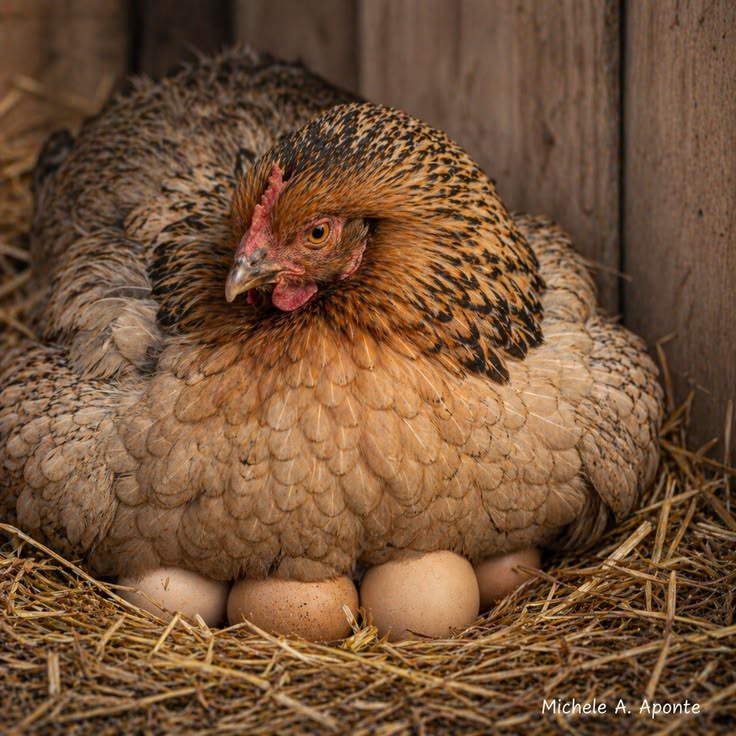
Try this simple check. Lift her gently out of the nest box and set her down by the feeder. A hen who was only laying will carry on with her day. A broody hen will puff up, cluck in a low flat voice and march straight back to the nest within minutes. If you lift her out three times and she returns three times, she has told you what she is doing. The night test is even clearer, since hens normally sleep on the roost and a broody hen sleeps in the nesting box instead.
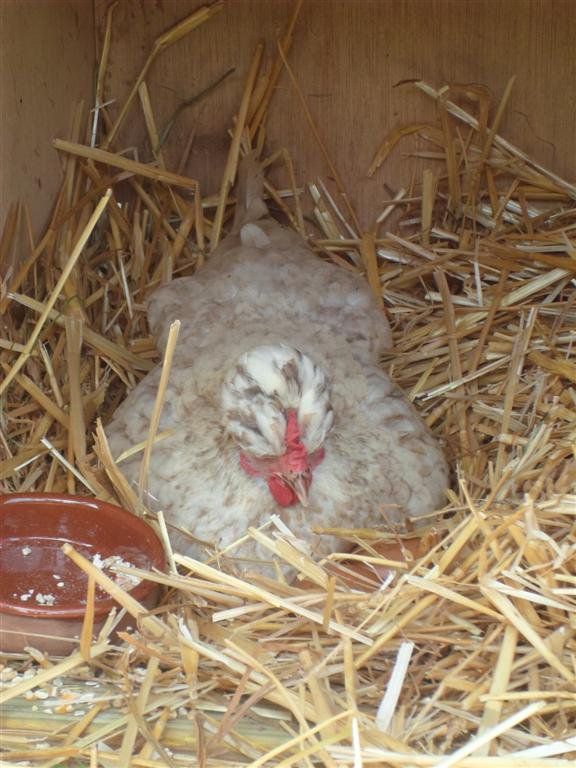
Watch out for one trap. If your hens have to queue for a nest box, a hen may look like she is sitting for hours when she is really just waiting her turn. Make sure you have enough boxes first, and our guide to how many nesting boxes for 6 hens will help you check that.
The rule is simple. A hen who is in the box for hours, day after day, and who sleeps there at night, is a broody hen.
The Puff and the Growl. How She Guards the Nest
A broody hen guards her nest, and she makes no secret of it. The moment you come near the box, she changes shape. She fluffs her feathers out until she looks twice her normal size, she flattens herself low over the eggs, and she spreads her wings slightly to cover everything beneath her.
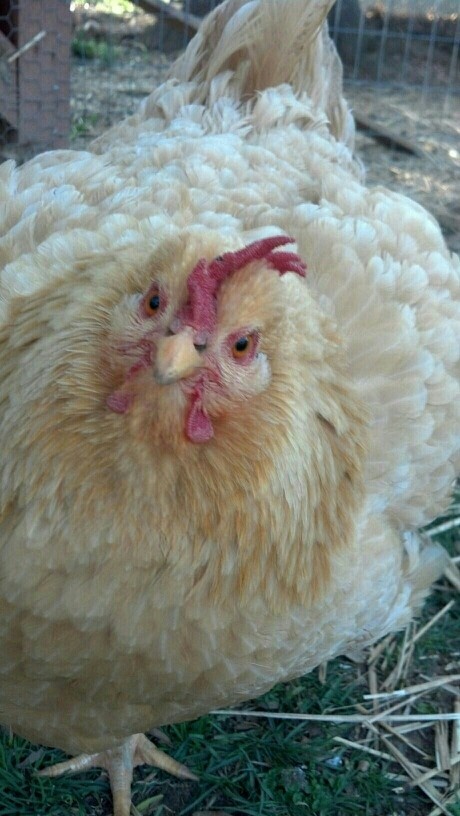
Then comes the sound. A broody hen growls, and it is a real growl, low and rattling, quite unlike her normal cluck. Some hens hiss instead. Others make a soft, flat, repeated cluck that sounds almost like a purr with a warning in it. Any of these sounds means the same thing, which is leave my nest alone.
If you reach under her, expect a peck. It is usually a quick warning peck rather than a hard bite, but a determined broody can give you a sharp nip on the hand. She is not a mean hen, she is a mother hen doing her job. Wear a glove if your hen is a keen pecker, and lift her from behind rather than reaching straight in from the front. When she does leave the nest, she walks low and flat with her wings held out, clucking in that same low voice, and keepers call it the broody walk. The rule is simple. A hen who puffs up, growls and pecks to guard the nest is telling you she is broody.
The Body Changes. Feathers, Comb and Droppings
Broodiness changes a hen’s body in ways you can see, and these signs separate a truly broody hen from a hen who is simply stubborn about her favourite nest box. Start with her breast. A broody hen pulls feathers from her own breast to line the nest, and she does it so the eggs can touch her bare skin. If you see a bare patch on her chest when she is off the nest, that is one of the strongest signs of a broody hen you will ever find.
Next, look at her comb and wattles. A laying hen has a bright red comb and wattles. A broody hen’s comb and wattles look paler than normal, a little washed out and sometimes slightly shrunken. Compare her with the other hens. If she is the only pale one and she is also sitting all day, the picture is coming together.
Then watch how much she eats and drinks. A normal hen eats about 120 grams of feed a day. A broody hen eats about 30 to 50 grams a day, which is less than half her normal amount. Make sure fresh water and feed are close to the nest box, so her breaks are short and easy, and check that she does come off the nest at least once a day.
Finally, look at her droppings, because they are hard to miss. A broody hen holds her droppings in all day while she sits, and when she finally goes, the result is one huge and very smelly dropping. A broody hen saves it all up and delivers it in one go. The rule is simple. A bare breast patch, a paler comb, very little food and one huge dropping a day all point to a broody hen.
She Stops Laying. The Clearest Single Sign
If you want one sign that matters more than any other, it is this one. A broody hen stops laying eggs. Her body has switched from making eggs to sitting on them, and the two jobs do not run at the same time. So if your hen has moved into the nest box and the eggs have stopped coming, you have the clearest single sign of broodiness there is.
This is easy to check if you keep a rough note of who lays what. If your hen has laid an egg almost every day for months and then nothing for three or four days while she sits in the box, that is your answer. A broody hen sits on eggs that other hens laid, and she may gather them under her, but she adds none of her own.
A hen does not always stop laying on the very first day she starts sitting. Some hens lay one or two more eggs first, and then the laying stops. If she is still sitting and still laying nothing after three or four days, the sign is confirmed.
Remember too that a broody hen will sit on anything, or on nothing at all. Some hens sit on golf balls, some sit on wooden eggs, and some sit on an empty nest with great dedication. The empty nest she refuses to leave tells you everything. The rule is simple. A hen who sits all day and stops laying is a broody hen.
Broody or Just Laying. The 20 Minute Rule
Here is the question every keeper asks first. My hen has been in the nest box for an hour, is she broody. The answer is probably not, because laying an egg takes 15 to 20 minutes. An hour in the box is normal laying behaviour, and it is no reason to worry or to act.
The difference is time, repeated over days. A laying hen goes into the box, lays her egg in 15 to 20 minutes, and then leaves to eat, drink, scratch and dust bathe with the flock. A broody hen goes into the box and stays there for hours, and she does it again the next day, and the day after that. Broody means hours, day after day. That is the 20 minute rule in practice. Short visits mean laying. Long visits, repeated daily, mean broody.
There is a second difference too, which is what she does when she comes out. A hen who has just laid an egg usually announces it with the loud egg song, then goes off to eat and drink with a normal appetite. A broody hen comes out quietly, eats a little, drinks a little, drops one huge dropping, and then hurries back to the nest in that low flat broody walk.
If you are unsure, watch her for two or three days and keep a simple note of how long she spends in the box. The rule is simple. Twenty minutes means laying, and hours day after day means broody.
Broody or Sick. How to Tell Them Apart
This is the most important distinction in the whole guide, because a sick hen needs help and a broody hen does not. The two can look similar at first, since both hens sit still, eat less and look a little dull, but they are very different once you know what to check.
A broody hen is focused and fierce. She sits in the nest box, she puffs up, she growls and she pecks when you reach under her. She is alert, with bright eyes.
A sick hen is lethargic away from the nest. That is the key difference. She sits hunched and dull in a corner of the coop or the run, not in the nest box, and she does not care who comes near her. She is off her feed entirely, not just eating less, and she may not drink either. Her droppings are runny, watery or an odd colour, and she may have breathing trouble, a rattly chest, a runny nose or swollen eyes.
If you see any of those sick signs, do not assume broodiness. Separate the hen somewhere warm, quiet and dry, offer her water with a little sugar or electrolytes, and get advice from a vet. When in doubt, treat it as illness first and check for broodiness second. The rule is simple. A broody hen is fierce in the nest, and a sick hen is dull and lifeless away from it.
Broody or Egg Bound. The Emergency to Rule Out
Egg binding is the emergency that every keeper must be able to rule out, because an egg bound hen needs help the same day. An egg bound hen has an egg stuck inside her that she cannot pass. It can look a little like broodiness at first, but the details are very different.
An egg bound hen strains. She pushes and pushes, over and over, as if she is trying to lay an egg that will not come. She waddles when she walks, with her legs held wide and her tail held low. Her belly feels swollen and hard when you pick her up gently, and she is clearly in distress, panting, restless and unable to settle. A broody hen sits flat and calm for hours. An egg bound hen cannot settle at all.
If you suspect egg binding, act the same day. Move the hen somewhere warm and quiet, give her a warm bath in shallow water up to her belly for 20 minutes, and offer her water with a little calcium if you have it. Do not try to pull the egg out yourself, as that can break it inside her and cause a serious infection. If the egg does not pass within a few hours, get her to a vet at once. Egg binding can kill a hen within a day, so this is not a wait and see problem.
Most of the time, a sitting hen is broody and not egg bound. Just check for the straining, the waddling and the swollen belly before you settle on broodiness, and check it every day while she sits. The rule is simple. Straining, waddling and a swollen belly mean egg binding, and that needs help the same day.
Which Hens Go Broody Most. Breeds and Seasons
Some hens go broody every spring without fail, and some hens never go broody in their whole lives. Breed is the biggest reason for that difference. The breeds most prone to broodiness are Silkies, Cochins, Orpingtons and Brahmas. Silkies are famous for it, and a Silkie hen will sit on anything. Cochins are close behind. Orpingtons and Brahmas go broody often too.
Our breed guides cover this in detail for the breeds that go broody most. If you keep Australorps, our guide to do australorps go broody explains how often they sit and what to expect from them.
Broodiness varies a lot from one breed to another, and even from one hen to another inside the same breed.
Season matters as well. Broodiness is most common in spring and early summer, when the days are getting longer and the weather is warming up. Longer days and a comfortable dark nest are strong triggers, and a hen who has been laying well all spring is the most likely candidate. Spring is the peak season.
So what do you do once you know she is broody. If you want chicks, give her fertile eggs or day old chicks, and our guide to how to hatch chicken eggs at home in an incubator will help you if you want to hatch eggs yourself instead.
If you do not want chicks, break her gently with the method in our guide to how to break a broody hen, and do it sooner rather than later, because a broody hen loses weight and condition while she sits.
Never use ice or cold water, and never leave her sitting for weeks on unfertilised eggs with no plan. The rule is simple. Broody breeds sit most in spring, and every broody hen needs a plan.
FAQs
How long does a broody hen sit.
About 21 days, which is the natural incubation period for chicken eggs. If you give her fertile eggs, she will sit until they hatch. If she is sitting on unfertilised eggs, golf balls or an empty nest, do not let her sit for the full 21 days with no plan, because she will lose weight and condition. Break her gently within the first week if you can.
Can a hen go broody with no eggs in the nest.
Yes, she can, and many hens do. A broody hen will sit on an empty nest, on golf balls or on wooden eggs with complete dedication, because the instinct is about sitting, not about the eggs themselves. The hours she spends in the nest, the puffing and the growling, and the fact that she has stopped laying, are what tell you.
Will a broody hen eat and drink on her own.
She will, but much less than usual. A broody hen eats about 30 to 50 grams of feed a day instead of about 120 grams, and she drinks less too. She comes off the nest once or twice a day for a quick break, eats a little, drinks a little, drops one huge dropping and hurries back. Put fresh water and feed close to the nest box.
Should I let my broody hen sit or break her.
That depends on what you want. If you want chicks and you have fertile eggs or day old chicks, let her sit. If you do not want chicks, break her gently, and do it sooner rather than later, since sitting for weeks on unfertilised eggs costs her weight and condition.
Is a broody hen sick.
No, broodiness is normal and healthy. A broody hen is alert, fierce and focused in the nest. A sick hen is different, because she is dull and lethargic away from the nest, off her feed entirely, with runny droppings or breathing trouble, and she needs a vet. If you are ever unsure, treat it as illness first and check for broodiness second.
If you are new to keeping chickens, grab the free starter checklist and keep it by the coop, it covers the basics every new keeper needs.
If you crack open an egg and find two yolks, read our guide to why do chickens lay double yolk eggs and are they safe to eat.
Keep Reading
- How to Break a Broody Hen
- How to Hatch Chicken Eggs at Home in an Incubator
- How Often Do Cochins Go Broody
- Do Australorps Go Broody
- Can Chickens Eat Quinoa

Nusrat
Author, TheChickenPet.com