
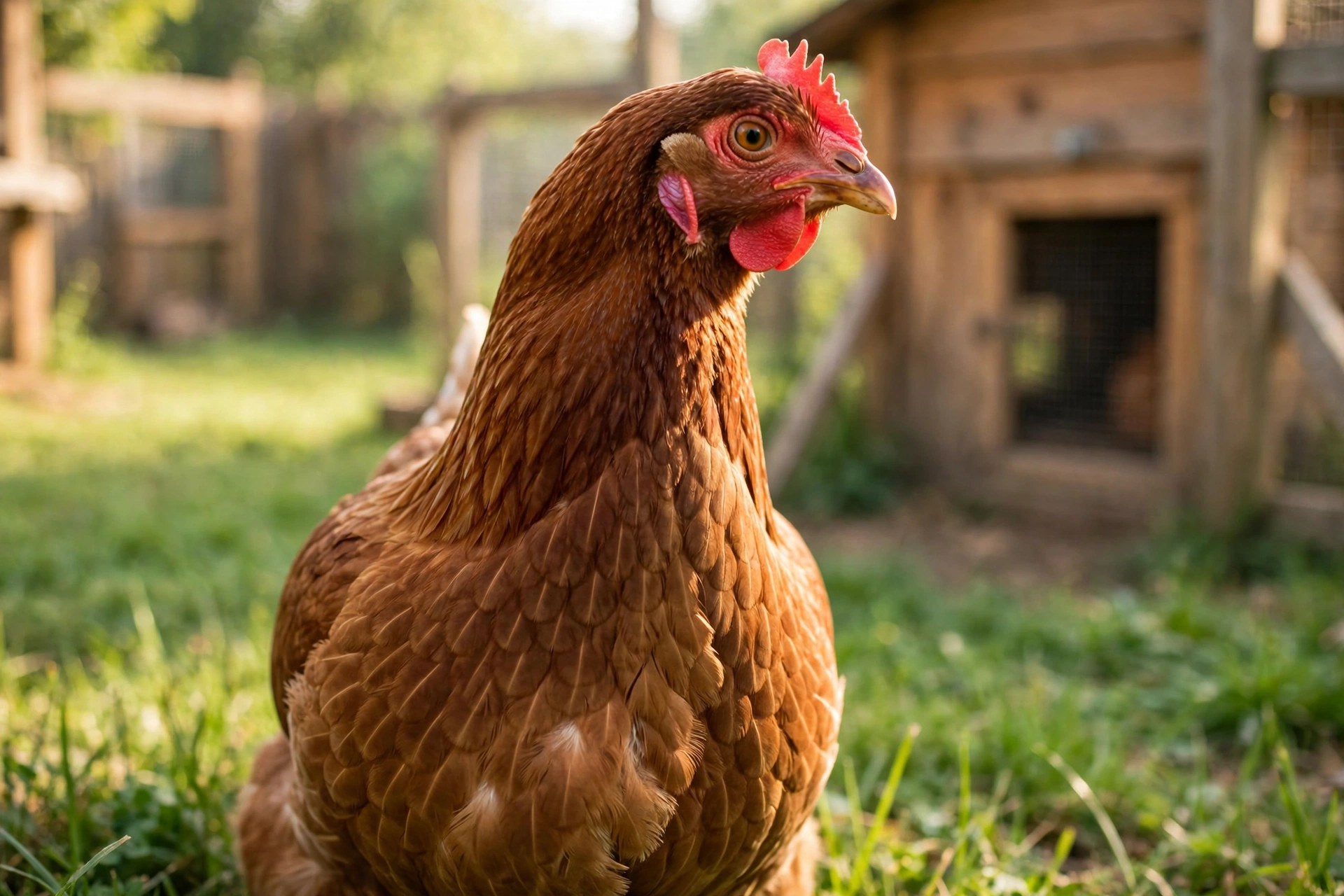
A hen with sour crop has a crop that never empties. The crop is the soft pouch at the base of her neck where food sits before it moves on to the stomach, and in a healthy bird it fills during the day and is flat and empty first thing in the morning. With sour crop the food sits there too long, ferments, and turns into a soft, squishy, sour smelling mass that will not move on. The bird goes off her feed, grows quiet, and loses condition fast if nothing is done.
The good news is that sour crop is easy to spot once you know the one check that matters. Feel the crop first thing in the morning, before the bird has eaten or drunk anything. If it is flat, she is fine. If it is still full, soft and squishy, and her breath smells sour, you have found the problem early, and early is when it is easiest to fix. This guide covers what sour crop is, the symptoms to watch for, the morning crop check, how it differs from an impacted crop, what to do first, and the mistakes that make it worse.
Quick Facts
What it is. A yeast infection of the crop, usually Candida, where food ferments instead of moving on.
First sign. A crop that is still full first thing in the morning, before the bird has eaten.
How it feels. Soft and squishy, like a water balloon, never hard.
How it smells. Sour, like fermenting feed or bad breath.
First step. Separate the bird, keep fresh water available, and speak to a vet about antifungal treatment.
Never. Hold a hen upside down to empty her crop. She can breathe fluid into her lungs and die.
What Sour Crop Is
The crop is a stretchy pouch in the front of a chicken’s neck. Food and water pass through it on the way to the proventriculus and the gizzard, and the crop holds the meal while the rest of the digestive system works through it. In a healthy bird the crop fills during the day, slowly empties overnight, and is flat by morning. The whole system depends on that steady movement. When the crop slows down or stops, food sits in a warm, damp pouch for hours, and yeast that normally lives in small numbers in the crop starts to grow out of control. The yeast ferments the trapped food, gas builds up, and the contents turn sour. That is sour crop.
Sour crop is not usually the first problem. It is often the second problem, the one that follows something else. A bird that has eaten too much long grass, straw or stringy vegetable matter can develop a slow crop, and the slow crop then turns sour. A bird that is already unwell, stressed, or short of grit can have the same trouble. Mouldy or stale feed can do it too, because the yeast and mould in bad feed add to the load in the crop. Antibiotics can also play a part, because they can disturb the normal balance of microbes in the gut and let yeast take over. That is why the treatment is never only about the crop. The crop is where the trouble shows, but the keeper also has to find and fix whatever slowed the crop down in the first place, or the problem comes back.
It helps to know that sour crop is not the same as a pendulous crop, though the two get confused. A pendulous crop is a stretched crop muscle that hangs low and never fully empties, often in older heavy birds. It can lead to sour crop, because food pools in the sagging pouch, but a pendulous crop on its own is a structural problem, while sour crop is an infection. The two need different handling, and a crop bra, a small support sling, is sometimes used for a pendulous crop but does nothing for the yeast infection itself.
Sour Crop Symptoms in Chickens
The symptoms of sour crop build slowly, which is why the morning crop check matters so much. A bird can look almost normal for a day or two while the crop is already going wrong. The first thing most keepers notice is a change in behaviour. The hen goes quiet. She stands apart from the flock, fluffs her feathers, and shows little interest in food, even treats she would normally run for. Her comb may look paler than usual. She may stretch her neck and shake her head, as if she is trying to clear something from her throat. Some birds make a gurgling sound when they breathe, or open their beak and gasp after eating.
The crop itself tells the clearest story. Feel it in the morning before the bird eats or drinks. In sour crop it is still full, and it feels soft, squishy and puffy, like a small water balloon under the skin. Press it very gently and you may feel gas move inside it. The smell is the other giveaway. A healthy chicken’s breath has almost no smell. A bird with sour crop has breath that smells sour, sharp and fermented, and you can often smell it just by holding her close. In more advanced cases fluid may come up from the crop and run from the beak, especially when the bird lowers her head or is picked up. That fluid is sour and sometimes yellowish, and it is a sign the crop is badly overloaded.
Appetite and droppings change next. The bird eats less because the crop is already full, and what she does eat adds to the problem. Her droppings may become watery, greenish or very loose, and she may drink more water than usual. Weight loss follows quickly in a small bird, and a hen that was laying will often stop laying while she is ill. None of these signs on its own proves sour crop, which is why the crop check is the test that settles it. A full, soft, sour smelling crop in the morning is sour crop until a vet says otherwise.
The Morning Crop Check
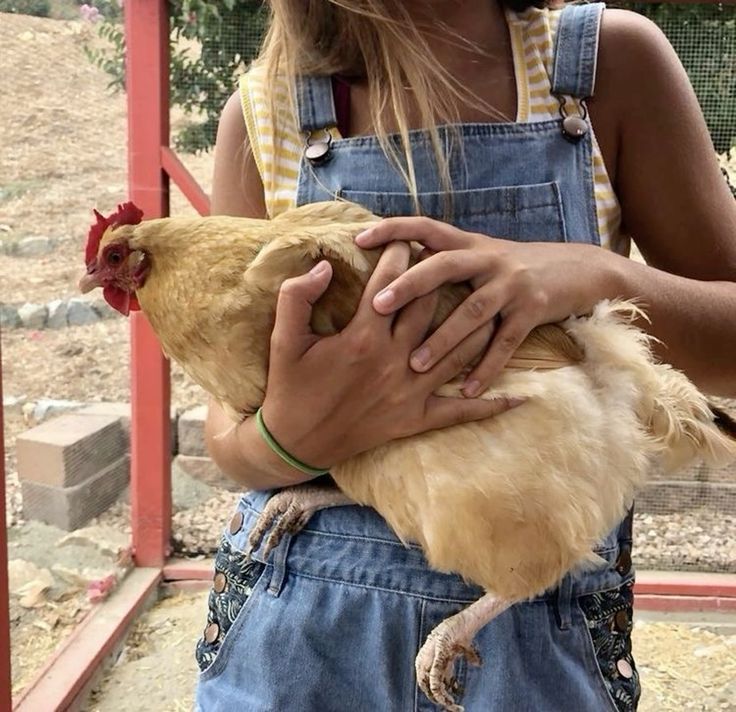
The morning crop check is the single most useful habit in this whole guide, and it takes about ten seconds per bird. Do it first thing in the morning, before the birds have eaten or drunk anything, because that is the only time a healthy crop should be empty. Pick the bird up calmly, hold her against your body, and feel the front of her neck and upper chest with your fingertips. The crop sits just to the right of the centre of the chest, at the base of the neck.
A healthy crop in the morning feels flat. You may feel the keel bone and a little loose skin, and nothing more. That is normal, and it means the bird digested her last meal properly overnight. A crop with sour crop feels full, soft and squishy. It may feel warm. It may gurgle when you press it very gently. It does not feel hard, and that matters, because a hard crop points to a different problem, which the next section covers.
Do the check the same way every time, and do it on a healthy bird first so you know what normal feels like. The difference between an empty crop and a full soft crop is obvious once you have felt both. If you find a full soft crop, do not wait to see if it clears on its own. Separate the bird, keep fresh clean water in front of her, and start the treatment steps below. A crop that is still full the next morning after a day of care is a bird that needs a vet, not another day of waiting.
A word of caution about handling. A bird with a full sour crop can bring fluid up if she is squeezed, tipped forward, or held upside down. Never turn her upside down. Hold her upright, support her body, and keep her head above the level of her crop while you check her.
Sour Crop vs Impacted Crop
Sour crop and impacted crop look similar from the outside, a bird with a full crop that will not empty, but they are different problems with different causes and different first steps. Getting the two mixed up is the most common mistake keepers make with crop trouble, so here is the comparison that settles it.
| Sour crop | Impacted crop | |
|---|---|---|
| How the crop feels | Soft, squishy and puffy, like a water balloon | Hard and firm, like a golf ball |
| What is inside | Fermenting feed and gas, yeast overgrowth | A solid mass of long grass, straw, string or dry feed |
| The smell | Sour and fermented, easy to notice | Little or no smell at first |
| The cause | Slow crop, yeast overgrowth, stale feed, illness | A physical blockage the crop cannot pass |
| First step | Isolate, fresh water, vet for antifungal treatment | Isolate, offer water, gentle massage downward, vet if it does not clear |
An impacted crop is a blockage. The bird has eaten something the crop cannot move on, often long dry grass, straw bedding, string, or a large amount of dry feed eaten too fast with too little water. The mass sits in the crop and hardens, and the bird cannot pass it. The crop feels hard and full, and the bird goes off her feed because nothing can get past the blockage. Treatment starts with water and very gentle massage downward toward the stomach, never upward, and with removing the cause, but a hard blockage that does not soften in a day or two is a vet job, and surgery is sometimes needed.
Sour crop is an infection, not a blockage, and it needs antifungal treatment from a vet. Massage does not cure it, and trying to empty the crop by force can kill the bird. The two conditions can also occur together. A blockage can sit long enough to turn sour, and a sour crop can slow the crop enough for a blockage to form. If the crop feels hard and smells sour, treat it as a vet emergency and do not try to fix it at home.
How to Treat Sour Crop in Chickens
Start by separating the bird into a quiet, warm pen with fresh clean water and no feed for the first part of the day. Separation does three things. It stops the other birds picking on a weak bird, it lets you see exactly how much she drinks and what her droppings look like, and it stops her adding more food to a crop that cannot cope with it. Keep the pen clean and dry, and keep her head above the level of her crop when you handle her.
Offer fresh water only for the first 12 to 24 hours, and change it often. Many keepers add a small amount of apple cider vinegar to the water, about a teaspoon per litre, because the acid makes the crop less friendly to yeast. It is a common home remedy and it does no harm in that small amount, but be honest about what it is. It is a support measure, not a cure. The yeast infection itself needs an antifungal medicine, usually nystatin, and that comes from a vet. Do not guess at a dose or borrow medicine meant for another animal. A vet who treats poultry can prescribe the right antifungal and tell you how long to give it.
Gentle massage can help, but only in the right way and only very gently. With the bird held upright, use your fingertips to massage the crop in slow downward strokes, toward the stomach, for a minute or two at a time. The aim is to help the crop move its contents onward, not to push anything back up. If fluid comes up, stop at once and hold the bird upright until she settles. Never squeeze hard, never massage upward, and never try to make her vomit.
When the crop starts to feel smaller and the smell fades, usually after a day or two of treatment, offer small amounts of soft, easy food. Plain yoghurt with live cultures is a good first food, because it is soft and it adds helpful bacteria back to the gut. A little scrambled egg or soft mash is fine too. Keep the portions small and frequent rather than one big meal, and keep grit available so the gizzard can do its work. Go back to normal feed gradually over two or three days, and watch the morning crop check every day until the crop is empty in the morning for three days in a row. That is the sign she is truly better.
Treatment takes time. A mild case may clear in two or three days. A bad case can take a week or more, and some birds need a second course of antifungal medicine. Do not stop the medicine the moment the bird looks better. Finish the course the vet prescribed, or the yeast comes straight back.
What Not to Do
The mistakes with sour crop are as important as the treatment, because the wrong move can kill a bird that would otherwise recover. The first and worst mistake is holding a hen upside down to empty her crop. It is an old piece of advice that still circulates, and it is dangerous. A chicken cannot protect her airway the way a mammal can, and fluid from the crop runs straight into her lungs when she is upside down. Birds have died this way in minutes. Never do it, whatever anyone tells you.
Do not try to make the bird vomit by squeezing the crop hard or pressing it upward. The same risk applies, and squeezing a sore, stretched crop can injure it. Do not keep feeding a bird with a full crop in the hope she will eat her way through it. More food only adds to the fermenting mass. Do not reach for antibiotics on your own. Sour crop is a yeast infection, and antibiotics do not kill yeast. Worse, they can disturb the gut bacteria further and make the yeast problem worse. Antibiotics are for bacterial infections, and only a vet should decide when they are needed.
Do not use strong home remedies. Bleach, peroxide, baking soda solutions and neat vinegar have all been suggested online, and none of them belong inside a chicken. They burn the crop lining and make the bird worse. Stick to fresh water, a little apple cider vinegar at most, gentle handling, and veterinary medicine. And do not leave a sick bird in the flock hoping the problem sorts itself out. A bird with sour crop is a bird that needs care today, not next week.
Sour Crop in Chicks
Chicks are the most likely birds in a flock to develop sour crop, and the reasons are simple. Their crops are small, their digestive systems are still learning, and they are kept in a brooder where the temperature, the feed and the bedding all matter. A chick that eats bedding, that is kept too cold so its digestion slows, or that is given treats before its gut is ready can develop a slow crop, and a slow crop in a chick turns sour fast. Young chicks are also the birds least able to cope with going off their feed, because they have almost no reserves.
The signs are the same as in an adult, a full soft crop in the morning, a sour smell, a chick that stands apart and stops eating, but the check needs a lighter touch. Feel the crop with one fingertip, very gently, and do not squeeze. If a chick has sour crop, separate it into a small warm pen with a heat source, offer fresh water with a tiny amount of apple cider vinegar, and speak to a vet quickly, because chicks go downhill faster than adults. Do not try to massage a chick’s crop hard, and never hold a chick upside down.
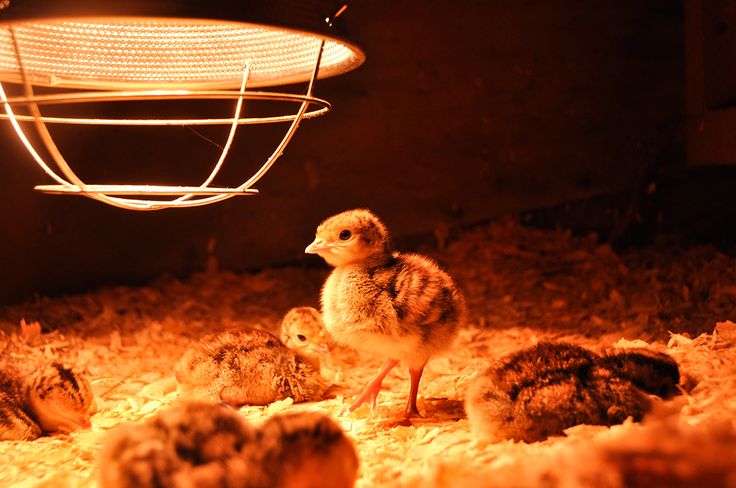
Prevention in the brooder is worth more than any treatment. Keep the brooder at the right temperature for the chicks age, offer chick starter crumb as the main feed, and hold off on treats until the chicks are at least two weeks old. Give them chick grit from the start if they get anything other than starter crumb, and keep the bedding clean and dry so they are not eating soiled material. Our guide to hatching eggs at home covers the first day in detail, and the brooder setup guide covers the first weeks, and both are worth reading before your chicks arrive, not after a problem shows up.
How to Prevent Sour Crop
Prevention is mostly good housekeeping, and most of it is already part of keeping healthy chickens. Start with the feed. Keep feed fresh, dry and free of mould, and never feed mouldy or stale feed, even if it looks mostly fine. Store feed in a dry, sealed container, and buy in amounts you will use within a few weeks. Mouldy feed is one of the most common causes of sour crop, and it is also bad for the birds in other ways.
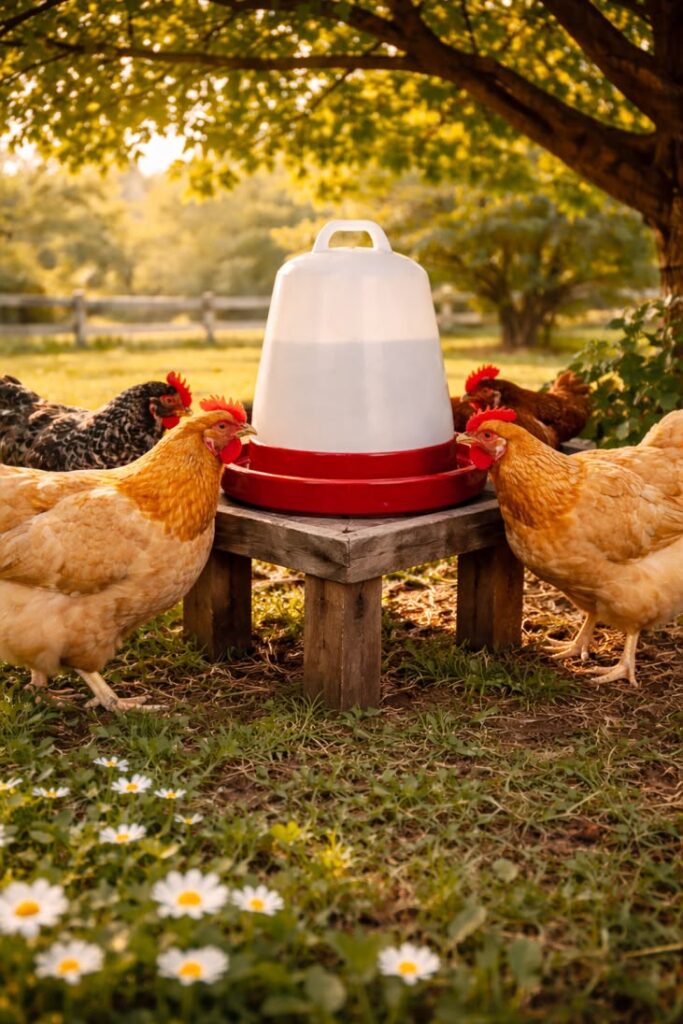
Keep the water clean. Change drinking water every day, scrub the waterer at least once a week, and keep it out of direct sun where algae grows. Dirty water adds yeast and bacteria to every drink, and a bird that drinks dirty water all day is loading her crop with exactly the microbes that cause sour crop. Grit matters too. Chickens need grit to grind their food in the gizzard, and a bird without grit digests slowly. Keep insoluble grit available at all times, in a separate dish, and do not rely on free ranging to provide it, especially in winter or on soft ground.
Watch what the birds eat outside the feeder. Long grass, straw bedding, string, twine and tough vegetable stalks are the foods most likely to slow a crop down. Keep the run mown short, pick up string and twine, and chop leafy treats into short pieces before you offer them. Treats should stay
inside the 10 percent rule, no more than a tenth of the daily diet, and the main feed should always be a proper layer or grower ration, not scraps.
Fruit treats follow the same rule, and our guide to can chickens eat cherries shows how to serve them with the pits removed.
Finally, make the morning crop check a habit, not a one-off. A quick feel of a few birds each morning, especially after any change in feed or routine, catches a slow crop days before it turns sour. The birds that get checked are the birds that get treated early, and early treatment is the difference between a bird that recovers in three days and a bird that needs a vet and a week of care.
When to Call a Vet
Most mild cases of sour crop respond to isolation, water and antifungal medicine, but some cases need a vet sooner rather than later. Call a vet if the crop is still full and soft after a day of care, if fluid is coming up from the beak, if the bird is gasping or breathing with her beak open, or if she has stopped drinking as well as eating. A bird that will not drink is a bird that is dehydrating, and that is an emergency in a small animal.
Call a vet at once if the crop feels hard as well as sour, because that may be a blockage that has turned sour, and home treatment will not clear it. The same applies if the bird is a chick, because chicks deteriorate fast. If you have no poultry vet nearby, an avian vet or a farm vet who sees poultry can help, and many will advise by phone if you can describe the crop, the smell and how long the bird has been ill. Take a note of when you first noticed the problem, what the bird has eaten, and whether the crop was hard or soft, because those are the first three things a vet will ask.
Frequently Asked Questions
Can sour crop kill a chicken?
Yes, it can, and that is why it needs attention the day you find it. A bird with sour crop slowly starves because food cannot move past the crop, and she can dehydrate at the same time. Fluid from the crop can also be breathed into the lungs, which is often fatal. The risk is highest in chicks and in birds that have been ill for several days before anyone noticed. Found early and treated properly, most birds recover fully.
How long does sour crop take to heal?
A mild case often clears in two to three days once the bird is isolated, the crop is resting, and antifungal treatment has started. A bad case can take a week or more, and the bird needs to show an empty crop in the morning for three days in a row before you can call her recovered. Do not rush her back to the flock. A bird that looks better but still has a slow crop will relapse the moment she eats a full meal.
Can I treat sour crop at home without a vet?
You can start the care at home, isolation, fresh water, no feed for the first day, gentle downward massage, and that care matters. But the yeast infection itself needs an antifungal medicine, and that needs a vet. Home care without medicine often improves the bird for a day and then the problem comes back. If you cannot reach a vet quickly, start the home care and keep trying, but do not settle for home care alone.
Is sour crop contagious to other chickens?
Not in the usual sense. One bird does not catch sour crop from another bird the way she would catch a respiratory infection. But the causes are usually shared, the same feed, the same water, the same run, so when one bird shows sour crop, check the others and fix the shared cause. Isolate the sick bird anyway, because she needs quiet and easy access to water, and the flock will pick on a weak bird.
What does a normal crop feel like?
In the morning, before the bird has eaten or drunk, a normal crop feels flat. You feel the keel bone and a little loose skin, and nothing more. During the day a normal crop feels full but firm and smooth, and it empties steadily overnight. A crop that is still full in the morning, soft and squishy with a sour smell, is not normal, and that is the check that matters most.

Nusrat
Author, TheChickenPet.com