
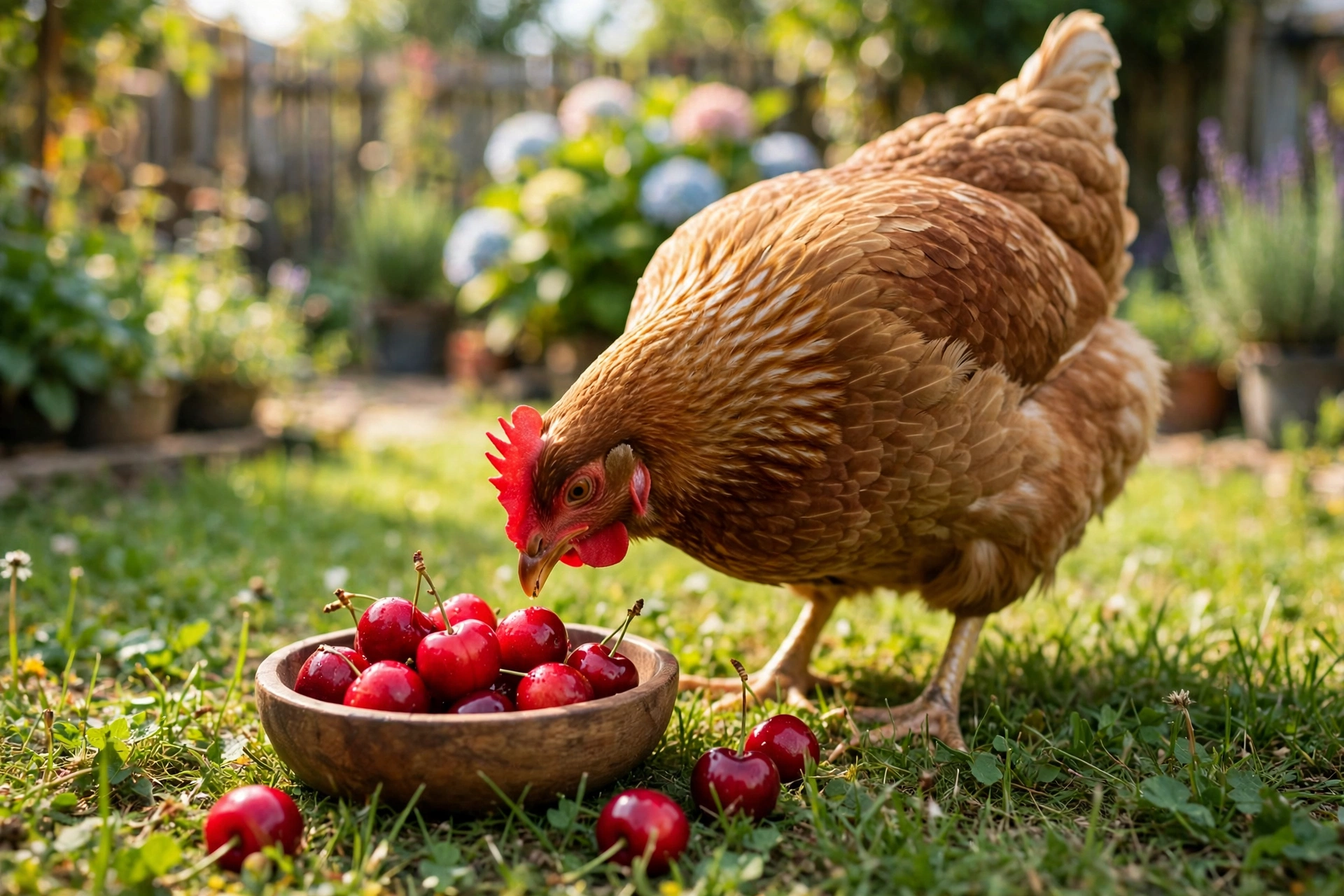
Yes, chickens can eat cherries, and they love them. The flesh is sweet, juicy and safe, and a few cherries make a perfect summer treat. The rule is simple and it is not negotiable. Every pit comes out first. Cherry pits contain cyanide compounds, and a chicken gizzard can crush them, so a pit that is swallowed whole is a real risk, not a small one. Halve every cherry, pull every pit, and the flesh is safe.
Our own food checker agrees. It lists cherries as Safe with the note “Pits removed first”, and cherry pits as Unsafe with the note “Contain cyanide compounds”. This guide covers the difference between sweet and sour cherries, the pit-out protocol that keeps the treat safe, how many cherries a hen should get, what to do about cherry leaves and wilted leaves, and whether baby chicks can have cherries at all.
Table of Contents
Verdict. Cherries are Safe, pits removed first. Cherry pits are Unsafe, they contain cyanide compounds.
Prep. Halve every cherry and pull every pit before it reaches the flock.
Amount. A few cherries per bird, as a treat inside the 10 percent treat rule.
Never. Whole cherries with pits, cherry pits, or wilted cherry leaves.
Chicks. Wait until chicks are at least 8 weeks old, and offer only tiny pieces of flesh.
Watch out. Ground cherries are safe only when ripe, and chokecherry leaves and pits are unsafe.
Can Chickens Eat Cherries
Chickens can eat cherries, and the answer is the same for the cherries you buy at the shop and the ones you pick from a garden tree. The flesh is safe. It is mostly water and natural sugars, with a little vitamin C and potassium, and hens go for it eagerly. The danger is never the flesh. It is the pit in the middle, and the leaves on the tree, and those two dangers are what the rest of this guide is about.
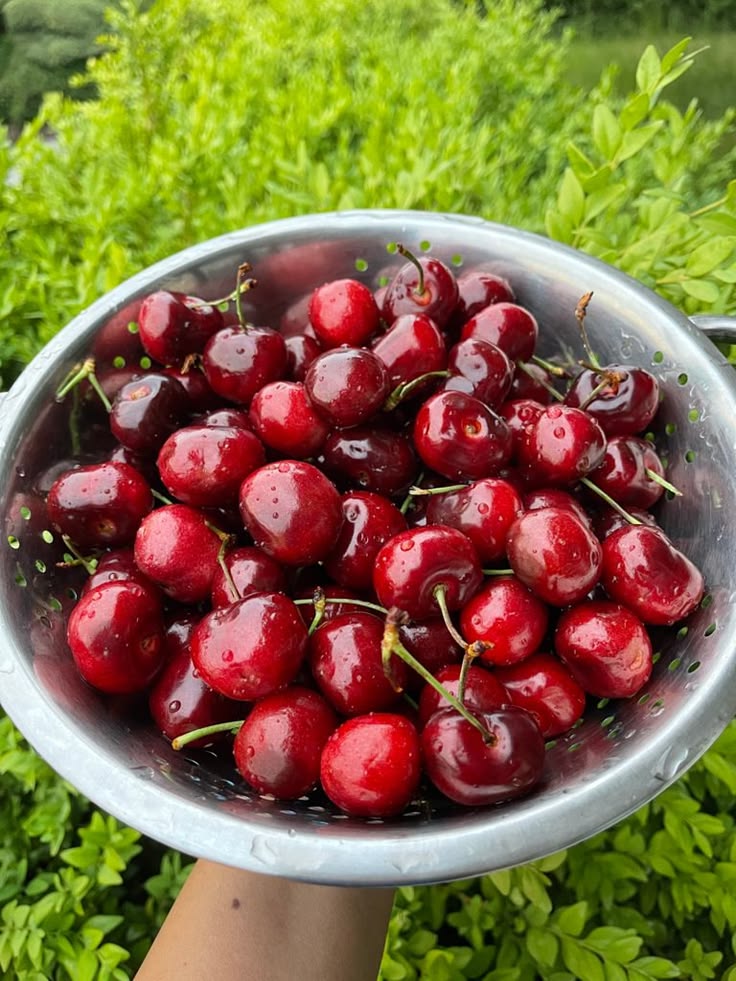
The pit rule is the same one that applies to every stone fruit on this site. Our apricots guide covers it in full, and the rule is simple. The flesh is food, the pit is not. A cherry pit contains amygdalin, a compound that releases cyanide when it is crushed or digested, and a chicken gizzard is built to crush hard things. A single pit is unlikely to kill a healthy adult hen, but pits add up, and a bird that eats several whole cherries has swallowed several pits. There is no reason to take the risk when removing the pit takes seconds.
Fresh cherries are the best choice. Frozen cherries are fine too once they are thawed, and they make a good cooling treat on a hot day. Dried cherries are best avoided, or offered only in very small amounts, because the sugar is concentrated and they often contain added sugar or preservatives. Cherry juice, cherry pie filling and anything with added sugar or alcohol is not chicken food. Keep it simple. Fresh flesh, pits out, a few per bird.
Sweet vs Sour Cherries
Sweet cherries and sour cherries are both safe for chickens once the pits are out, and the difference between them is mostly about taste and sugar. Sweet cherries, the dark red Bing and Rainier types you eat fresh, are higher in sugar. Sour cherries, the bright red Morello and Montmorency types usually grown for cooking, are sharper and lower in sugar. Hens will eat both happily, and neither one is better or worse for them in small amounts.
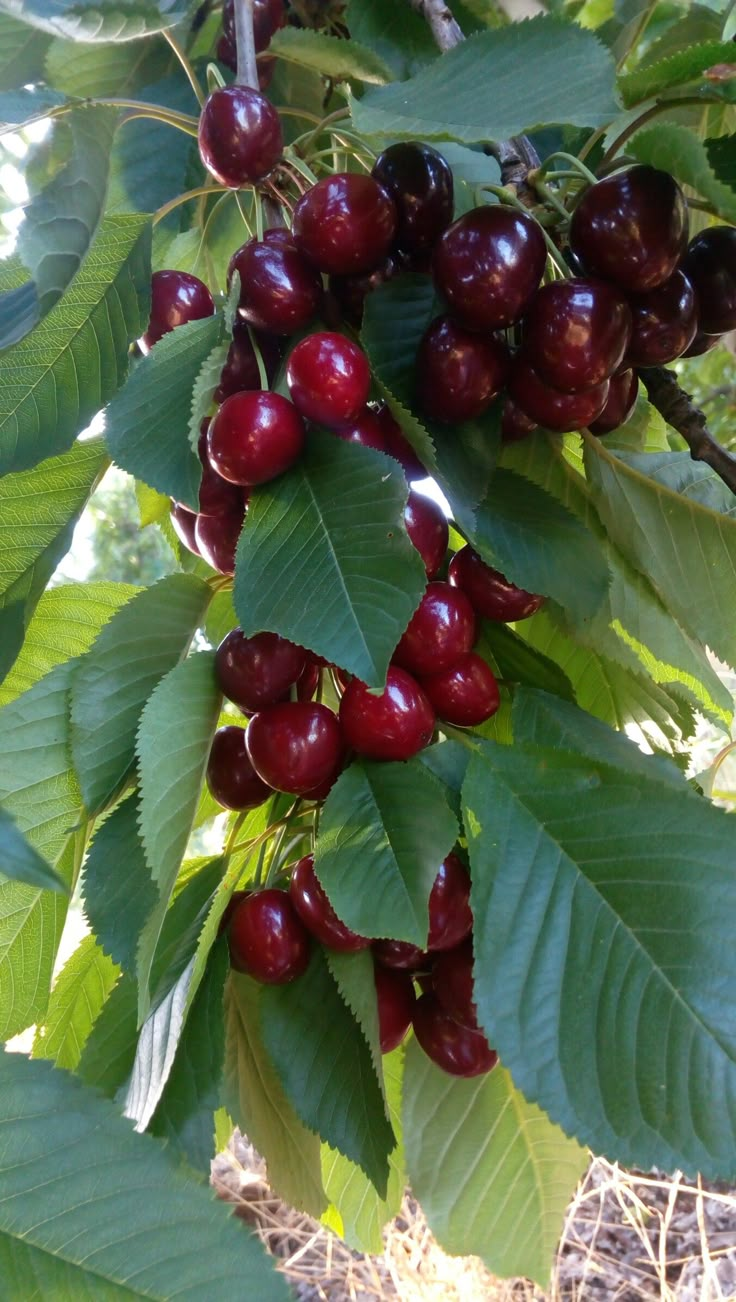
The practical difference is the pit. Sour cherries are smaller, and their pits are smaller too, which makes them fiddly to remove. That is not a reason to skip the step. A small pit carries the same compounds as a big one. If you are pitting a bowl of sour cherries for cooking, the offcuts are not worth the effort for the flock. Offer a few pitted sweet cherries instead, and keep the sour ones for your own cooking.
Colour is not a safety signal. Dark red, bright red and yellow Rainier cherries are all the same food once the pit is out. The only cherry colour that matters is unripe and green, and unripe cherries are best left on the tree. They are hard, sour and hard to digest, and there is no reason to offer them when ripe fruit is so easy to find in season.
How to Prepare Cherries
Preparing cherries for chickens takes about a minute, and the steps are worth doing properly every time. Wash the cherries first, because shop bought fruit can carry spray residues and garden fruit can carry dust and bird droppings. Then halve each cherry with a small knife and pull the pit out with your fingers or the tip of the knife. A cherry pitter does the same job faster if you have a lot of fruit, and it is worth using one if you are preparing a whole bowl.
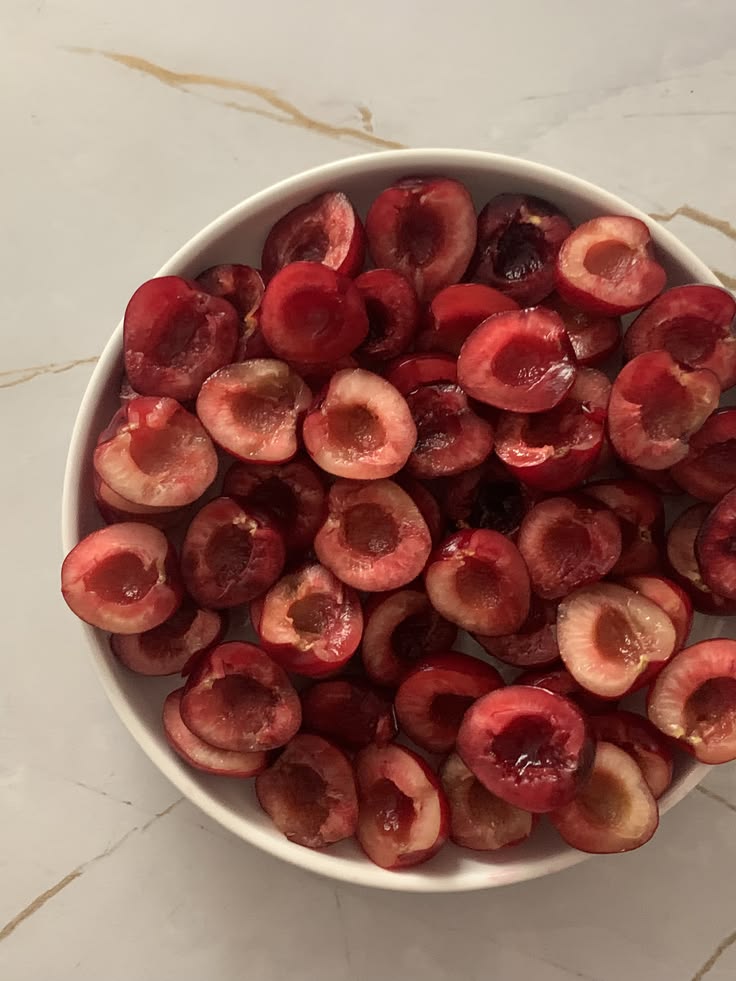
Offer the halved flesh in a shallow dish or scattered on clean ground, not in a deep bowl where the pieces sink under each other. A few pieces per bird is enough. Watch the first time you offer them, because some hens will swallow a half cherry whole, and a half cherry with no pit in it is perfectly safe to swallow. The danger is only the pit, and once the pits are out there is nothing left to worry about.
Do not offer cherries still on the stem in a bunch, because hens will pull at the stems and can swallow a pit that is still attached to a piece of flesh. Pull the fruit off the stems, halve it, remove the pits, and then offer it. The same goes for cherries you pick yourself. Check each one as you halve it, because a cherry that looks fine on the outside can hide a split pit or a damaged stone.
How Many Cherries Can a Chicken Eat
A few cherries per bird is the right amount, and the 10 percent treat rule is the guide. Treats of all kinds, fruit included, should stay inside a tenth of the daily diet, and the main feed should always be a proper layer or grower ration. For a standard laying hen, three or four halved cherries a couple of times a week is plenty. More than that is not dangerous in itself, but it fills the bird up with sugar and water and leaves less room for the feed that actually keeps her laying and healthy. Flaxseed is another treat that fits the same rule, at about a tablespoon per bird per day.
Sugar is the reason for the limit, not poison. Cherries are sweet, and a hen that eats a lot of fruit in one sitting can end up with loose droppings for a day. That is not an emergency, but it is a sign the treat was too big. Cut back, offer less next time, and make sure fresh water is available. Hens that are moulting or recovering from illness should get even less, because their digestion is already under strain.
Cherries are a seasonal treat, and that is part of their charm. Fresh cherries are at their best for a few weeks in summer, and the flock can enjoy them then. Out of season, frozen cherries are the better choice than dried ones, because they are just the fruit with nothing added. Thaw them first, halve them if they are whole, and check for pits, because frozen cherries are often sold with the pits still in.
Can Chickens Eat Cherry Pits
No, chickens must never eat cherry pits. The pits contain cyanide compounds, and our food checker lists them as Unsafe for exactly that reason. The compound in the pit is amygdalin, and when a pit is crushed in the gizzard or broken down during digestion, it releases hydrogen cyanide. A small amount may cause no obvious harm, but there is no safe dose to aim for, and no reason to test it. The pits go in the bin, not in the run.
The same warning applies to the pits of every stone fruit. Apricots, plums, peaches and nectarines all carry the same compounds in their pits, and the rule is the same for all of them. Our apricots guide and our plums guide both cover it, and the cherry rule is no different. Flesh yes, pit no, every time.
If a hen does swallow a whole cherry with the pit still in, do not panic, but do act. One pit is unlikely to cause serious harm to a healthy adult bird, because many pits pass through whole without being crushed. Watch her for the next few hours. If she goes quiet, stops eating, or shows signs of distress, call a vet and tell them exactly what happened. Do not try to make her vomit, and do not give her anything to neutralise the pit. The best thing you can do is remove the source, make sure she has fresh water, and watch her closely.
Cherry Leaves Warning
Cherry leaves are the second danger, and they are easy to overlook, because the fruit gets all the attention. Fresh green cherry leaves are not a major risk in small amounts, and hens that peck at a leaf on the tree are unlikely to come to harm. Wilted cherry leaves are a different matter. When cherry leaves wilt, whether from pruning, storm damage or drought, the cyanide compounds in them become more concentrated, and wilted leaves are genuinely dangerous to chickens and to other livestock.
If you prune a cherry tree, or if a branch comes down in a storm, clear the leaves and branches out of the run at once. Do not leave prunings where the flock can reach them, and do not use cherry prunings as bedding or as a windbreak in the run. The same warning applies to any tree in the cherry family, including wild cherry and ornamental cherry trees, which are common in gardens and parks.
Flocks that free range near cherry trees need a little extra care in late summer, when leaves start to fall. Fallen leaves that are still green are low risk, but leaves that have wilted and dried on the ground after pruning or storm damage should be raked up. It is a small job, and it removes a risk that is easy to miss.
Can Baby Chicks Eat Cherries
Baby chicks can eat cherries, but not until they are old enough, and not in the same way as an adult hen. Wait until chicks are at least 8 weeks old before offering any fruit, including cherries. Before that age their digestion is still developing, and they need chick starter crumb as their main feed, with grit available if they get anything else. A chick that fills up on fruit instead of starter crumb will not grow properly.
When chicks are old enough, offer only tiny pieces of cherry flesh, with the pits removed, and only one or two pieces per chick. Cut the flesh small, because a chick can choke on a piece that is too big, and watch them eat it. Do not offer whole cherries to chicks, even with the pits removed, because the size alone is a choking risk. And do not offer cherry pits, leaves or stems to chicks at any age.
Ground Cherries and Chokecherries
Ground cherries are a different fruit from ordinary cherries, and they have their own rule. Our checker lists ground cherries as Safe, but only when ripe, with the note that unripe fruit is a nightshade risk. Ground cherries grow inside a papery husk, and they are ready when they fall from the plant and turn golden. Unripe green ground cherries belong to the nightshade family, and they should never be offered. If you grow them, wait for the fruit to drop, check that it is golden and soft, and offer it without the husk.
Chokecherries are the wild cousin, and the rule for them is simple. Do not offer them. Our checker lists chokecherry leaves and pits as Unsafe, with cyanide compounds as the reason, and the fruit itself is small, astringent and mostly pit. Wild chokecherry trees are common in hedgerows, and flocks that free range near them should be watched, especially in late summer when the fruit ripens and the birds may peck at fallen fruit. The flesh is not worth the risk when ordinary cherries are so easy to buy.
Cherries in Summer
Cherries ripen in the hottest weeks of the year, and that timing makes them a useful summer treat. Hens eat less feed in hot weather and drink far more water, and a few juicy cherries help with both. The flesh is mostly water, so it adds hydration along with the treat, and chilled cherries straight from the fridge are a simple way to cool the flock down on a hot afternoon.
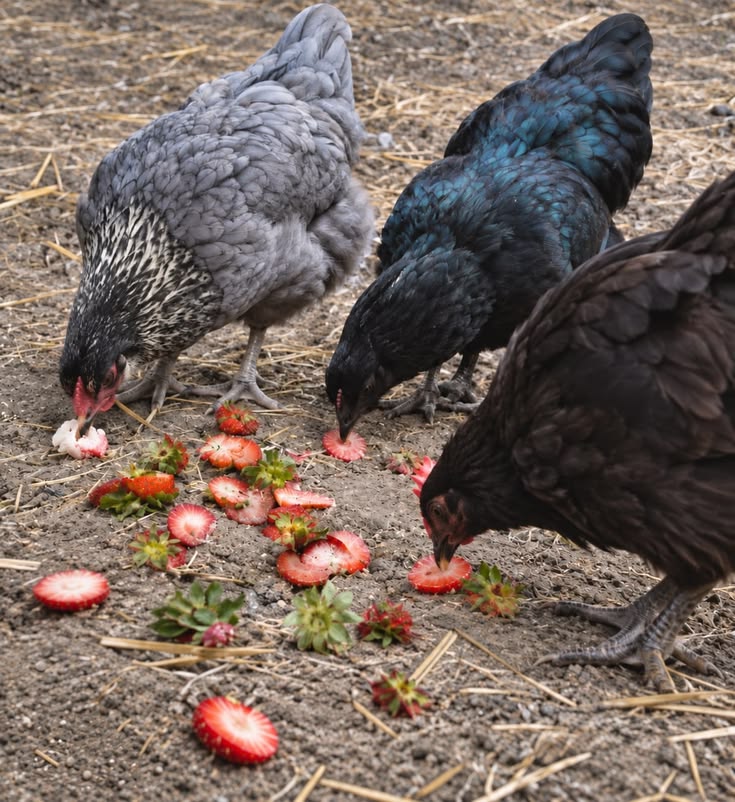
Frozen cherries work even better for this. Freeze pitted halved cherries in a small tub of water, and the result is a fruit ice block the hens can peck at for an hour. It keeps them busy, keeps them cool, and gives them a little fruit at the same time. Make sure the block is shallow enough that the birds can reach the fruit as it melts, and put it in the shade so it lasts longer.
Summer is also the season when cherry trees drop fruit. If you have a tree in or near the run, pick up fallen cherries every day. Fallen fruit ferments fast in the heat, and fermented fruit can upset a hen’s digestion. Worse, a fallen cherry that splits open can hide its pit in the grass, and a hen pecking at the ground can swallow it whole. A daily tidy under the tree takes a minute and removes the risk. The same goes for windfalls after a storm. Clear them before the flock gets to them.
Frequently Asked Questions
Q: Can chickens eat cherries every day?
A: They can, but there is no need to. A few cherries a couple of times a week is plenty, and daily fruit is more sugar than a laying hen needs. Keep treats inside the 10 percent rule and let the main feed do the work. Cherries are a seasonal treat, and the flock will enjoy them more when they are not an everyday food.
Q: Do cherry pits really poison chickens?
A: Yes, the pits contain cyanide compounds, and our checker lists them as Unsafe. A single pit swallowed whole will often pass through without harm, but a pit crushed in the gizzard releases hydrogen cyanide, and several pits add up to a real risk. There is no safe number of pits to aim for, so every pit comes out before the fruit reaches the flock.
Q: Can chickens eat frozen cherries?
A: Yes, frozen cherries are fine once they are thawed. They are just the fruit with nothing added, and they make a good cooling treat on a hot day. Check for pits before you offer them, because frozen cherries are often sold with the pits still in, and halve them if they are whole.
Q: Can chickens eat cherry stems?
A: No, do not offer cherry stems. The stems are tough, they have no food value, and they can carry the same compounds as the leaves in small amounts. Pull the fruit off the stems, halve it, remove the pits, and offer the flesh on its own.
Q: What should I do if my hen ate a whole cherry with the pit?
A: Do not panic. One pit is unlikely to cause serious harm to a healthy adult hen, because many pits pass through whole. Watch her for the next few hours. If she goes quiet, stops eating or drinking, or shows signs of distress, call a vet and tell them exactly what happened. Do not try to make her vomit.

Nusrat
Author, TheChickenPet.com