
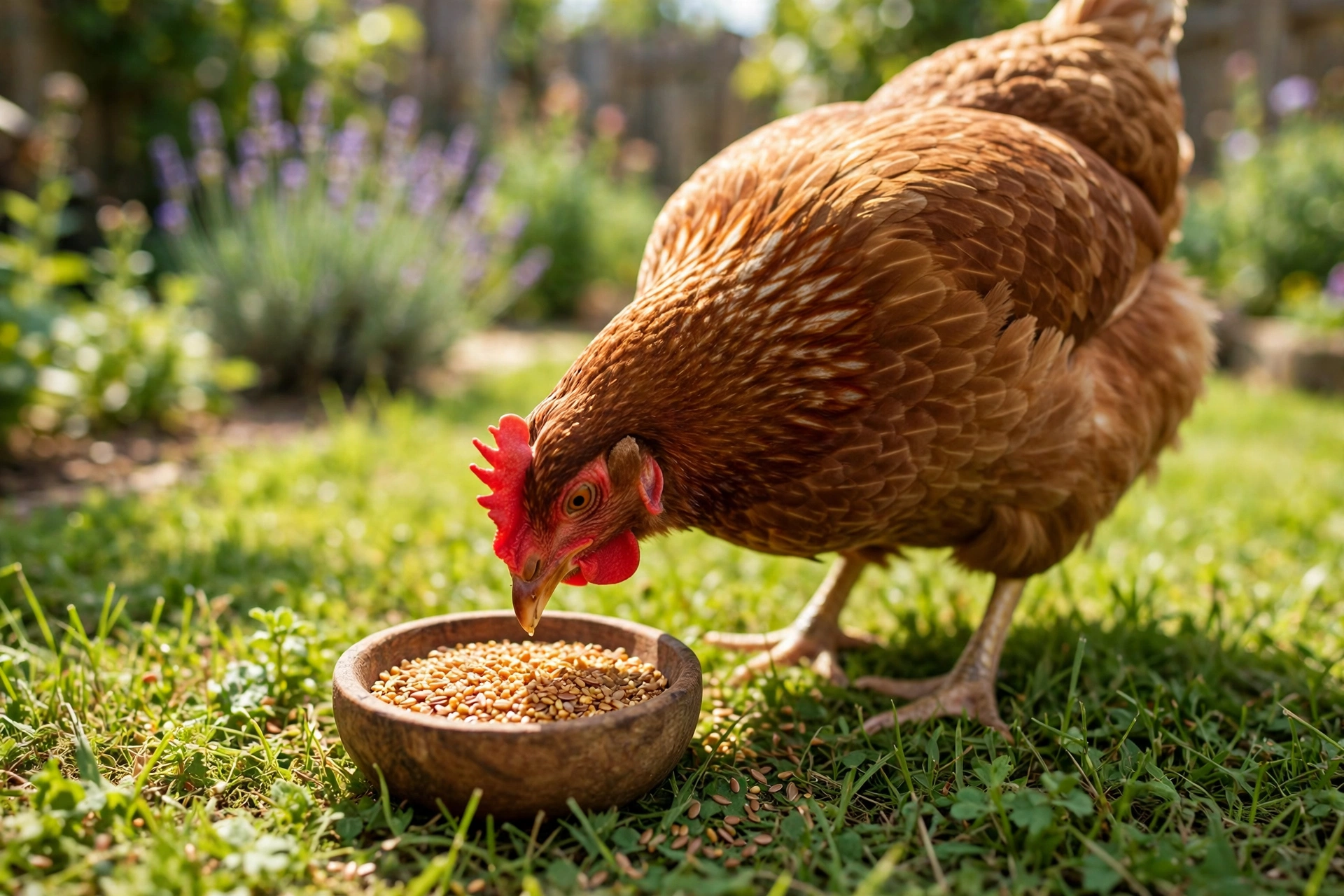
Yes, chickens can eat flaxseed, whole or ground, and it is one of the best seeds you can offer them. Flaxseed is rich in omega-3 fatty acids, the same healthy fats that make eggs more nutritious, and a small daily amount can lift the omega-3 content of the eggs your hens lay. It is also a good source of fibre and plant protein, and hens eat it readily once they get used to it.
Our own food checker lists flaxseed as Safe, with the note “Whole or ground; omega-3 boost”. The one choice that matters is ground or whole, because the two forms are not absorbed the same way, and the amount matters too, because flaxseed is oily and rich. This guide covers the ground or whole question, how much to offer, how to serve it, what it does to egg quality, and how to store it so it does not go rancid.
Table of Contents
Verdict. Flaxseed is Safe, whole or ground, with an omega-3 boost.
Best form. Ground, because the hen absorbs far more of the omega-3 from ground seed.
Amount. About 1 tablespoon per bird per day, inside the 10 percent treat rule.
Never. Large amounts daily, rancid or stale seed, or flaxseed as a replacement for proper feed.
Chicks. Ground flaxseed only, and only once chicks are eating treats, from about 8 weeks.
Storage. Keep it cool, dry and sealed, and use it within a few weeks of grinding.
Can Chickens Eat Flaxseed
Chickens can eat flaxseed, and it is one of the few treats that does more than fill them up. Flaxseed, also called linseed, is a small flat seed with a shiny brown coat, and it is one of the richest plant sources of omega-3 fatty acids. The omega-3 in flaxseed is alpha-linolenic acid, or ALA, and hens convert some of it into the longer chain omega-3s that end up in the yolk. That is why flaxseed is famous among chicken keepers. A spoonful a day in the feed can make the eggs measurably richer in omega-3.
Flaxseed is also a good source of fibre, which supports digestion, and it contains plant protein and lignans, natural compounds that act as antioxidants. It is not a complete feed on its own, and it should never replace a proper layer ration, but as a supplement inside the treat allowance it is one of the best things you can add to the diet. Hens usually take to it quickly, though some birds need a few days to get used to the taste and texture.
There is one honest caveat to mention. Raw flaxseed contains tiny amounts of cyanogenic glycosides, the same family of compounds found in cherry pits and apricot kernels, but in far smaller amounts. At a tablespoon a day the level is far too low to harm a hen, and the seed is listed as Safe by our checker for exactly that reason. The risk only appears if a bird eats very large amounts every day, which is another reason the amount matters. Feed it as a supplement, not as a staple, and the caveat never becomes a problem.
Ground or Whole Flaxseed
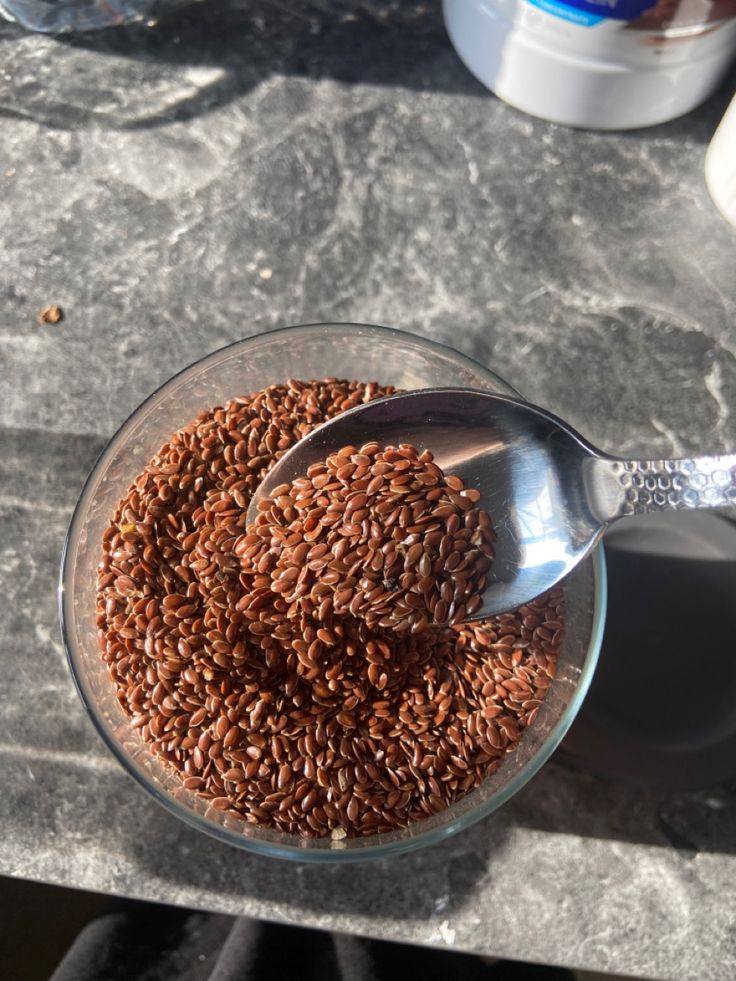
Both forms are safe, but ground flaxseed is the better choice, and the reason is simple. A whole flaxseed has a hard shiny coat, and a chicken’s digestion does not always break that coat open. Many whole seeds pass straight through the bird undigested, and the omega-3 inside them goes out with the droppings. The bird still gets some benefit, because the gizzard grinds some of the seeds, but a lot of the value is wasted.
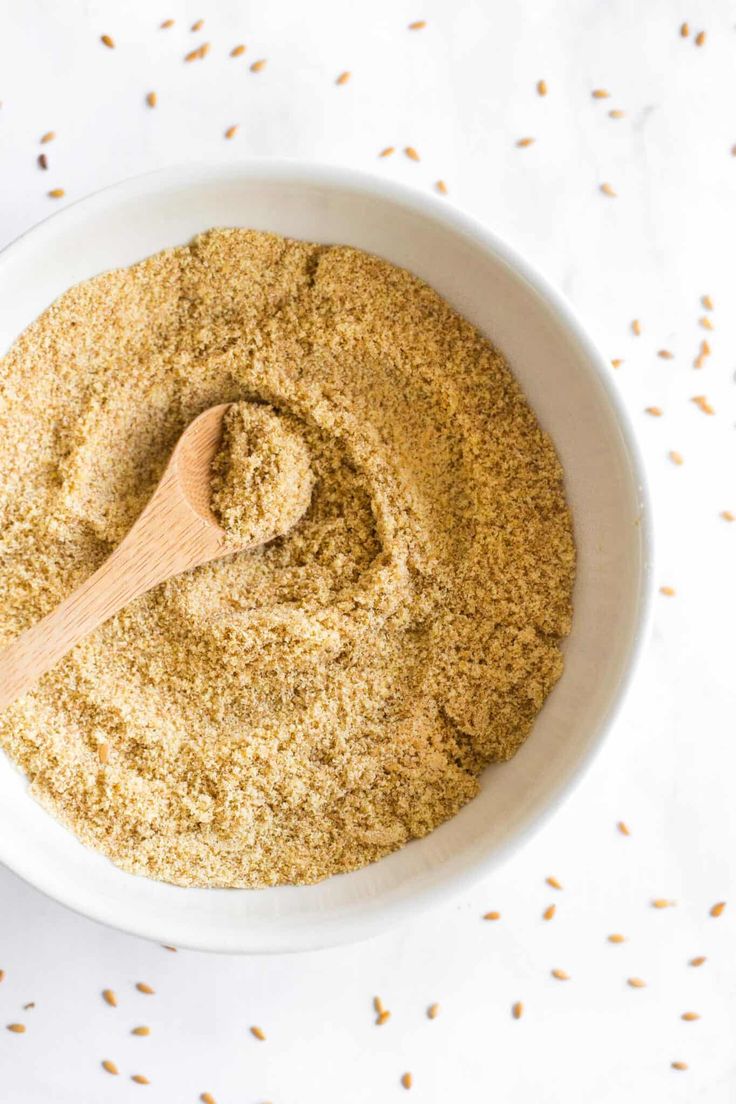
Ground flaxseed, also called flax meal, has the coat already broken, so the oils and nutrients are available straight away. The hen absorbs far more of the omega-3 from ground seed than from whole seed, and the same amount of flaxseed does more work. If you are feeding flaxseed for the omega-3 benefit, ground is the form to use. A coffee grinder or a small spice grinder does the job in seconds, and you can grind a week’s worth at a time.
Whole flaxseed still has a place. It keeps longer than ground seed, because the oil inside is protected by the coat, and it is easier to scatter as a scratch treat. Hens enjoy picking whole seeds off the ground, and it gives them something to forage for. A good routine is to feed ground flaxseed mixed into the daily feed for the omega-3 benefit, and to scatter a small handful of whole seed in the run now and then as a foraging treat. Both forms are safe, and the two together cover both jobs.
Why Flaxseed Is Good for Hens
The main reason to feed flaxseed is omega-3, and the benefit shows up in the eggs. Hens that eat flaxseed regularly lay eggs with higher omega-3 levels in the yolk, and the yolks are often a deeper orange colour. That is not just a pretty colour. Omega-3 enriched eggs are the reason many keepers feed flaxseed at all, and the effect is real and well documented. A tablespoon a day is enough to make a difference, and the change shows up within a week or two.
The fibre in flaxseed helps the digestion too. It supports gut health and keeps droppings normal, and it slows the digestion of the rest of the meal slightly, which helps the bird absorb more from her feed. The protein in flaxseed is useful as well, though it is not a complete protein on its own, so it should never replace the protein in a proper layer ration.
Flaxseed also helps feather condition. The oils in the seed support healthy skin and feathers, and hens that get a little flaxseed often have a glossier coat, especially during moult when feathers are regrowing. It is not a cure for feather problems, and it will not fix picking or parasites, but as part of a good diet it helps the birds look and feel better. If the feathers still look rough, check for lice first, and our guide to how to treat chicken lice and tell them from mites shows what to look for.
How Much Flaxseed Can a Chicken Eat
About 1 tablespoon per bird per day is the right amount, and it fits inside the 10 percent treat rule. A tablespoon is roughly 10 grams, and for a standard laying hen that is a generous supplement without crowding out her proper feed. Some keepers feed a little less, about 2 teaspoons, and that is fine too. The exact amount matters less than the habit. A small amount every day beats a large amount once a week.
More is not better with flaxseed. The seed is oily, and too much oil in the diet can cause loose droppings and, over time, can put strain on the liver. The cyanogenic compounds in raw flaxseed are also a reason to keep the amount modest, though at a tablespoon a day they are far too low to matter. If you are feeding ground flaxseed, a tablespoon is a heaped spoonful. If you are scattering whole seed, a small handful for the whole flock is enough.
The 10 percent rule is the guide for all treats, and flaxseed is no exception. Treats of every kind should stay inside a tenth of the daily diet, and the main feed should always be a proper layer or grower ration. Flaxseed is a supplement, not a staple, and the birds that benefit most are the ones that get it as part of a balanced diet, not instead of one.
How to Serve Flaxseed
The easiest way to serve flaxseed is to mix ground flaxseed into the daily feed. Stir a tablespoon per bird into the feeder in the morning, and the birds will eat it along with their ration without noticing the difference. The seed sticks to the feed slightly, which helps the birds eat it all rather than picking around it. If you feed a wet mash, ground flaxseed mixes in even better, and the birds will eat the whole lot.
Whole flaxseed works best scattered on the ground as a scratch treat. Scatter a small handful in the run or in a patch of dry leaves, and the hens will spend a happy half hour scratching and pecking for it. That foraging time is good for the birds, and it keeps them busy and out of trouble. Do not scatter ground flaxseed on the ground, because it blows away and gets lost in the dirt.
Flaxseed also mixes well into other treats. Stir ground flaxseed into scrambled egg, plain yoghurt or a soft mash, and the birds will eat it eagerly. It also works in a homemade flock block or treat ball, though those should stay occasional. Whatever you mix it into, keep the amount at a tablespoon per bird, and do not add it to every single meal. Once a day is enough.
Flaxseed and Egg Quality
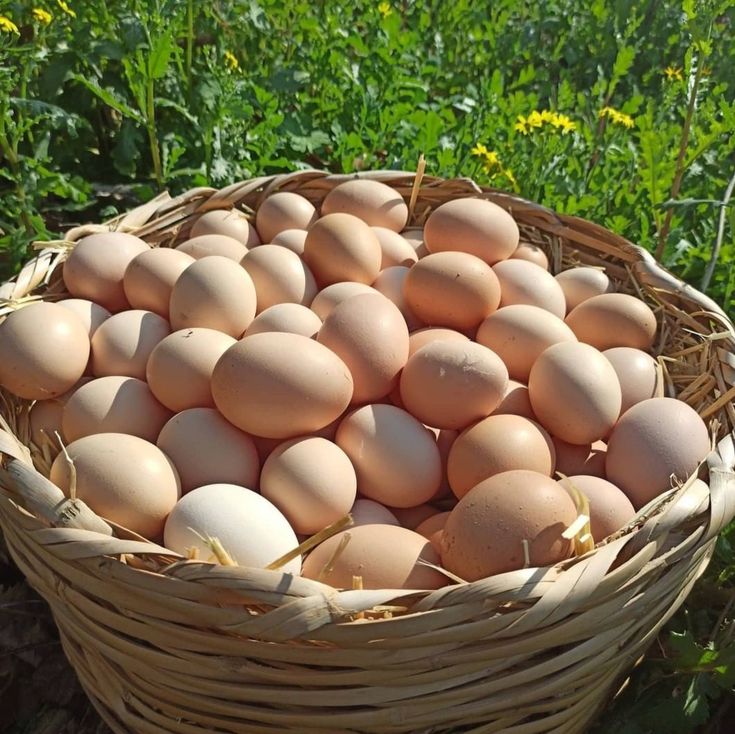
Flaxseed is the best known way to raise the omega-3 content of eggs, and the effect is easy to see. Hens that eat a tablespoon of ground flaxseed a day lay eggs with measurably higher omega-3 levels in the yolk, and the yolks are often a deeper, richer orange. The change is not instant. It takes about a week for the omega-3 to build up in the yolk, and it fades again within a week or two if you stop feeding it, so it needs to be a daily habit to keep the benefit.
The flavour of the eggs does not change at the right amount. Some keepers worry that flaxseed will make the eggs taste fishy, and that can happen if the birds eat far too much, but at a tablespoon a day there is no flavour change at all. The eggs taste the same, they just carry more omega-3. If you ever notice a fishy taste, cut the amount in half and the problem will go away.
Shell quality is not affected by flaxseed, and it is not a substitute for calcium. Hens still need oyster shell or another calcium source for strong shells, and flaxseed does nothing for that. Think of flaxseed as a yolk supplement, not a shell supplement, and keep the oyster shell dish full alongside it.
Can Baby Chicks Eat Flaxseed
Baby chicks can eat flaxseed, but only in ground form, and only once they are old enough for treats. Wait until chicks are at least 8 weeks old before offering any flaxseed. Before that age they need chick starter crumb as their main feed, and their digestion is still developing. A chick that fills up on seeds instead of starter crumb will not grow properly.
When chicks are old enough, offer only a tiny amount of ground flaxseed, mixed into their starter crumb, and no more than half a teaspoon per chick. Whole flaxseed is too big and too hard for young chicks, and they will struggle to digest it. Ground seed is the only form for chicks, and even then it should be an occasional supplement, not a daily one, until the birds are fully grown.
Flaxseed Storage and Rancidity
Flaxseed goes rancid, and that is the one storage problem to take seriously. The same oils that make flaxseed valuable are also what make it spoil. Whole flaxseed keeps well, because the hard coat protects the oil inside, and a sealed bag in a cool dry place will keep for months. Ground flaxseed is different. Once the seed is ground, the oil is exposed to air, and it starts to go off within a few weeks.
The rule is simple. Buy whole flaxseed, and grind only what you need for a week or two at a time. Keep the ground seed in a sealed jar in a cool place, or in the fridge if you have room, and use it up within two weeks. If ground flaxseed smells bitter, paint-like or stale, throw it away. Rancid flaxseed is not just useless, it can upset the birds’ digestion, and there is no reason to risk it when fresh seed is cheap.
Store whole flaxseed in a dry sealed container, away from heat and damp, and check the bag before you buy it. The seed should smell mild and nutty, not sharp or stale. Buy in amounts you will use within a few months, and keep it out of the coop, where damp and mice can get at it. A kitchen cupboard or a sealed feed bin is the right place.
Frequently Asked Questions
Q: Is flaxseed better ground or whole for chickens?
A: Ground is better for the omega-3 benefit, because the hen absorbs far more from ground seed. Whole seed often passes through undigested, so much of the value is wasted. Buy whole seed for storage, grind a week or two at a time, and feed the ground seed mixed into the daily feed.
Q: How much flaxseed should I give my chickens?
A: About 1 tablespoon per bird per day, mixed into the feed. That is roughly 10 grams, and it fits inside the 10 percent treat rule. More is not better, because the seed is oily and too much can cause loose droppings. A small amount every day beats a large amount once a week.
Q: Will flaxseed make my chickens’ eggs taste fishy?
A: Not at the right amount. At a tablespoon a day there is no flavour change at all. A fishy taste only appears if the birds eat far too much flaxseed, so if you ever notice it, cut the amount in half and the problem will go away.
Q: Can chickens eat flaxseed every day?
A: Yes, a tablespoon a day is fine as a daily supplement, and the omega-3 benefit needs a daily habit to stay in the yolk. Just keep it inside the treat allowance, keep the main feed as a proper layer ration, and grind fresh seed every week or two so it never goes rancid.
Q: Is linseed the same as flaxseed?
A: Yes, linseed and flaxseed are the same seed, from the same plant. Linseed is the older name, and flaxseed is the name used for the food grade seed. Both are safe for chickens in the same amounts, and the same ground or whole advice applies.

Nusrat
Author, TheChickenPet.com