
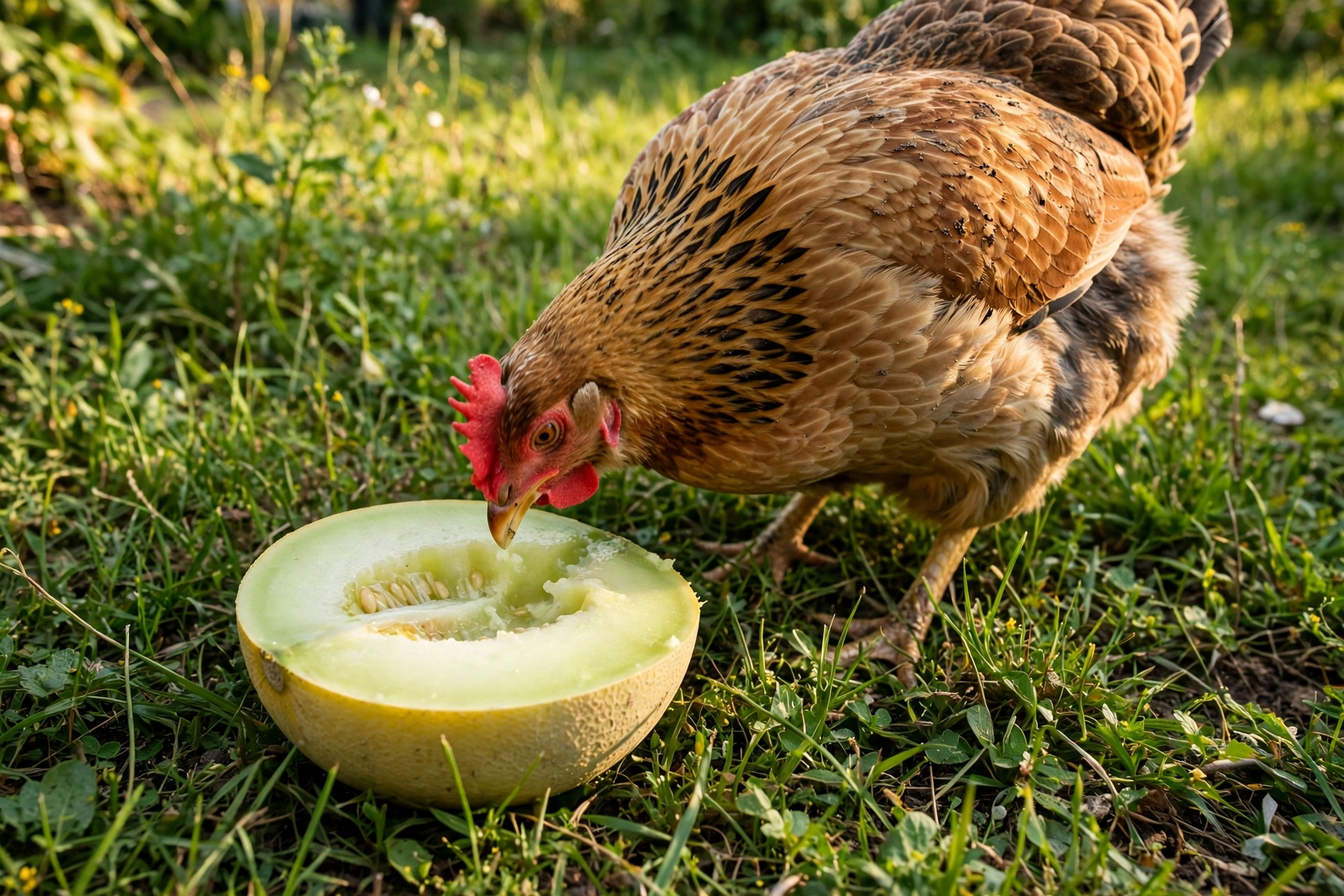
Yes, chickens can eat honeydew melon, and on a hot day it is one of the best treats you can offer them. Honeydew is sweet, soft and mostly water, so hens love the taste and get a little extra hydration with every peck. It is a simple summer fruit with no fussy preparation, just wash it, cut it open and let the flock at it.
This guide treats honeydew as its own melon, not as a copy of cantaloupe. You will learn what the food checker says about it, which parts are fine and which part needs care, how much to offer each hen, how it helps in summer heat, and when chicks can first try it. Read the part about the rind carefully, because the checker has no entry for honeydew rind, and this article does not invent one.
Table of Contents
- The Short Answer
- Honeydew Is Its Own Melon, Not Just Another Cantaloupe
- What the Food Checker Says About Honeydew
- Which Parts of a Honeydew Can Chickens Eat
- How Much Honeydew and How Often
- Honeydew Melon for Chickens in Summer
- How to Serve Honeydew Safely
- Can Chicks Eat Honeydew Melon
- When Not to Feed Honeydew
- Frequently Asked Questions
Quick Facts
At a Glance Honeydew melon is Safe for chickens. The flesh and the seeds are fine, and a good serving is 1 to 2 tablespoons of flesh per hen, 2 to 3 times a week.
Summer Help Honeydew is mostly water, so it helps hens stay hydrated on hot days. It never replaces fresh drinking water, it only adds to it.
Good to Know The checker has no entry for honeydew rind. Use the rind only as a boredom buster, let the hens peck the flesh off it, then remove it. Chicks can try honeydew from 12 to 16 weeks. Wash the skin before serving and never feed mouldy or fermenting fruit.
The Short Answer
Can chickens eat honeydew melon? Yes, they can, and it is a safe treat when it is served fresh and in small amounts. The food checker lists honeydew melon as Safe, with the note that flesh and seeds are fine, and that verdict is the basis for everything in this article.
Is honeydew safe for chickens in general? Yes, for healthy adult hens it is one of the gentlest fruits you can offer. The flesh is soft enough for hens to peck apart without any cooking, the seeds are small and soft, and the high water content suits hot weather. It is a treat, not a feed, so it sits alongside the main ration rather than replacing any of it. A hen that fills up on melon and skips her layer feed will miss the protein and calcium she needs for eggs and feathers, so keep the portion small and the main feed always available.
Honeydew also earns its place because hens genuinely enjoy it. Put a halved melon in the run and the flock will gather round it, pecking the flesh down to the rind and squabbling happily over the best spots. It is food and entertainment in one, which is a rare combination, and it costs nothing more than a melon you may already have in the kitchen.
Honeydew Is Its Own Melon, Not Just Another Cantaloupe
Can chickens eat melon in general? Yes, several melons are fine for chickens, but honeydew and cantaloupe are not the same fruit, and it is worth knowing the difference before you serve either one. Honeydew has a smooth, pale, creamy green skin and pale green flesh that is mild, sweet and very juicy. Cantaloupe has a rough netted skin and orange flesh with a stronger, muskier flavour. Hens will eat both, but they are different fruits with different flesh, different seeds and different skins, so a verdict for one is never a verdict for the other.
The practical differences matter at serving time. Honeydew flesh is firmer than a ripe cantaloupe and holds together better when you cut it into chunks, so it scatters less in the run. Its seeds sit in a neat hollow in the centre and are small, flat and soft, and the checker says they are fine for chickens to eat. Honeydew skin is smooth and hard, and hens will not eat it, which is why the rind is handled separately later in this guide.
If you already feed cantaloupe, honeydew is an easy addition to the same summer routine, just served on different days so the flock gets variety rather than a double helping of melon. Our article on can chickens eat cantaloupe covers the other melon in full, and this article covers honeydew only, so the two guides sit side by side without repeating each other.
What the Food Checker Says About Honeydew
The food checker on this site lists honeydew melon as Safe, with the note “Flesh and seeds fine”. That entry was checked in both the checker data file and the food checker CSV, and both agree. It is the only checker basis this article relies on, and the publishing run will read the live checker first, so if the live checker ever says something different, the live checker wins.
What the entry means in plain words is simple. The flesh of a honeydew melon is safe for chickens, and the seeds are safe too. There is no warning attached to either part, no preparation step the checker demands, and no limit written into the entry itself. The limits in this article, the serving size and the weekly frequency, come from the general treat rule rather than from the checker, because treats of any kind should stay under about 10 percent of the diet.
One honest gap matters here, and this article states it plainly rather than papering over it. The checker has no entry for honeydew rind. There is no honeydew rind verdict to quote, so this article claims none. The rind section below is written in the article’s own words only, based on how hens actually behave with a melon half, and it does not borrow a verdict from any other fruit. A rind entry for a different melon is not a verdict for honeydew rind, and it is not presented as one anywhere in this guide.
Which Parts of a Honeydew Can Chickens Eat
A honeydew melon has four parts a keeper deals with, the flesh, the seeds, the rind and the skin, and each one is handled differently.
The flesh is the main part, and it is safe. Cut it into small chunks or offer a thick slice, and hens will peck it apart quickly. The flesh is soft, sweet and full of water, so it suits hens of all ages from the chick stage onwards, once they are old enough for treats. There is nothing to remove from the flesh itself, no pips to pick out and no skin to peel off before serving, which makes it one of the easiest fruits to prepare.
The seeds are fine too, and the checker says so directly. Honeydew seeds are small, flat and soft, quite unlike the hard pits of stone fruit, so hens can eat them without any risk of a blocked crop or a harmful kernel inside. You can scoop the seeds out if you prefer a tidier serving, but there is no need to. Hens will eat the seeds along with the flesh when they peck at the centre of a halved melon, and that is perfectly fine. Never confuse melon seeds with the pits of cherries, peaches or plums, which are genuinely dangerous, because melon seeds are a completely different thing.
The rind is the part that needs care, and the reason is the gap in the checker noted above. Can chickens eat honeydew rind? There is no checker verdict for it, so this article does not call the rind safe or unsafe. What it does say, in the article’s own words, is that the rind works well as a boredom buster. Put a halved melon flesh side up in the run and the hens will peck the flesh off it, down to the rind, and that keeps a flock busy and happy for a good while. The rind itself is tough and fibrous, hens do not really eat it, and they will leave the hollowed out shell behind once the flesh is gone. Remove the rind after the hens have finished with it, the same day, so it does not sit in the run attracting flies or going soft in the heat. Treat the rind as a serving dish the hens empty, not as a food in its own right.
The skin is the smooth outer surface of the melon, and it is the same as the rind for practical purposes, since the skin is the outside of the rind. Hens will not eat it. What matters about the skin is washing it before you cut the melon open, because a knife drags whatever sits on the skin through the flesh. Wash the whole melon under running water and give it a quick rub before cutting, even if you bought it clean and it looks spotless.

How Much Honeydew and How Often
A good serving of honeydew melon is 1 to 2 tablespoons of flesh per hen, offered 2 to 3 times a week. That is a small handful of chunks per bird, or one halved melon shared between a flock of six to eight hens, with each bird getting her share as the flock pecks at it together. The amount looks small next to a whole melon, and that is the point, because a whole melon is a lot of fruit for a small flock, and the treat rule is what keeps the diet balanced.
Treats of every kind, fruit included, should stay under about 10 percent of what a hen eats in a day. Her main feed is a balanced layer ration, and it carries the protein, calcium and vitamins she needs for eggs, feathers and health. Fruit gives sugar and water, which are welcome in small amounts and unhelpful in large ones. A hen that fills up on melon will eat less layer feed, and over time that shows up as thinner shells, fewer eggs and duller feathers. The full treat rule is explained in our feeding pillar, what can chickens eat, which is the best place to check any new treat against the same standard.
Frequency matters as much as portion size. Two or three melon days a week in summer is plenty, and one day a week is fine in cooler months when honeydew is out of season and expensive. Daily melon is too much, not because honeydew is harmful, but because a daily sweet treat crowds out the feed that does the real work. A good habit is to serve melon on the hottest days of the week, when the water content earns its keep, and to skip it on ordinary days when the flock is happy with greens and grain.
Watch the droppings after the first serving. A little loose dropping after a watery fruit is normal and settles by the next day, but watery droppings that last more than a day mean the portion was too big or the fruit was served too often, so cut back and let the flock settle. Hens that have never had melon before may be shy of it for a few minutes, pecking cautiously at an unfamiliar colour and texture. Leave it in the run and let the boldest hen try it first, because the rest of the flock will follow her within minutes.
Honeydew Melon for Chickens in Summer
Honeydew melon for chickens in summer is where this fruit truly earns its place. Honeydew is roughly 90 percent water, so every peck gives a hen a little drink along with a little sweetness, and on a hot day that extra water is genuinely useful. Hens lose water fast in heat through panting, and a hen that pants all afternoon needs more water than her drinker alone may tempt her to take. A cool melon half in the run gives her water in a form she actually wants, and the flock will finish it far more eagerly than they will stand at a warm drinker.
Serve melon cold on the hottest days for the best effect. Keep the melon in the fridge, cut it open just before serving, and put the halves in a shaded part of the run rather than in full sun, so the flesh stays cool while the hens work through it. A melon left in blazing sun turns warm and soft within the hour, and warm melon is far less appealing to hens and far quicker to spoil. In a heatwave, a chilled melon half in the morning and a chilled half in the late afternoon is a kind and practical routine.
Honeydew helps with hydration, but it never replaces fresh drinking water. Every hen still needs a clean drinker with cool water available all day, refilled often in summer and placed in the shade. Melon is a supplement to the water routine, not a substitute for it, and a flock that has melon but no fresh water is still a flock in trouble. Our summer guide, how to keep chickens cool in summer, covers the full heat routine, including shade, ventilation and water, and melon fits into that routine as one small part of it.
Frozen melon is another summer trick worth trying. Cut the flesh into chunks, freeze them in a tub of water, and turn the frozen block out into a shallow dish in the run. The hens will peck at the ice to reach the fruit, and the block keeps them busy and cool for an hour or more on a still, hot afternoon. It is a simple boredom buster and a cooling aid in one, and it uses the same fruit and the same serving size, just served cold and slow.
How to Serve Honeydew Safely
Serving honeydew to chickens is simple, and the whole routine takes about five minutes.
Wash the skin before serving. Run the whole melon under cold water and rub the skin with your hands, because soil and spray residue sit on the outer skin, and the knife carries them into the flesh as it cuts. This step matters even for melons that look clean, and it matters most for melons bought from a market stall rather than a sealed pack. Cut the melon on a clean board with a clean knife, and use a board that has not just been used for raw meat.
Cut the melon in half and scoop out the loose seeds if you like, though the seeds are fine to leave in. Then either cut the flesh into chunks of about 1 to 2 tablespoons per hen, or set the halves flesh side up in the run and let the flock peck the flesh off the rind. The halves method is less work and more fun for the hens, and it doubles as a boredom buster on a dull day. The chunks method gives you better control over portions when you have a small flock or one greedy hen that hogs the whole half.
Remove whatever the hens leave behind on the same day. Uneaten flesh left in the run in summer heat turns soft, draws flies and starts to ferment within hours, and a hollowed out rind left overnight does the same. Pick up the leftovers in the evening, check the spot where the melon sat, and rake away any scattered flesh that has fallen into the bedding. A clean run after a treat day keeps flies down and stops the flock pecking at spoiled fruit the next morning.
Never feed mouldy or fermenting fruit. A melon with mould on the flesh, a sour or alcoholic smell, or flesh that has gone slimy and brown belongs in the compost, not in the run. Mould on fruit can carry toxins that harm hens, and fermenting fruit can upset their crops and digestion. The same rule applies to any fruit you serve, and it is worth repeating, because a melon that is past its best for you is past its best for your hens too. If you would not eat it yourself, do not offer it to the flock.
Can Chicks Eat Honeydew Melon
Chicks can eat honeydew melon from 12 to 16 weeks of age, once they are old enough for treats beyond their starter feed. Before that age, chicks should eat only their starter feed, because their tiny bodies need the exact balance of protein and nutrients in it, and treats of any kind can unbalance that diet quickly. A chick under 12 weeks has no business with melon, however tempting it is to share.
When chicks reach 12 to 16 weeks, start with a very small amount, a few tiny cubes of flesh for the whole brood, and watch how they take to it. Cut the pieces small enough for a young beak, about the size of a pea, and serve them in a shallow dish rather than on the ground, so the chicks find them easily and the pieces stay clean. Chicks need chick grit available before they eat any treat, including soft fruit, because grit is what lets their gizzards grind food properly. A dish of chick grit beside the feed from the first weeks takes care of that, and by the time melon arrives, the habit is already in place.
Young birds are often more cautious than adults with new food, so do not be surprised if the chicks ignore the melon at first. Leave the dish with them for half an hour, then remove it, and try again in a few days. Once one chick tastes it, the rest will crowd in, and from then on melon will be a treat they recognise. Keep the chick portions smaller than the adult serving, a teaspoon of flesh per chick is plenty, and keep the frequency to once or twice a week at most while they are still growing.
When Not to Feed Honeydew
Honeydew is safe for healthy hens, but there are days when it should stay in the kitchen.
Never feed honeydew that is mouldy, fermenting or past its best. A melon with mould on the flesh, a sour smell or slimy flesh belongs in the compost. Mould and fermentation can harm a hen’s crop and gut, and no amount of cutting away the bad part makes a mouldy melon safe, because mould spreads further through soft flesh than the eye can see. When in doubt, throw it out.
Do not feed honeydew to a hen with a crop problem, such as sour crop or an impacted crop, until she has recovered. A hen with a slow or blocked crop needs plain feed and water, and sometimes a vet, not sweet fruit that ferments in a crop that is not emptying. Wait until her crop is empty in the morning again and her droppings are normal before treats return to the menu.
Skip melon on days when the flock is already getting other sweet treats, such as watermelon, grapes or corn on the cob, because the treat allowance is shared across everything, not per fruit. One sweet treat a day is enough, and two sweet treats in one day pushes the flock over the 10 percent line without anyone noticing. Spread the treats through the week instead, with melon on one day and greens or mealworms on the next.
Finally, do not use honeydew to tempt a hen that has stopped eating because she is ill. A sick hen that refuses feed needs a vet, not a favourite fruit, and masking a lost appetite with melon only delays the care she needs. If a hen stops eating, isolates herself or has watery droppings for more than a day, get her checked rather than reaching for the fruit bowl.
Frequently Asked Questions
Can chickens eat honeydew melon?
Yes, chickens can eat honeydew melon. The food checker lists honeydew melon as Safe, with the note that flesh and seeds are fine. Serve 1 to 2 tablespoons of flesh per hen, 2 to 3 times a week, as part of a diet that stays under about 10 percent treats. Wash the skin before cutting, and never feed mouldy or fermenting fruit.
Is honeydew safe for chickens?
Yes, honeydew is safe for healthy adult chickens and for chicks from 12 to 16 weeks. The flesh and the small soft seeds are both fine, and the high water content makes it a useful summer treat. It is a treat, not a feed, so the balanced layer ration still comes first, and fresh drinking water is still needed every day.
Can chickens eat honeydew rind?
There is no checker verdict for honeydew rind, because the checker has no entry for it, so this article claims none. In the article’s own words, the rind works as a boredom buster, since hens peck the flesh off it and leave the tough shell behind. Set the halved melon flesh side up in the run, let the hens empty it, and remove the rind the same day.
Can chickens eat melon every day?
Chickens can eat melon as a treat, but not every day. Honeydew and other melons are sweet, and a daily serving crowds out the layer feed that carries the protein and calcium hens need. Two or three melon days a week in summer, and about once a week in cooler months, is a better rhythm. On the other days, offer greens, grains or mealworms instead.
Can chickens eat honeydew seeds?
Yes, honeydew seeds are fine for chickens, and the checker says so directly. The seeds are small, flat and soft, and hens eat them along with the flesh when they peck at the centre of a halved melon. Do not confuse melon seeds with the hard pits of cherries, peaches or plums, which are genuinely dangerous, because melon seeds are a completely different thing.
Keep Reading
What Can Chickens Eat and the treat rule every keeper should know.
Can Chickens Eat Cantaloupe and the other melon in the summer fruit guide.
How to Keep Chickens Cool in Summer and the full heat routine for hot days.

Nusrat
Author, TheChickenPet.com