
A hen is not a quiet pet. She clucks while she scratches, she sings after she lays, she warns the flock when a hawk passes overhead, and she grumbles when another hen takes her favourite dust bath spot. To a new keeper it can all sound like one noisy blur, but a hen has about 24 to 30 distinct calls, and most of them mean something specific.
Learning those calls changes how you keep chickens. You will know when a loud cackle is just the egg song, when a sharp scream means a predator is close, and when a soft trill means a hen is content. You will also learn when a sound is not behaviour at all, but illness. This guide covers the sounds you will actually hear in a backyard run, what each one means, and what to do when you hear it.

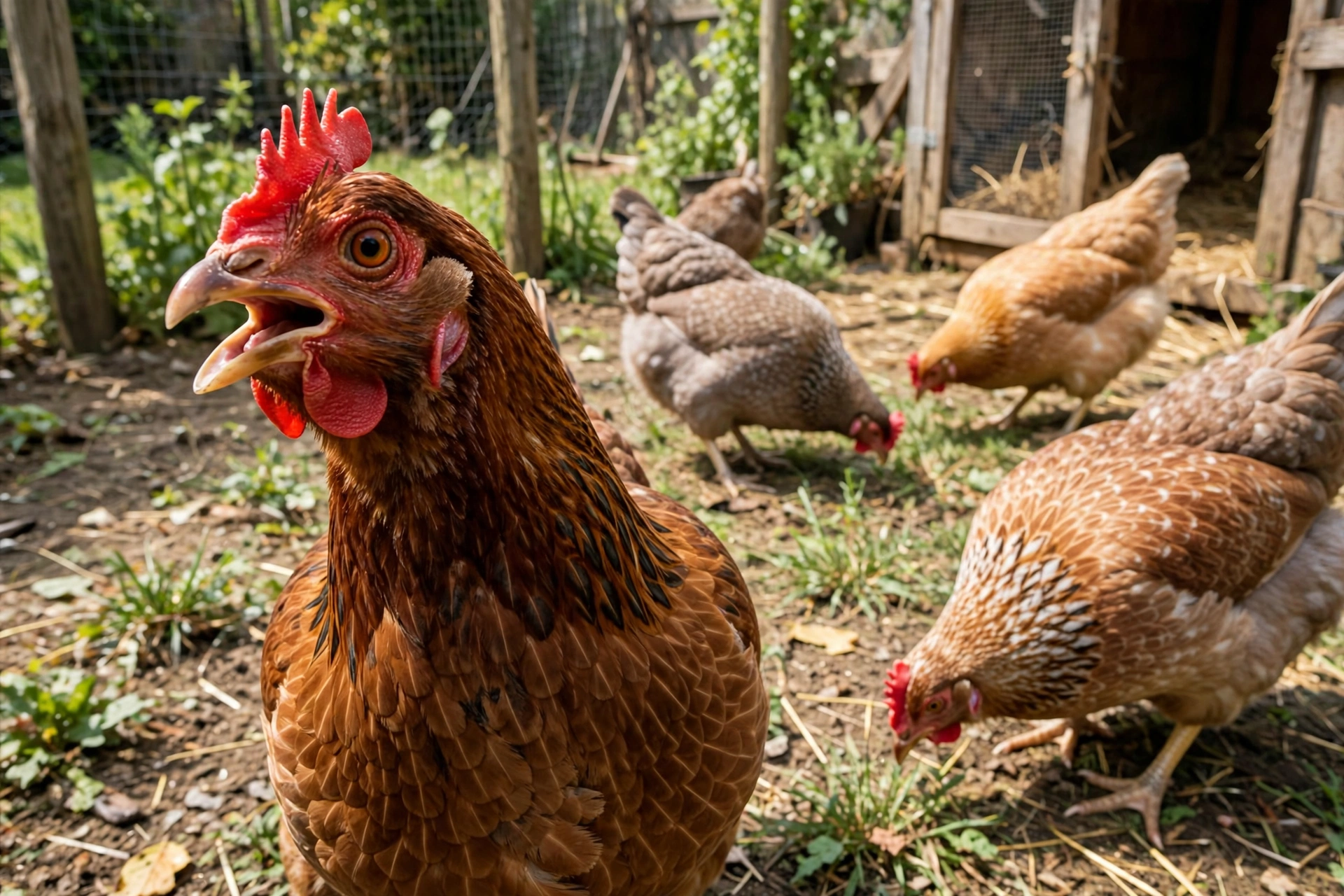
A brown hen at the doorway of her nest box. Photo by Shirley Weston via Pinterest.
Table of Contents
- How Many Sounds Does a Chicken Make
- The Contented Cluck and the Sounds of a Happy Hen
- What Does a Chicken Egg Song Sound Like
- The Food Call and Tidbitting
- The Chicken Alarm Call for a Ground Predator
- Why Is My Chicken Screaming
- The Broody Growl and Other Warning Sounds
- Rooster Crowing and What It Means
- Chick Peeps and Distress Cheeps
- Do Chickens Purr
- Sudden Silence and Other Sounds That Mean Trouble
- When a Sound Means Illness, Not Behaviour
- How to Learn Your Own Flock’s Voices
- Frequently Asked Questions
Quick Facts
At a Glance A hen has about 24 to 30 distinct calls. Most are everyday sounds for contentment, food, laying and social life, and a few are alarms that need a fast response.
Learn First Learn the egg song, the two alarm calls and the distress cheep first. The egg song is loud but harmless, the alarm calls mean danger, and the distress cheep means a chick needs help now.
Good to Know Sudden silence after a loud alarm can mean the flock has frozen or hidden from a predator. A wheeze, a honk or gasping is not a normal call and needs a vet check.
How Many Sounds Does a Chicken Make
Researchers who study chicken communication usually count about 24 to 30 distinct calls in a domestic hen, and some counts go a little higher when chick sounds and rooster sounds are added in. That number sounds large, but you do not need to learn all of them at once. Most keepers use about ten calls every day, and the rest are rare, quiet or limited to chicks and roosters.
A call is not just a noise. It is a message, and the rest of the flock understands it. When one hen gives the ground predator alarm, the others freeze or run for cover without waiting to see the danger for themselves. When a rooster gives the food call, the hens come running. The pitch, the speed and the volume all carry meaning, so listen for how a sound is made as well as what it sounds like. A slow, low, rhythmic cluck is a very different message from a fast, high, repeated scream.
The Contented Cluck and the Sounds of a Happy Hen
The sound you will hear most often is the contented cluck. It is a soft, low, rhythmic sound, often described as buck buck buck or cluck cluck cluck, made with the beak mostly closed and the throat relaxed. A hen makes it while she forages, while she scratches in the dust, and while she settles on the perch at dusk. It is the background music of a healthy flock.
Listen for the pace. A contented cluck is slow and even, with a pause between each note, and the hen looks relaxed while she makes it, with her tail up and her feathers smooth. The absence of these sounds can be as telling as their presence. A hen that has gone quiet, stands hunched and alone, and no longer joins the soft clucking of the flock may be unwell, stressed or bullied. Our guide on how do you know if a chicken is happy covers the body language that pairs with a contented cluck.
What Does a Chicken Egg Song Sound Like
What does a chicken egg song sound like. It is loud, proud and impossible to miss. After a hen lays an egg, she often stands up in the nest box or steps out into the run and lets out a series of loud, rapid cackles, often written as buck buck buck ba-gawk. It starts fast, stays loud for a minute or two, and then fades as she settles back to foraging. Other hens often join in, and for a few minutes the whole run can sound like a celebration.
The egg song is one of the most common reasons new keepers worry. They hear a hen shouting from the coop and assume something is wrong. In most cases nothing is wrong at all. The hen has just laid an egg, and she is announcing it to the flock. Not every hen sings, and not every egg gets a song. If the song goes on for a very long time, or if the hen stays in the nest straining without laying, that may mean she is egg bound, which needs help at once. If laying has stopped altogether, our guide on why are my chickens not laying eggs walks through the common causes, from short days and moult to stress and hidden nests.
The Food Call and Tidbitting
The food call is one of the sweetest sounds in the chicken world, and it is most often heard from a rooster, though hens make it too. It is a rapid, excited series of short clucks, often written as tuk tuk tuk, made while the bird pecks at the ground and picks up a morsel, drops it, and picks it up again. That picking up and dropping is called tidbitting, and it is the bird showing the flock what it has found.
A rooster who finds a tasty morsel will stand over it, call loudly, and tidbit until a hen comes to take it. He often gives the best piece to a hen rather than eating it himself. Hens tidbit too, especially a mother hen with chicks, who will call her chicks to every crumb. You will hear the food call when you scatter treats, when a hen finds a worm, and when a rooster finds a seed. The birds that hear it come running, because they know it means something good has been found.

The Chicken Alarm Call for a Ground Predator
The chicken alarm call for a ground predator is a sharp, repeated, urgent sound, often written as a loud buck buck buck or a harsh squawk repeated again and again. It is the call a hen makes when she sees a dog, a cat, a fox, a snake or any other threat on the ground. It is louder and faster than a normal cluck, and it tells the flock to be alert and to move to safety.
For a ground predator, hens often freeze first, then run for cover, usually toward the coop or under a bush, while the rooster moves toward the threat and calls even louder. The call may go on for a minute or more, getting faster if the threat comes closer and slower if it moves away. What to do when you hear it is simple. Go and look, calmly and quickly, check the run and the fence line, and check every bird for injuries once the flock has settled. Even a scare with no injury can leave hens stressed, and stressed hens may lay fewer eggs for a day or two.
Why Is My Chicken Screaming
Why is my chicken screaming. The most common reason is the air predator alarm, and it is the most frightening sound a chicken makes. It is a long, high, piercing scream, often a single drawn out screech or a series of sharp shrieks, made when a hen sees a hawk, an eagle, a crow or another bird of prey overhead. It is very different from the ground alarm, which is repeated and staccato, while the air alarm is longer, higher and more urgent.
When you hear it, the flock reacts at once. Hens run for cover under bushes, under the coop or inside the run, and they freeze there, silent and still, until the danger has passed. Chicks run to their mother and hide under her wings. There are other reasons a chicken screams. A hen that is grabbed, caught in wire, or stepped on will scream in pain and fear. A hen that is chased or pecked hard may scream as she runs away. In each case, go and look at once, check the sky and the run, count your birds, and check any screaming hen for injury once she has settled.
The Broody Growl and Other Warning Sounds
A broody hen has her own voice, and it is one of the most distinctive sounds in the flock. When you reach toward a broody hen on her nest, she will often flatten herself, puff up her feathers, and let out a low, guttural growl, sometimes followed by a sharp peck. It is a warning, and it means leave me and my eggs alone. The growl is low, rough and sustained, very different from a cluck, and once you have heard it you will never mistake it for anything else.
Other warning sounds are part of normal flock life. A hen that is annoyed by another hen may give a short, sharp squawk and a peck, and the other hen will usually move away. A hen that is guarding food or a dust bath spot may give a low, grumbling cluck. These sounds are short, the birds settle quickly, and no one is hurt, so they are normal social talk. What matters is the pattern. Constant screaming, constant chasing, a hen that is always hiding, or a hen with bald patches and wounds is not normal, and it means the flock needs more space, more feeders and waterers, or a change in who lives together.
Rooster Crowing and What It Means
Rooster crowing is the most famous chicken sound of all, and it is also the one that causes the most trouble with neighbours. A crow is a loud, clear, multi part call, usually written as cock a doodle doo, that starts with a low note, rises to a high note, and ends with a drawn out finish. It is made with the neck stretched up, the beak open wide, and the whole body involved, and it can be heard from a long way away.
Roosters crow at dawn because their body clock tells them to, but they crow at other times too. They crow to mark their territory, to answer another rooster, to warn the flock, to call the hens, and sometimes just because they feel like it. Crowing is not a sign of distress. A rooster that suddenly stops crowing, or whose crow turns hoarse, weak or strained, is worth a closer look, because a change in crow can mean illness or injury. Hens are much quieter than roosters, so if noise matters where you live, read our guide on are buff orpingtons noisy and check your local rules before you bring a rooster home.

Chick Peeps and Distress Cheeps
Chicks talk almost all the time, and their voices change fast as they grow. A contented chick makes a soft, gentle peep, a short, high, regular sound that comes every few seconds while it eats, drinks, explores and snuggles under its mother or under a heat lamp. It is a happy sound, and a brooder full of soft peeping chicks is a good sign that they are warm, fed and settled.
A chick that is cold, lost, hungry or frightened makes a very different sound. The distress cheep is loud, high, sharp and repeated without a pause, and it is impossible to ignore once you have heard it. It is the chick calling for its mother, for warmth, or for help, and it means something needs fixing now. Check the heat first, because cold is the most common cause, then check food and water, and check for a chick that is stuck or separated from the rest. A mother hen answers the distress cheep at once, clucks softly, spreads her wings, and calls the chick to her.
Do Chickens Purr
Do chickens purr. Not in the way a cat purrs, but they do make a sound that keepers often call purring, and it means much the same thing, contentment and calm. The chicken purr is a soft, low, rolling trill, made with the beak closed and the throat vibrating gently. It is quiet, it is easy to miss if you are not close, and it is one of the most rewarding sounds a keeper can hear.
You will hear it most often when a hen is settled and relaxed. She may purr while she dust bathes, while she sits in the sun with her feathers fluffed, while she settles on the perch at night, or while she is held gently by a person she trusts. The purr is different from a growl. A purr is soft, even and relaxed, and the hen looks loose and calm while she makes it. A growl is rough, low and tense, and the hen looks puffed up and ready to peck. Watch the bird as well as listening to her, and the body language will give the sound away.
Sudden Silence and Other Sounds That Mean Trouble
Sudden silence is one of the most important sounds in chicken keeping, even though it is not a sound at all. A flock that has been clucking, scratching and singing, and then goes suddenly quiet and still, is telling you something has changed. The most common cause is a predator, usually a hawk overhead or a fox at the edge of the run, and the flock has frozen to avoid being seen. That freeze is a survival response, and it is often the first sign a keeper gets that danger is near.
When you notice sudden silence, stop and look. Check the sky for a hawk, check the fence line for a dog or a fox, and count the birds. Do not call the hens or try to coax them out at once, because they will stay hidden until they feel safe. Once they start to move and cluck again, you will know the danger has passed. Silence can also mean illness, though it is usually slower. A hen that has gone quiet over a day or two, stands alone and eats little may be sick, stressed or bullied, and that kind of silence needs a health check.

When a Sound Means Illness, Not Behaviour
Most chicken sounds are behaviour, and they are normal, but a few sounds are not calls at all, and they mean the bird is ill and needs help. The three to learn are wheezing, honking and gasping, and each one sounds different from a normal cluck, crow or scream.
Wheezing is a whistling or rattling sound made when the bird breathes in or out. It often goes with sneezing, a runny nose, watery eyes, a swollen face or a drop in laying. Wheezing can mean a respiratory infection, and it needs a vet check, because respiratory infections spread fast in a flock. Honking is a harsh, goose like sound, often made when a bird tries to breathe through a blocked throat or a swollen airway. Gasping is the most urgent sound of all. A bird that gasps stretches her neck forward, opens her beak wide, and struggles to draw breath. Keep the bird warm, quiet and safe, offer water within easy reach, and call a vet at once. Do not force water or food into a gasping bird, because she may choke.
How to Learn Your Own Flock’s Voices
Learning your flock’s voices takes a little time, but it is one of the most useful skills a keeper can build, and it starts with watching and listening together. Spend ten minutes a day near the run, without food in your hand and without trying to handle the birds, and just watch what they do and listen to what they say. Note which sound goes with which action, and you will soon have a small dictionary of your own flock.
Start with the three sounds that matter most. Learn the egg song, so you do not worry when a hen sings after laying. Learn the two alarm calls, so you know when to run and when to stay calm. Learn the distress cheep, so you can help a chick fast. Listen to individual birds, not just the flock as a whole. Each hen has her own voice, and a change in one bird’s voice is easier to spot when you know her normal voice well. For a wider look at keeping the flock that makes these sounds, the Chicken Care and Health pillar brings the care, housing and health routines together in one place.
Frequently Asked Questions
What does a chicken egg song sound like?
What does a chicken egg song sound like. It is a loud, rapid series of cackles, often written as buck buck buck ba-gawk, made after a hen lays an egg. It lasts a few minutes, other hens often join in, and the hen looks bright and active while she sings. It is normal behaviour, not pain or distress.
Why is my chicken screaming?
Why is my chicken screaming. The most common reason is the air predator alarm, a long, high, piercing scream made when a hawk or another bird of prey is overhead. A hen may also scream if she is grabbed, trapped, hurt, chased or startled. Go and look at once, check the sky and the run, and count your birds.
What is a chicken alarm call?
A chicken alarm call is a sharp, urgent call that warns the flock of danger. The ground predator alarm is a repeated, staccato buck buck buck, made for a dog, a cat, a fox or a snake, and it makes the flock run for cover. The air predator alarm is a long, high scream, made for a hawk overhead, and it makes the flock freeze and hide in silence.
Do chickens purr?
Do chickens purr. Not in the way a cat purrs, but hens do make a soft, low, rolling trill that keepers call purring. It is made with the beak closed, it means contentment and calm, and you hear it most when a hen is dust bathing, sitting in the sun, settling at night, or being held gently by a person she trusts.
Are chickens noisy pets?
Hens are moderately noisy, and they are loudest for a few minutes after laying, when they sing the egg song, and when they give an alarm call. For most of the day they make soft, low clucks that are easy to live with. Roosters are much louder, because they crow at dawn and through the day.
When should I worry about a chicken sound?
Worry when a sound is new, when it does not stop, or when it comes with other signs of illness. Wheezing, honking, gasping, a hoarse crow, a lost voice, or a bird that has gone quiet and stands alone all need a closer look, and gasping needs a vet at once. A loud egg song, a food call or a brief alarm that fades as the flock settles is normal.
Keep Reading
Chicken Care and Health and the pillar guide for keeping your flock healthy.
How Do You Know If a Chicken Is Happy and the signs of a contented hen.
Are Buff Orpingtons Noisy and the noise question neighbours ask.

Nusrat
Author, TheChickenPet.com