
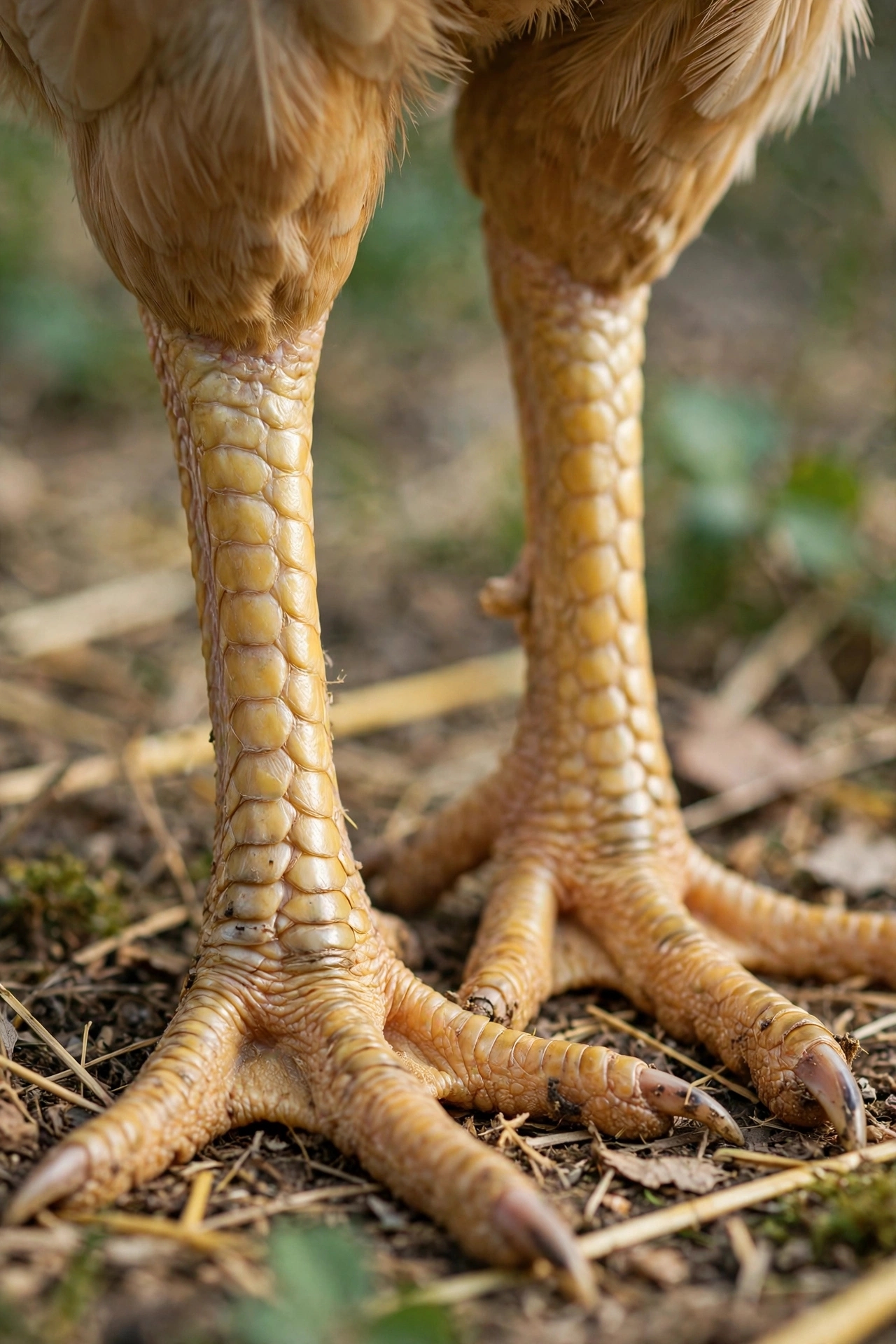
If your hen’s legs look rough, with scales lifting away from the leg and a whitish crust building up between them, she may have scaly leg mites. These tiny mites burrow under the scales on a chicken’s legs and feet, and left alone they cause thick crusts, sore legs and eventually lameness. Caught early, scaly leg mites in chickens are very treatable at home. The treatment is simple, a warm soak, a gentle brush, and petroleum jelly or oil smoothed over the legs to smother the mites, repeated every few days for 2 to 3 weeks. This guide covers how to spot them before they get bad, the step by step scaly leg mites treatment, why you must treat the whole flock and clean the coop, and the safety lines you should never cross.
Table of Contents
- The Short Answer. Catch It Early and Smother the Mites
- What Are Scaly Leg Mites
- How to Spot Scaly Leg Mites Early
- Scaly Leg Mites or Bumblefoot. How to Tell Them Apart
- How to Treat Scaly Leg Mites Step by Step
- How Long Treatment Takes and Why You Repeat It
- Treat the Whole Flock and Clean the Coop
- What Never to Use on Scaly Leg Mites
- When to Call a Vet
- FAQs
Scaly leg mites are tiny mites that burrow under the leg scales. Early signs are lifted scales with a whitish crust. Severe cases cause thick coral-like crusts and lameness.
Warm soak, gentle brush, then smother the legs with petroleum jelly or oil. Repeat every few days for 2 to 3 weeks, because mite eggs survive under the scales.
Never use petrol or kerosene on a chicken’s legs. Treat the whole flock and clean the coop. See a vet for severe cases or for ivermectin.
The Short Answer. Catch It Early and Smother the Mites
Check your birds’ legs every week, and treat at the first sign of lifted scales. That is the whole rule in one sentence, and everything else in this guide is detail around it. Scaly leg mites in chickens start quietly. The earliest sign is a few scales on the legs lifting slightly, with a whitish crust forming underneath. At that stage the bird is usually still walking normally and laying normally, and the treatment is easy. If the mites are left alone for weeks, the crusts grow thick and coral-like, the legs become sore and swollen, and the hen may start to limp. The treatment works by smothering. A warm soak softens the crusts, a gentle brush lifts the loose dead scales, and a thick coat of petroleum jelly or oil seals the legs and suffocates the mites underneath. You repeat it every few days for 2 to 3 weeks, because the mite eggs tucked under the scales survive the first round and hatch later. One application is never enough.
What Are Scaly Leg Mites
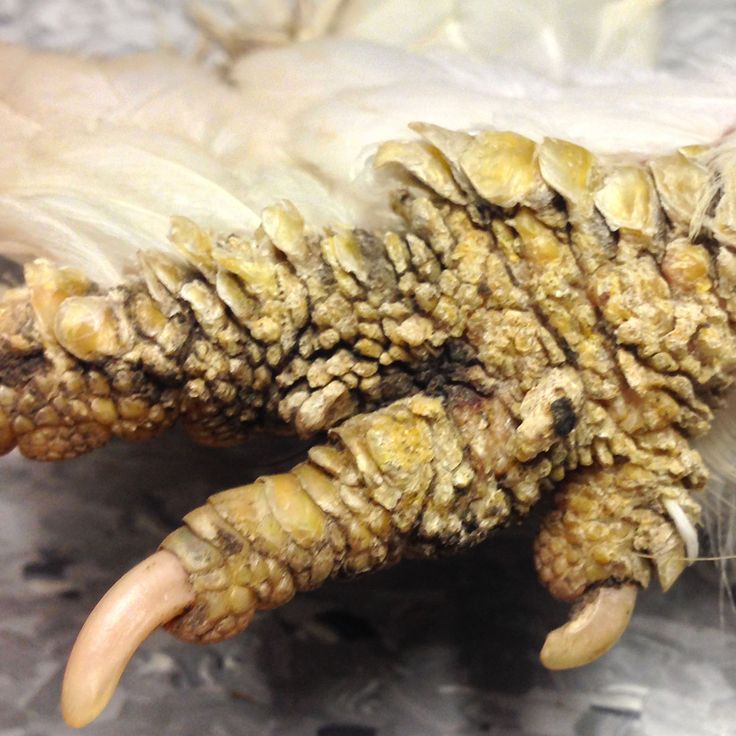
Scaly leg mites are microscopic mites, Knemidocoptes mutans, that live on chickens and burrow under the scales of the legs and feet. You will not see the mites themselves. They are far too small for the naked eye. What you see is the damage they cause. The mites tunnel under the scales and feed there, and the bird’s skin reacts by producing extra keratin, the same material scales are made of. That extra keratin builds up as crust under and between the scales, pushing them up and out. The scales look raised and rough instead of lying flat and smooth against the leg, and a whitish or grey crust fills the gaps. Scaly leg mites spread slowly, usually by direct contact between birds on a roost, or through bedding and coop surfaces. They spread most easily in a crowded coop, and they favour older birds and birds with feathered legs, because the feathers give the mites more cover. They do not live on people, and they are not the same as the body mites that live in a chicken’s feathers. Our guide to chicken mites covers those body mites, which need a different check and a different treatment.
How to Spot Scaly Leg Mites Early
The best habit is simple. Pick up each bird once a week and look at her legs in good light. Healthy legs have scales that lie flat and smooth, overlapping neatly like roof tiles, with clean skin between them. The first warning sign is raised scales on chicken legs, a few scales lifting at the edges instead of lying flat. Look closely and you will see a whitish crust forming underneath the lifted scales. The legs may look slightly powdery or dusty. At this stage the hen is usually still behaving normally, which is why the weekly check matters. You will not notice it from across the run. As the infestation grows, the crusts thicken and spread up the legs and onto the feet. The legs look rough and grey, the scales stick out at odd angles, and the crust can build into thick coral-like lumps. The bird may start to limp, stand less, or peck at her own legs. In a severe case the toes can become deformed and the hen may stop laying. Do not wait for lameness. Treat at the first lifted scales. Check the feet as well as the legs. Mites often start between the toes, where the crust is easy to miss. And check the whole flock, not just the bird that looks worst. If one bird has scaly leg mites, the others have almost certainly been exposed.
Scaly Leg Mites or Bumblefoot. How to Tell Them Apart
Scaly leg mites and bumblefoot are both leg and foot problems, and they are easy to confuse at a glance, but they are different conditions with different treatments. Getting the diagnosis right matters, because the petroleum jelly treatment for mites will not fix bumblefoot. Bumblefoot is a bacterial infection of the foot pad, usually caused by a cut or a bruise from a sharp roost or rough ground. Its sign is a round swelling on the underside of the foot, often with a dark scab in the middle, and the bird limps on that one foot. The legs themselves look normal. Scaly leg mites, by contrast, affect the scales along the whole leg and foot, with lifted scales and crust on both legs, and the foot pad itself usually looks fine.
| Condition | What you see | Where it shows |
|---|---|---|
| Scaly leg mites | Raised scales, whitish crust, rough legs | Along both legs and feet |
| Bumblefoot | Round swelling with a dark scab on the foot pad | Underside of one foot, legs look normal |
| Both present | Crust on the legs plus a swollen foot pad | Treat both, and see a vet |
A bird can have both at once, because sore mite-damaged legs are easier to injure. If you see the round swollen foot pad of bumblefoot, read our bumblefoot guide and treat that as well. If you see only raised scales and crust, it is mites.
How to Treat Scaly Leg Mites Step by Step
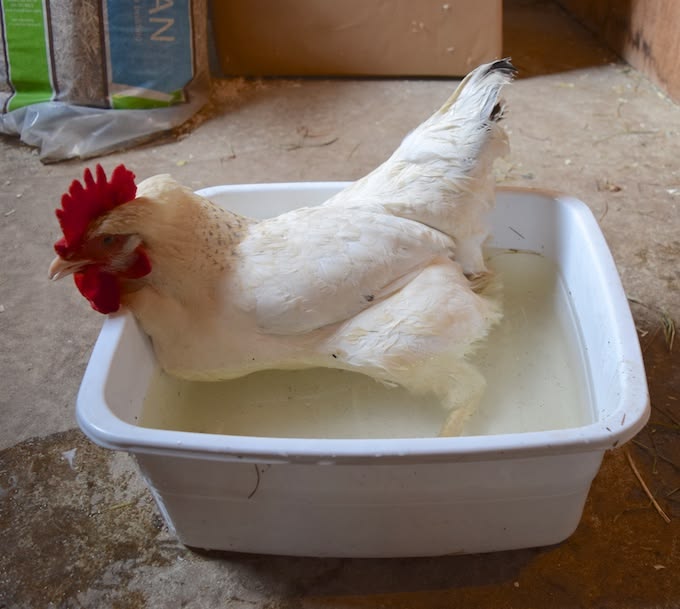
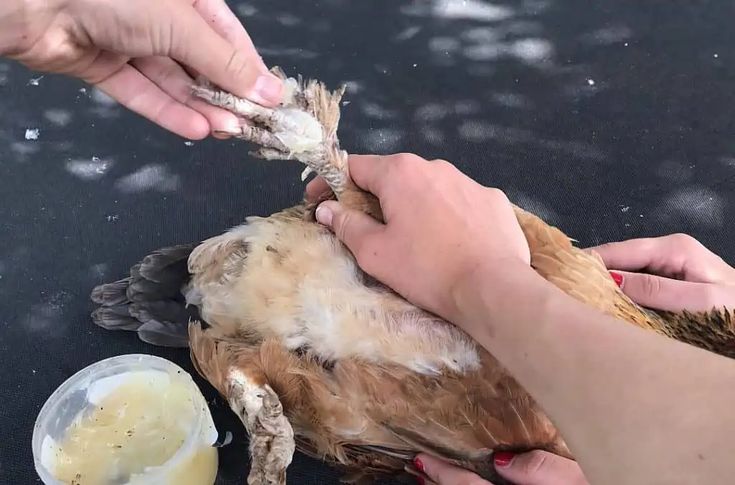
Work calmly, one bird at a time, and keep everything you need within reach before you start. You will need a basin of warm water, a soft old toothbrush, petroleum jelly or a plain vegetable oil, an old towel, and a helper if you can get one. First, hold the hen calmly, wrapped lightly in a towel with her legs free, or tucked under an arm like a football. Do not squeeze her chest, because birds need chest movement to breathe. Second, soak her legs in warm water for 5 to 10 minutes. The water should feel warm on your wrist, never hot. The soak softens the crusts and makes the next step painless. Third, brush the legs very gently with the soft toothbrush, working in the direction the scales lie. Your aim is to lift loose dead crust and loose scales only. Never scrub hard and never pick or peel scales off, because the live skin underneath is raw and will bleed. If a scale does not come away easily, leave it. The soak and the jelly will deal with it over the next few rounds. Fourth, dry the legs gently with the towel, then smooth a thick coat of petroleum jelly over the whole leg and foot, working it between the scales and between the toes. Petroleum jelly scaly leg mites treatment works because the jelly seals the scales and suffocates the mites underneath. Plain vegetable oil works the same way if you have no petroleum jelly. Fifth, set her down gently and let her go back to the flock. She will be fine, and the jelly will stay on the legs for days.
How Long Treatment Takes and Why You Repeat It
Scaly leg mites treatment is not a one day job. Plan on repeating the soak, brush and jelly every few days for 2 to 3 weeks, usually 4 to 6 rounds in total. The reason is the mite eggs. The jelly smothers the adult mites, but the eggs tucked under the scales survive. They hatch over the following days, and the new mites need to be smothered before they can lay more eggs. That is why you repeat. If you stop after one or two rounds, the legs will look better for a week and then the crust will come back. You will know the treatment is working when the crust stops growing and the old crust starts to flake away on its own. New scales grow in smooth and flat, but that takes weeks, because a leg scale is slow to regrow. Do not judge success by the legs looking perfect. Judge it by the crust no longer spreading and the bird walking comfortably. If after 3 weeks the crust is still spreading, or the legs look worse, stop and see a vet. A stubborn case may need ivermectin, which is a vet only treatment, not something to guess at home.
Treat the Whole Flock and Clean the Coop
Treat every bird in the flock, not just the one with visible crust. Scaly leg mites spread by contact on the roost, so by the time one bird shows raised scales, the others have almost certainly picked up mites too, even if their legs still look smooth. Treating the whole flock at the same time stops the mites moving from bird to bird and undoing your work. Clean the coop on the same day you start treatment, and repeat the clean each week while treatment runs. Empty the bedding, scrub the roosts and nest boxes, and let everything dry in the sun if you can. Mites hide in cracks and in old bedding, and a dirty coop reinfests treated birds. Our guide to how often to clean a chicken coop covers the routine that keeps the coop from becoming a mite reservoir in the first place. Prevention after treatment is mostly routine. Keep the weekly leg check, keep the coop clean and dry, and give the birds a dust bath. A regular dust bath helps birds keep their own skin and feathers clear of parasites, and our guide to making a dust bath for chickens shows how to set one up. Feathered leg breeds need the closest watch, because their leg feathers hide the early lifted scales.
What Never to Use on Scaly Leg Mites
Some old advice for scaly leg mites is dangerous, and it still circulates online. Never use petrol, kerosene, diesel or any fuel on a chicken’s legs. These are toxic, they burn raw skin, and a bird that pecks at her treated legs will swallow poison. The same goes for undiluted essential oils, strong disinfectants and surgical spirit. None of these is needed, and all of them can injure the bird. Do not use a hard brush, a wire brush or a scraper on the legs, and never pick or peel scales off by force. The live skin under a mite-damaged scale is raw, and tearing scales off causes bleeding, pain and a wound that can turn into bumblefoot. Do not use ivermectin or any other wormer or mite medicine without a vet. Ivermectin can work for severe scaly leg mites, but the dose, the withdrawal period for eggs, and whether it is the right drug for that bird are all vet decisions. Buying it online and guessing the dose is how birds get poisoned. Petroleum jelly or plain vegetable oil, a warm soak and a soft brush are the whole home treatment. Anything stronger belongs to the vet.
When to Call a Vet
Most early cases clear up with the soak and jelly routine. See a vet promptly if the legs have thick coral-like crusts that cover most of the leg, if the toes look deformed or the bird cannot walk properly, or if there is bleeding, swelling or a bad smell from the legs, which can mean a secondary infection. See a vet too if the crust keeps spreading after 3 weeks of proper treatment, or if several birds are badly affected at once. A vet can confirm the diagnosis, prescribe ivermectin where it is needed, and check for other problems that are making the bird vulnerable, such as poor nutrition or another illness. Take a clear photo of the legs before you go, and note when you first saw the raised scales and what you have already tried. That history helps the vet a lot, and it costs you nothing to bring.
FAQs
What causes scaly leg mites in chickens.
Tiny mites called Knemidocoptes mutans burrow under the leg scales and feed there. The bird’s skin makes extra keratin in response, which builds up as crust and pushes the scales up. They spread by contact between birds and through bedding and coop surfaces.
How do you treat scaly leg mites in chickens.
Soak the legs in warm water for 5 to 10 minutes, brush very gently with a soft toothbrush to lift loose crust, then coat the whole leg and foot thickly with petroleum jelly or plain vegetable oil. Repeat every few days for 2 to 3 weeks, because mite eggs survive under the scales and hatch later.
How long does scaly leg mites treatment take.
Expect 2 to 3 weeks and 4 to 6 rounds of treatment. The crust stops spreading first, then flakes away on its own, and new smooth scales grow in over the following weeks. If the crust is still spreading after 3 weeks, see a vet.
Can scaly leg mites kill a chicken.
A mild case will not, but a severe untreated case can cripple a bird. Thick crusts deform the toes, the bird stops walking and eating properly, and secondary infection can follow. That is why early treatment matters, and why a severe case needs a vet.
Are scaly leg mites contagious to other chickens or to people.
They spread easily between chickens by contact on the roost and through shared bedding, so treat the whole flock and clean the coop. They do not live on people, so they are not a risk to you, but wash your hands after handling an affected bird as you would after any coop job.
Also see When Can Baby Chicks Go Outside for the First Time
Keep Reading

Nusrat
Author, TheChickenPet.com