
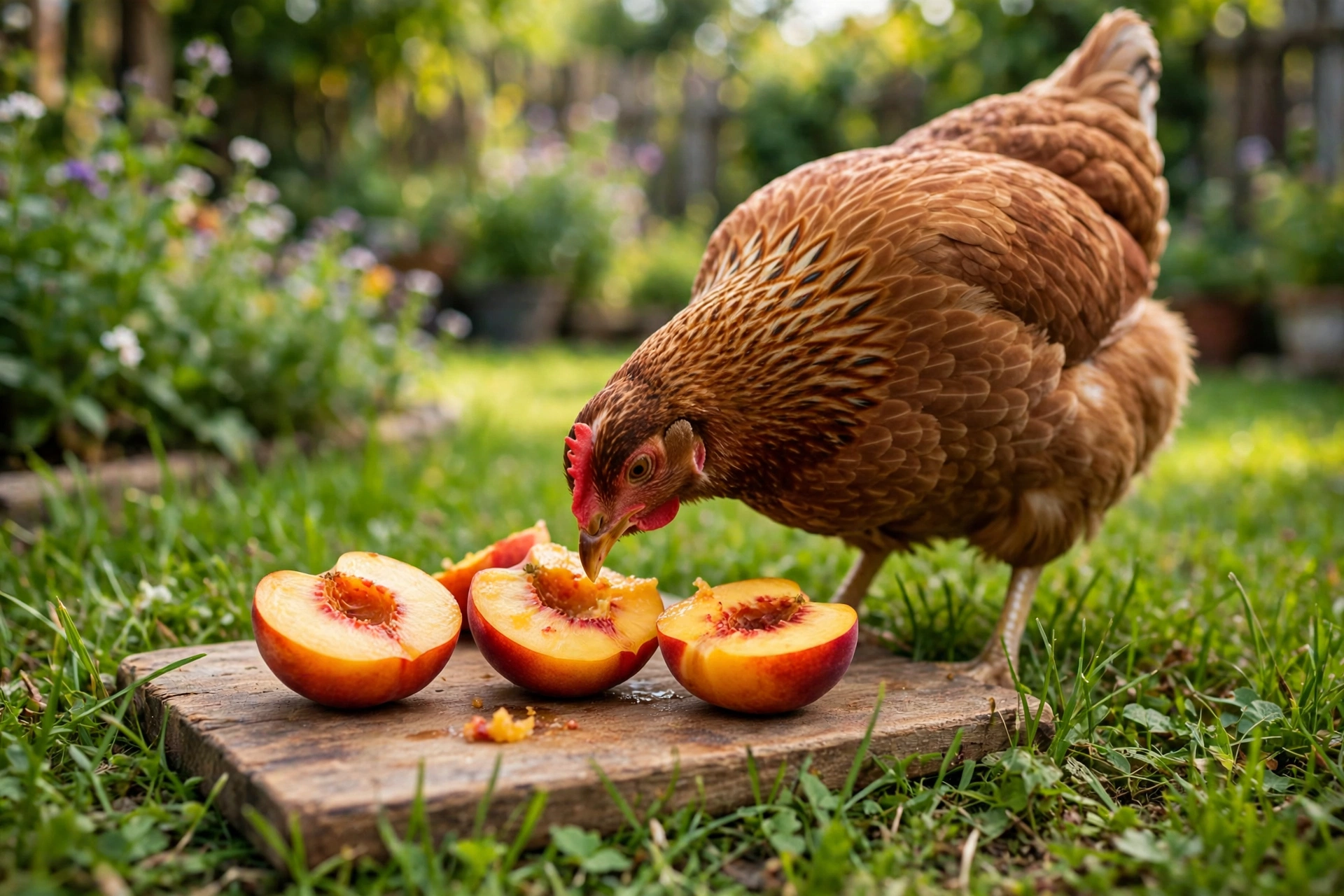
Yes, chickens can eat nectarines, and they are a lovely summer treat. The flesh is sweet, juicy and safe, and hens go for it eagerly. The rule is the same as for every stone fruit on this site. Every pit comes out first. Nectarine pits contain cyanide compounds, and a chicken gizzard can crush them, so a pit that is swallowed whole is a real risk, not a small one. Halve every nectarine, pull every pit, and the flesh is safe.
Our own food checker lists nectarine as Safe with the note “Pit removed first”. That is the whole verdict in one line, and this guide fills in the rest. How nectarines compare to peaches, how to prepare them, how many to offer, what to do about the pit and the leaves, and whether baby chicks can have them at all.
Table of Contents
Verdict. Nectarines are Safe, pit removed first.
Prep. Halve every nectarine and pull every pit before it reaches the flock.
Amount. A few slices per bird, as a treat inside the 10 percent treat rule.
Never. Whole nectarines with pits, nectarine pits, or wilted leaves.
Chicks. Wait until chicks are at least 8 weeks old, and offer only tiny pieces of flesh.
Cousin fruit. Peaches follow the same rule, flesh yes and pit no, every time.
Can Chickens Eat Nectarines
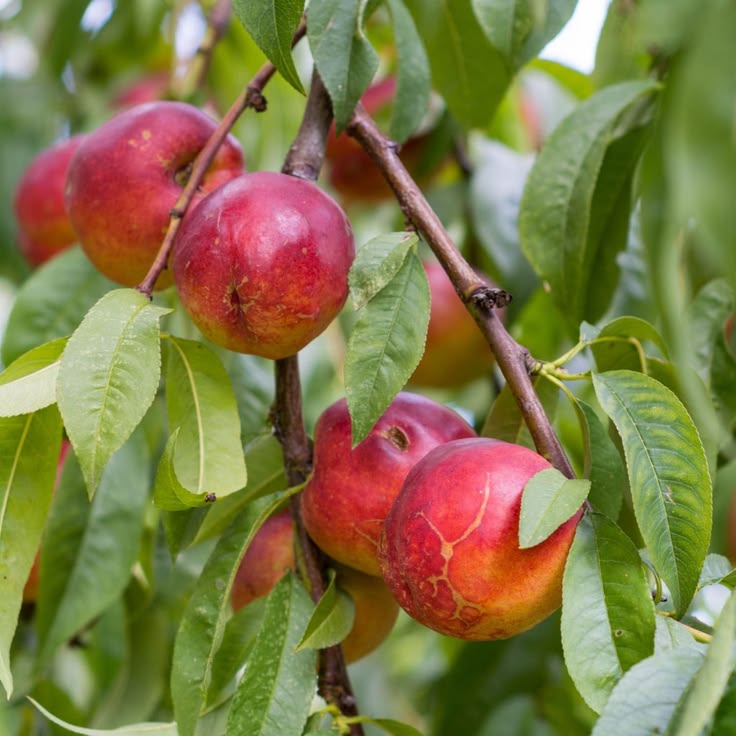
Chickens can eat nectarines, and the answer is the same for the fruit you buy at the shop and the ones you pick from a garden tree. The flesh is safe. It is mostly water and natural sugars, with a little vitamin C and potassium, and hens eat it happily. The danger is never the flesh. It is the pit in the middle, and the leaves on the tree, and those two dangers are what the rest of this guide is about.
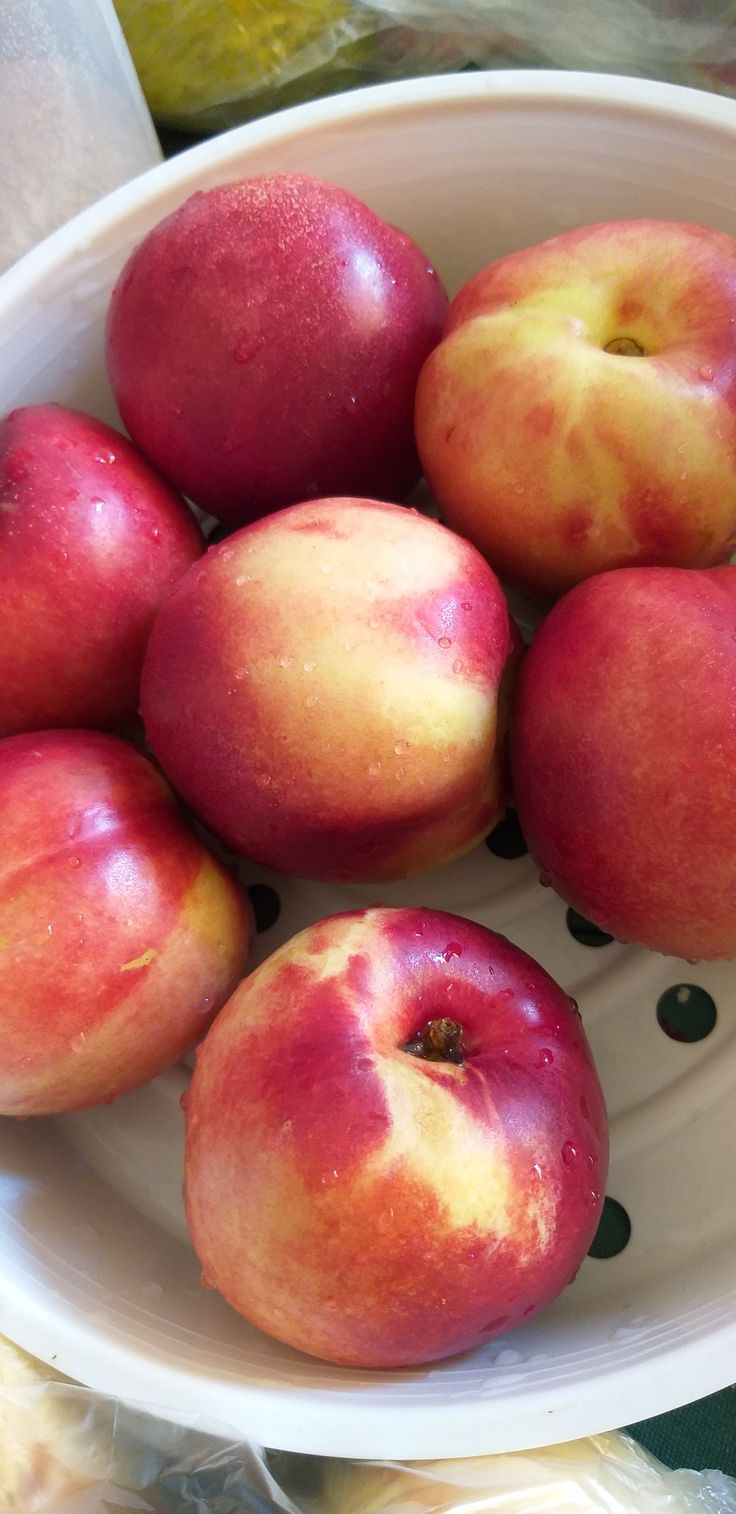
The pit rule is the same one that applies to every stone fruit on this site. Our apricots guide covers it in full, and the rule is simple. The flesh is food, the pit is not. A nectarine pit contains amygdalin, a compound that releases cyanide when it is crushed or digested, and a chicken gizzard is built to crush hard things. A single pit is unlikely to kill a healthy adult hen, but pits add up, and a bird that eats several whole nectarines has swallowed several pits. There is no reason to take the risk when removing the pit takes seconds.
Fresh nectarines are the best choice. Frozen nectarines are fine too once they are thawed, and they make a good cooling treat on a hot day. Dried nectarines are best avoided, or offered only in very small amounts, because the sugar is concentrated and they often contain added sugar or preservatives. Nectarine juice, nectarine pie filling and anything with added sugar or alcohol is not chicken food. Keep it simple. Fresh flesh, pits out, a few slices per bird.
Nectarines vs Peaches
Nectarines and peaches are the same fruit, give or take a gene. A nectarine is a peach without the fuzz, and the two are so close that a nectarine tree can grow a peach, and a peach tree can grow a nectarine. For chickens the difference does not matter at all. The flesh of both is safe, the pit of both carries the same cyanide compounds, and the rule is the same for both. Flesh yes, pit no, every time.
The practical difference is the skin. A peach has a fuzzy skin that some hens pick at and drop, while a nectarine has a smooth skin that is easier to eat. Neither skin is dangerous, and you do not need to peel either fruit. Wash the fruit, halve it, remove the pit, and offer the flesh with the skin on. The skin adds a little fibre, and the birds will eat it or leave it as they please.
Peaches are held back in our article queue as the first reserve after this batch, because the story is the same as the nectarine story, and the two articles would repeat each other. If you have peaches rather than nectarines, feed them exactly the same way. Halve them, remove the pit, offer a few slices, and keep them inside the 10 percent treat rule.
How to Prepare Nectarines
Preparing nectarines for chickens takes about a minute, and the steps are worth doing properly every time. Wash the nectarines first, because shop bought fruit can carry spray residues and garden fruit can carry dust and bird droppings. Then cut each nectarine in half around the pit, twist the halves apart, and pull the pit out with your fingers or the tip of a knife. Cut the flesh into slices or small chunks, so the birds can eat it easily and no one tries to swallow a large piece whole.
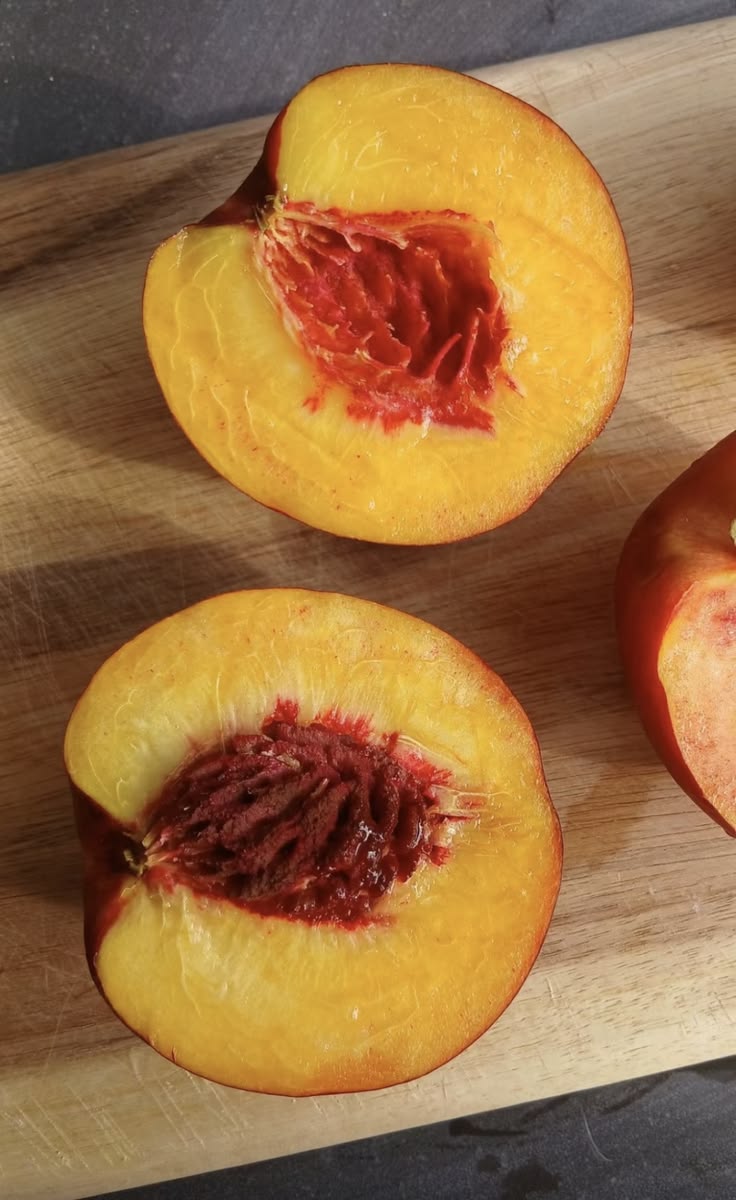
Offer the slices in a shallow dish or scattered on clean ground, not in a deep bowl where the pieces sink under each other. A few slices per bird is enough. Watch the first time you offer them, because some hens will swallow a large piece whole, and a piece of flesh with no pit in it is perfectly safe to swallow. The danger is only the pit, and once the pits are out there is nothing left to worry about.
Do not offer nectarines still on the stem in a bunch, because hens will pull at the stems and can swallow a pit that is still attached to a piece of flesh. Pull the fruit off the stems, halve it, remove the pits, and then offer it. The same goes for nectarines you pick yourself. Check each one as you halve it, because a nectarine that looks fine on the outside can hide a split pit or a damaged stone.
How Many Nectarines Can a Chicken Eat
A few slices per bird is the right amount, and the 10 percent treat rule is the guide. Treats of all kinds, fruit included, should stay inside a tenth of the daily diet, and the main feed should always be a proper layer or grower ration. For a standard laying hen, half a nectarine a couple of times a week is plenty. More than that is not dangerous in itself, but it fills the bird up with sugar and water and leaves less room for the feed that actually keeps her laying and healthy.
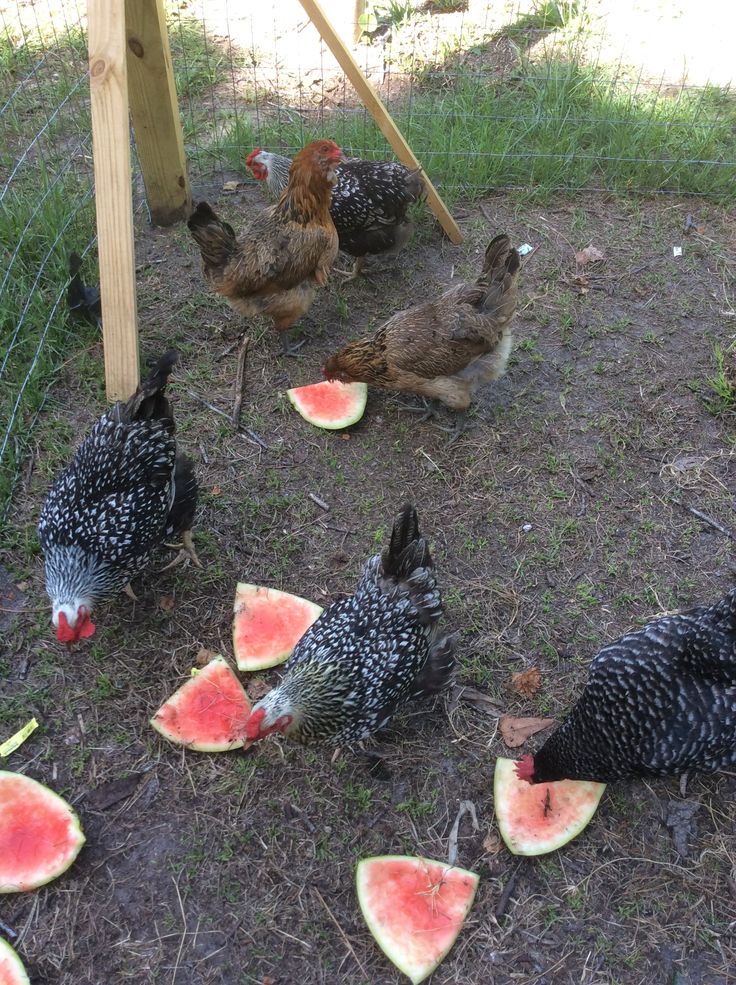
Sugar is the reason for the limit, not poison. Nectarines are sweet, and a hen that eats a lot of fruit in one sitting can end up with loose droppings for a day. That is not an emergency, but it is a sign the treat was too big. Cut back, offer less next time, and make sure fresh water is available. Hens that are moulting or recovering from illness should get even less, because their digestion is already under strain. For another small treat that fits the same 10 percent rule, see Can Chickens Eat Chia Seeds Dry or Soaked.
Nectarines are a seasonal treat, and that is part of their charm. Fresh nectarines are at their best for a few weeks in summer, and the flock can enjoy them then. Out of season, frozen nectarines are the better choice than dried ones, because they are just the fruit with nothing added. Thaw them first, halve them if they are whole, and check for pits, because frozen stone fruit is often sold with the pits still in.
Can Chickens Eat Nectarine Pits
No, chickens must never eat nectarine pits. The pits contain cyanide compounds, the same family of compounds found in cherry pits and apricot pits, and the rule is the same for all of them. The compound in the pit is amygdalin, and when a pit is crushed in the gizzard or broken down during digestion, it releases hydrogen cyanide. A small amount may cause no obvious harm, but there is no safe dose to aim for, and no reason to test it. The pits go in the bin, not in the run.
The same warning applies to the pits of every stone fruit. Apricots, plums, cherries, peaches and nectarines all carry the same compounds in their pits, and the rule is the same for all of them. Our apricots guide and our plums guide both cover it, and the nectarine rule is no different. Flesh yes, pit no, every time.
If a hen does swallow a whole nectarine with the pit still in, do not panic, but do act. One pit is unlikely to cause serious harm to a healthy adult bird, because many pits pass through whole without being crushed. Watch her for the next few hours. If she goes quiet, stops eating, or shows signs of distress, call a vet and tell them exactly what happened. Do not try to make her vomit, and do not give her anything to neutralise the pit. The best thing you can do is remove the source, make sure she has fresh water, and watch her closely.
Nectarine Leaves Warning
Nectarine leaves are the second danger, and they are easy to overlook, because the fruit gets all the attention. Fresh green nectarine leaves are not a major risk in small amounts, and hens that peck at a leaf on the tree are unlikely to come to harm. Wilted nectarine leaves are a different matter. When the leaves of a stone fruit tree wilt, whether from pruning, storm damage or drought, the cyanide compounds in them become more concentrated, and wilted leaves are genuinely dangerous to chickens and to other livestock.
If you prune a nectarine or peach tree, or if a branch comes down in a storm, clear the leaves and branches out of the run at once. Do not leave prunings where the flock can reach them, and do not use stone fruit prunings as bedding or as a windbreak in the run. The same warning applies to cherry, apricot and plum trees, which are all in the same family.
Flocks that free range near nectarine or peach trees need a little extra care in late summer, when leaves start to fall. Fallen leaves that are still green are low risk, but leaves that have wilted and dried on the ground after pruning or storm damage should be raked up. It is a small job, and it removes a risk that is easy to miss.
Can Baby Chicks Eat Nectarines
Baby chicks can eat nectarines, but not until they are old enough, and not in the same way as an adult hen. Wait until chicks are at least 8 weeks old before offering any fruit, including nectarines. Before that age their digestion is still developing, and they need chick starter crumb as their main feed, with grit available if they get anything else. A chick that fills up on fruit instead of starter crumb will not grow properly.
When chicks are old enough, offer only tiny pieces of nectarine flesh, with the pits removed, and only one or two pieces per chick. Cut the flesh small, because a chick can choke on a piece that is too big, and watch them eat it. Do not offer whole nectarines to chicks, even with the pits removed, because the size alone is a choking risk. And do not offer nectarine pits, leaves or stems to chicks at any age.
Frequently Asked Questions
Q: Can chickens eat nectarines every day?
A: They can, but there is no need to. A few slices a couple of times a week is plenty, and daily fruit is more sugar than a laying hen needs. Keep treats inside the 10 percent rule and let the main feed do the work. Nectarines are a seasonal treat, and the flock will enjoy them more when they are not an everyday food.
Q: Are nectarines and peaches the same for chickens?
A: Almost. A nectarine is a peach without the fuzz, and the rule is the same for both. Flesh yes, pit no, every time. If you have peaches rather than nectarines, feed them exactly the same way. Halve them, remove the pit, offer a few slices, and keep them inside the 10 percent treat rule.
Q: Do nectarine pits really poison chickens?
A: Yes, the pits contain cyanide compounds, the same family as cherry pits and apricot pits. A single pit swallowed whole will often pass through without harm, but a pit crushed in the gizzard releases hydrogen cyanide, and several pits add up to a real risk. There is no safe number of pits to aim for, so every pit comes out before the fruit reaches the flock.
Q: Can chickens eat frozen nectarines?
A: Yes, frozen nectarines are fine once they are thawed. They are just the fruit with nothing added, and they make a good cooling treat on a hot day. Check for pits before you offer them, because frozen stone fruit is often sold with the pits still in, and halve them if they are whole.
Q: What should I do if my hen ate a whole nectarine with the pit?
A: Do not panic. One pit is unlikely to cause serious harm to a healthy adult hen, because many pits pass through whole. Watch her for the next few hours. If she goes quiet, stops eating or drinking, or shows signs of distress, call a vet and tell them exactly what happened. Do not try to make her vomit.

Nusrat
Author, TheChickenPet.com