
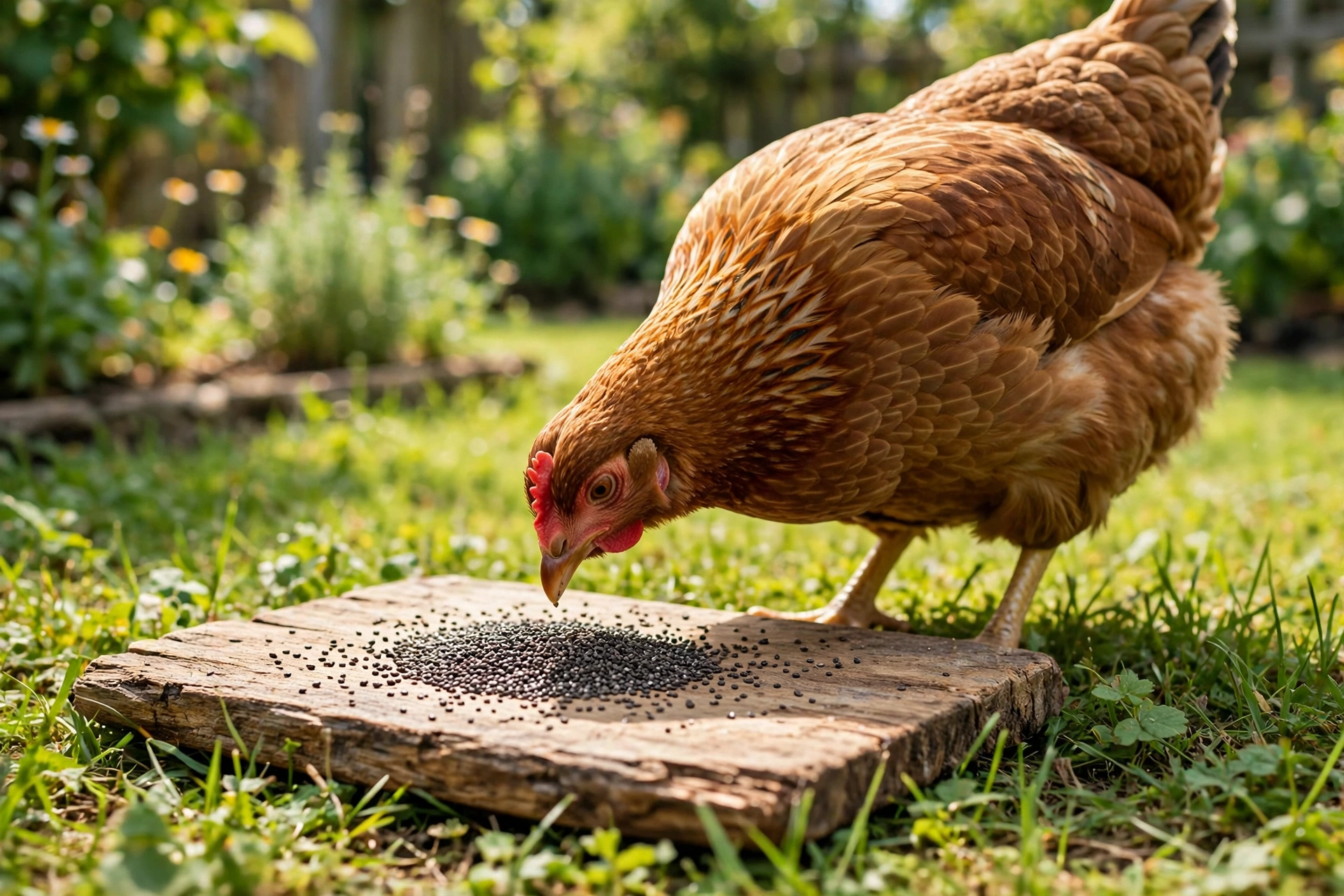
Yes, chickens can eat chia seeds, dry or soaked, and they are one of the best seeds you can offer a backyard flock. They are tiny, easy to eat, and packed with the things laying hens need most, omega-3 fats, calcium and protein, in a form the birds can actually use. The only question is whether to serve them dry or soaked, and the honest answer is that both ways work, with soaked being the gentler choice.
Our own food checker lists chia seeds as Safe with the note “Dry or soaked”. That is the whole verdict in one line, and this guide fills in the rest. Why chia seeds are good for hens, how dry and soaked compare, how many to offer, how to serve them, and whether baby chicks can have them at all.
Table of Contents
Verdict. Chia seeds are Safe, dry or soaked.
Best way. Soaked is gentler, dry is fine in small amounts with fresh water nearby.
Amount. About a teaspoon per bird per day, inside the 10 percent treat rule.
Good for. Omega-3 fats, calcium, protein, and richer yolks.
Chicks. Wait until chicks are at least 8 weeks old, and offer only a tiny pinch.
Cousin seed. Flaxseed gives the same omega-3 boost, and our flaxseed guide covers it.
Can Chickens Eat Chia Seeds
Chickens can eat chia seeds, and they are a safe and healthy treat. Chia seeds are the tiny black or white seeds of the chia plant, a member of the mint family grown in Central and South America. They are about 2 millimetres long, with a mild nutty taste, and hens eat them readily, dry or soaked. They are not toxic, they have no pit or shell to worry about, and there is nothing in them that harms chickens.
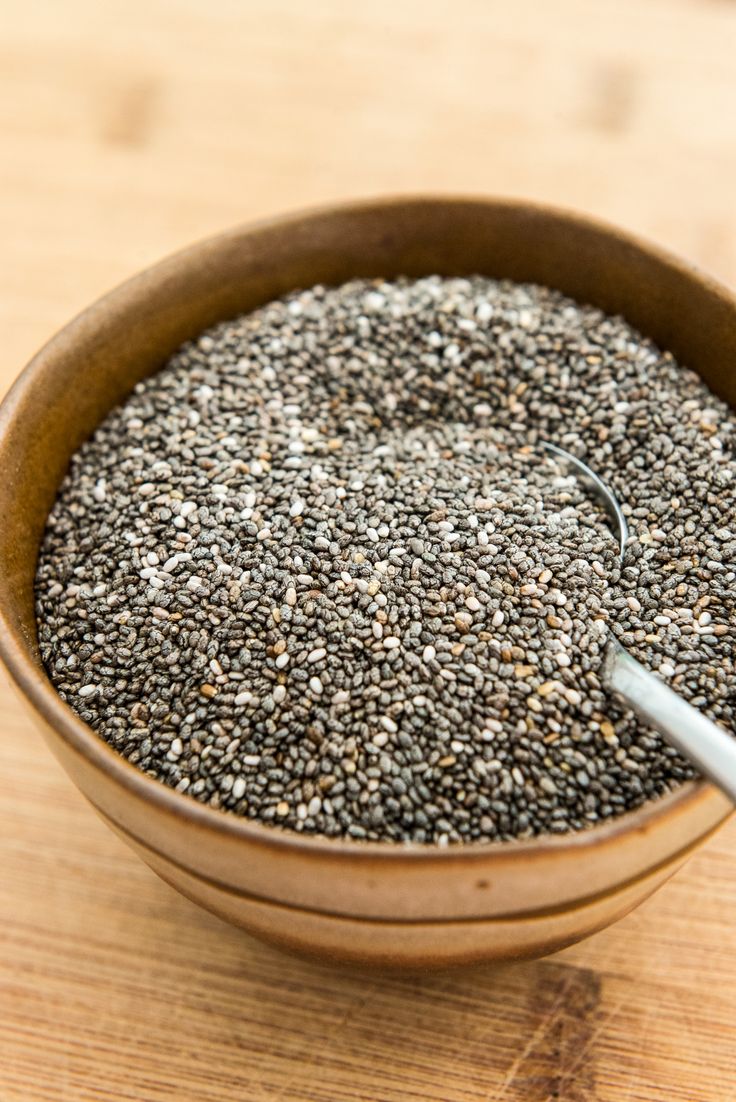
Chia seeds are one of the easiest seeds to feed. They are small enough for a hen to swallow whole, so there is no chopping or grinding to do, and they mix easily into feed or mash. They do not go stale quickly, they keep for months in a sealed jar, and a small bag lasts a long time, because a teaspoon a day is all a bird needs.
The one thing to watch is water. Chia seeds absorb many times their weight in water, and that is the reason some keepers prefer to soak them first. A dry chia seed that swells inside a bird could, in theory, cause a blockage, but in practice a teaspoon of dry seeds scattered on feed with fresh water nearby has never been a problem for a healthy adult hen. Soaked seeds are simply the gentler and safer choice, and this guide covers both ways.
Dry or Soaked Chia Seeds
Dry chia seeds are the simple way to feed them. Sprinkle a teaspoon per bird over the feed, or scatter them on clean ground as a scratch treat, and make sure fresh water is available nearby. The birds will eat them with their feed, drink as they go, and the seeds will do their work. Dry is fine, and it is how most keepers feed chia seeds most of the time.
Soaked chia seeds are the gentler way. Put a spoonful of seeds in a small bowl, add about three times as much water, and leave it for 15 to 20 minutes. The seeds will swell and form a soft gel, which is easy to eat and easy to digest. Soaked seeds are the better choice for young birds, for birds that are moulting, and for any bird that is already a little dry or off her feed. The gel is also a good way to carry other supplements, because it mixes easily into mash.
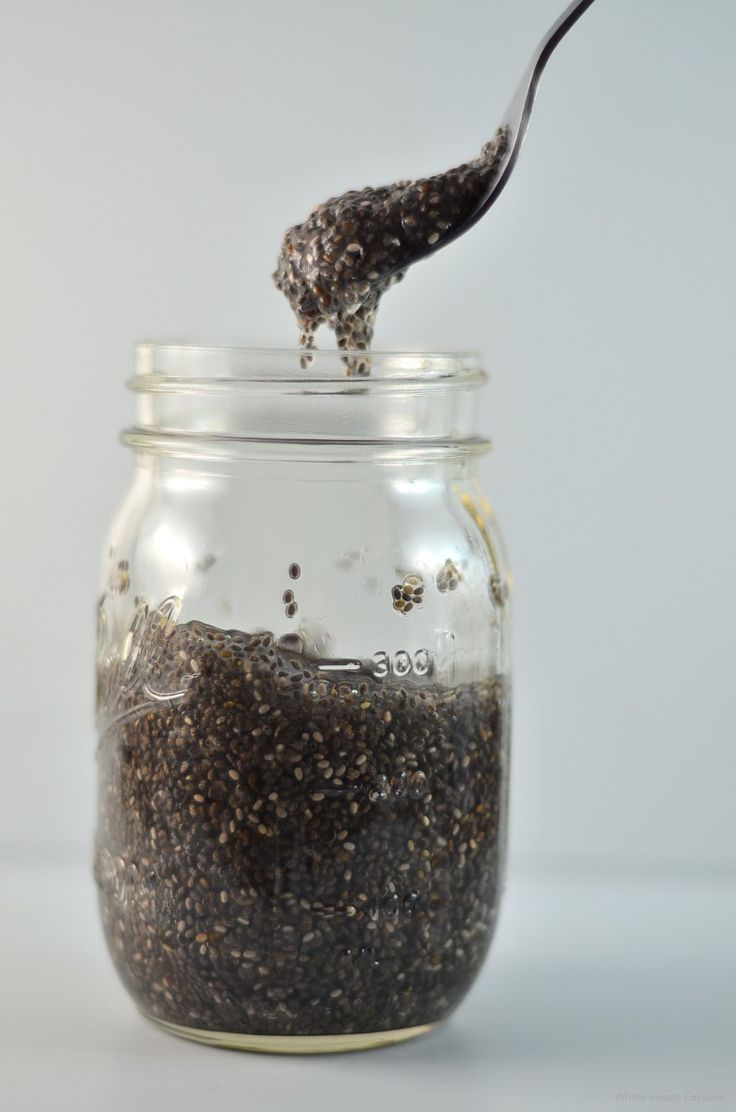
There is no wrong choice between dry and soaked, only a safer one. If you are feeding a large flock and want the simple route, dry is fine, in small amounts, with water nearby. If you are feeding a few birds and want the best result, soak them. Never offer a large amount of dry chia seeds at once, and never offer dry seeds to a bird with no water available. A teaspoon per bird is the limit either way.
Sprouted chia seeds are another option, and they are safe too. Sprouting takes a few days, and the sprouts are soft, green and easy to eat. They are a nice occasional treat, but they are not necessary. Dry or soaked covers everything a flock needs from chia seeds.
Why Chia Seeds Are Good for Hens
Chia seeds are good for hens for the same reason they are good for people. They are rich in omega-3 fatty acids, the fats that make egg yolks richer and deeper in colour, and they are one of the few plant sources that carry a meaningful amount of them. A hen that eats chia seeds regularly will lay eggs with more omega-3 in the yolk, and the yolks will be a deeper orange, which is the sign of a well fed bird.
They are also rich in calcium, which matters for strong eggshells. A laying hen needs a steady supply of calcium every day, and chia seeds add to it, alongside oyster shell and a proper layer ration. They are not a replacement for oyster shell, but they are a useful extra, especially for older hens whose shells are starting to thin.
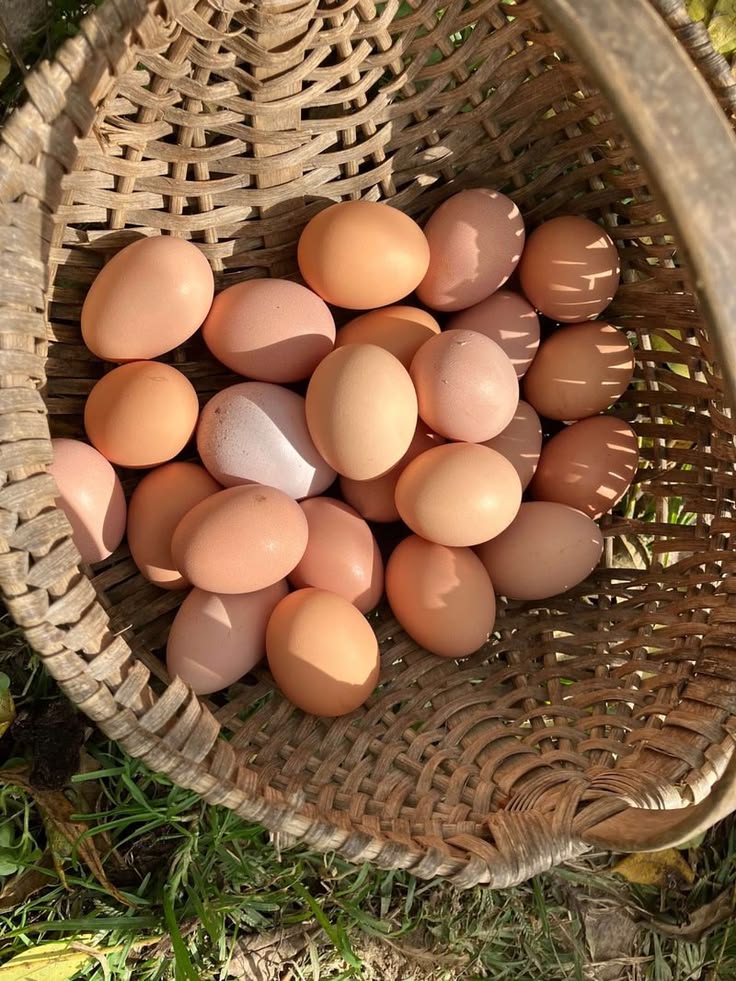
Chia seeds carry a good amount of protein, about 17 percent by weight, and a range of minerals, including magnesium, iron and zinc. They are also high in fibre, which helps the digestion, and they contain antioxidants that support general health. None of this makes them a miracle food, but it makes them one of the most useful seeds in the treat basket, and a teaspoon a day is an easy way to add them.
Flaxseed is the closest cousin to chia seeds, and the two are often compared. Flaxseed gives the same omega-3 boost, and our flaxseed guide covers it in full. The main difference is that flaxseed is best ground before feeding, because whole flaxseed can pass through undigested, while chia seeds are small enough to be eaten whole. If you feed both, you do not need a full portion of each. A teaspoon of one or the other is enough.
How Many Chia Seeds Can a Chicken Eat
About a teaspoon per bird per day is the right amount, and the 10 percent treat rule is the guide. Treats of all kinds, seeds included, should stay inside a tenth of the daily diet, and the main feed should always be a proper layer or grower ration. A teaspoon of chia seeds is a small amount, but it is enough to add the omega-3 and calcium the bird needs, without filling her up. Mushrooms are another caution food in the same treat rotation, and only the plain store-bought kind is safe.
More is not better. Chia seeds are high in fat and fibre, and a bird that eats a lot of them in one sitting can end up with loose droppings for a day. That is not an emergency, but it is a sign the treat was too big. Cut back, offer less next time, and make sure fresh water is available. Hens that are moulting or recovering from illness should get even less, because their digestion is already under strain.
Chia seeds are a daily treat, not a seasonal one. They keep well in a sealed jar, they are cheap by the bag, and a teaspoon a day is easy to build into the feeding routine. Offer them with the morning feed, or scatter them as an afternoon scratch treat, and the flock will come to expect them.
How to Serve Chia Seeds
Serving chia seeds is simple, and there are three ways that work well. The first is to sprinkle them dry over the feed. Measure out a teaspoon per bird, scatter them over the layer ration in the feeder, and let the birds eat them with their feed. Make sure fresh water is available nearby, because the seeds will absorb water as the birds eat.
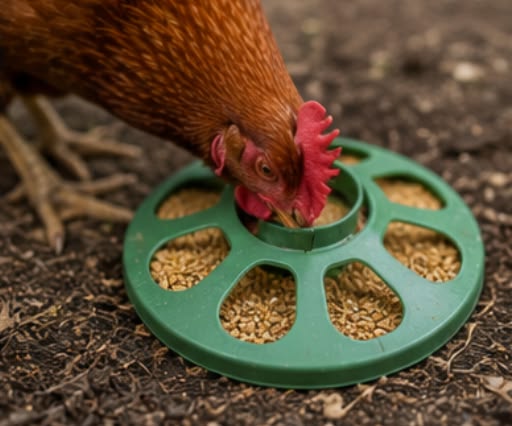
The second way is to soak them first. Put the seeds in a small bowl, add three times as much water, wait 15 to 20 minutes for the gel to form, then spoon the gel onto the feed or into a dish. Soaked seeds are softer, easier to digest, and the best choice for young birds, moulting birds, and any bird that is a little off her feed.
The third way is to mix them into a wet mash. Stir a spoonful of dry or soaked seeds into a bowl of warm mash made from layer pellets and water, and offer it as a morning treat. The seeds disappear into the mash, the birds eat the lot, and nothing is wasted. This is the best way to feed chia seeds to a flock that picks around dry seeds and leaves them in the feeder.
Do not mix chia seeds into the water, because they will swell and clog the drinker. Do not offer them in a deep bowl on their own, because the birds will scatter them and waste most of them. And do not feed them in a large pile, because the birds at the front will eat most of them and the birds at the back will get none. Scatter them, mix them, or soak them, and every bird gets her share.
Can Baby Chicks Eat Chia Seeds
Baby chicks can eat chia seeds, but not until they are old enough, and not in the same way as an adult hen. Wait until chicks are at least 8 weeks old before offering any seeds, including chia. Before that age their digestion is still developing, and they need chick starter crumb as their main feed, with grit available if they get anything else. A chick that fills up on seeds instead of starter crumb will not grow properly.
When chicks are old enough, offer only a tiny pinch of soaked chia seeds, not dry ones. Soaked seeds are soft, easy to swallow, and easy to digest, and a pinch is all a chick needs. Do not offer dry chia seeds to young chicks, because the seeds can swell in the crop and cause a blockage. And do not offer chia seeds to chicks under 8 weeks old at any amount.
Frequently Asked Questions
Q: Can chickens eat chia seeds every day?
A: Yes, a teaspoon per bird per day is fine, and chia seeds are a daily treat rather than a seasonal one. Keep them inside the 10 percent treat rule and let the main feed do the work. A small daily amount is better than a large amount once a week.
Q: Are chia seeds or flaxseed better for chickens?
A: Both are good, and the difference is small. Chia seeds are easier to feed, because they are small enough to eat whole, while flaxseed is best ground before feeding. Flaxseed is slightly higher in omega-3 by weight, but chia seeds are higher in calcium. If you feed one, you do not need a full portion of the other. A teaspoon of either is enough.
Q: Do chia seeds need to be soaked before feeding?
A: No, dry chia seeds are safe in small amounts with fresh water nearby. Soaked seeds are gentler and easier to digest, and they are the better choice for young birds, moulting birds, and any bird that is a little off her feed. Soak a spoonful in three times as much water for 15 to 20 minutes to make the gel.
Q: Can chia seeds cause a blockage in chickens?
A: A large amount of dry chia seeds with no water could, in theory, swell in the crop and cause a blockage, but a teaspoon per bird with fresh water nearby has never been a problem for a healthy adult hen. Soaked seeds remove the risk entirely. Never offer a large amount of dry seeds at once, and never offer dry seeds to a bird with no water available.
Q: Do chia seeds make eggs better?
A: Yes, the omega-3 fats in chia seeds pass into the yolk, and the yolks become richer and deeper in colour. The effect is gradual, and it takes a few weeks of regular feeding to see it. Chia seeds are not a replacement for a proper layer ration or oyster shell, but they are a useful extra that makes a real difference to egg quality.

Nusrat
Author, TheChickenPet.com