
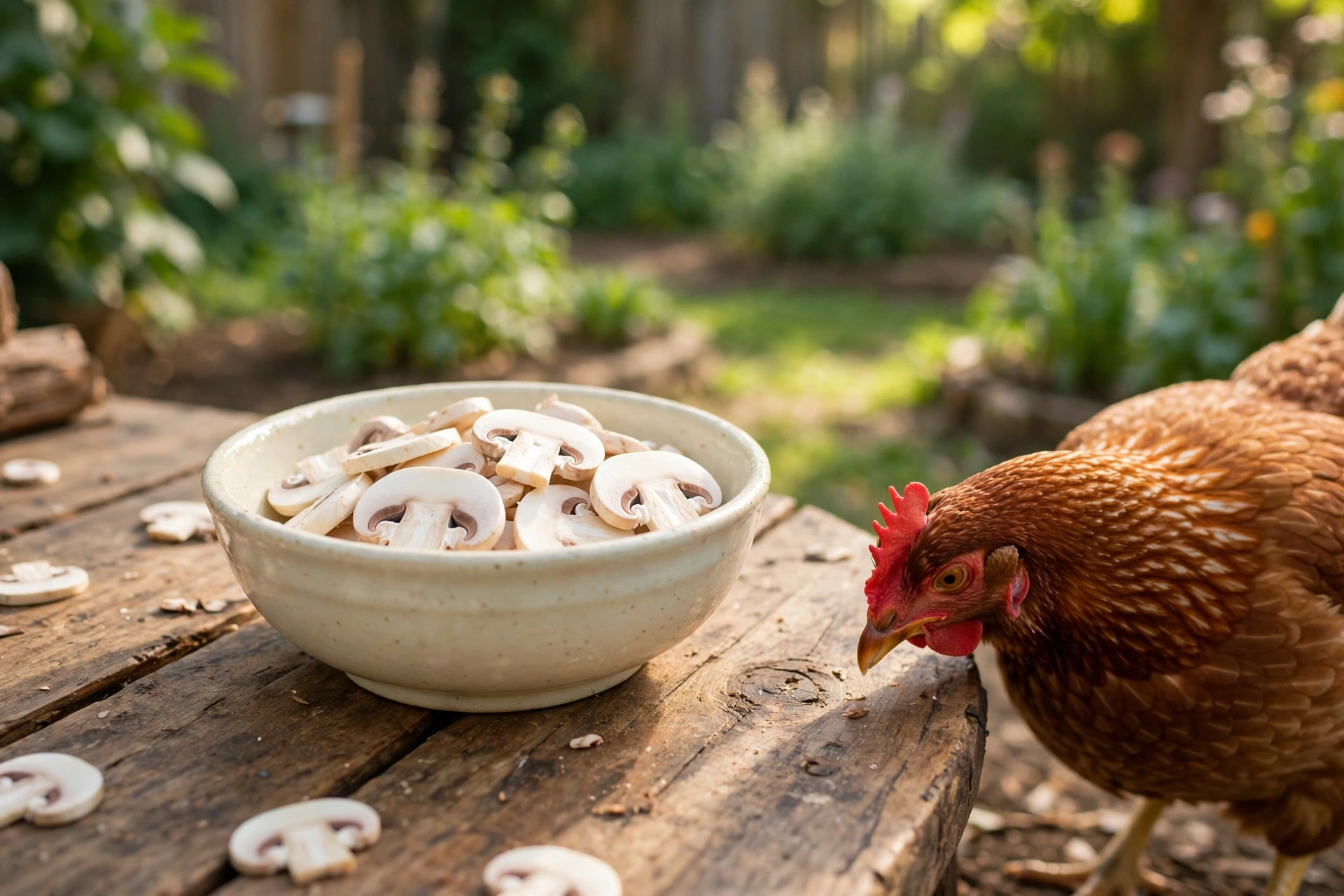
Chickens can eat mushrooms, but only the plain store-bought kind and only in small amounts. Wild mushrooms are a different story and they are never safe to feed, not even one bite. If you stick to white button, cremini or portobello mushrooms from the grocery store, chop them small, serve them plain and keep the portion tiny, your hens can enjoy them as an occasional treat. The rest of this guide covers which kinds are safe, raw or cooked, how much to give and what to do if a hen helps herself to a mushroom growing in the yard.
Table of Contents
- Can Chickens Eat Mushrooms
- Are Mushrooms Safe for Chickens
- Can Chickens Eat Raw Mushrooms
- Can Chickens Eat Cooked Mushrooms
- Can Chickens Eat Wild Mushrooms
- Which Mushrooms Are Safe and Which Are Not
- How Many Mushrooms and How Often
- How to Serve Mushrooms to Chickens
- What to Do if a Chicken Eats a Wild Mushroom
- Mushrooms and the Treat Rule
- Frequently Asked Questions
Quick Facts
At a Glance. Store-bought mushrooms are a Caution food, safe only in small amounts. Wild mushrooms are Unsafe and never fed.
How to Serve. Plain, chopped small, with no butter, garlic, onion or salt. Cooked plain is the gentler choice, raw is fine in tiny pieces.
Good to Know. Treats stay under 10 percent of the daily diet. A few chopped pieces once or twice a week at most is plenty.
Can Chickens Eat Mushrooms
Yes, chickens can eat mushrooms, with one firm condition. The mushrooms must be the plain store-bought kind from a grocery store, and the portion must stay small. White button mushrooms, cremini mushrooms and portobello mushrooms all fall into this safe group. They are the same mushrooms people buy for cooking, grown on farms under controlled conditions, and they carry none of the guessing that comes with wild fungi.
The short answer has a hard limit built into it. Mushrooms are a Caution food on our own food checker, not a Safe food and not an Unsafe one. That middle verdict means the food is fine in the right form and the right amount, and risky in the wrong form or a large amount. For mushrooms the right form is store-bought and plain, and the right amount is a few chopped pieces as an occasional treat.
This matters because mushrooms sit in a grey area for many keepers. Some keepers feed them without a second thought, and others avoid them completely because they know some wild mushrooms are poisonous. Both instincts have a grain of truth. The farmed mushrooms in the shops are a different food from the mushrooms that pop up in a damp run after rain, and the article treats them as two separate foods from here on.
Are Mushrooms Safe for Chickens
Are mushrooms safe for chickens? The honest answer is that it depends entirely on where the mushroom came from. Store-bought mushrooms are safe in small amounts. Wild mushrooms are never safe, because even experienced foragers can mistake a toxic species for an edible one, and chickens have no way to tell the difference at all.
Store-bought mushrooms are grown on sterile compost in controlled farm conditions. The common kinds, white button, cremini and portobello, are all the same species, Agaricus bisporus, picked at different stages of growth. They contain B vitamins, selenium and a little protein, and they are low in calories, so a few pieces add variety without loading the bird with sugar or fat. None of that makes them a health food your flock needs, but it does mean a small serving does no harm.
Wild mushrooms are the opposite. Hundreds of species grow in gardens, lawns and runs, and a good number of them are toxic to chickens and to people. The dangerous ones do not always look dangerous, and some deadly species look very much like edible ones. A chicken pecking at a mushroom in the yard is not tasting it carefully first, she is swallowing it. That is why the rule for wild mushrooms is simple and absolute, never feed them and do not let the flock eat them if you can help it.
The risk is not theoretical. Mushroom poisoning in chickens can damage the liver and kidneys, and the symptoms may not show for hours, by which time the damage is done. There is no home test that makes a wild mushroom safe, and cooking does not make a poisonous mushroom safe either. If you cannot name the exact species with total certainty, treat it as poisonous.
Can Chickens Eat Raw Mushrooms
Chickens can eat raw mushrooms if they are store-bought, but cooked is the better choice for most flocks. Raw button mushrooms are firm and a little rubbery, and a whole raw mushroom is a choking risk for a hen that gulps her food. Chopped into small pieces, raw mushrooms are fine in a tiny portion, and many keepers feed them this way without any trouble.
Raw mushrooms do carry one small drawback. Their cell walls are tough, so a chicken gets less nutrition from a raw piece than from a cooked one. That is a minor point for a treat food, since mushrooms are not there to feed the bird, they are there for variety. Still, if you have the choice, a quick plain cook makes the mushroom softer, easier to peck apart and easier to digest.
If you do serve them raw, keep the pieces small, about the size of a pea, and scatter them rather than piling them in one spot. Scattering slows the greedy eaters down and lets every hen get a piece. Wash the mushrooms first to remove any compost or packaging dust, and skip any mushroom that looks slimy, dark or past its best.
Can Chickens Eat Cooked Mushrooms
Yes, chickens can eat cooked mushrooms, and cooked plain is the best way to serve them. Cooking softens the mushroom, breaks down the tough cell walls and makes the pieces easy for a hen to peck and swallow. A mushroom cooked in a dry pan or in a little water, with nothing added, is the ideal treat version.
The word plain does all the work here. Mushrooms cooked for people usually come with butter, garlic, onion, salt, soy sauce or herbs, and none of those belong in a chicken treat. Garlic and onion are the two to watch most, since both can cause problems for chickens in larger amounts, and salty or buttery mushrooms add fat and salt a hen does not need. If you are cooking mushrooms for your own dinner, set a few pieces aside before the seasoning goes in, and those plain pieces are the ones for the flock.
Cooked mushrooms also suit older hens and young pullets better than raw ones, because the soft texture is easier on a weaker beak. Let the pieces cool fully before serving, and chop them after cooking so every piece is bite sized. A mushroom that is still warm from the pan is fine once it reaches room temperature, but never serve food straight from a hot pan.
Can Chickens Eat Wild Mushrooms
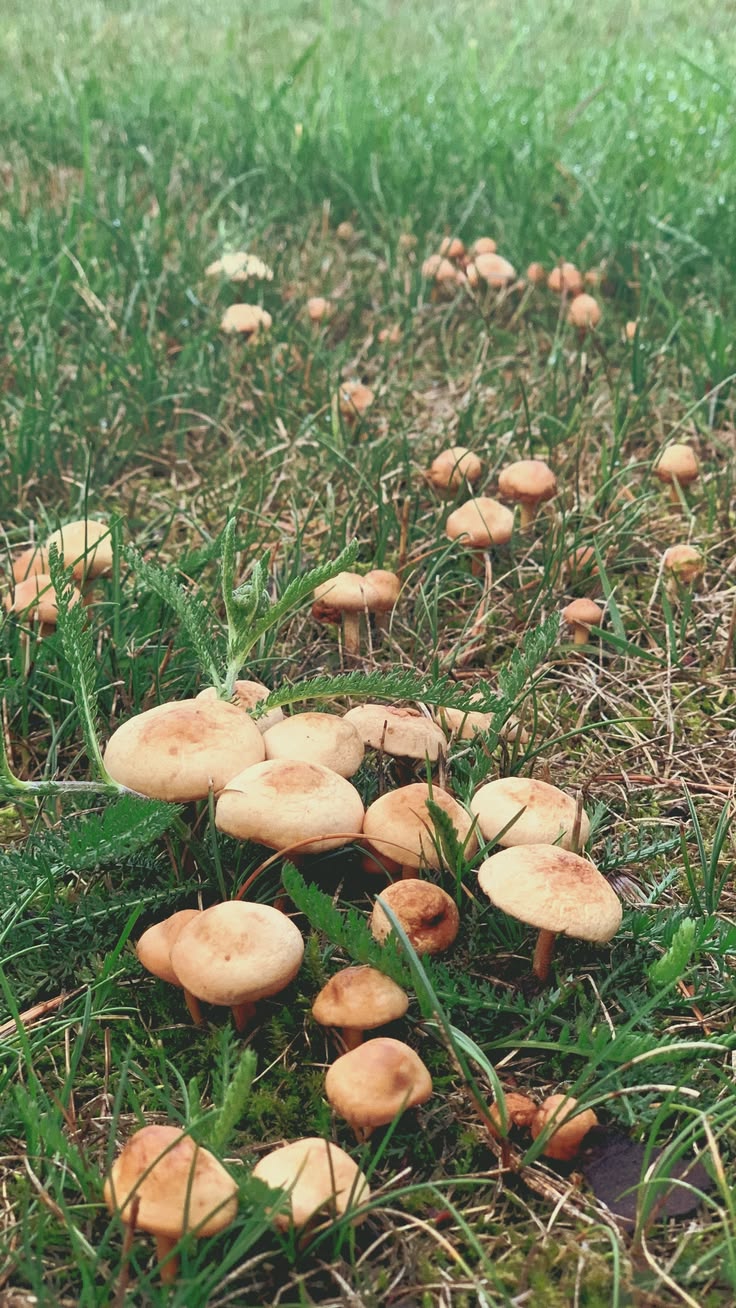
No, chickens must never eat wild mushrooms. This is the one absolute rule in this guide, and it holds for every wild species, every season and every yard. Wild mushrooms include the little brown ones that appear in the lawn after rain, the pale ones under trees, the bright capped ones in the flower beds and the shelf fungi on old logs. Some are harmless and some are deadly, and telling them apart takes expert knowledge that most keepers, and no chicken, can rely on.
The danger is that toxic mushrooms do not announce themselves. A deadly species can look plain and ordinary, and an edible species can look strange. Even mushroom experts use spore prints, microscopes and years of field experience to confirm a species, and they still make mistakes. A keeper guessing from a phone photo is gambling with the flock, and the stakes are liver and kidney failure, which can kill a hen days after she ate the mushroom.
Wild mushrooms also grow exactly where chickens scratch, which makes this a practical problem and not just a feeding question. After rain, walk the run and the garden before letting the flock out, and pick and bin any mushrooms you find. Wear gloves, since some toxic species can irritate skin, and put the mushrooms in a closed bin so the hens cannot reach them. If mushrooms keep appearing in one damp corner, that corner needs more sun and airflow, or a change of bedding, because fungi love wet and shady ground.
If you find your hens already pecking at a wild mushroom, take it away at once and watch the birds closely for the rest of the day. The section near the end of this guide covers exactly what to look for and when to call a vet.
Which Mushrooms Are Safe and Which Are Not
The safe list is short, and that is a good thing, because a short list is easy to remember. The unsafe list is everything else, and it stays long on purpose.
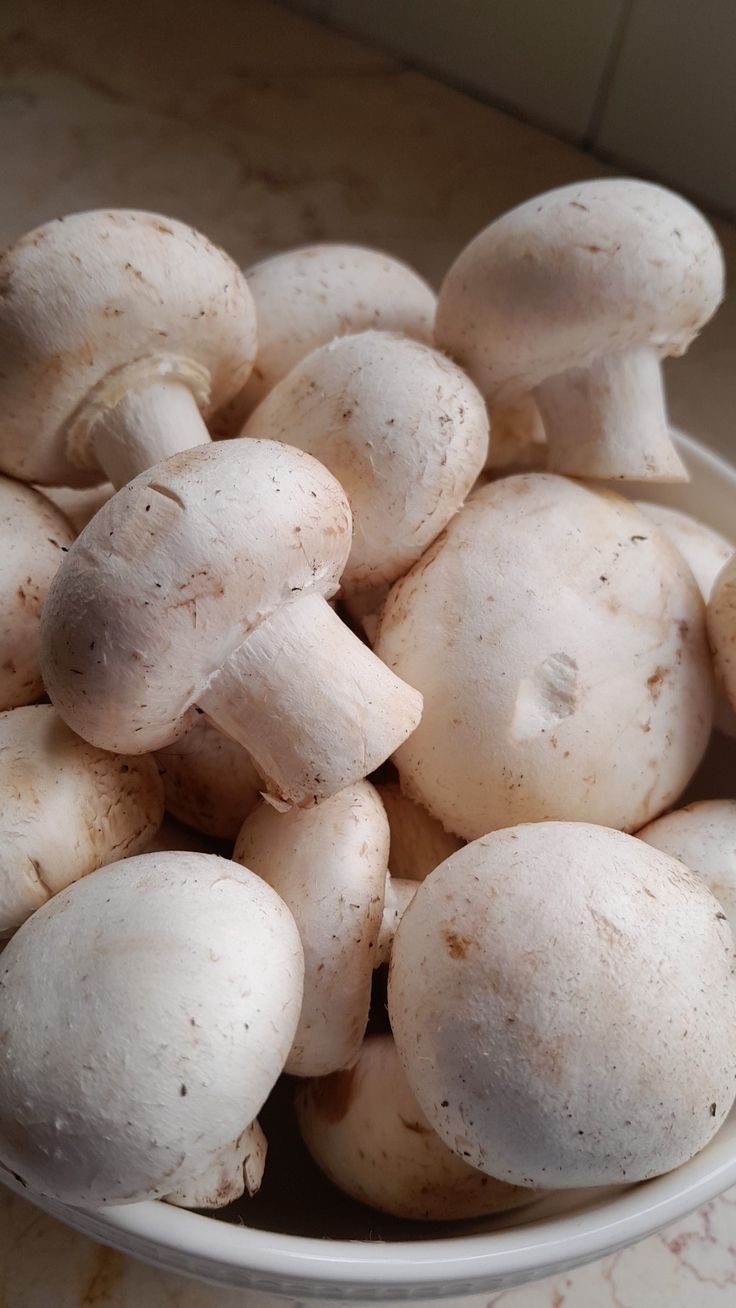
Safe in small amounts, store-bought only, are white button mushrooms, cremini mushrooms, portobello mushrooms, shiitake mushrooms and oyster mushrooms. These are the farmed kinds sold in shops and supermarkets. Shiitake and oyster mushrooms are fine too, served plain and chopped small, but they are dearer than button mushrooms and your hens will not know the difference, so the common button mushroom is the sensible everyday choice.
Not safe, ever, are any wild mushrooms, any mushroom picked from the garden, lawn, woods or compost heap, and any mushroom you cannot identify with total certainty. That includes the little brown mushrooms in the grass, the ones growing on logs and the ones that appear in the run after a wet week. It also includes dried wild mushrooms and mushroom supplements sold for people, since their species and dose are not made for chickens.
A few extra cautions belong here. Never feed mushrooms that have gone slimy or mouldy in the fridge, since spoiled food is a separate risk. Never feed mushrooms from a takeaway or restaurant dish, because those are seasoned. And never feed magic mushrooms or any mushroom grown for its drug effects, which are illegal in many places and dangerous for birds.
How Many Mushrooms and How Often
A few chopped pieces per hen, once or twice a week at most, is the right amount. Think of mushrooms as a garnish on the treat menu, not a meal. Two or three small pieces per bird is plenty, and for a flock of six hens, half a cup of chopped mushroom shared between them is a generous serving.
The reason for the small portion is not that mushrooms are dangerous in themselves. It is that treats of any kind must stay under 10 percent of what a hen eats in a day, and her proper feed must always come first. A hen that fills up on treats eats less of her balanced layer feed, and over weeks that gap shows up as weaker shells and fewer eggs. Mushrooms are low in calories, so they are a better treat than bread or corn, but the 10 percent rule still applies.
Frequency matters as much as portion. Once or twice a week keeps mushrooms as a novelty the hens enjoy, and it keeps the diet varied. Feeding them every day would crowd out other treats and add nothing, since mushrooms bring no nutrient the flock is missing. If your hens turn their beaks up at mushrooms, do not worry and do not push it. Some flocks love them and some ignore them, and either reaction is fine.
Young chicks under eight weeks old should not get mushrooms at all. Their diet needs to stay simple while their digestion develops, and chick starter feed covers everything they need. Wait until the pullets are on grower feed and eating greens confidently before offering a tiny piece.
How to Serve Mushrooms to Chickens
Serving mushrooms well takes five minutes and four simple steps. Start with fresh store-bought mushrooms and check each one, firm, dry and free of slime or dark spots. Wash them under running water and pat them dry, since shop mushrooms can carry a little compost dust.
Chop the mushrooms into pea sized pieces. Small pieces stop greedy hens from gulping a whole mushroom, and they let the treat spread across the flock instead of going to the fastest bird. For a portobello, remove the tough stem first and chop the cap only, since the stem is woody and hard to peck apart.
Cook the pieces plain if you have the time, in a dry pan or in a little water, with no oil, butter, garlic, onion, salt or sauce. Let them cool to room temperature, then scatter them on clean ground or in a shallow dish. Scattering is better than a pile, because it turns the treat into a little foraging game and gives the shy hens a fair chance.
Watch the flock for a few minutes after serving, the way you would with any new food. Most hens will peck, taste and decide. If a hen eats eagerly and shows no trouble, mushrooms can join the treat rotation. If the flock ignores the pieces, clear them away after an hour so they do not rot in the run, and try a different treat next time.
What to Do if a Chicken Eats a Wild Mushroom
If you see a hen eat a wild mushroom, act quickly and stay calm. Remove any mushroom pieces left in the run at once, and if you can, keep the piece she ate or take a clear photo of the mushroom for identification. Do not try to make the hen sick, and do not give her home remedies, since both can make things worse.
Watch her closely for the next 12 to 24 hours. The warning signs to look for are drooping wings, standing hunched and fluffed up, refusing food or water, watery or unusual droppings, wobbling or weakness, and a pale comb. Symptoms can appear within a few hours or take much longer, so a hen that looks fine after an hour is not out of danger yet. Keep her somewhere quiet, warm and easy to watch, with fresh water in reach.
Call a vet the same day, even if the hen still looks well. Tell the vet what the mushroom looked like, or send the photo, and say roughly how much she ate and when. A vet can judge the risk from the species and the timing, and early treatment gives a poisoned bird a far better chance than waiting for symptoms. If you have no poultry vet nearby, call any vet and ask, since mushroom poisoning is a known emergency and most vets will advise over the phone.
Prevention is the real fix, so after a scare, walk the whole run and garden and clear every mushroom you can find. Check again after the next rain, since new ones appear fast. A dry, sunny run with fresh bedding grows far fewer mushrooms than a damp, shaded one, so fixing drainage and airflow helps more than any single clear out.
Mushrooms and the Treat Rule
Mushrooms fit neatly into the treat rule that governs all extras, and that rule is worth repeating because it keeps every treat food safe. Treats stay under 10 percent of the daily diet, proper feed always comes first, and new foods are introduced one at a time in a small amount.
Our feeding pillar, What Can Chickens Eat, sets out this rule in full, and it is the best place to check any new food before offering it. The pillar lists the foods that are safe, the ones that need caution and the ones to avoid, and mushrooms sit in the caution group for exactly the reasons this guide gives, safe from the shop and dangerous from the wild. You can read it here, What Can Chickens Eat.
Two caution foods from the same shelf of the pantry make useful company for mushrooms. Chickpeas are the other cooked-only food in this series, and their rule is stricter than the mushroom rule, since chickpeas must always be fully cooked before a hen touches them. You can read the full guide here, Can Chickens Eat Chickpeas Cooked Only. Eggplant is the other caution food, and it teaches a different lesson, since only the ripe fruit is safe and the leaves are toxic. You can read that guide here, Can Chickens Eat Eggplant Ripe Fruit Only. Together the three guides show how the caution group works, a food can be fine in one form and unsafe in another, and the form is what the keeper controls.
Mushrooms also teach a habit that protects the flock beyond feeding time. A keeper who checks the run for wild mushrooms after rain is a keeper who spots other hazards too, a broken fence wire, a puddle of stagnant water, a patch of mouldy bedding. The five minute check is a small habit with a large payoff, and it starts with knowing that the mushrooms in the grass are not the mushrooms in the shop.
Frequently Asked Questions
Can chickens eat mushrooms from the grocery store?
Yes, plain store-bought mushrooms are fine in small amounts. White button, cremini, portobello, shiitake and oyster mushrooms are all safe when they are fresh, chopped small and served plain, with no butter, garlic, onion or salt. A few pieces once or twice a week is plenty.
Can chickens eat raw mushrooms or should they be cooked?
Both are fine for store-bought mushrooms, but cooked plain is the better choice. Cooking softens the mushroom and makes it easier to digest, while raw mushrooms are firm and rubbery. If you serve them raw, chop them into pea sized pieces so no hen gulps a whole mushroom.
Can chickens eat wild mushrooms growing in the yard?
No, never. Wild mushrooms must never be fed to chickens, and keepers should pick and bin any that appear in the run or garden. Some wild species are deadly, and even experts can mistake a toxic mushroom for an edible one. Cooking does not make a poisonous wild mushroom safe.
Can chickens eat mushroom stems or just the caps?
Hens can eat the soft stems of button and cremini mushrooms, chopped small along with the caps. The tough woody stem of a large portobello is best removed, since it is hard to peck apart. With any mushroom, the cap is the easy part and the stem is only worth serving when it is tender.
What happens if a chicken eats a wild mushroom?
Remove any mushroom left in the run, keep the bird somewhere quiet and easy to watch, and call a vet the same day, even if she still looks well. Watch for drooping wings, a hunched and fluffed up stance, refusing food or water, watery droppings, wobbling and a pale comb. Symptoms can take hours to appear, so do not assume a hen is fine just because she looks well at first.

Nusrat
Author, TheChickenPet.com
Keep Reading
What Can Chickens Eat, the full feeding guide with the treat rule and the safe, caution and avoid lists.
Can Chickens Eat Chickpeas Cooked Only, the other cooked-only food in the caution group.
Can Chickens Eat Eggplant Ripe Fruit Only, where only the ripe fruit is safe and the leaves are toxic.