
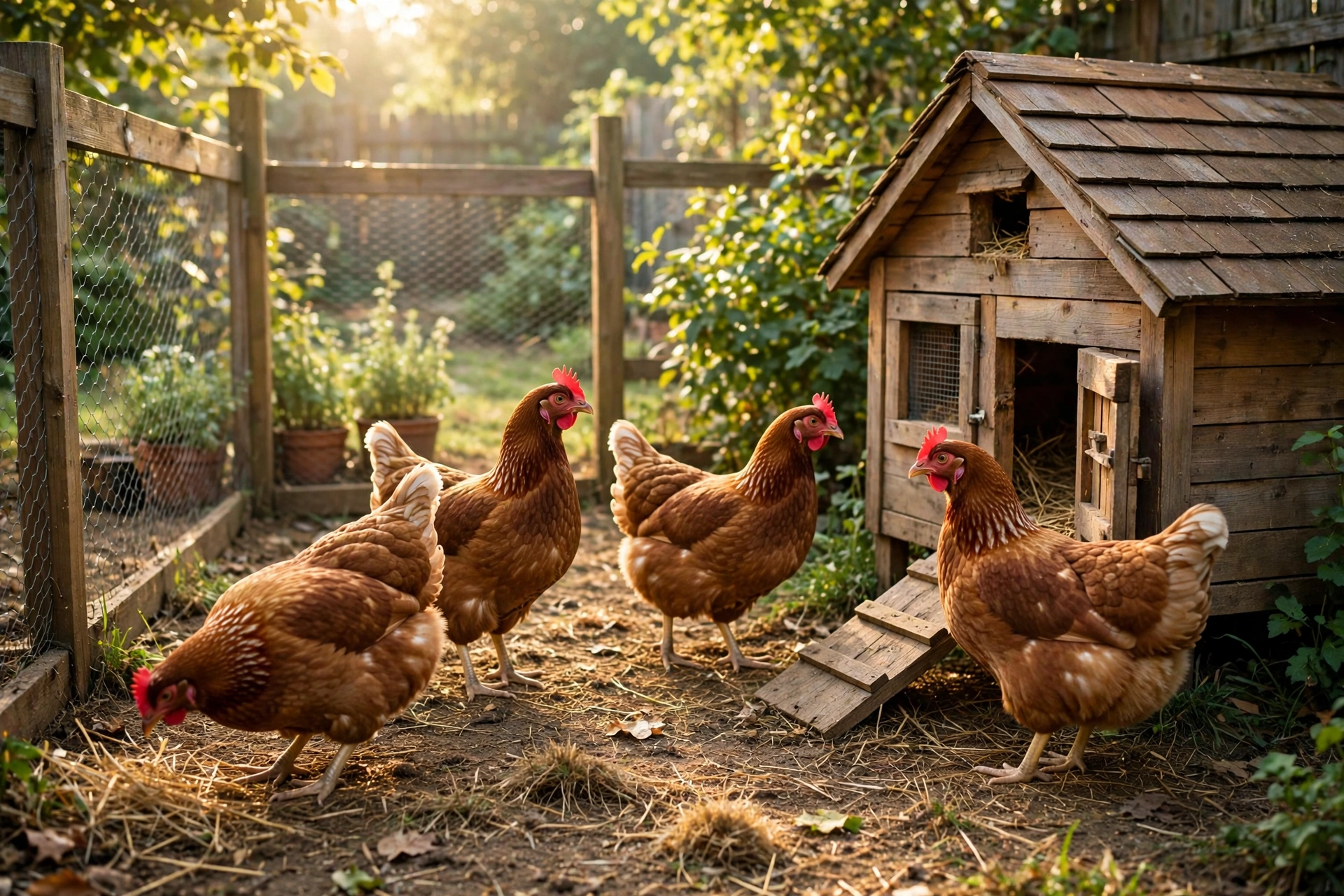
Start with 4 hens if you can, and never fewer than 3. Three is the smallest number that keeps chickens happy as a flock, and 4 to 6 is the sweet spot for most households. That range gives you enough eggs for a family, fits a normal backyard coop, and stays easy to look after.
The exact number for you comes down to three ceilings. How many eggs you want each week, how much coop and run space you have, and what your local rules allow. This guide works through all three, with the egg math in a table and one simple rule at the end. Start with the number your coop holds comfortably, minus two.
Table of Contents
- Why Three Hens Is the Floor
- Why Four to Six Is the Sweet Spot
- How Many Eggs Do You Actually Want
- How Many Hens for a Family of 4
- How Many Chickens Per Person
- The Space Ceiling
- The Local Rules Ceiling
- The Coop Minus Two Rule
- Nesting Boxes and the Rest of the Kit
- Chicks or Point of Lay Pullets
- What If You Get the Number Wrong
- Frequently Asked Questions
Quick Facts
Social floor. Never start with fewer than 3 hens, because chickens are flock animals.
Sweet spot. 4 to 6 hens suits most households.
Egg math. A good layer gives about 4 to 5 eggs a week, so 4 hens give about 20 eggs a week.
Family of 4. 4 to 5 hens cover a family of four, including baking.
Space rule. About 4 square feet of coop and 10 square feet of run per bird.
Nesting boxes. One box per 3 to 4 hens.
Honest limit. Start with the number your coop holds comfortably, minus two.
Roosters. Not needed for eggs. One rooster per 8 to 12 hens if you keep one at all.
Why Three Hens Is the Floor
Chickens are flock animals, and that fact decides the smallest number before anything else does. A hen on her own gets lonely and stressed, and a stressed hen lays poorly, picks at her own feathers, and falls sick more easily. That is why the answer to how many chickens a beginner should start with never begins at one.
Two hens are better than one, but two is still fragile. If one bird dies, falls ill, or goes broody and stops joining the flock, the other is suddenly alone, and you are back to the lonely-hen problem with no time to fix it gently. Three hens give the flock a buffer. One bird can be unwell or broody while the other two still have each other, and the pecking order has enough birds in it to settle without one hen taking all the bullying.
Three is the minimum flock size for chickens kept as pets, and it holds even when you only want a few eggs. If you want fewer eggs, pick a breed that lays less often rather than keeping fewer birds. Our guide on keeping just one chicken explains the lonely-hen problem in full, and it is worth reading before you decide.
Why Four to Six Is the Sweet Spot
Four to six hens is where most beginners land, and for good reasons. Four hens give you about 20 eggs a week in the laying season, which covers breakfast for a family with eggs to spare. Six hens give you about 30, which covers baking and sharing with neighbours too. The feed bill stays small, about a quarter pound of layer feed per bird per day, and the daily chores take minutes rather than an hour.
The pecking order also works better in this range. With 4 to 6 birds there are enough hens for the bossy one to spread her attention around, and enough space in a standard coop for the lowest hen to get out of the way. Add a fifth or sixth hen and you also buy insurance against the natural dips in laying. When one hen moults, goes broody, or takes a winter break, the other four or five keep the egg basket from going empty.
Go below four and you lose that buffer. Go far above six and the work, the feed, the mess and the space all grow faster than the eggs do. That is why 4 to 6 is the number most experienced keepers suggest when a beginner asks how many chickens to get. It is big enough to feel like a real flock and small enough to learn on.
How Many Eggs Do You Actually Want
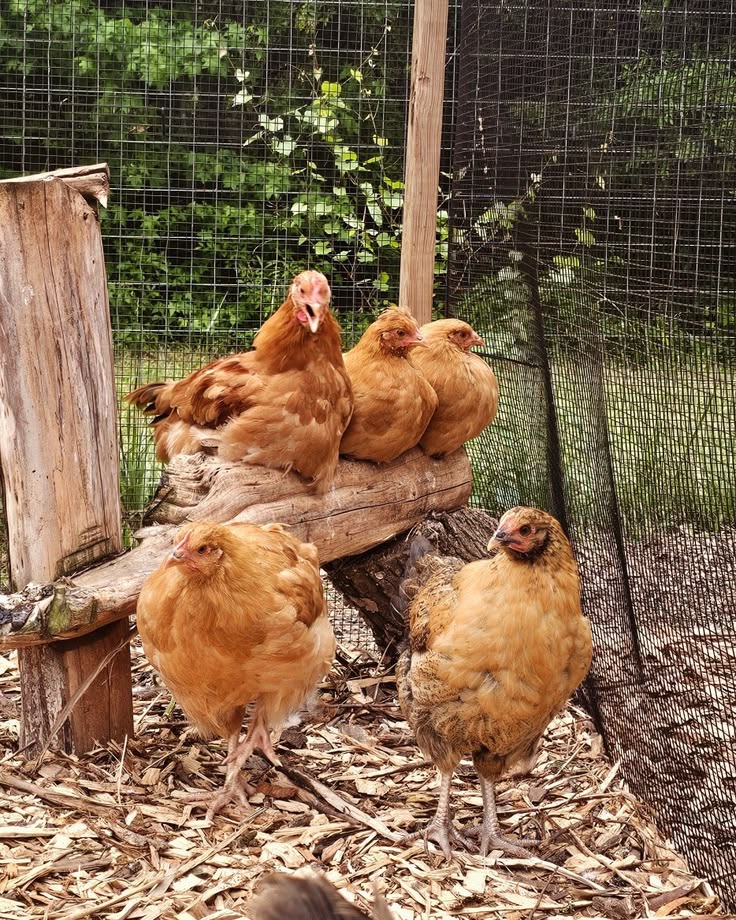
Egg math is the most practical way to pick your number, because it works backwards from what your household eats. A good laying hen gives about 4 to 5 eggs a week in her first two laying years, when the days are long and she is healthy. Laying drops in winter, during moult, and as hens age, and young pullets take a few months to start laying at all, so treat these numbers as a good-season average rather than a promise.
| Hens in your flock | Eggs in a good week |
|---|---|
| 3 hens | About 15 eggs |
| 4 hens | About 20 eggs |
| 5 hens | About 25 eggs |
| 6 hens | About 30 eggs |
| 8 hens | About 40 eggs |
Count how many eggs your household eats in a normal week, then add a few for baking and for giving away, because fresh eggs always find a taker. If the answer is a dozen, 3 hens cover it. If it is closer to two dozen, you need 5 hens. If you bake most weekends, add one more hen to the number the table gives you.
This is also the answer to how many chickens you need for eggs. Do not start from the number of birds and hope the eggs work out. Start from the eggs and let the table give you the birds.

How Many Hens for a Family of 4
A family of four typically eats 12 to 18 eggs a week, which is one to one and a half dozen. Four hens cover that comfortably in the laying season, with a few eggs to spare for baking. Five hens cover it with room for weekend baking and the odd cake, and they keep the basket full when one hen takes a break.
Three hens can work for a family of four if you eat eggs lightly, but there is no slack in it. The week one hen moults, the basket drops to about 10 eggs, and that is when beginners start wishing they had bought one more bird. So for the question of how many hens for a family of 4, the honest answer is 4 hens as the starting point and 5 if your family bakes.
The same thinking scales to other households. A single person who eats eggs most mornings needs 3 hens, because the flock floor matters more than the egg count. A couple needs 3 hens, or 4 if they bake. A family of six, or a household that bakes every week, should look at 6 hens. And if you plan to sell a few dozen eggs to neighbours, 8 hens is a better starting point than 6, because selling eggs takes a steady surplus.
How Many Chickens Per Person
A handy rule of thumb is about one hen per person, plus one extra hen for the household. That gives a single person 2 hens for eggs, but the flock floor lifts that to 3. A couple gets 3 hens. A family of four gets 5 hens. A family of six gets 7 hens, which most beginners round down to 6 and top up later if the eggs run short.
This rule works because it tracks both the egg need and the flock need at once. One hen per person covers the breakfast eggs, and the extra hen covers the baking, the broody weeks, and the winter dip. It is a starting point rather than a law, because laying rates vary by breed and by season. A flock of Rhode Island Reds will out-lay the same number of Silkies by a wide margin, and a flock of older hens lays less than a flock of pullets.
So use the per-person rule to sanity check the number from the egg table, not to replace it. If the egg table says 4 hens and the per-person rule says 5, go with 5 if your coop allows it, because the cost of one extra hen is small and the cost of running short on eggs every week is a daily annoyance.
The Space Ceiling
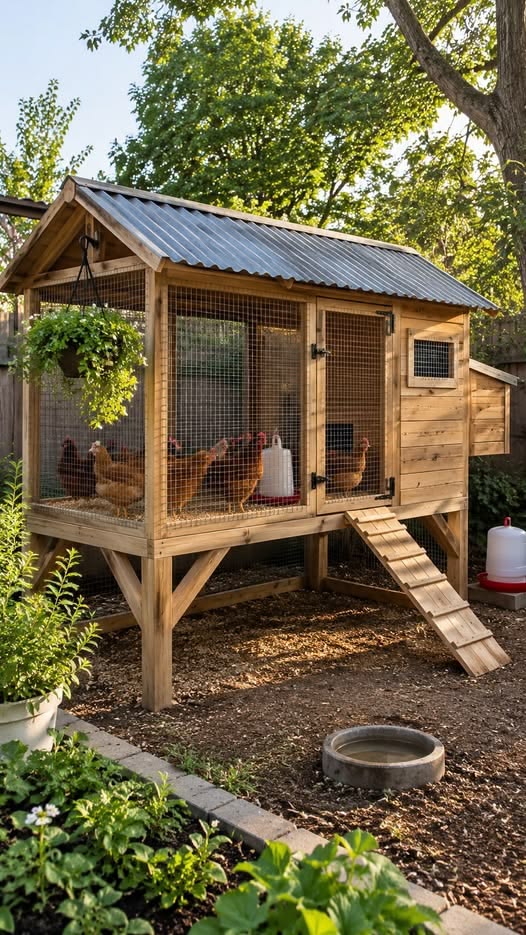
Space is the ceiling most beginners get wrong, because coop sellers are generous with their numbers. The working figures are about 4 square feet of coop floor per bird and about 10 square feet of run per bird. Those are the numbers our space guide uses, and it works through the full math for a flock of four, so read it before you buy or build.
Measure your coop honestly. Count the inside floor space only, not the nesting box area and not the space under a raised coop that the birds cannot use in bad weather. Then divide by four. A coop with 16 square feet of floor holds 4 hens comfortably, not 6, whatever the box it came in says. The run matters just as much, because hens spend their waking hours there. A run of 40 square feet holds 4 hens, and a run of 60 holds 6.
Overcrowding shows fast. Hens peck each other, bedding turns wet and smelly within days, and stress makes the whole flock lay less. Every extra bird you squeeze in costs you more in feed, cleaning and vet trouble than the eggs she adds. If the space says 4 hens, the answer is 4 hens, even if your heart says 6.
The Local Rules Ceiling
Check your local rules before you buy birds, because the law can overrule every other ceiling in this guide. Many towns and suburbs allow 4 to 6 hens and ban roosters outright. Some allow no chickens at all, and some set the cap by lot size, so a small yard gets 3 hens and a large one gets 8. Homeowners associations and landlords can say no even when the town says yes.
A quick check saves a forced rehoming later. Look up your town or city ordinance, search for the word poultry or chickens, and note the number cap, the distance rule for coops, and whether roosters are allowed. If the rules are unclear, a short call to the council office settles it. Do this before you buy the coop, because a coop built for 8 hens in a town that allows 4 is money wasted.
If your cap is lower than the number you want, take the cap as your answer and pick good layers to make the most of it. Four excellent layers give you more eggs than six poor layers, and they fit the rules.
The Coop Minus Two Rule
Here is the honest limit this guide promised. Take the number your coop and run hold comfortably at the space figures above, then subtract two, and start with that number.
If your coop holds 6 hens comfortably, start with 4. If it holds 8, start with 6. The two spare places are not wasted space. They absorb everything beginners underestimate. The mess is always bigger than you expect. The birds always need more room in winter, when they stay inside for longer. One bird always turns out bigger or bossier than the rest, and she needs room to be kept away from. And sooner or later a hen goes broody or falls ill and needs a quiet corner of her own.
The minus-two rule also leaves you room to grow without building a second coop. When you have kept chickens for a year and you know you want more, the space is already there. Starting at the full capacity leaves you nowhere to go except a bigger coop or a smaller flock, and both of those cost money and stress the birds.
Nesting Boxes and the Rest of the Kit
The kit follows the number, so get the number right first and then buy for it. Nesting boxes run at one box per 3 to 4 hens, which means a flock of 4 to 6 hens needs two boxes, not six. Hens like to share a favourite box anyway, and extra boxes mostly gather dust. Our nesting box guide works out the exact count and size for your flock.
Roost space runs at about 8 to 10 inches of roost bar per bird, so a flock of 6 needs about 5 feet of roost in total. Feeders and waterers come in sizes too, and a feeder rated for 6 hens will run dry by mid-afternoon if you keep 10. Buy the kit for the number you plan to keep, not the number you dream of keeping one day, and check the ratings before you pay.
Chicks or Point of Lay Pullets
Whether you start with chicks or with point of lay pullets changes the number you should buy. If you start with day-old chicks, buy one or two extra, because a chick can fail in the first weeks and straight run chicks may include cockerels you did not plan for. Chicks also need a brooder with heat for 6 to 8 weeks before they can move into the coop, so the extra birds cost you brooder space first.
If you buy point of lay pullets at 16 to 20 weeks old, buy the exact number you want, because sexed pullets are reliably female and they start laying within a few weeks. Pullets cost more per bird than chicks, but they skip the brooder, the heat lamp, and the anxious first weeks, and for most beginners that trade is worth it.
Either way, buy all your birds at once from the same source. Adding birds later is possible, but it means quarantine and a pecking order fight, and it is harder than starting with the right number in the first place.
What If You Get the Number Wrong
Getting the number wrong is fixable, and most keepers adjust in the first year. If you started too small, you can add two or three birds, but do it with a quarantine period and a see-but-do-not-touch introduction, because the old flock will defend its pecking order. Adding one bird alone is the hardest introduction of all, so add at least two at a time.
If you started too big, rehoming is possible but slow, and overcrowding shows fast in pecking, dirty bedding and stressed birds. Do not wait for the flock to sort itself out, because it will not. Rehome the extra birds early, or build a bigger run, and treat it as a lesson in measuring first.
Better still, start at the low end of the sweet spot. Four hens teach you everything six hens would, with less mess and less feed, and you can always add two more next spring when you know what you are doing.

Frequently Asked Questions
How many chickens should a beginner get?
A beginner should get 4 to 6 hens, and never fewer than 3. Four hens give you about 20 eggs a week and fit a standard backyard coop, while six give you about 30 and cover baking too. Start with 4 if you are unsure, and add more later once you know the routine.
Is 2 chickens enough?
Two chickens are enough for eggs, because two good layers give you about 8 to 10 eggs a week, but two is not enough for the birds. Chickens are flock animals, and a pair is fragile, because one death or illness leaves a lone hen. Start with 3 hens at the very least.
How many hens for a family of 4?
Four to five hens cover a family of four. Four hens give you about 20 eggs a week, which covers breakfast with a few to spare. Five hens cover weekend baking as well and keep the basket full when one hen takes a break.
What is the minimum flock size for chickens?
The minimum flock size is 3 hens. Three is the smallest number that still behaves like a flock, survives one bird going broody or falling ill, and keeps every bird with company. One or two hens is not a flock, and the birds will show it in stress and poor laying.
Do I need a rooster for eggs?
No, hens lay eggs without a rooster, and a rooster changes nothing about the number or quality of table eggs. You only need a rooster if you want fertile eggs for hatching. If you do keep one, about one rooster per 8 to 12 hens is the usual ratio, and most suburbs ban roosters anyway, so check your local rules first.

Nusrat
Author, TheChickenPet.com
Keep Reading
How to Predator Proof a Chicken Coop, Step by Step, the coop hub, with the steps that keep hens safe at night.
Can You Keep Just One Chicken? Why a Single Hen Gets Lonely, why a single hen gets lonely, and why three is the floor.
How Much Space Do 4 Chickens Need? Coop and Run Sizes That Work, the coop and run sizes for a flock of four, with the full math.