
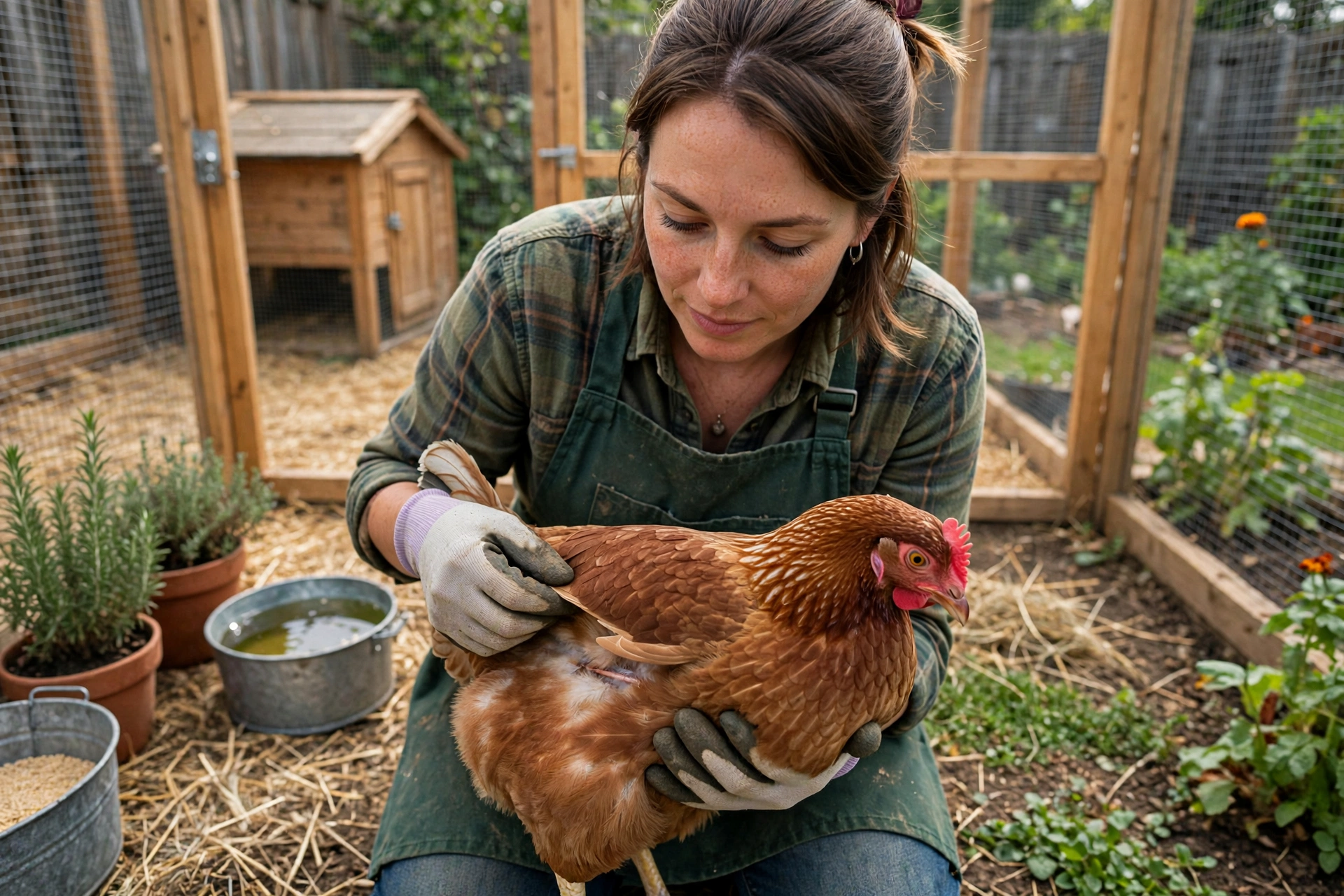
A hen with a crusty vent, a sour smell and matted feathers around her tail is a worrying sight, and many keepers do not know what they are looking at. It could be diarrhea, it could be mites, it could be a prolapse, and it could be vent gleet. Each of those problems needs different care, so getting the name right matters before you start any treatment.
Vent gleet is a yeast infection of the vent, and its proper name is cloacitis. It happens when a yeast called Candida, which lives in small numbers in a healthy gut, grows out of control around the vent and the cloaca. The result is a white or yellow discharge that dries into a crust, a red and sore vent, and a smell that keepers often describe as sour or yeasty. It is uncomfortable for the hen, it can put her off laying, and it can spread if the conditions that caused it are not fixed.
This guide will help you spot vent gleet, tell it from the three lookalikes the site already covers, and treat it safely at home.

Table of Contents
- What Is Vent Gleet in Chickens
- Signs of Vent Gleet
- Vent Gleet vs Prolapse
- Vent Gleet vs Diarrhea and Mites
- Vent Gleet Causes
- Is Vent Gleet Contagious
- How to Treat Vent Gleet at Home
- Why Antibiotics Make Vent Gleet Worse
- When to Call a Vet at Once
- Prevention That Keeps Vent Gleet Away
- Frequently Asked Questions
Quick Facts
At a Glance Vent gleet is a yeast overgrowth of the vent, clinically called cloacitis. It shows as a white or yellow crusty discharge, a sour yeast smell, a red sore vent and matted feathers around the tail.
Home Care Isolate the bird, wash the vent gently with warm water and pat it dry, apply an antifungal cream such as miconazole or clotrimazole to the outside of the vent only, and give probiotics for 7 to 10 days. Hold off grain treats while she recovers.
Good to Know Antibiotics make vent gleet worse, because they wipe out the good gut bacteria that keep yeast in check. Call a vet at once if there are bloody droppings, if the bird is straining or cannot pass waste, or if there is no improvement in a week.
What Is Vent Gleet in Chickens
Vent gleet in chickens is an infection of the vent and the cloaca caused by an overgrowth of yeast, most often Candida albicans. The cloaca is the single opening at the rear of the bird where droppings and eggs both leave the body, and the vent is the outside opening of that passage. In a healthy hen, small numbers of Candida yeast live in the gut without causing any trouble, kept in balance by the good bacteria that share the same space.
Vent gleet starts when that balance breaks down. Something weakens the good bacteria or stresses the bird, and the yeast multiplies far beyond its normal numbers. The yeast then irritates the lining of the cloaca and the skin of the vent. The discharge is usually white or yellow, thick and pasty, and it dries into a crust on the feathers around the vent. It often has a sour, yeasty smell that is quite different from the normal smell of droppings.
The clinical name is cloacitis, which simply means inflammation of the cloaca, so if your vet says cloacitis, they are talking about vent gleet. It is most often seen in laying hens, and it is more common in older hens, in hens that have been laying hard, and in birds that have recently been ill or stressed. Roosters can develop it too, but it is far less common in them.
Vent gleet is not the same as a bacterial vent infection, and it is not the same as a dirty vent from diarrhea alone. The crusty discharge plus the sour smell plus the red soreness together are what point toward yeast. Without care, the crust builds up and the infection can linger for weeks, but with steady home care and a fix for the cause, most hens recover well.
Signs of Vent Gleet
The first sign most keepers notice is the discharge. A hen with vent gleet has a white or yellow discharge around the vent, and it dries into a crust on the feathers below and around the tail. The crust can be thick enough to glue the feathers together, and it may need a gentle wash to remove. The discharge itself is pasty rather than watery, and it often keeps coming back for a day or two after it is cleaned off, until the yeast is brought under control.
The smell is the second sign, and experienced keepers often notice it before they see the crust. Vent gleet has a sour, yeasty smell that is different from normal droppings. If you lift a hen and catch a sour smell from her rear end, look at her vent closely before you assume anything else is going on.
The vent itself usually looks red, swollen and sore. The skin around the opening may be raw and inflamed, and the hen may flinch or move away when you touch the area. She may also peck at her own vent, which makes the soreness worse and can lead to bleeding. The feathers around the vent become matted and dirty, and in a bad case the whole area under the tail looks wet, stained and unkempt, even in a hen that was clean a few days earlier.
Laying often changes too. A hen with vent gleet may lay fewer eggs, lay soft shelled eggs, or stop laying for a while, because the infection irritates the passage the egg must travel through. A drop in laying on its own never proves vent gleet, but a drop in laying together with a crusty vent and a sour smell is a strong clue. She may also eat a little less, stand a little hunched, or strain when she passes droppings, because the sore vent makes passing waste uncomfortable.

Vent Gleet vs Prolapse
Vent gleet vs prolapse is the comparison keepers ask about most, because both problems show up at the vent and both look alarming at first glance. They are different conditions, they look different when you look closely, and they need different care, so it is worth learning how to tell them apart.
A prolapse, sometimes called a vent prolapse or a blown vent, is when part of the oviduct or the cloaca pushes out through the vent and stays outside the body. What you see is pink or red tissue sticking out of the vent, often in a tube or a rounded mass shape. It is wet and fleshy, not crusty, and it does not look like a discharge. A prolapse is usually the result of straining to lay a very large egg, laying too early, obesity, or a calcium problem, and it is an emergency because the exposed tissue can dry out, be pecked by other birds, and become infected.
Vent gleet does not push tissue out of the body. The vent stays in its normal place, and what you see is discharge and crust around the opening, with red and sore skin. There is no fleshy mass hanging out of the vent. If you see pink tissue protruding from the vent, treat it as a prolapse, not as vent gleet. Keep the tissue moist and clean, keep the bird away from the flock so other birds cannot peck at it, and call a vet at once.
Straining alone does not tell you which problem you have, because a hen with vent gleet may strain when she passes droppings and a hen with a prolapse strains because something is stuck. Look at the vent itself. Protruding tissue means prolapse. Crusty discharge and a sour smell with no tissue out means vent gleet is the more likely answer.
An egg bound hen can also strain, and she will often stand hunched, strain repeatedly, and pass little or no droppings. Our guide on the egg bound hen explains that emergency in full. Vent gleet, prolapse and egg binding are three separate vent problems with three separate treatments, and the vent check is what separates them.
Vent Gleet vs Diarrhea and Mites
Vent gleet is also easy to confuse with plain diarrhea and with mites, and both of those are common in backyard flocks. Diarrhea makes the feathers around the vent dirty and wet, and a keeper who sees a messy vent may assume yeast at once. The difference is in what the mess is made of and what it smells like. Diarrhea is watery droppings, often greenish or brown, that soil the feathers but do not form a thick white or yellow crust. Vent gleet produces a pasty discharge that dries into a crust, and it carries that sour yeast smell. A hen with diarrhea alone usually has a vent that is dirty but not red and swollen in the same way, and the mess clears up once the droppings firm up again.
Diarrhea also has many causes of its own, and most of them have nothing to do with yeast. A sudden feed change, too many watery treats, heat, stress, coccidiosis or a bacterial infection can all cause loose droppings. If your hen has watery droppings without a crusty discharge and without a sour smell, start with the diarrhea causes first. Our guide on why does my chicken have diarrhea covers those causes in detail.
Mites are the other lookalike, because they live around the vent and they make the skin sore and the feathers dirty. A heavy mite load can leave the skin red, irritated and scabby, with matted feathers. The difference is that mites are living insects you can see if you look closely. Part the feathers around the vent, under the wings and at the base of the neck, and look for tiny moving specks, grey or reddish, and for pale clusters of mite eggs stuck to the feather shafts. Vent gleet has no moving specks and no egg clusters, only discharge and crust.
A hen can also have both problems at once, because mites weaken a bird and stress her immune system, and that stress can let yeast take hold. That is why the vent area check should always include a mite check. Our guide on chicken mites explains what to look for and how to treat them. If you find mites, treat them first or alongside the yeast care. The practical rule is simple. A crusty white or yellow discharge with a sour smell points to vent gleet. Watery droppings with no crust point to diarrhea. Tiny moving specks around the vent point to mites. Pink tissue sticking out points to prolapse.
Vent Gleet Causes
Vent gleet causes all come back to the same idea, something lets yeast grow faster than the good gut bacteria can hold it back. The yeast is already there in small numbers, so vent gleet is not usually caught from outside. It is an overgrowth from inside, triggered by a change in the bird or in her surroundings.
Antibiotics are one of the most common triggers. Antibiotics kill bacteria, and they do not only kill the harmful ones. They also wipe out the good gut bacteria that keep Candida in check, and once those bacteria are gone, the yeast has room to multiply. A hen that has just finished a course of antibiotics for another illness is at higher risk of vent gleet in the weeks that follow.
Stress is another major cause. Moving to a new coop, losing a flock mate, a predator scare, overcrowding, a long spell of heat, or a moult can all stress a hen enough to weaken her immune system. A stressed bird is less able to keep yeast in balance, and the vent is often where the problem shows first. Older hens and hens that have been laying hard are more vulnerable for the same reason.
Wet litter is a very practical cause, and it is one of the easiest to fix. Yeast loves warm, damp conditions, and a coop with wet bedding, leaking drinkers or poor ventilation gives it exactly what it needs. A hen that sits in damp litter day after day keeps her vent area damp too, and damp skin is more easily irritated and more easily infected.
Diet plays a part as well. Too many starchy treats, such as large amounts of bread, corn, pasta or scratch grains, feed yeast in the gut and can tip the balance toward overgrowth. Other illnesses can set the stage too. A hen that has recently had coccidiosis, a respiratory infection or a crop problem may have a gut that is already out of balance, and yeast can follow on behind. For a wider look at the routine care that keeps the gut and the coop in balance, the Chicken Care and Health pillar is a good place to start.
Is Vent Gleet Contagious
Is vent gleet contagious is a question every keeper asks as soon as they spot it, because the next worry is always the rest of the flock. The honest answer is that vent gleet is not highly contagious in the way a respiratory virus is, but it can spread, and the conditions that caused it in one bird often affect the whole flock.
Candida yeast is present in the environment and in the guts of healthy birds, so a hen does not need to catch it from a sick flock mate. She already carries it. What she needs is a trigger that lets it overgrow, and if that trigger is shared, other birds may develop the same problem. Wet litter, leaking drinkers, a stressful move, a recent antibiotic course given to the whole flock, or a diet heavy on starchy treats are all shared triggers.
Direct spread is still possible in a smaller way, because the discharge from an infected hen contains large numbers of yeast cells that can contaminate shared bedding, drinkers and dust baths. A healthy hen is unlikely to become ill from them alone, but a hen that is already stressed or run down is more vulnerable, so isolating the sick bird is still the right move.
The practical approach is to isolate the affected hen, treat her, and fix the shared conditions for the whole flock at the same time. Clean out the coop, put in fresh dry bedding, clean the drinkers, and check the diet, then watch the rest of the flock closely for a week or two. If a second bird shows the same crusty discharge and sour smell, treat her the same way and look harder for the shared cause, because two cases in one flock almost always mean the litter, the water or the feed needs attention, not just the birds.
How to Treat Vent Gleet at Home
How to treat vent gleet at home starts with separation and a gentle clean, and it works best when it is done every day for a week or more. Vent gleet rarely clears in a day, and stopping treatment early because the bird looks a little better is the most common reason it comes back.
Isolate the hen first, in a clean dry pen or a dog crate with fresh bedding, food and water of her own. Isolation protects the rest of the flock, it keeps other birds from pecking at her sore vent, and it lets you watch her droppings, her eating and her laying closely. Keep her warm, quiet and dry, and handle her gently, because her vent is sore.
Wash the vent area gently with warm water. Hold the hen securely, wet the matted feathers and the crust, and let it soften before you try to remove it. Do not pull dry crust off the skin, because it will tear the sore skin underneath and cause bleeding. Once the crust has softened, work it away gently with your fingers or a soft cloth, wash the vent until it is clean, and pat the area dry. Do not leave her wet, because damp skin gives yeast the conditions it likes.
Apply an antifungal cream to the outside of the vent only, once the area is clean and dry. Miconazole or clotrimazole cream, the kind sold for human yeast infections, is the usual choice, and a thin layer on the outside of the vent is enough. Do not push cream inside the vent or the cloaca, because the inside lining is delicate and internal treatment needs a vet. Apply it once or twice a day, after each wash, and keep applying it for several days after the discharge has stopped.
Give probiotics for 7 to 10 days to rebuild the good gut bacteria that keep yeast in check. A poultry probiotic from a feed store is the simplest option, mixed into the drinking water or the feed as the packet directs. Keep giving it for the full 7 to 10 days even if the vent looks better after three or four days, because the gut takes longer to rebalance than the skin takes to look clean. Add apple cider vinegar to the drinking water at 1 tablespoon per gallon for 2 weeks, using a plastic drinker, not a metal one, because the acid can corrode metal. Change the water daily, and do not add vinegar to water that already has probiotics in it, so give the two at different times of day if you are using both.
Hold off grain treats during recovery. Stop bread, corn, scratch grains, pasta and other starchy treats until the hen has been clear for at least a week. Keep her on a good layer feed with fresh water, and offer leafy greens in small amounts if she will eat them. Watch her every day and note whether the discharge is less, whether the smell is fading, and whether she is eating and laying again. Most hens start to improve within a few days of steady care. If there is no improvement at all after a week, or if she gets worse at any point, call a vet, because she may need a prescription antifungal or treatment for a second problem.

Why Antibiotics Make Vent Gleet Worse
Why antibiotics make vent gleet worse is one of the most important points in this whole guide, because it is the mistake that turns a treatable problem into a long one. Antibiotics kill bacteria, and yeast is not a bacterium. An antibiotic does nothing to Candida at all, so it cannot cure a yeast infection, and it actively helps the yeast by killing the good bacteria that were holding it back.
A healthy gut is a crowded place, and the good bacteria and the yeast compete for the same food and the same space. When the good bacteria are present in large numbers, the yeast stays small in number and causes no trouble. When an antibiotic wipes out those good bacteria, the yeast multiplies freely. That is why a hen that has just had antibiotics can develop vent gleet in the weeks after the course finishes, even though the original illness is gone.
This means you should never give antibiotics for vent gleet, and you should never give them on the assumption that they will clear up a sore vent. They will not help, and they are likely to make the discharge worse and the recovery longer. If a hen with vent gleet is also on antibiotics for a separate problem that a vet has diagnosed, talk to your vet about the timing, because the vet may want to adjust the plan or add probiotics alongside the antibiotic course.
The same caution applies to long antibiotic courses given without a vet. A long course without a clear diagnosis does more harm than good, because it weakens gut health and it can encourage resistant bacteria. If your hen needs antibiotics for a real bacterial illness, let a vet decide which one and how long to give it. For vent gleet itself, the treatment is antifungal cream, probiotics, clean dry housing and time, not antibiotics.
When to Call a Vet at Once
Most cases of vent gleet respond to steady home care, and most hens improve within a week. Some signs mean the problem is more serious than home care can handle, and they should not wait for another wash or another day of cream. Call a vet at once if you see any of the signs in this section.
Call a vet at once if there are bloody droppings. Blood in the droppings is never a normal part of vent gleet, and it can mean coccidiosis, a bacterial infection, internal injury, or a second problem alongside the yeast. A hen with bloody droppings needs a diagnosis, not just a wash, and she needs it quickly.
Call a vet at once if the bird is straining and cannot pass waste. A hen that strains repeatedly, passes nothing or almost nothing, and stands hunched and distressed may have a blockage, an egg stuck inside, or a prolapse that has not yet shown itself. Vent gleet alone does not usually stop a hen from passing waste, so straining that does not ease is a warning sign. Keep her warm and quiet, do not try to force anything out of her, and get vet help as soon as you can.
Call a vet at once if the bird cannot pass waste at all, if her abdomen feels hard or swollen, or if she stops eating and drinking and becomes limp or unresponsive. These are emergency signs in any hen, and they need a vet, not home treatment. Offer water within easy reach, keep her warm and safe, and do not try to force feed or force water a bird that cannot swallow properly, because she may choke. Call a vet if there is no improvement in a week. A week of daily washing, antifungal cream, probiotics and clean dry housing should show clear improvement, with less discharge, less smell and less redness. If nothing has changed after a week, the diagnosis may be wrong, there may be a second infection alongside the yeast, or the bird may need a prescription antifungal.
Prevention That Keeps Vent Gleet Away
Prevention that keeps vent gleet away is mostly about keeping the coop dry, the water clean, the diet balanced and the birds calm. None of these steps is difficult on its own, and together they make vent gleet far less likely in your flock.
Keep the litter dry above all else. Use fresh dry bedding, change it regularly, and change it more often in wet weather. Fix leaking drinkers straight away, fix any low spot where water pools after rain, and make sure the coop has good ventilation so damp air does not sit inside. A dry coop is the single best defence against yeast, because yeast loves warm damp conditions and struggles in a dry one. Our Care and Health pillar has more on routine coop care and the daily habits that keep a flock healthy.
Keep the drinkers clean. Scrub drinkers every day or two, change the water daily, and keep drinkers raised off the ground so bedding and droppings cannot fall into them. A dirty drinker spreads yeast and bacteria to every bird that drinks from it.
Keep stress low. Give the flock enough space, avoid overcrowding, introduce new birds slowly, and protect the run from predators so the birds are not frightened at night. A calm hen keeps her gut bacteria in balance far better than a stressed one. During a moult or a heatwave, give extra shade, extra water and a little extra care.
Keep the diet balanced and keep starchy treats small. A good layer feed should be the main food, with treats kept to a small share of the diet. Bread, corn, scratch grains and pasta are fine in small amounts, but they should never replace proper feed. Do not give long antibiotic courses without a vet. Antibiotics have a real place in chicken keeping, but only when a vet has diagnosed a bacterial illness and chosen the right product and the right length of course. Quarantine new birds for at least two weeks before you add them to the flock, and check their vents during quarantine.

Frequently Asked Questions
What is vent gleet in chickens?
Vent gleet in chickens is a yeast infection of the vent and the cloaca, clinically called cloacitis. It is caused by an overgrowth of Candida yeast, which lives in small numbers in a healthy gut. When good gut bacteria are weakened by antibiotics, stress, wet litter or a poor diet, the yeast multiplies and causes a white or yellow crusty discharge, a sour yeast smell, and a red sore vent.
How can I tell vent gleet from a prolapse?
Vent gleet vs prolapse is a common worry, and the vent itself gives the answer. A prolapse shows pink or red tissue sticking out of the vent, wet and fleshy, and it is an emergency. Vent gleet does not push tissue out of the body. It shows a white or yellow crusty discharge around the vent, a sour smell, and red sore skin, with the vent in its normal place. If you see tissue protruding, treat it as a prolapse and call a vet at once.
How do I treat vent gleet at home?
How to treat vent gleet at home starts with isolating the hen in a clean dry pen. Wash the vent gently with warm water, let the crust soften and remove it without pulling, then pat the area dry. Apply an antifungal cream such as miconazole or clotrimazole to the outside of the vent only, once or twice a day. Give probiotics for 7 to 10 days, add apple cider vinegar at 1 tablespoon per gallon of water for 2 weeks, and hold off grain treats during recovery. Most hens improve within a few days, and you should call a vet if there is no improvement in a week.
Is vent gleet contagious to other chickens?
Vent gleet is not highly contagious, but it can spread in a flock, and the conditions that caused it often affect the whole flock. The yeast is already present in healthy birds and in the environment, so a hen develops it when her gut balance breaks down. Wet litter, dirty drinkers, stress, a shared antibiotic course or too many starchy treats can affect every bird. Isolate the sick hen, fix the shared conditions, and watch the rest of the flock for a week or two.
Can I use antibiotics for vent gleet?
No, antibiotics make vent gleet worse. Antibiotics kill bacteria, and yeast is not a bacterium, so they cannot cure a yeast infection. They wipe out the good gut bacteria that keep Candida in check, which lets the yeast multiply even faster. For vent gleet, the treatment is antifungal cream on the outside of the vent, probiotics, clean dry housing and time. If your hen needs antibiotics for a separate bacterial illness, let a vet decide.
Will a hen with vent gleet keep laying eggs?
A hen with vent gleet may lay fewer eggs, lay soft shelled eggs, or stop laying for a while, because the infection irritates the passage the egg must travel through and because a sick hen puts her energy into recovery instead of eggs. Laying usually returns as she recovers, though it may take a week or two after the vent looks clear. If laying does not return, call a vet to check for a second problem.
Keep Reading
Chicken Care and Health and the pillar guide for keeping your flock healthy.
Why Does My Chicken Have Diarrhea and the other causes behind a messy vent.
Chicken Mites and how to rule out external parasites first.

Nusrat
Author, TheChickenPet.com