
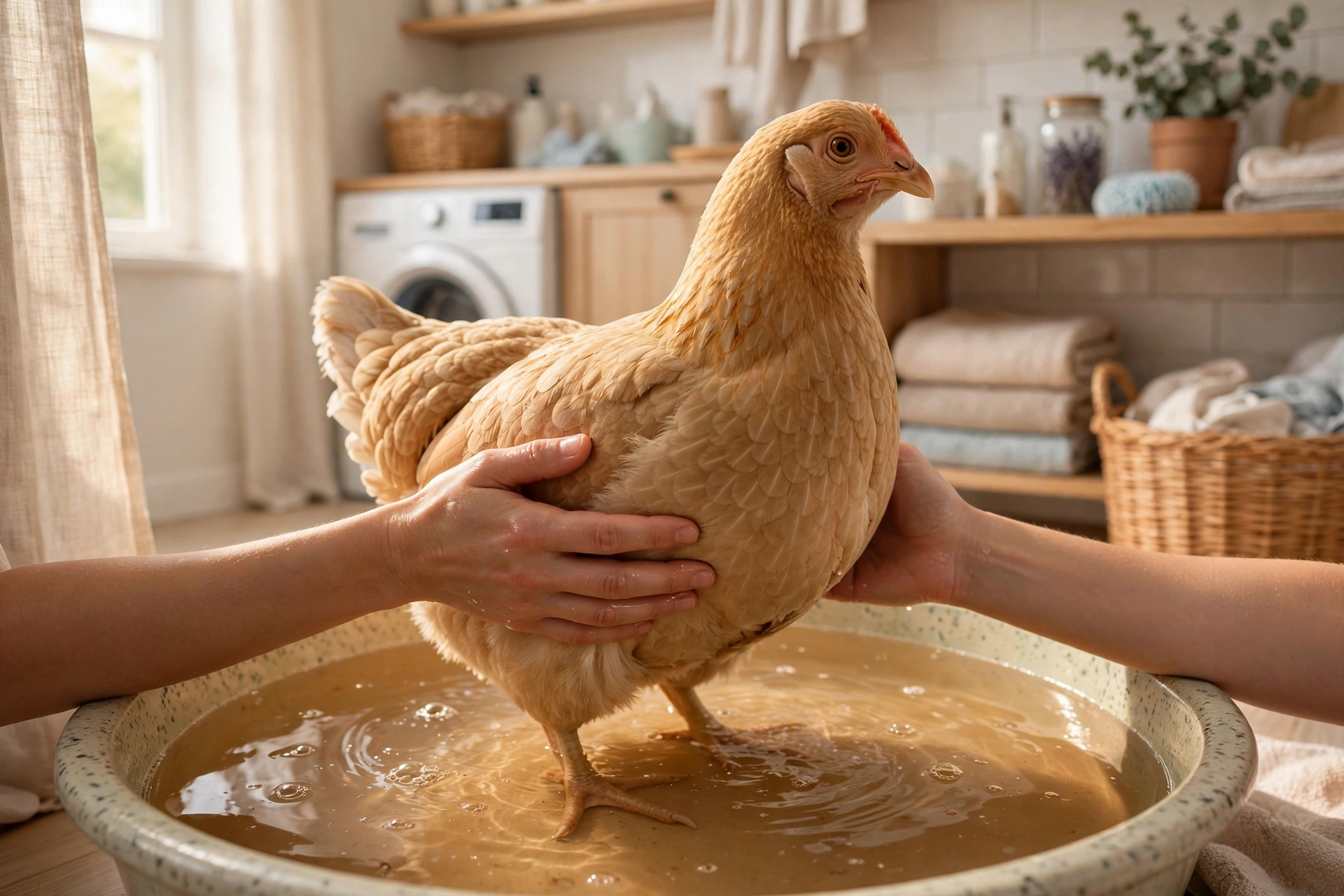
Yes, you can give a chicken a bath, and sometimes you should. Most of the time you should not. A healthy hen keeps herself clean with dust baths, preening and the occasional shake in the sun, and a water bath she does not need is only stress for no benefit. But droppings caked hard onto vent feathers, a lice treatment that calls for a wash, or a bird being prepared for a show are all real reasons to reach for the basin. This guide covers how to wash a chicken the calm way, when to skip the bath, and how to dry her fully before she goes back to the flock.
Table of Contents
- Can You Give a Chicken a Bath
- When a Chicken Actually Needs a Bath
- When to Skip the Bath
- What You Need Before You Start
- How to Give a Chicken a Bath Step by Step
- How to Dry a Chicken After a Bath
- Washing a Chicken Vent Feathers
- Bathing a Hen for Lice Treatment
- Mistakes to Avoid When You Bathe a Chicken
- Frequently Asked Questions
- Bathe a chicken only when she truly needs it, not on a schedule.
- Use warm water, about the temperature you would run for a baby’s bath, and plain baby shampoo.
- Never wet the head. Dry her fully with towels and gentle warm air, and never put a damp bird back with the flock.
Can You Give a Chicken a Bath
Can you give a chicken a bath? Yes, you can, and a hen that trusts you will usually sit still for it once she realises the water is warm and your hands are steady. Chickens are not waterproof the way ducks are, so a bath is a bigger event for a hen than it looks. Her feathers soak through, she loses the insulating air trapped between them, and she chills fast if she is left damp. That is why the answer to how to bathe a hen always starts with one question, does she actually need this bath.
A hen that is dry, bright eyed and laying normally does not need a bath. She needs her dust bath, and if you have not set one up yet, that is the first thing to fix. Our guide to how to make a dust bath for chickens shows the mix and the spot to put it, and a good dust bath does more for everyday cleanliness than any amount of washing. The water bath in this article is the exception, not the routine.
Most pet chickens tolerate a bath far better than their keepers expect. Hold her securely against your body, keep your movements slow, and talk to her in a low voice. A hen that panics is usually reacting to being grabbed from above or to cold water, and both are avoidable. Never chase a hen around the run to catch her for a bath. Pick her up calmly, carry her to the basin, and keep the whole job under fifteen minutes.
When a Chicken Actually Needs a Bath
There are three honest reasons to wash a chicken, and if your reason is not one of them, put the basin away.
The first is droppings caked onto the vent feathers. A hen can end up with a hard lump of droppings glued to the feathers around her vent. Left alone it blocks the vent, attracts flies and can lead to flystrike in warm weather. A warm soak loosens it gently where pulling at it would tear skin and feathers.
The second is a parasite treatment. Some lice and mite treatments are applied as a wash or a dip, and the product instructions may call for the bird to be bathed first so the treatment reaches the skin. If lice are the reason, read our guide on how to treat chicken lice and tell them from mites before you start. The bath is only one step and the coop needs treating too, or the lice will be back within days.
The third is show preparation. If you show your birds, a bath a day or two before the show is standard practice. The routine is the same as the one in this guide, with extra care on drying and on keeping the bird clean and indoors until show day.
A fourth reason is a hen that has got herself into something. Mud after heavy rain or spilled feed stuck to her breast feathers can justify a wash. A little mud on the feet is a spot clean, not a bath, and a hen that has rolled in something harmless will usually sort it out herself in the dust bath.
A move is another time a hen can end up dirty and stressed, and our guide to moving chickens to a new home covers the crate, the drive and the first days in the new coop
When to Skip the Bath
Knowing when not to bathe a chicken matters as much as knowing how. Skip the bath entirely if the weather is cold or wet, if the bird is moulting, if she is a young chick, or if she is already stressed or unwell.
Cold weather is the biggest reason to wait. A wet hen in winter loses body heat fast, and a bird that goes back to the coop damp can chill badly overnight. If the vent is caked in winter, spot clean it with a warm damp cloth indoors and keep her inside until she is dry. The full bath can wait for a warm day.
Moulting birds should not be bathed either. New pin feathers are tender and full of blood, and washing a moulting hen can break them and hurt her. A moulting hen looks scruffy by nature, and no amount of washing fixes that. Leave her alone and let the new feathers come in.
Chicks should almost never be bathed. A chick chills in minutes, and a wet chick that cannot get warm again can die. If a chick has pasty butt, hold a warm damp cloth against the lump until it softens, wipe it away gently and dry the chick straight away under the heat lamp. Never dunk a chick in water.
A sick or injured bird is another no. If a hen is lethargic, off her feed, or recovering from an illness, a bath is stress she does not need. The one exception is a foot injury that needs cleaning, and that is a foot soak, not a bath. Our guide to bumblefoot in chickens covers washing feet for an injury, done in a shallow dish with the rest of the bird kept dry.
Finally, do not bathe a chicken just because she looks dusty. Dust is what chickens are supposed to look like between dust baths. If she has a working dust bath, she is cleaning herself the way nature intended. Your job is to keep that dust bath dry and topped up, not to replace it with water.
What You Need Before You Start
Gather everything before you pick up the bird. A hen held in one hand while you hunt for a towel with the other will panic, and a panicking hen flaps, scratches and can hurt herself or you.
You need two basins or tubs, one for washing and one for rinsing, both wide enough for the hen to stand in with her feet flat. A washing up bowl works for a bantam, and a baby bath or small storage tub works for a large fowl hen. You need warm water, about the temperature you would run for a baby’s bath, roughly 38 degrees Celsius or 100 degrees Fahrenheit. Test it on the inside of your wrist. If it feels hot to you, it is too hot for her.
You need a gentle shampoo. Plain unscented baby shampoo is the safe choice, and it is what most keepers use. You can also use a shampoo made for poultry or cats, but skip anything with tea tree oil, strong fragrance or flea treatment chemicals unless your vet has told you to use it. Do not use dish soap or your own shampoo. Dish soap strips the natural oils from feathers, and human shampoo is too strong for a bird’s skin.
You need three or four old towels, a hair dryer with a low warm setting, and a warm room to work in. A bathroom or laundry room is ideal, with the door closed so there are no draughts. Lay a towel on the floor where you will stand, because the floor will get wet. A helper makes the first bath easier. One person holds the hen, the other pours and rinses.
How to Give a Chicken a Bath Step by Step
Work slowly and keep the hen’s head dry from start to finish. The whole bath should take ten to fifteen minutes, and drying takes longer than washing, so plan for that.
Step 1. Fill the wash basin with warm water deep enough to reach her belly when she stands in it, about ten centimetres or four inches for a standard hen. Fill the rinse basin the same way with clean warm water, and put both basins on the floor with a towel underneath.
Step 2. Pick up the hen calmly and hold her against your body, one hand under her breast and the other supporting her legs. Lower her into the wash basin feet first, keeping her wings folded against her sides. Talk to her quietly. Most hens settle once their feet are in warm water.
Step 3. Scoop warm water over her back and sides with a cup or your hand, working from the neck down. Do not pour water over her head, and keep it out of her eyes and ears. Let the feathers soak for a minute or two so dirt softens.
Step 4. Put a small amount of baby shampoo in your palm, lather it in your hands, then work it gently through the dirty feathers. Rub in the direction the feathers lie, never against them, and pay attention to the vent area, the belly and the legs, where dirt collects. For caked droppings, hold a warm wet cloth against the lump for a minute until it loosens, then work it free with your fingers. Never pull at a lump that is still stuck fast.
Step 5. Lift her into the rinse basin and scoop clean warm water over her until no shampoo remains. Shampoo left in the feathers irritates the skin and makes the feathers clump, so rinse twice if you are unsure. She is rinsed when the water runs clear and the feathers feel clean rather than slippery.
Step 6. Lift her out, wrap her in a towel straight away, and hold her against you while the towel takes up the worst of the water. Swap to a dry towel and pat her gently. Do not rub hard, because wet feathers tangle and break.
That is the wash done. What happens next matters more than the wash itself.

How to Dry a Chicken After a Bath
Drying is the part most first time bathers rush, and it is the part that keeps a bathed hen safe. A hen is not dry when she stops dripping. She is dry when the feathers near her skin are dry, and that takes time.
Start with towels. Pat her all over with a dry towel, working down through the layers of feathers, and swap towels as they get wet. A big hen can soak through two towels before you even reach the dryer. Keep her wrapped and warm, and keep the room warm and free of draughts.
Then use a hair dryer on its lowest warm setting, held at least thirty centimetres or a foot away from the bird, and keep it moving. Never hold it still on one spot, and never use the hottest setting. Dry in the direction the feathers lie, lifting the wing gently to dry underneath it, and check the belly and the vent area last, because those are the thickest feathered spots and the slowest to dry. Most hens tolerate the dryer once they realise the air is warm. If she panics, stop, wrap her in a towel, and try again in a few minutes.
The job is finished when you can part the feathers on her breast and belly and find the skin underneath dry. That usually takes twenty to thirty minutes for a standard hen, longer for a heavy feathered breed. If the weather is warm and sunny, you can finish drying outside in a sheltered sunny spot, but only if the sun is strong and there is no wind. In cool weather, keep her indoors until she is fully dry, even if that means an hour in a dog crate lined with towels in a warm room.
Never put a damp hen back in the coop or back with the flock while she is wet. A wet hen is a cold hen, and a hen that smells different and looks different can also get pecked by flock mates. Keep her separate until she is dry, calm and herself again, then let her rejoin the flock as if nothing happened.
Washing a Chicken Vent Feathers
Washing a chicken vent feathers is the single most common reason for a bath, so it deserves its own detail. Droppings stick to the fluffy feathers around the vent, dry hard, and build up into a lump that can block the vent and attract flies. A hen with a badly caked vent strains to pass droppings, and in warm weather the damp mess under the lump is exactly where flies lay eggs.
Start with a spot clean before you commit to a full bath. Hold a cloth soaked in warm water against the lump for two or three minutes, then wipe gently. Often the lump softens and comes away in pieces, and that is all the bird needs. Trim the very tips of the soiled feathers with blunt scissors if a small amount of matted feather remains, cutting only the dirty tips and never close to the skin.
If the mess is too big for a cloth, use the bath method above and spend the soaking time on the vent area. Let the hen stand in the warm water for a few minutes so the lump softens on its own, then work it free with your fingers a little at a time. Be patient. Pulling a hard lump off dry feathers tears the skin and leaves a raw patch that invites infection.
Once the vent is clean, dry the area thoroughly and check the skin underneath. Healthy skin is pink and clean. If you see redness, swelling, sores or a bad smell that does not wash away, that is not a cleaning problem any more. A hen with a persistently dirty vent, watery droppings, or a discharge that keeps coming back may have vent gleet or another health problem, and she needs a vet, not another bath. Our chicken care and health hub gathers the health guides on this site, and a vet visit is the right next step when cleaning alone does not fix it.
To keep the vent clean in future, check the usual causes. Runny droppings often come from too many watery treats or a sudden feed change, and an overweight hen can struggle to keep herself tidy. Fix the cause and the vent usually stays clean on its own.
Bathing a Hen for Lice Treatment
A bath can be part of lice treatment, but it is never the whole treatment. Lice live on the bird and lay eggs at the base of the feathers, and a wash alone does not kill the eggs. If you bathe a hen for lice and put her back in an untreated coop, the lice will be back within days.
Before you bathe, confirm it is lice and not mites, because the two need different treatment. Lice are pale, fast moving insects you can see on the skin around the vent and under the wings, and their egg clusters look like grey clumps stuck to feather shafts. Mites are smaller, often red or dark, and many types live in the coop and only visit the bird at night. Our guide on how to treat chicken lice and tell them from mites shows how to tell them apart and covers the full treatment.
If the treatment you are using calls for a wash, bathe the hen using the steps above and follow the product instructions exactly for any medicated wash or dip. Some products say to apply after bathing, some say the bath is the treatment, and getting that order wrong wastes the product. Wear gloves, work in a well ventilated room, and keep the product away from the bird’s eyes and beak.
After the bath, dry her fully as above and treat the coop the same day. Clean out the bedding, dust the roosts and nest boxes with the recommended product, and repeat the bird treatment after seven to ten days to catch lice hatching from eggs that survived the first round. A single bath without the follow up is the most common reason lice treatment fails.

Mistakes to Avoid When You Bathe a Chicken
The most common mistake is bathing too often. A chicken does not need a weekly bath, and a hen bathed every week loses the natural oils that keep her feathers in condition. Her feathers get dull, she gets stressed, and she is more likely to catch a chill. Bathe only when there is a real reason.
The second mistake is water that is too hot or too cold. Hot water scalds and stresses a bird, and cold water chills her fast. Test the water on your wrist every time, and top it up with warm water if it cools while you work.
The third mistake is getting the head wet. Water in the ears can cause an ear infection, and water in the eyes stings and panics the bird. Keep the head above water for the whole bath, and clean the head or comb with a damp cloth, never a pour of water.
The fourth mistake is rushing the drying. A hen that looks dry on the outside can still be wet against the skin, and that hidden dampness is what chills her overnight. Part the feathers and check the skin. If it is damp, keep drying.
The fifth mistake is using the wrong soap. Dish soap, laundry detergent, human shampoo with fragrance, and anything with tea tree oil can all irritate a bird’s skin or strip her feathers. Plain baby shampoo is cheap, easy to find and safe, so there is no reason to improvise.
The last mistake is bathing a bird that should not be bathed at all. A moulting hen, a sick hen, a chick, or any bird on a cold wet day should be spot cleaned or left alone. When in doubt, wait for a warm day.
Frequently Asked Questions
How often can you bathe a chicken?
Only when she needs it, which for most pet hens means a few times a year at most. A healthy hen with a good dust bath may never need a full water bath in her life. Bathing on a schedule strips feather oils and stresses the bird for no benefit.
Can you use Dawn dish soap on a chicken?
It is not the best choice. Dish soap is made to cut grease, and it strips the natural oils from a hen’s feathers along with the dirt. Plain unscented baby shampoo cleans just as well and is far gentler on her skin.
Can you bathe a chick?
Almost never. Chicks chill in minutes and a wet chick can die quickly. If a chick has pasty butt, hold a warm damp cloth against the lump until it softens, wipe it away and dry the chick straight away under the heat lamp. Never dunk a chick in water.
Can chickens get wet in the rain?
Yes, and a healthy hen in light rain is fine. Her outer feathers shed water and the down underneath stays dry. A long heavy downpour is different, and a soaked hen will head for shelter on her own. Make sure the coop is dry and draught free so she can dry off.

Nusrat
Author, TheChickenPet.com
Keep Reading
How to Make a Dust Bath for Chickens, the dust bath that keeps a healthy hen clean without water.
How to Treat Chicken Lice and Tell Them From Mites, how to tell lice from mites and treat the bird and the coop.
Chicken Care and Health, the health guides on this site, gathered in one place.